A year of empty stadiums lays bare what soccer has missed
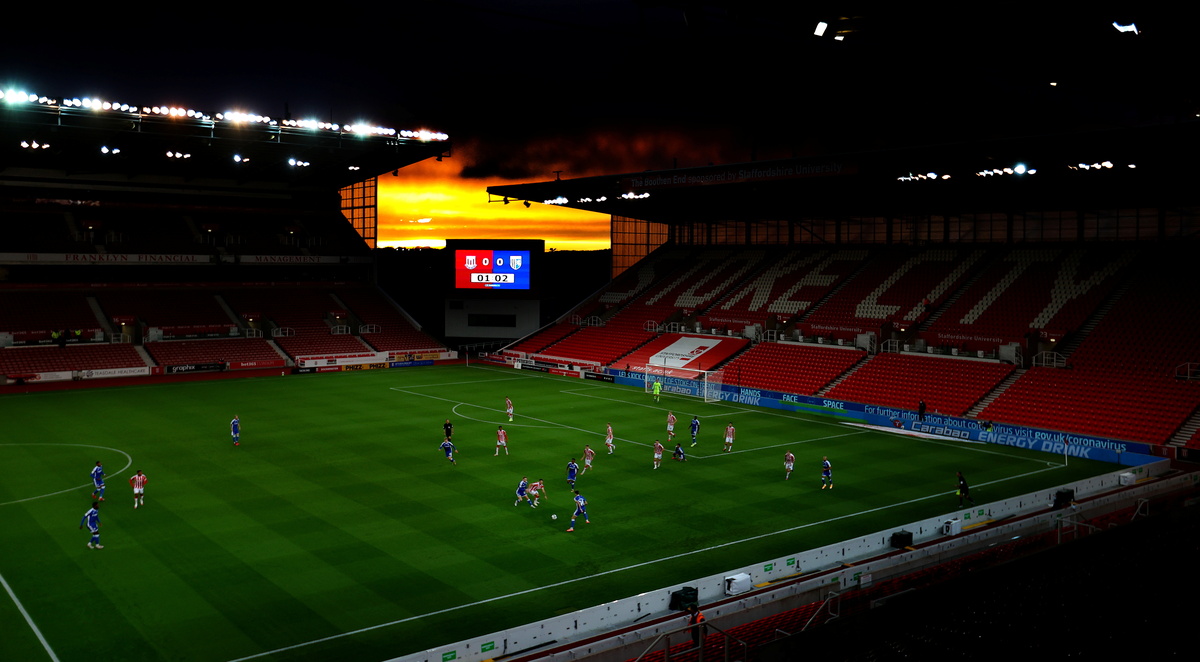
Footballers play during the third round of a Carabao Cup football match between Stoke City and Gillingham at the bet365 Stadium, during the coronavirus disease (COVID-19) outbreak, in Stoke-on-Trent, Britain, September 23, 2020. REUTERS/Carl Recine
A year ago at The Shay, home to fifth-tier English soccer club Halifax FC, fans followed time-honoured traditions - they walked to the match from local pubs and queued for pie at half time.
But the 2,000 or so supporters also sensed things were about to change. While they could watch their team play that day, games in leagues above them had been cancelled across England as the coronavirus pandemic spread.
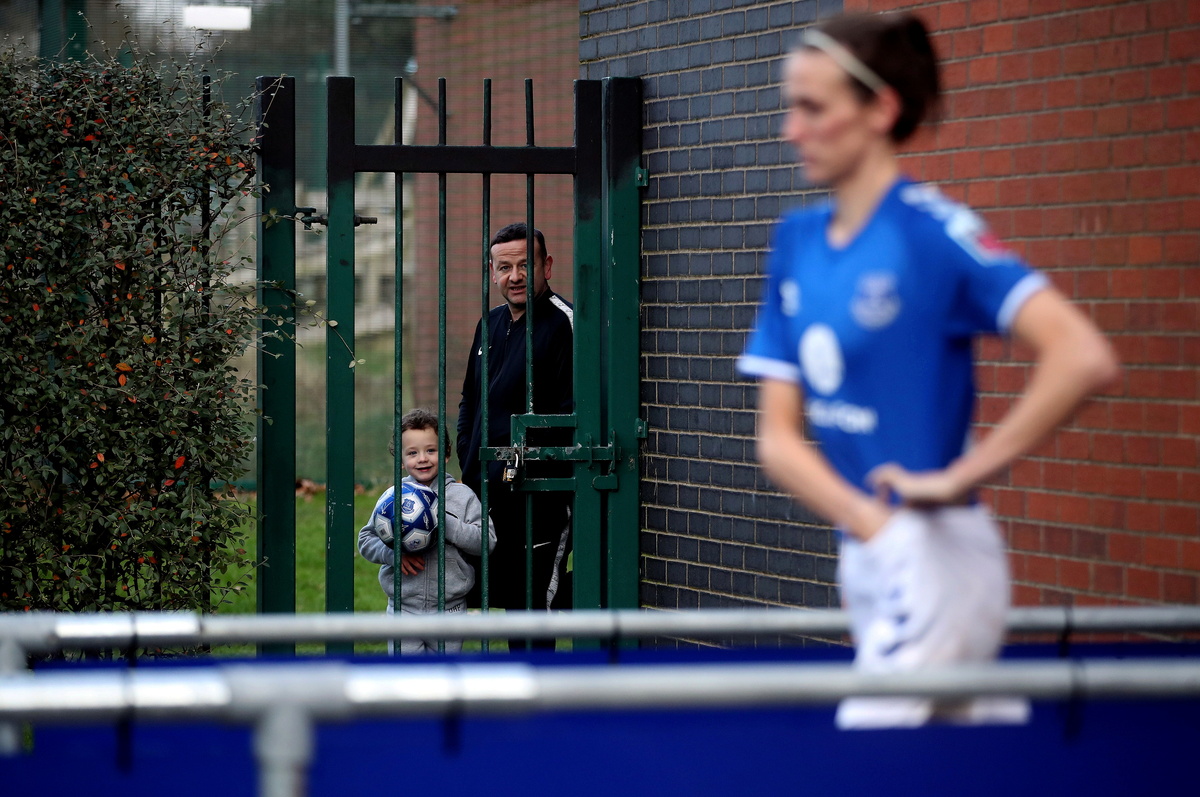
Two Everton fans watch Everton's Jill Scott before a Women's Super League football match between Everton and Manchester United at Walton Hall Park, during the coronavirus disease (COVID-19) outbreak, in Liverpool, Britain January 31, 2021. REUTERS/Carl Recine
"I have a feeling this might be the last football match that takes place in the country for a good while," said fan Nathan Sinclair.
He was right.
For over three months, there was no soccer of any kind in England, where it is by far the most popular sport.
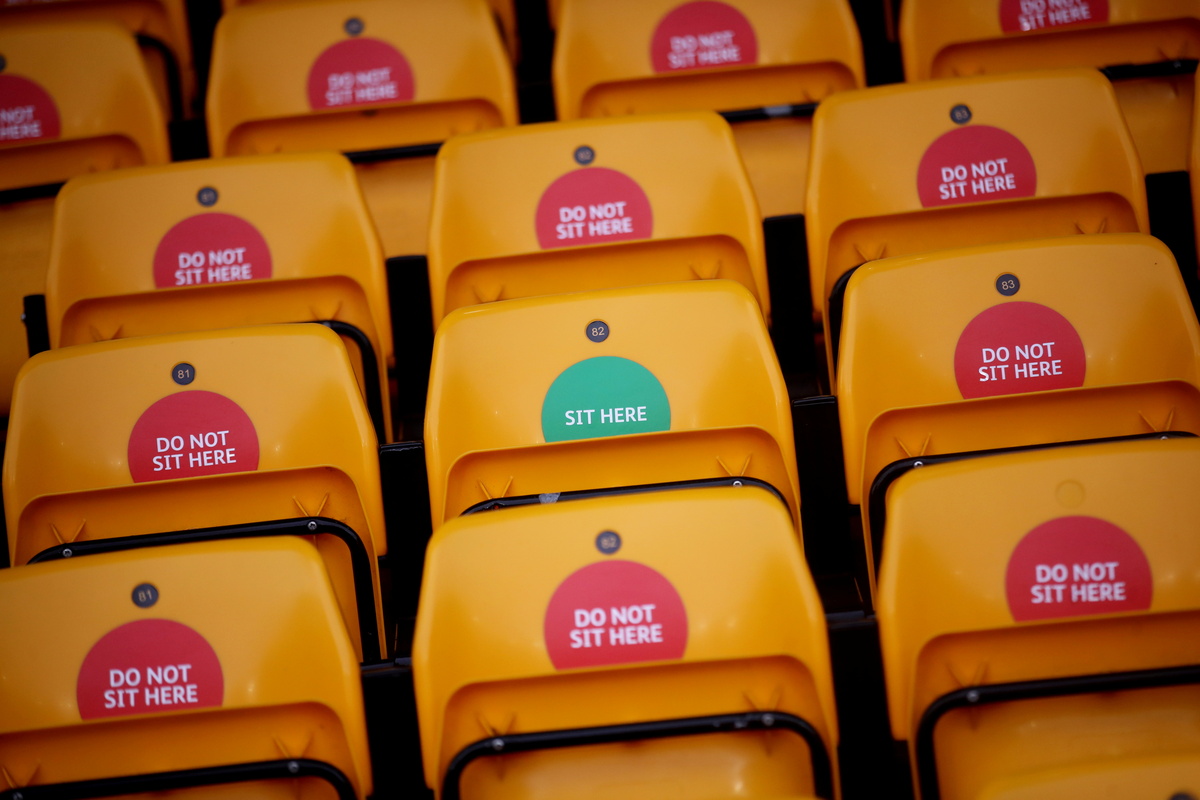
Stickers to enforce social distancing are stuck on seats on the day of a Premier League football match between Wolverhampton Wanderers and West Bromwich Albion at Molineux Stadium, during the coronavirus disease (COVID-19) outbreak, in Wolverhampton, Britain, January 16, 2021. REUTERS/Carl Recine
The Premier League - the world's richest - and the Football League returned in mid-June, while teams like Halifax had longer to wait.
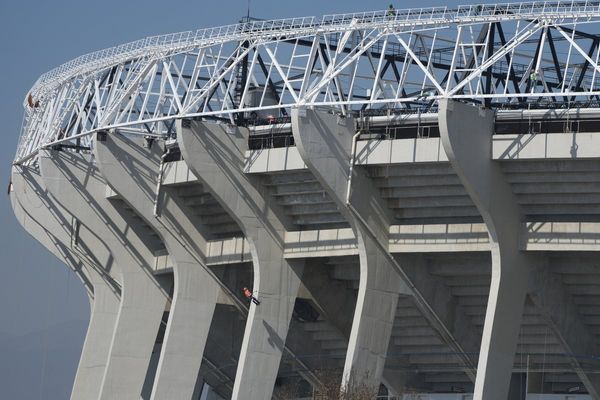
Across the spectrum games have restarted on the field, yet stadiums remained empty barring a handful of exceptions in December, depriving the sport of its lifeblood.
Fans have been able to watch from home only, and what they have seen is a recognisable game in an unrecognisable context, despite efforts to compensate for the absence of crowds.
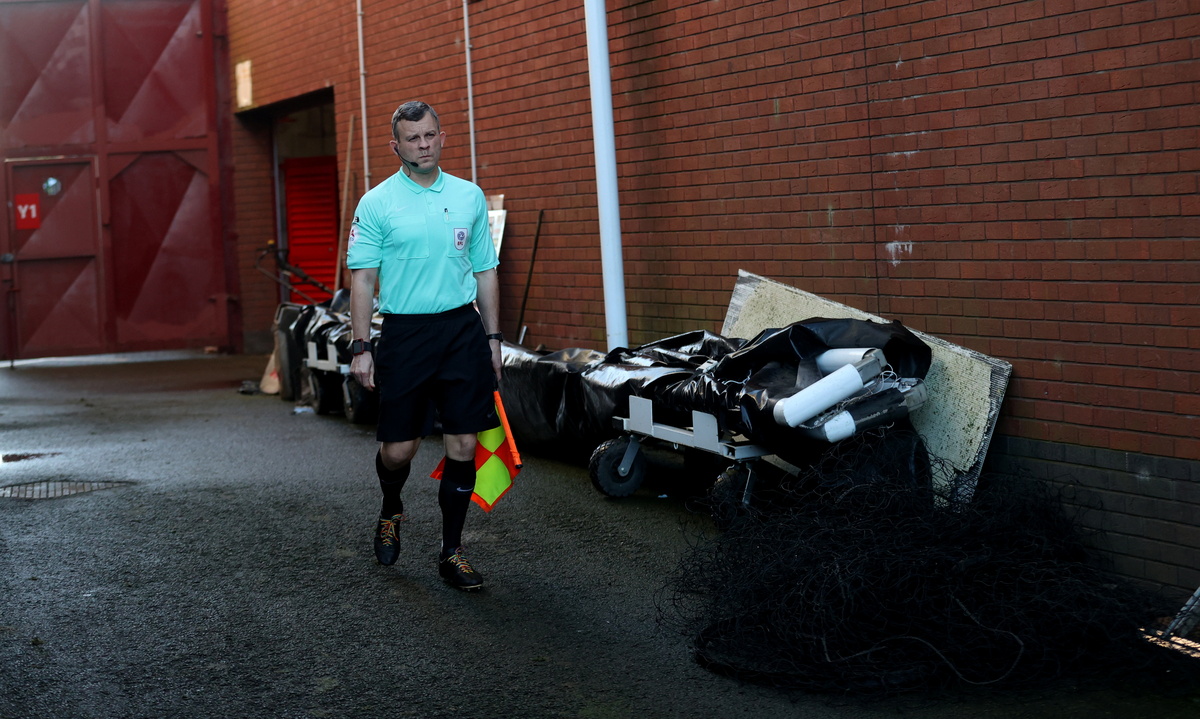
An assistant referee wears rainbow laces as he makes his way to the pitch via the emergency gate, instead of the tunnel, on the day of a Championship football match between Stoke City and Middlesbrough at the bet365 Stadium, during the coronavirus disease (COVID-19) outbreak, in Stoke-on-Trent, Britain, December 5, 2020. REUTERS/Carl Recine
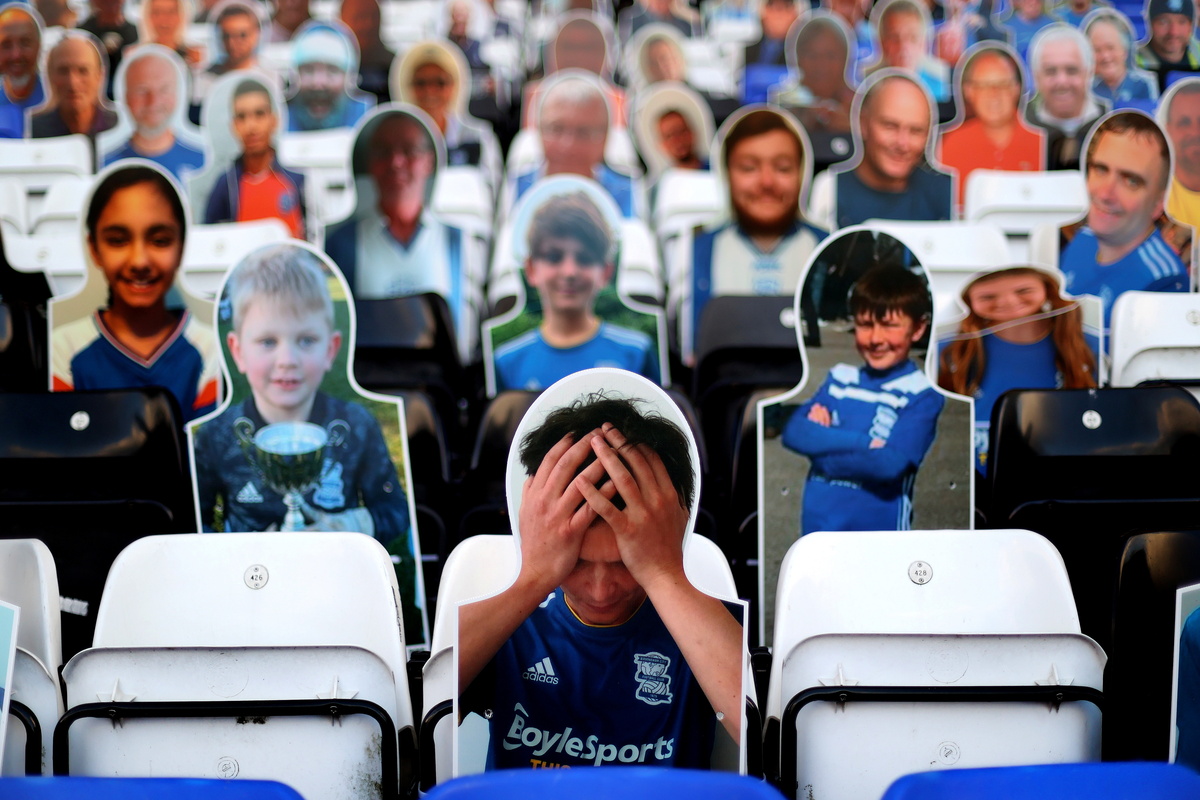
Clubs have covered empty seats with banners, flags, advertising and slogans, and in some cases cut-out faces of fans, while broadcasters use simulated crowd noise. But attempts to mitigate the lack of crowds can only do so much.
CIRCUS WITHOUT CLOWNS
Players have struggled as well as supporters.
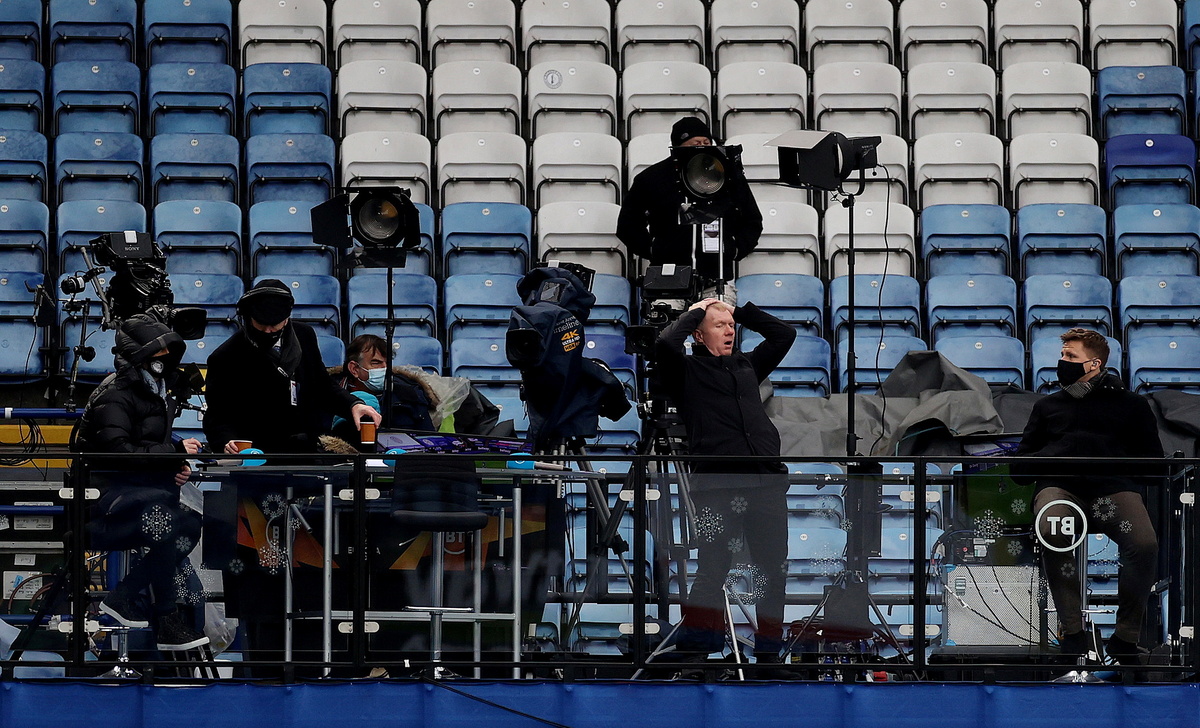
BT Sport pundit Paul Scholes reacts after the side he used to play for, Manchester United, missed a chance to score during a Premier League football match between Leicester City and Manchester United at King Power Stadium, during the coronavirus disease (COVID-19) outbreak, in Leicester, Britain, December 26, 2020. REUTERS/Carl Recine
"It's horrible to play without fans, it's a very ugly sensation," said Barcelona forward Lionel Messi, whose great rival Cristiano Ronaldo agreed.
"Playing without fans is like going to the circus and not seeing clowns, it's like going to the garden and not seeing flowers," said the Juventus forward.
For the small number of journalists allowed to attend games, the reality had been laid bare - a soccer match without fans is a soulless occasion.
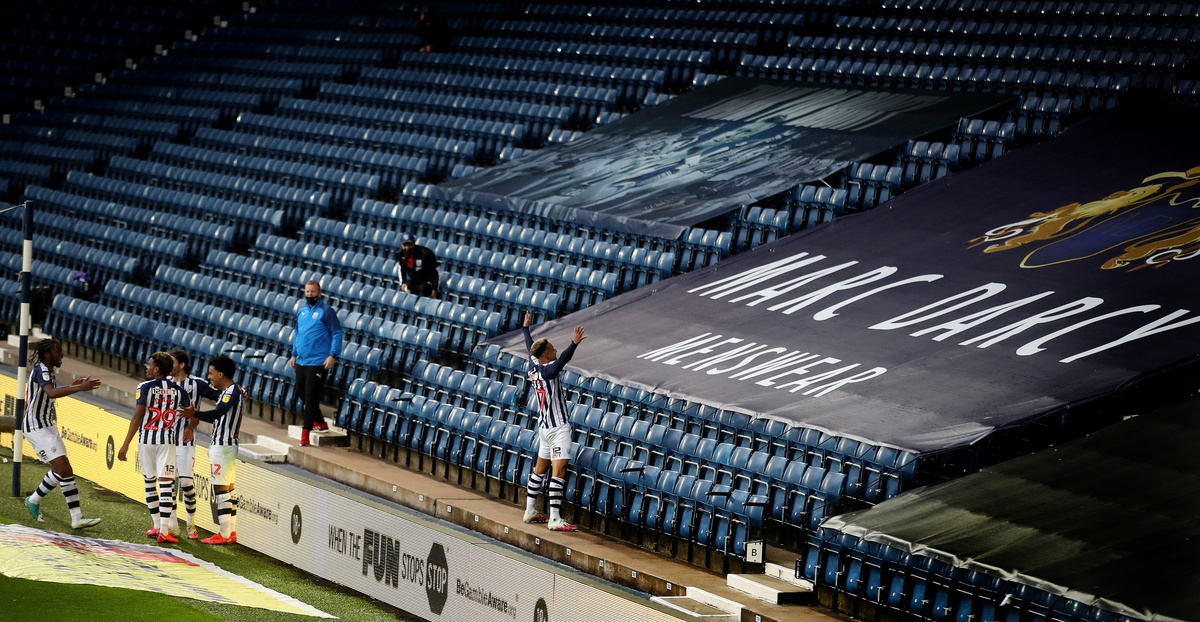
West Bromwich Albion's Callum Robinson celebrates scoring a second goal in front of an empty stand on the day of a Championship football match between West Bromwich Albion and Queens Park Rangers at The Hawthorns, during the coronavirus disease (COVID-19) outbreak, in West Bromwich, Britain, July 22, 2020. REUTERS/Carl Recine
Technique and tactics, endeavour and athleticism are there to be admired, but much of what makes a professional match special is absent.
It is not only the roar of a crowd when a goal is scored that is missing, but groans of frustration and applause of appreciation. The emotion has gone.
That makes life harder for the 22 players on the field and the support staff on the sidelines.
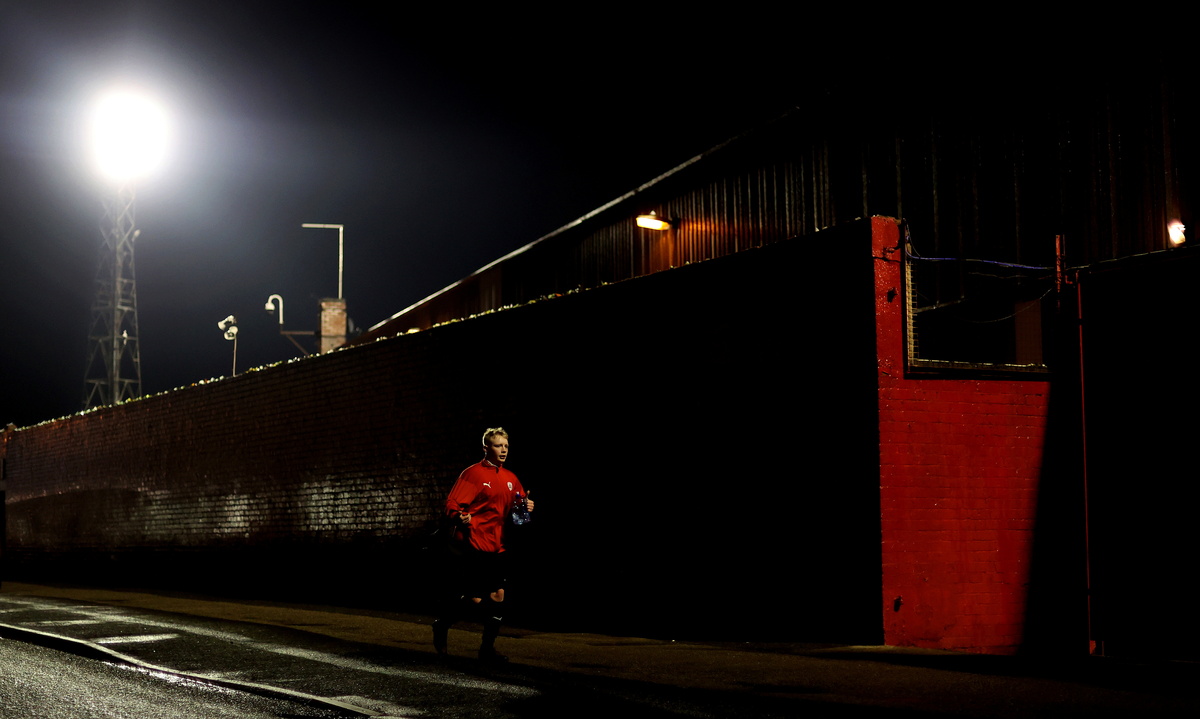
An academy player runs past Oakwell Stadium whilst the Barnsley and Bournemouth teams warm up inside, on the day of a Championship football match between Barnsley and AFC Bournemouth in Oakwell, during the coronavirus disease (COVID-19) outbreak, in Barnsley, Britain, December 4, 2020. REUTERS/Carl Recine
"Not seeing anyone in the stadium makes it like training, and it takes a lot to get into the game at the beginning," said Messi.
For reporters, watching live soccer has been both a privilege and a stark reminder of what has been missing for the past 12 months - being together with friends, switching off from work and enjoying a drink, a joke, a celebration, an argument.
As the game in England prepares for the return of fans, their long absence might prompt the sport's administrators and owners to reflect on what really counts.
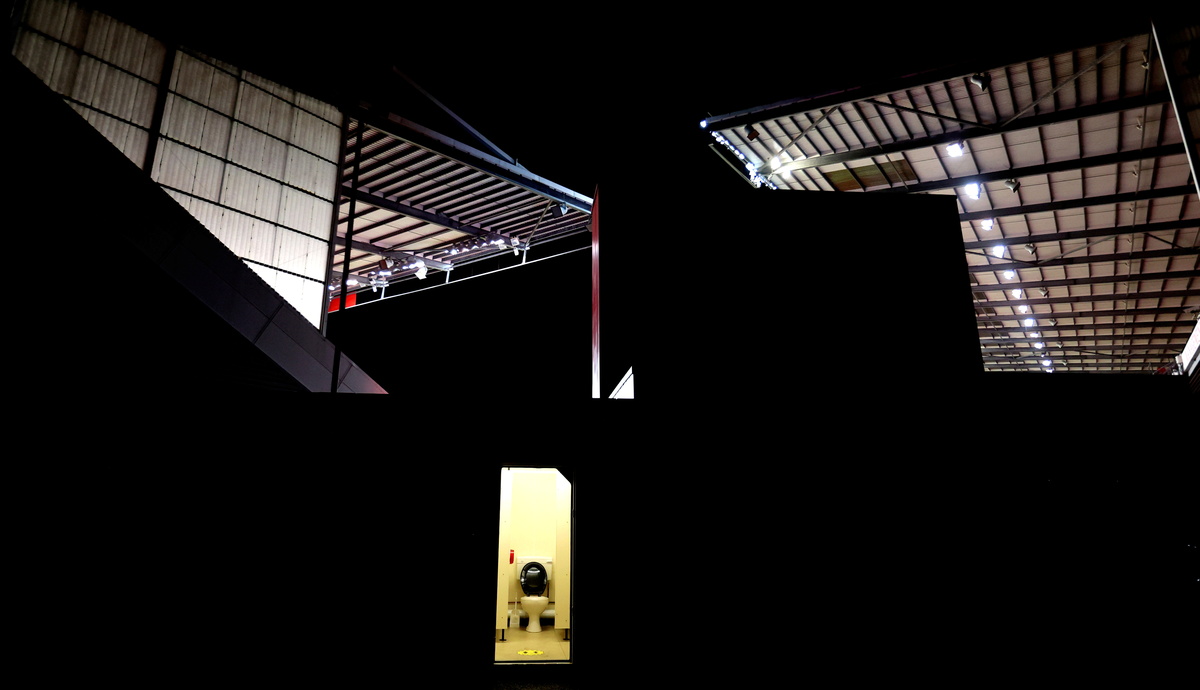
A portable cabin toilet door is left open outside the bet365 stadium on the day of a Championship football match between Stoke City and Sheffield, during the coronavirus disease (COVID-19) outbreak, in Stoke-on-Trent, Britain, February 16, 2021. REUTERS/Carl Recine
The language of soccer is often that of a business - not surprising given it is a multi-billion-dollar global industry.
But the last year has shown that the sport has missed its passionate supporters as much as they have missed the sport.
English novelist J.B. Priestley summed up almost a century ago the escapism and drama that standing in the crowd can bring:
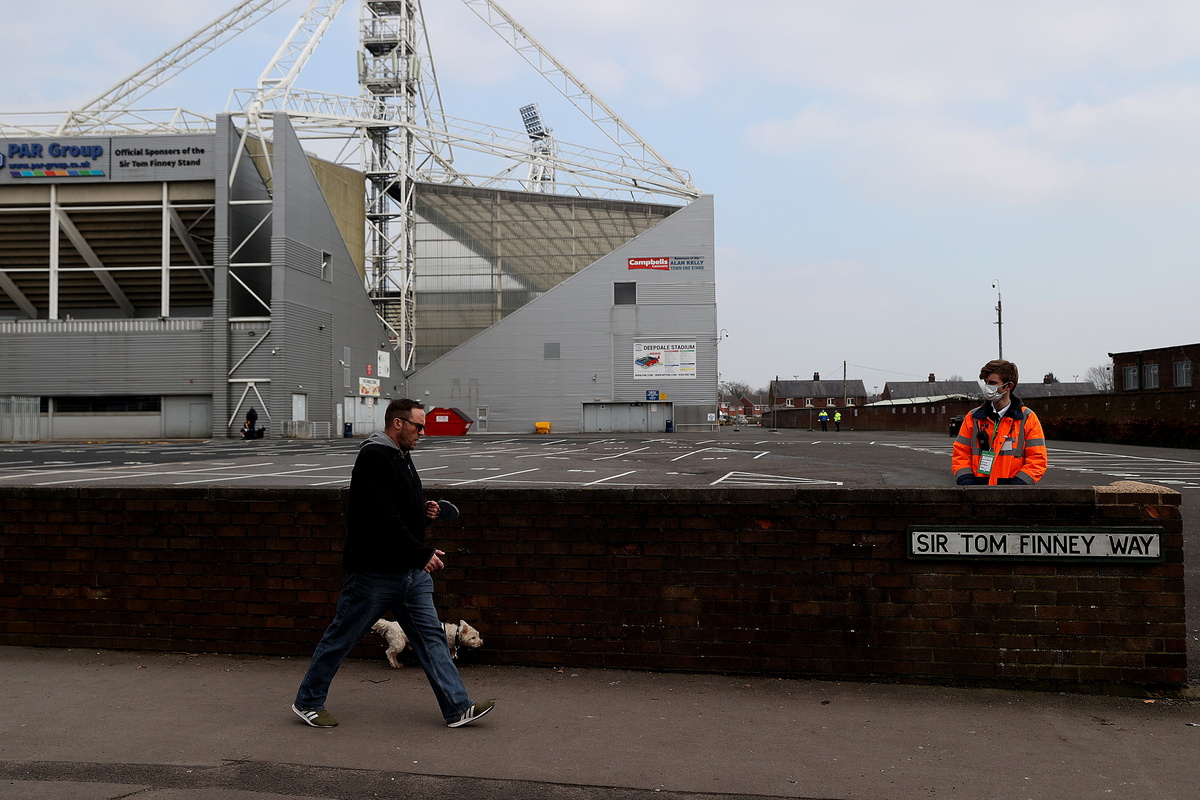
A steward guards an empty carpark before a Championship football match between Preston North End and AFC Bournemouth at Deepdale, during the coronavirus disease (COVID-19) outbreak, in Preston, Britain, March 6, 2021. REUTERS/Carl Recine
"...there you were, cheering together, thumping one another on the shoulders, swopping judgements like lords of the earth, having pushed your way through a turnstile into another and altogether more splendid kind of life, hurtling with Conflict and yet passionate and beautiful in its Art."
(Reporting by Simon Evans; Editing by Mike Collett-White)
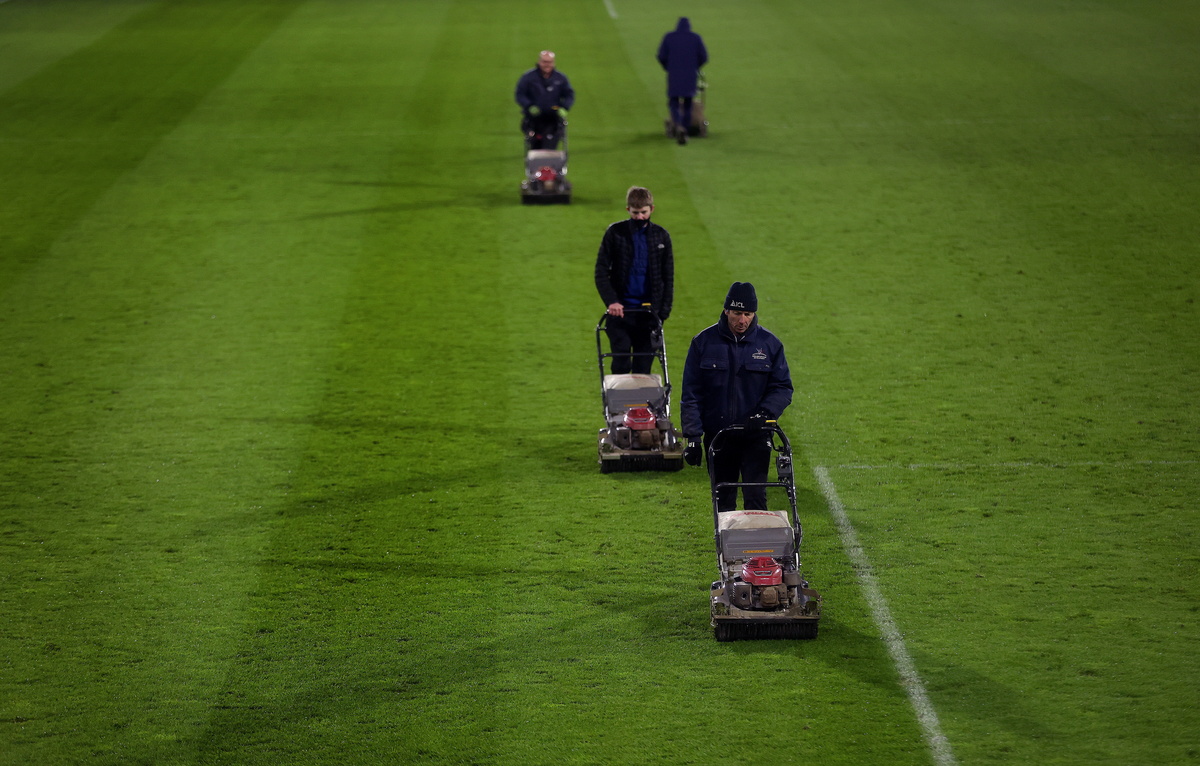
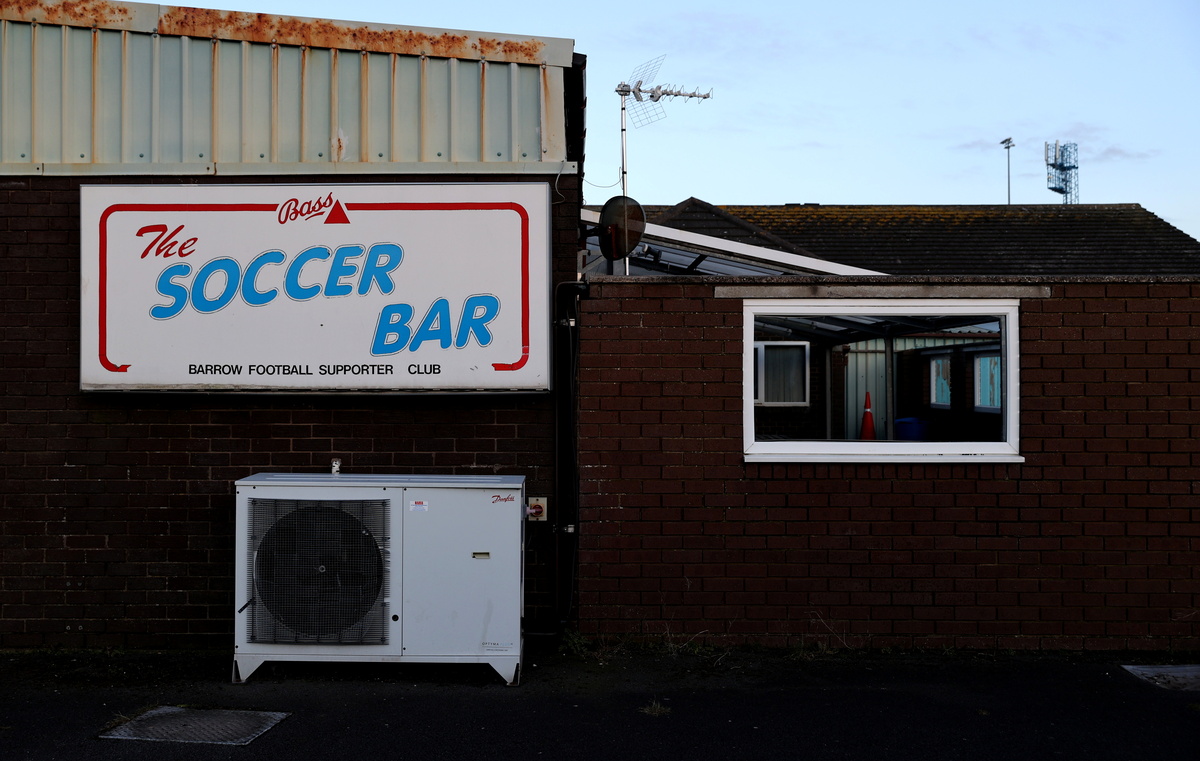
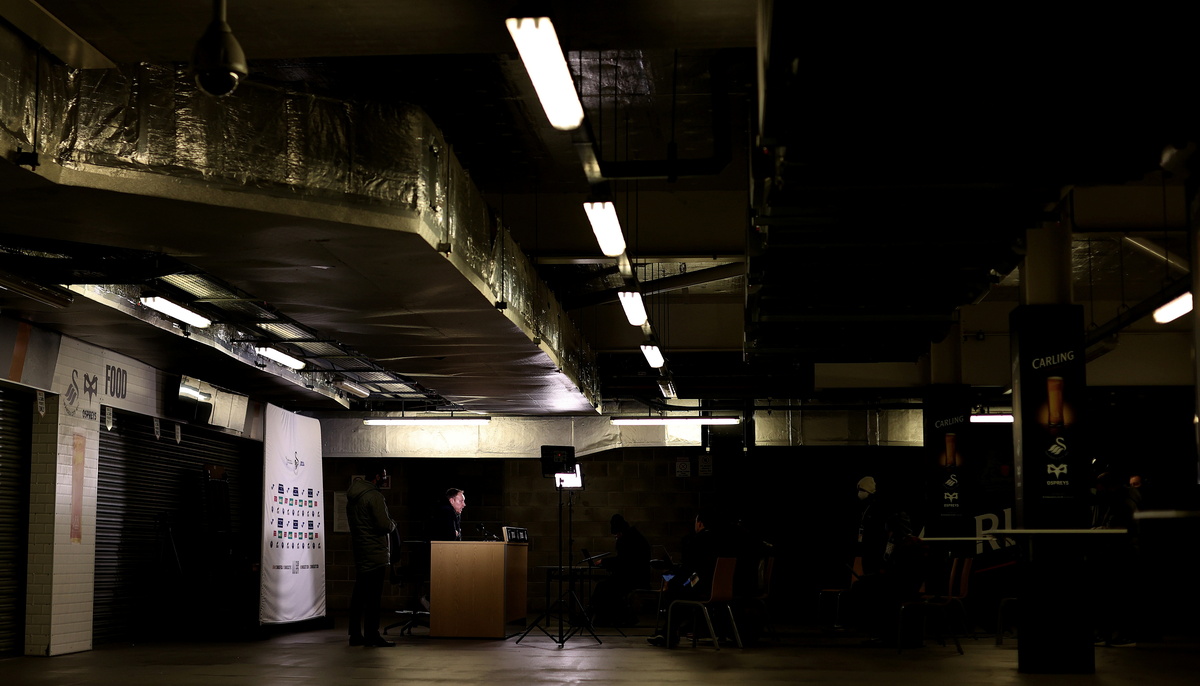
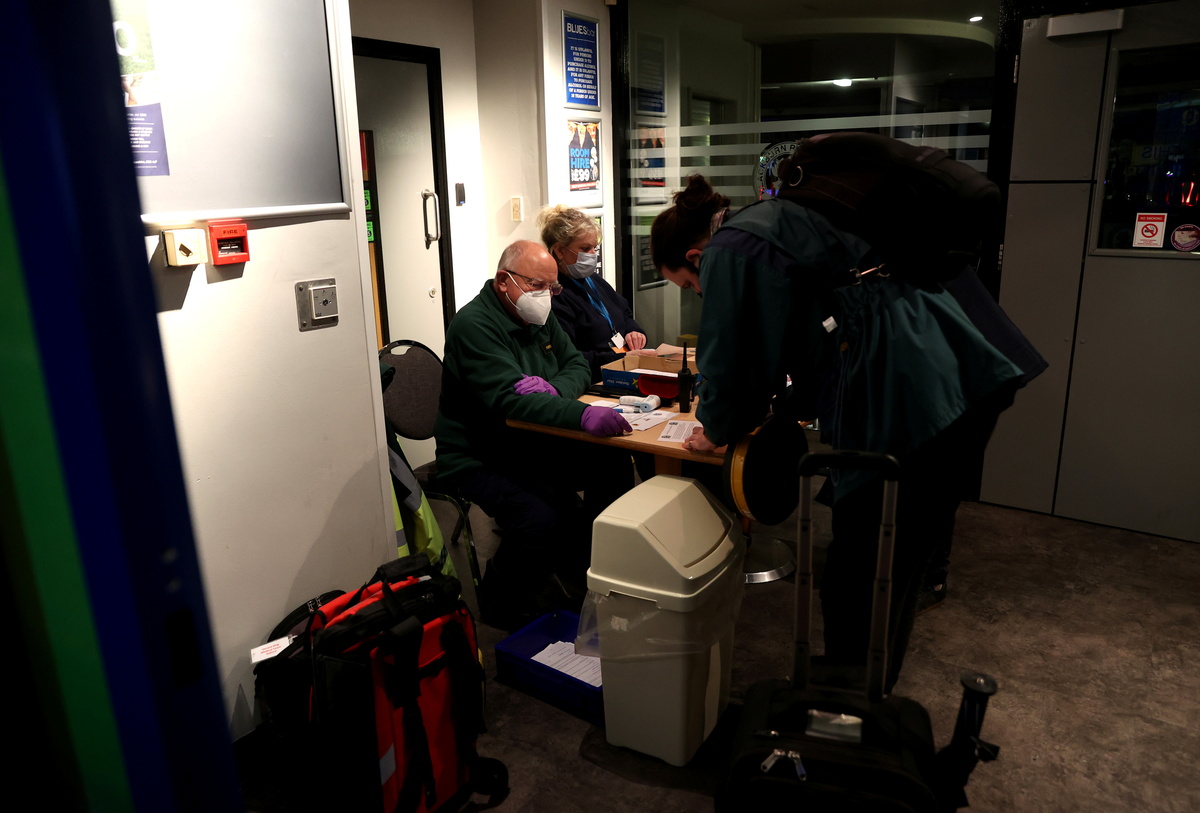
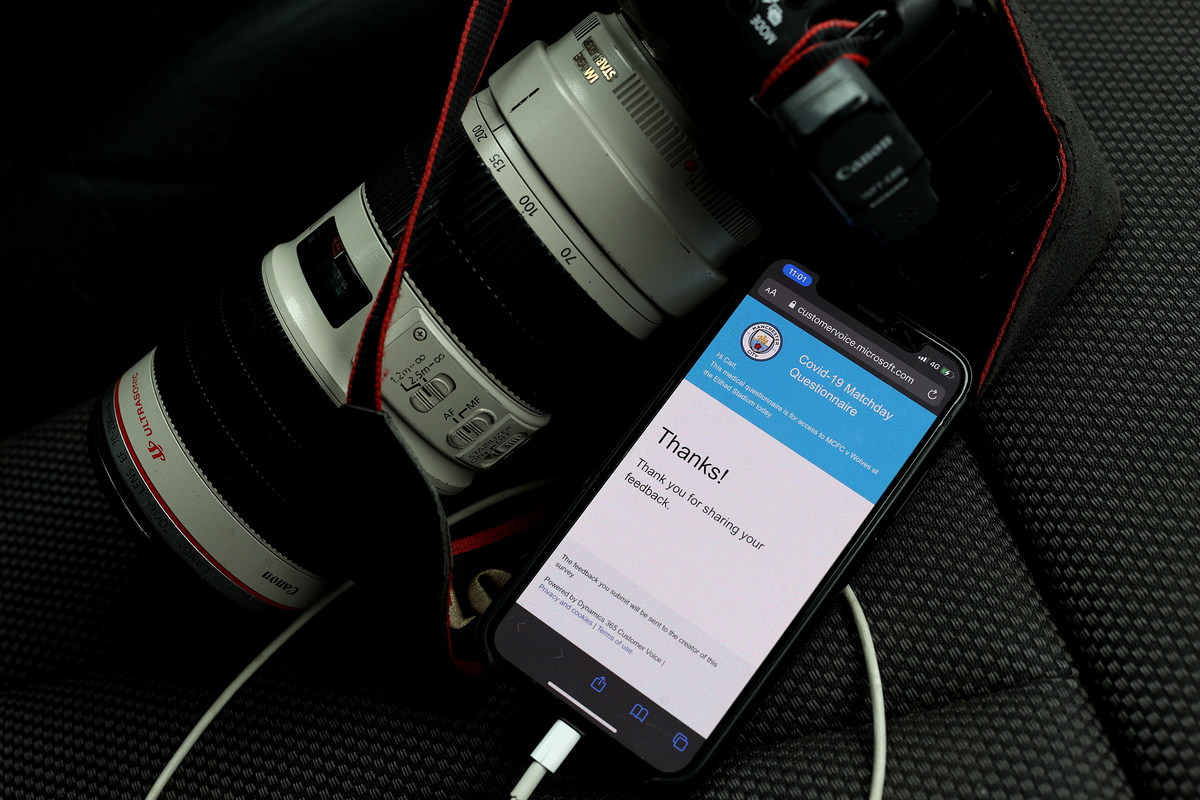
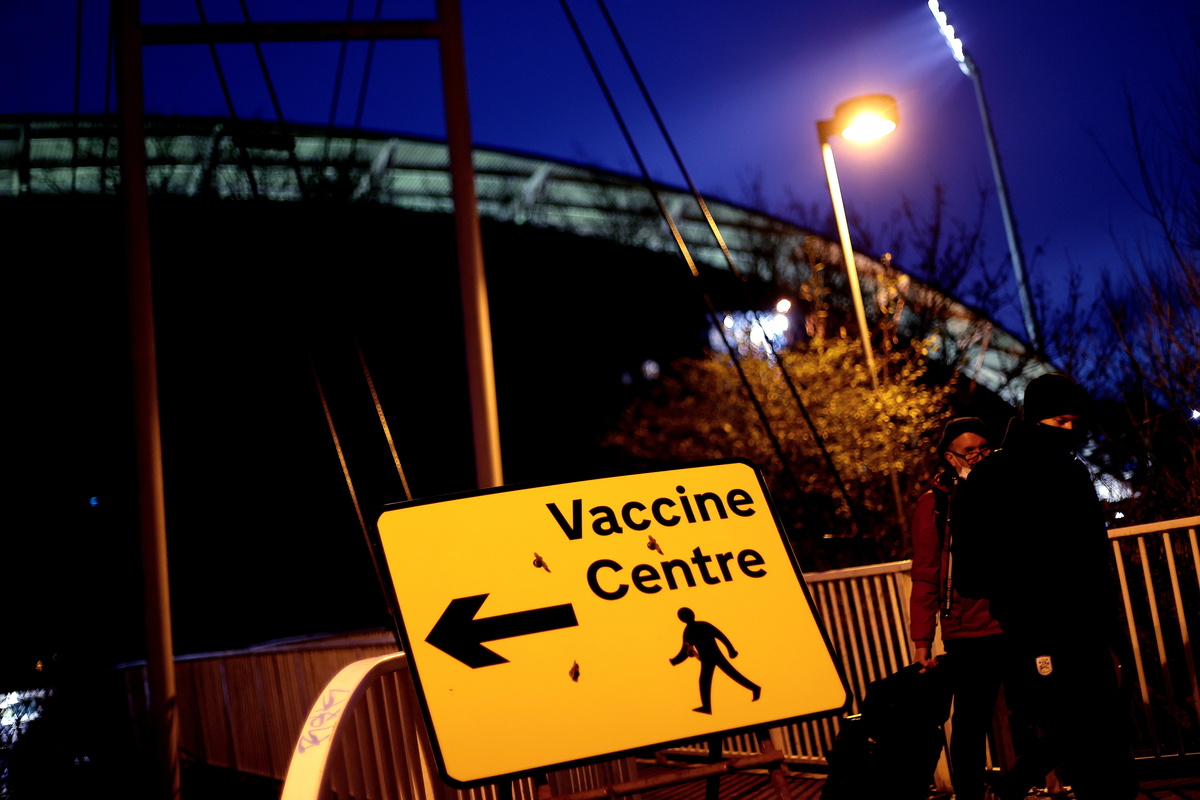
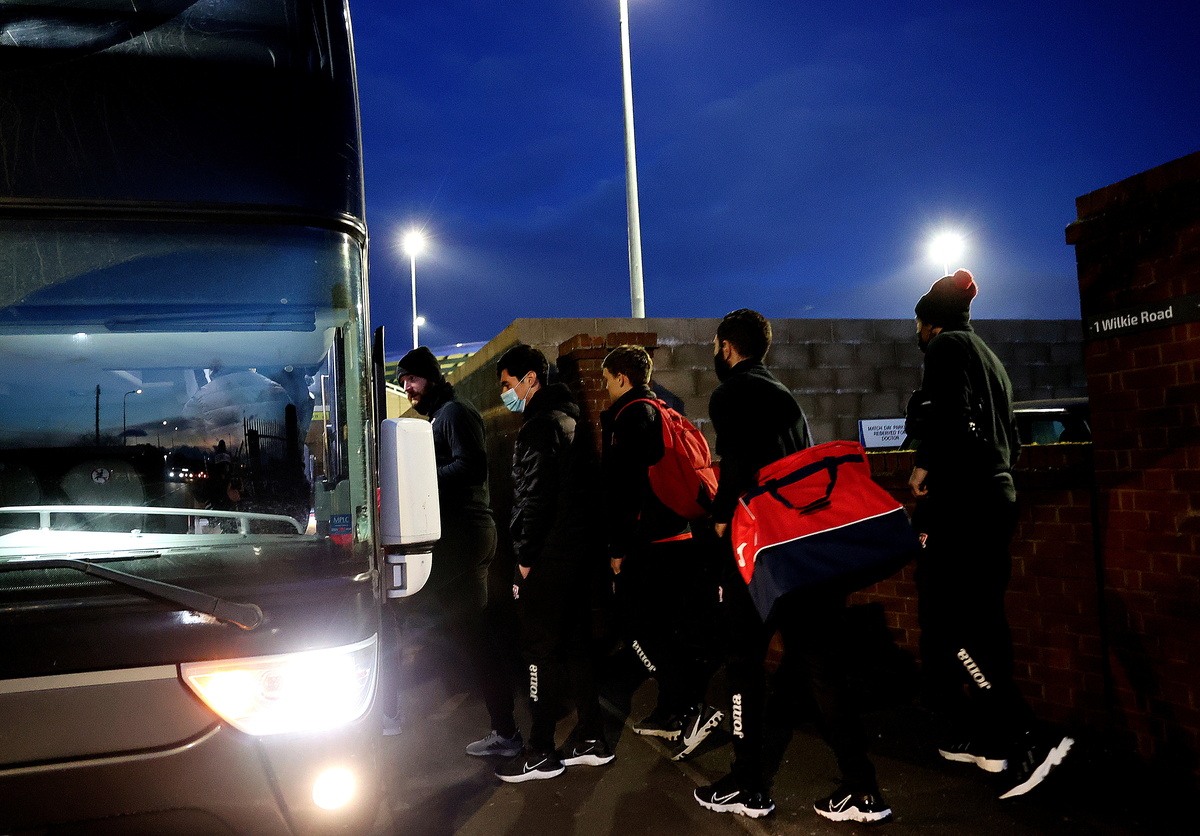
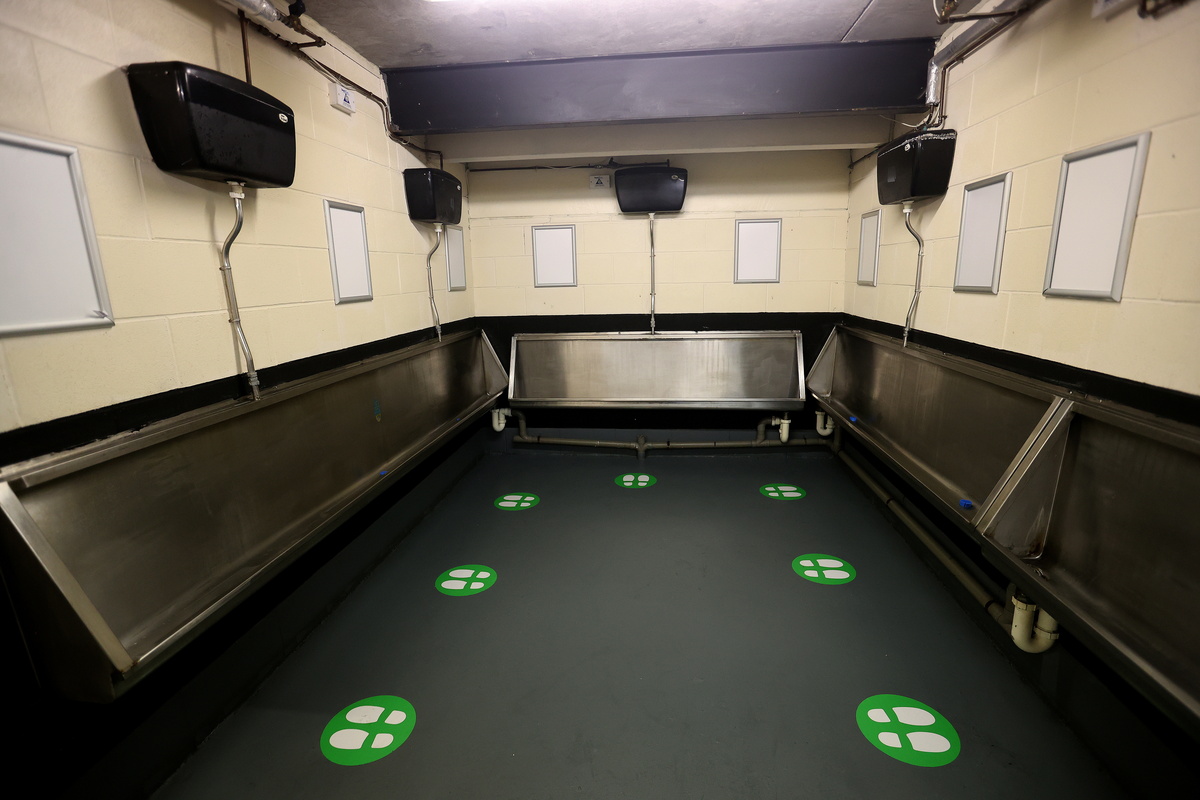
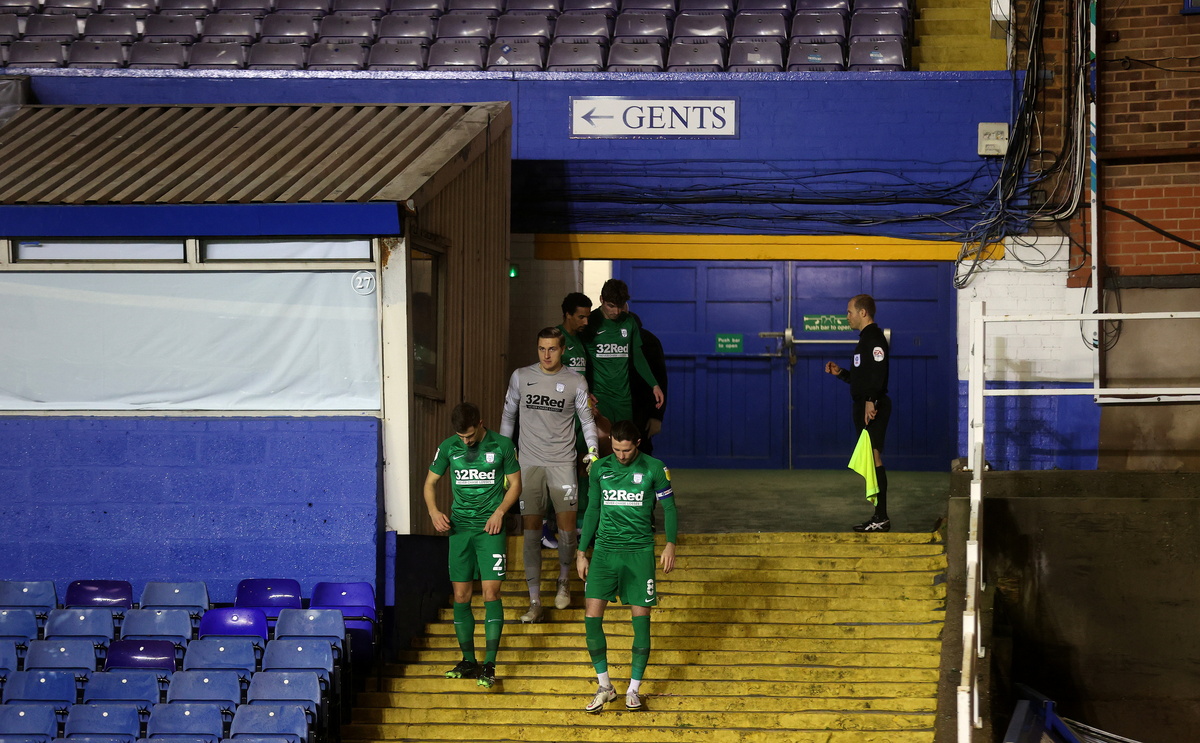
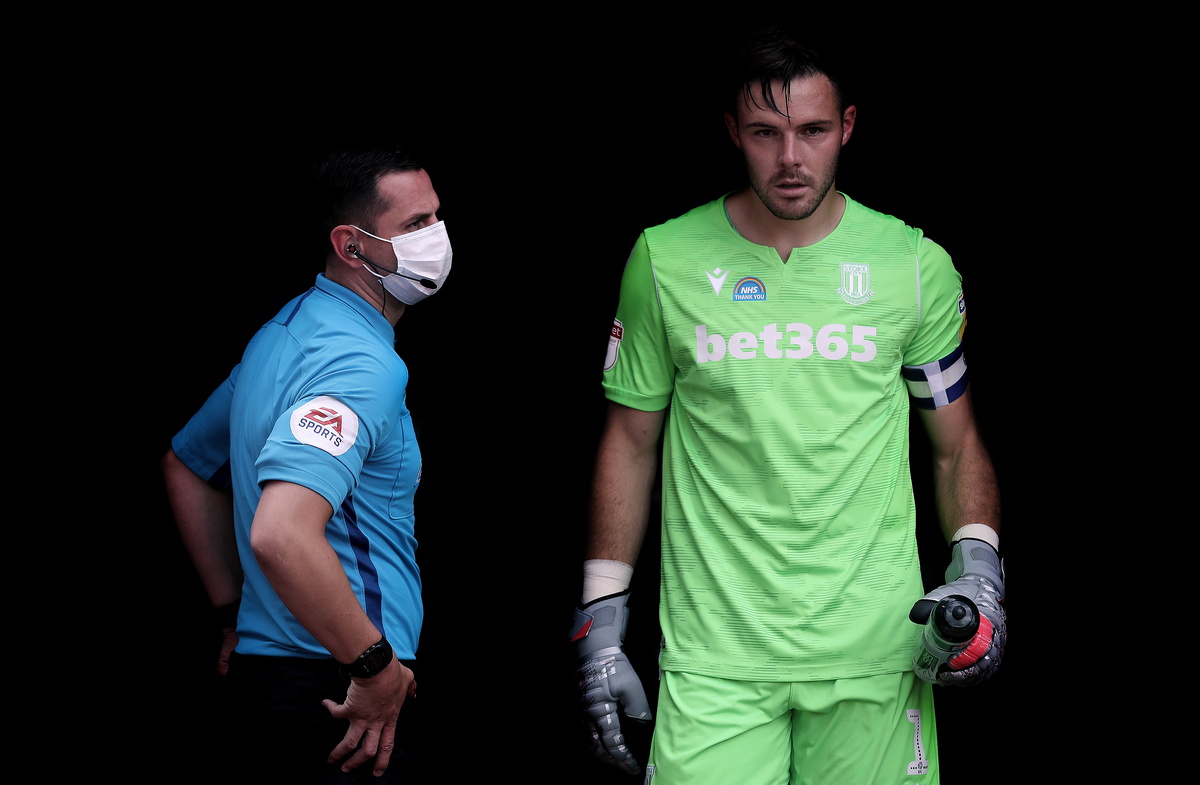
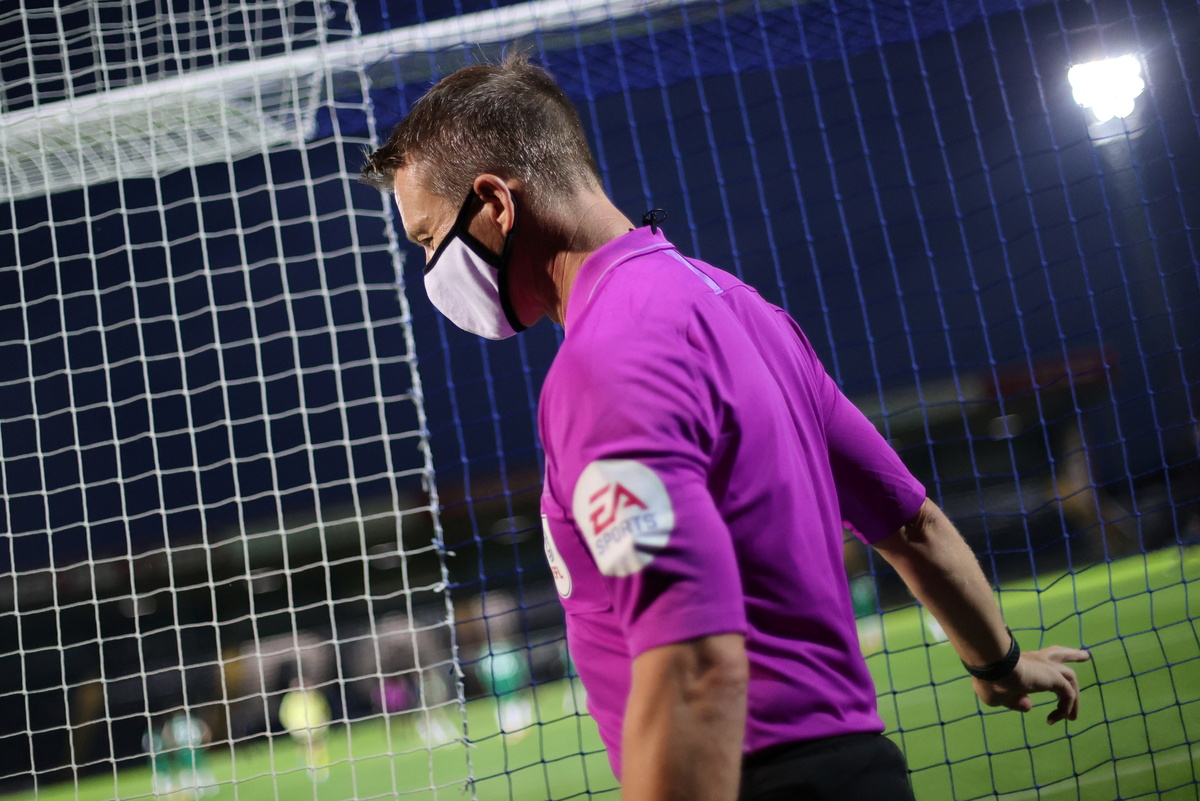
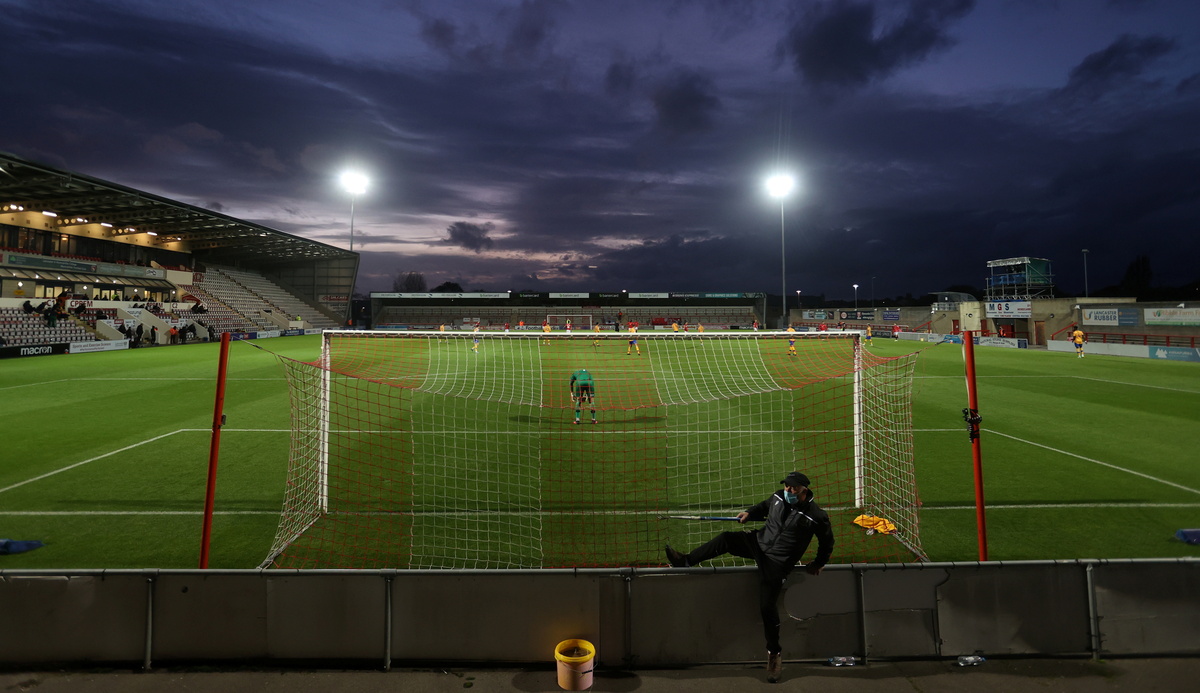
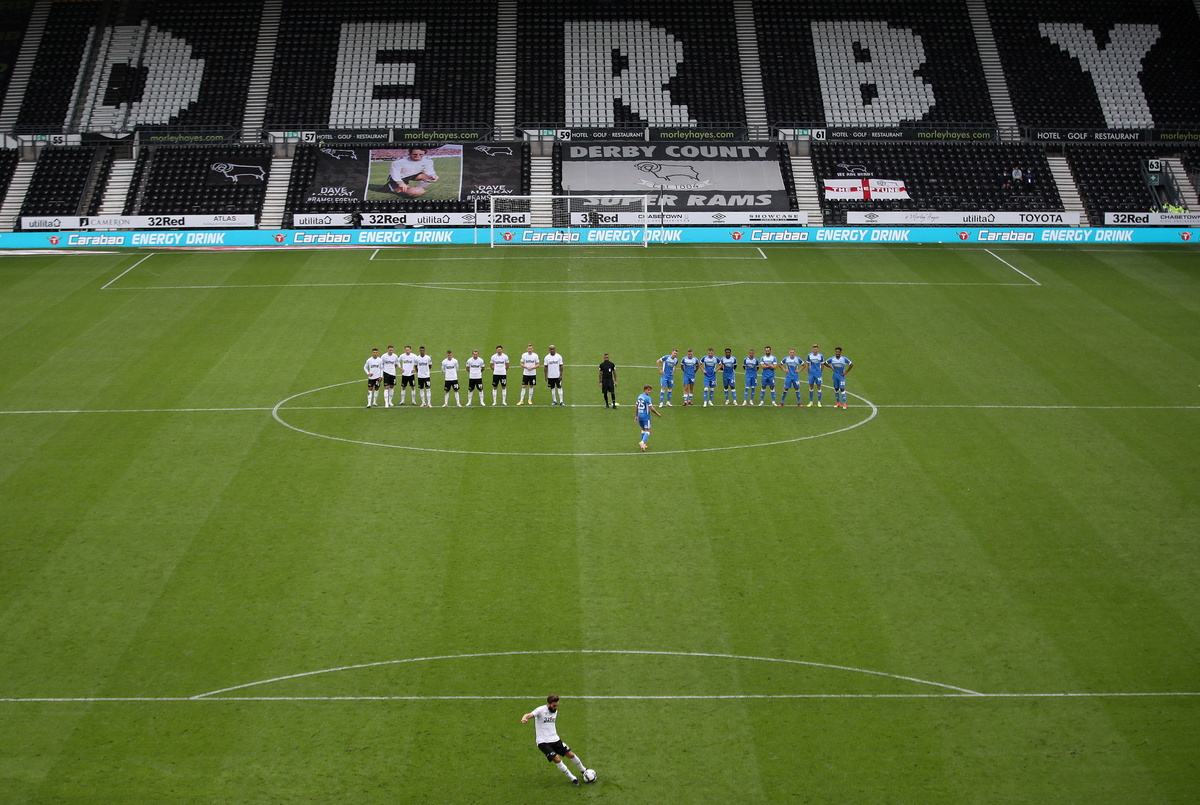
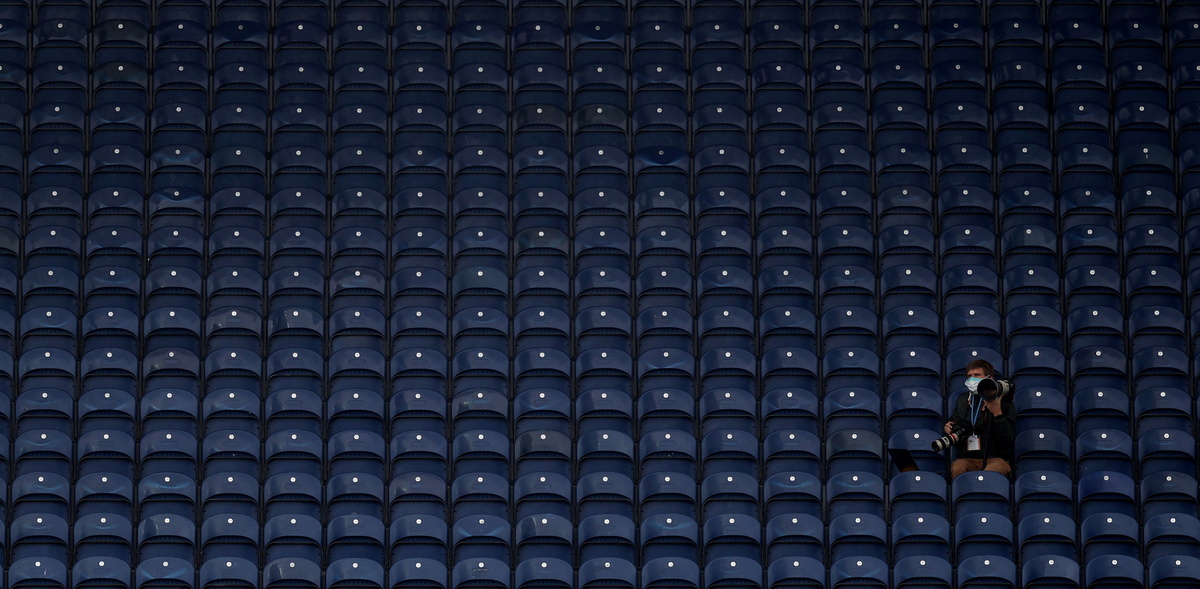
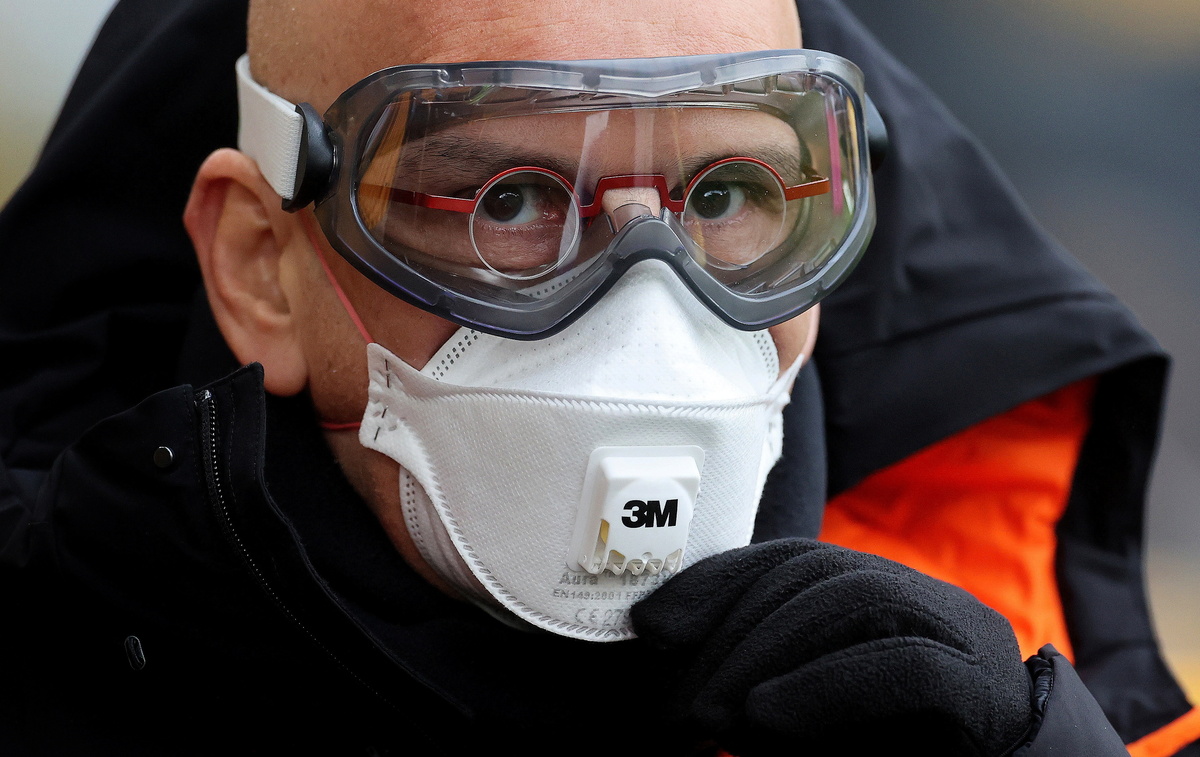
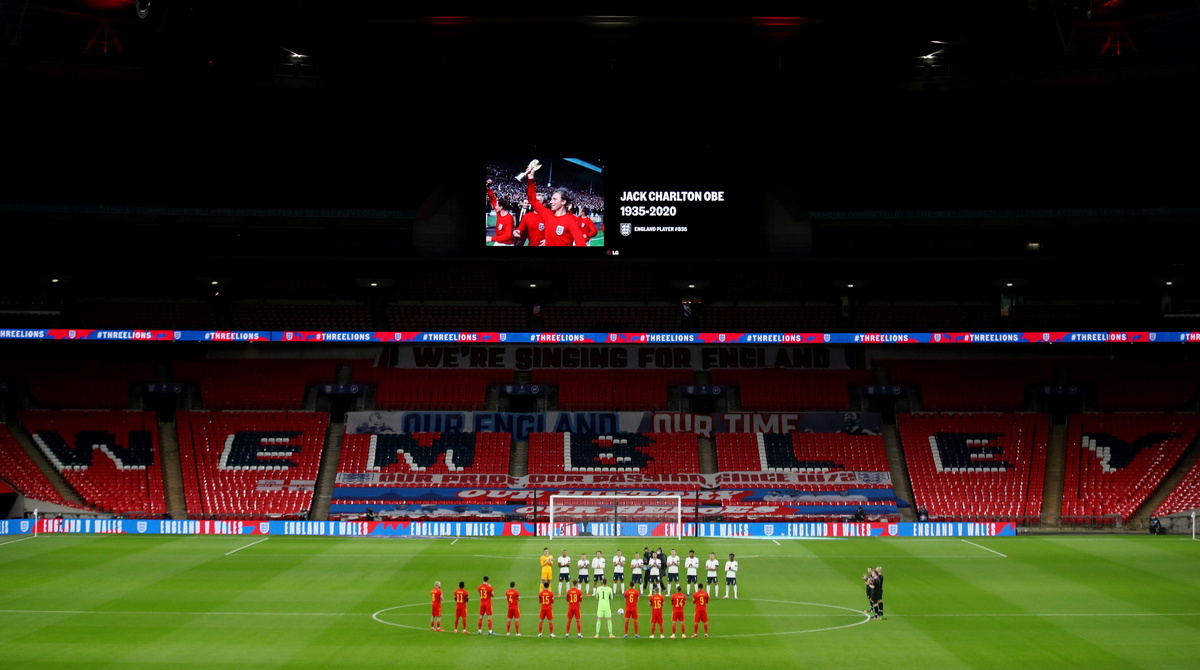
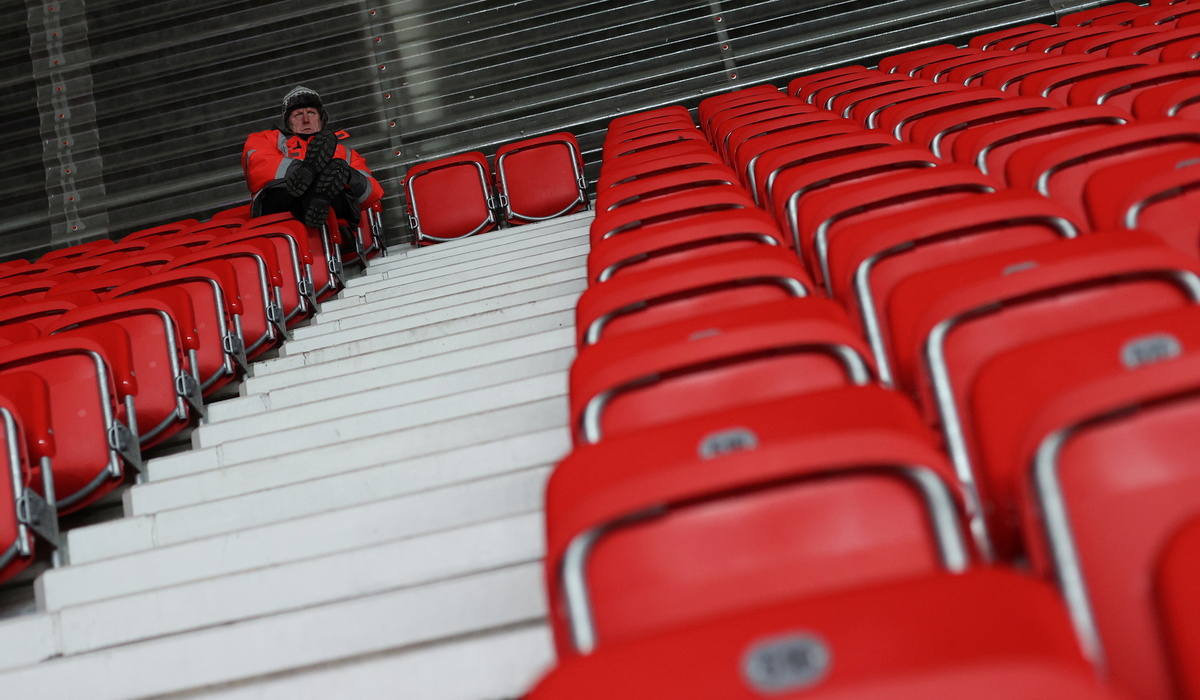
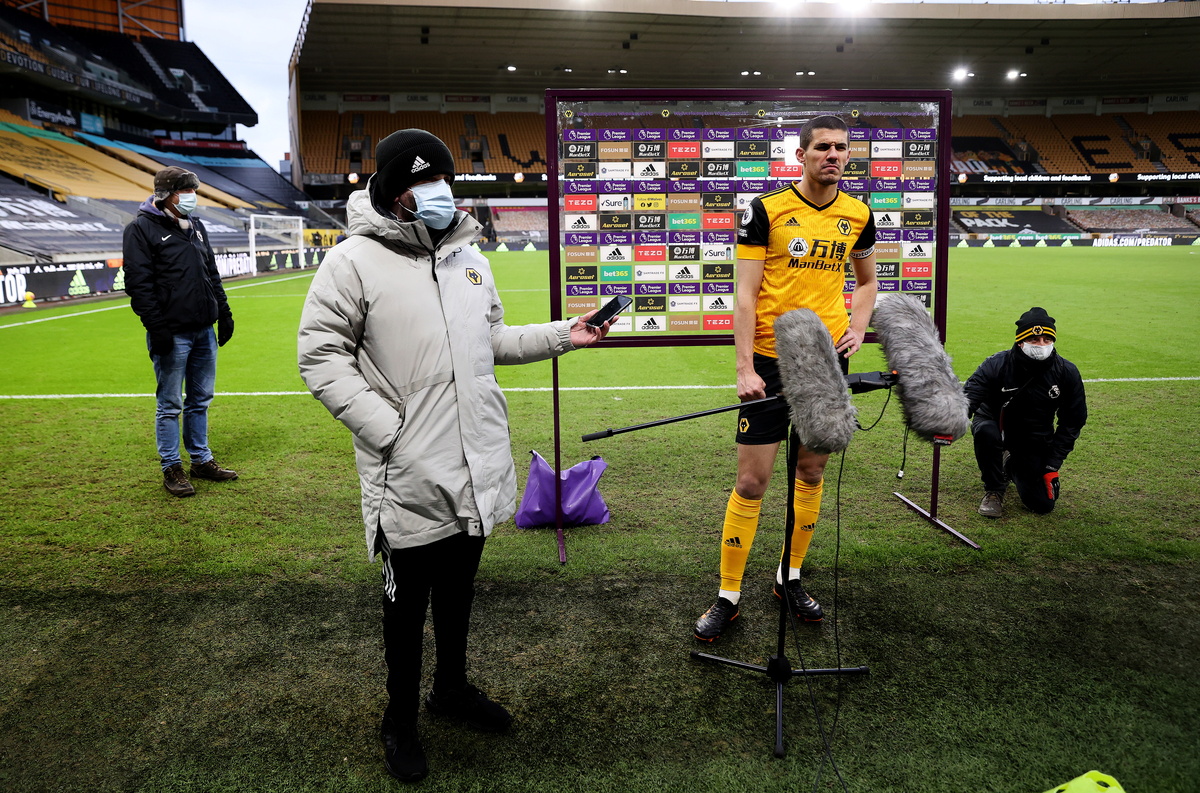
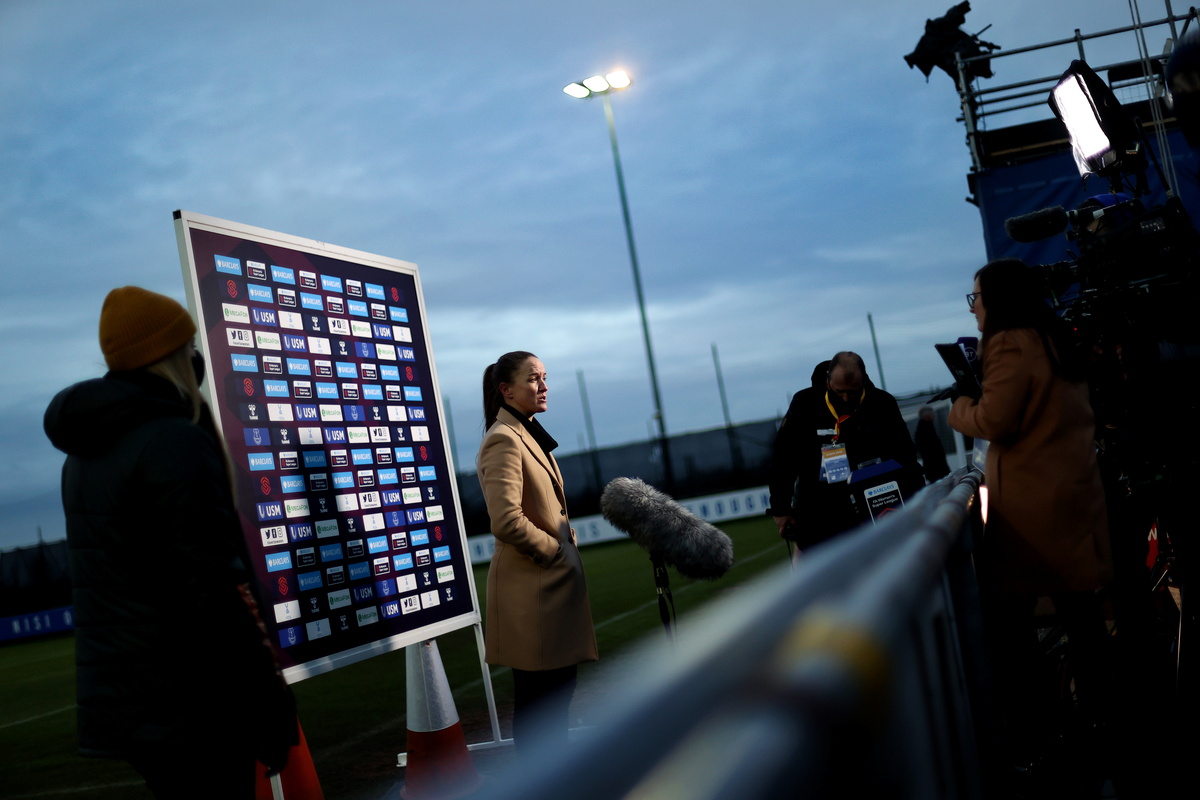
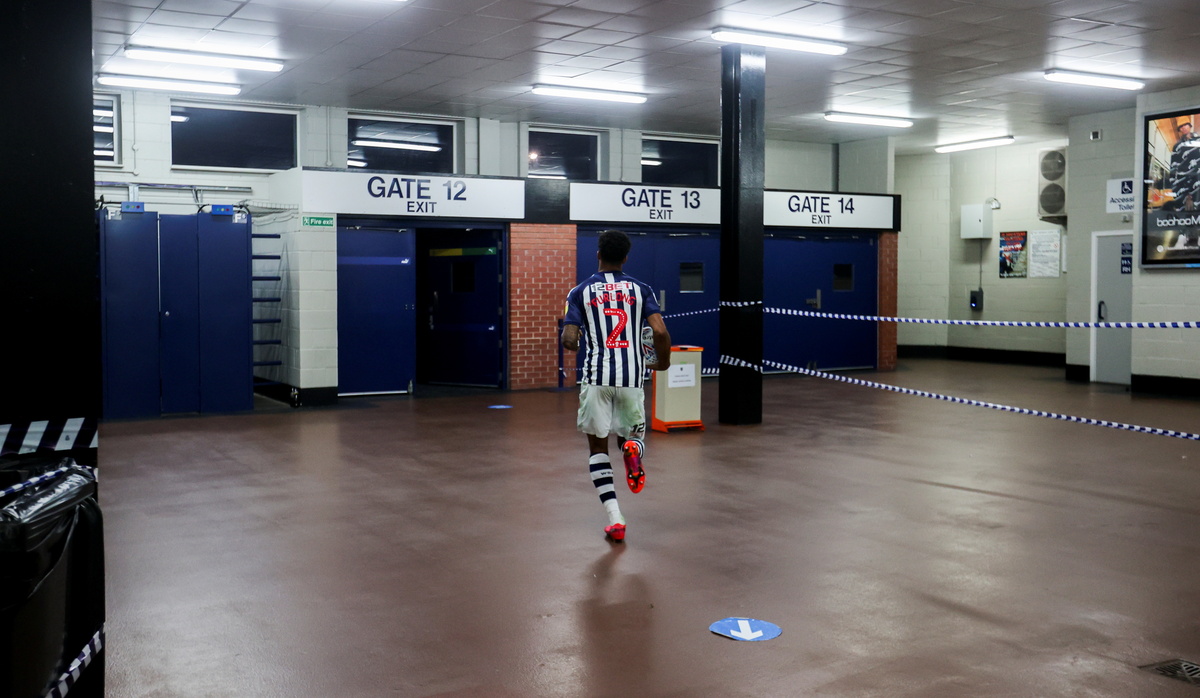
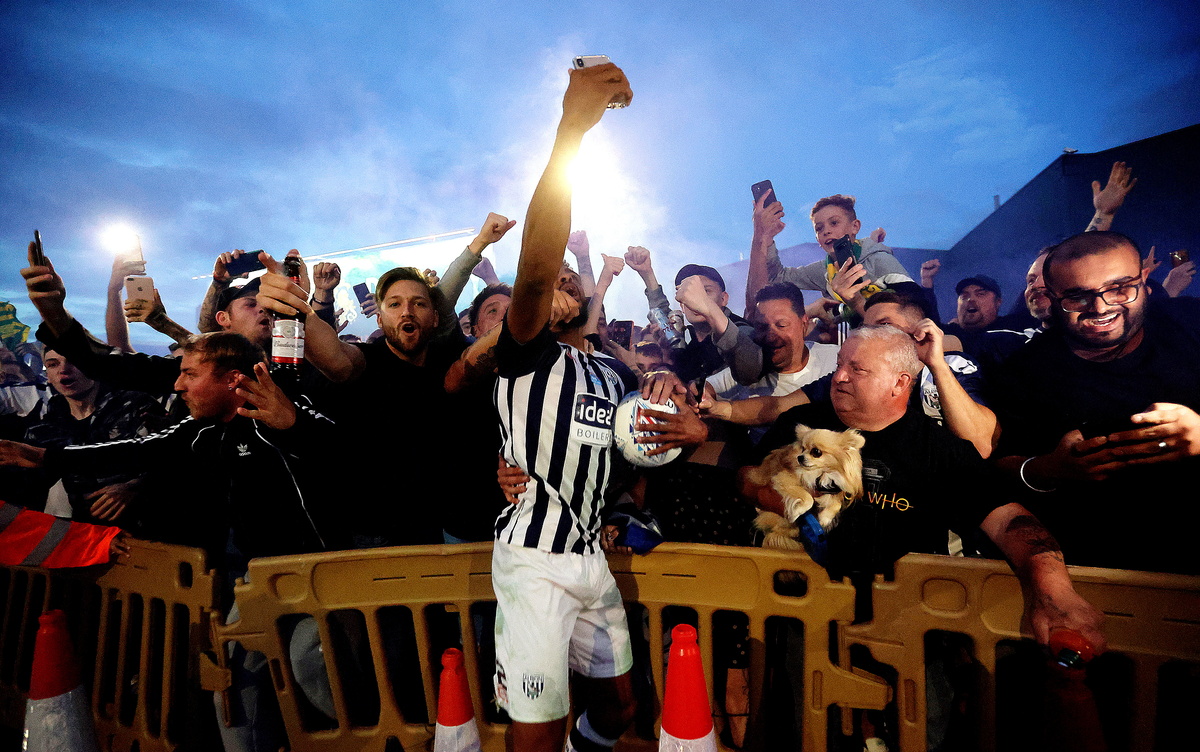
Huddersfield Towns ground staff mow the grass on the pitch after a Championship football match between Huddersfield Town and Stoke City at John Smith's Stadium, during the coronavirus disease (COVID-19) outbreak, in Huddersfield, Britain, January 30, 2021. REUTERS/Carl Recine The Soccer Bar is pictured empty as entertainment venues are forced to close due to government restrictions imposed during the coronavirus disease (COVID-19) outbreak, on the day of League Two football match between Barrow and Exeter City at Holker Street in Barrow-in-Furness, Britain, February 9, 2021. REUTERS/Carl Recine Swansea City manager Steve Cooper holds a press conference with the media in front of a concessions stand in a concourse underneath the main stand during the fourth round of a FA Cup football match between Swansea City and Nottingham Forest at Liberty Stadium, during the coronavirus disease (COVID-19) outbreak, in Swansea, Wales, Britain, January 23, 2021. REUTERS/Carl Recine A photographer fills in a heath questionnaire in order to be allowed access to the stadium on the day of a Championship football match between Blackburn Rovers and Watford at Ewood Park, during the coronavirus disease (COVID-19) outbreak, in Blackburn, Britain, February 24, 2021. REUTERS/Carl Recine A heath questionnaire, to gain access to a football match between Manchester City and Newcastle-under-Lyme, is completed on an iPhone, during the coronavirus disease (COVID-19) outbreak, in Staffordshire, Britain, January 16, 2021. REUTERS/Carl Recine Members of the media walk past a vaccine centre sign as they leave the stadium on the day of a Championship football match between Huddersfield Town and Stoke City at John Smith's Stadium, during the coronavirus disease (COVID-19) outbreak, in Huddersfield, Britain, January 30, 2021. REUTERS/Carl Recine The Exeter City football team get back on the bus to start their 330 mile trip back home as the football match between Barrow and Exeter City was postponed at Holker Street, during the coronavirus disease (COVID-19) outbreak, in Barrow-in-Furness, Britain, February 9, 2021. REUTERS/Carl Recine Social distancing markers are stuck on the floor in the men's toilets in preparation for when fans can return to football stadiums, on the day of a Championship football match between Derby County and AFC Bournemouth at Pride Park, during the coronavirus disease (COVID-19) outbreak, in Derby, Britain, January 19, 2021. REUTERS/Carl Recine Preston North End players walk out to the pitch after getting changed before a Championship football match between Birmingham City and Preston North End at St Andrew's, during the coronavirus disease (COVID-19) outbreak, in Birmingham, Britain, January 20, 2021. REUTERS/Carl Recine The assistant referee wears a protective face mask before walking to the pitch near Stoke City goalkeeper Jack Butland on the day of a Championship football match between Stoke City and Middlesbrough at the bet365 Stadium in Stoke-on-Trent, Britain, June 27, 2020. REUTERS/Carl Recine The assistant referee wears a protective face mask as he performs a final net check during the second round of a Carabao Cup football match between Rochdale and Sheffield Wednesday at The Crown Oil Arena, during the coronavirus disease (COVID-19) outbreak, in Rochdale, Britain, September 15, 2020. REUTERS/Carl Recine A member of ground staff jumps over the boards, after providing the finishing touches to the goal mouth, before a League Two football match between Morecambe and Mansfield Town at Mazuma Stadium, during the coronavirus disease (COVID-19) outbreak, in Morecambe, Britain, October 20, 2020. REUTERS/Carl Recine Derby County's Graeme Shinnie scores his penalty against Barrow in the shootout in an empty stadium as Derby progress to the next round of the Carabao Cup at the Pride Park stadium, during the coronavirus disease (COVID-19) outbreak, in Derby, Britain, September 5, 2020. REUTERS/Carl Recine A photographer sits in an empty stand during a Championship football match between Blackburn Rovers and Leeds United at Ewood Park, during the coronavirus disease (COVID-19) outbreak, in Blackburn, Britain, July 4, 2020. REUTERS/Carl Recine Cardboard cutouts of football fans are placed in stands as clubs try to increase revenue and add some atmosphere into the stadiums, on the day of a football match between Birmingham City and Watford at St Andrew's, during the coronavirus disease (COVID-19) outbreak, in Birmingham, Britain, December 12, 2020. REUTERS/Carl Recine A member of the Wolverhampton Wanderers Coaching staff wears a protective face mask and goggles on the day of a Premier League football match between Wolverhampton Wanderers and West Bromwich Albion at Molineux Stadium, during the coronavirus disease (COVID-19) outbreak, in Wolverhampton, Britain, January 16, 2021. REUTERS/Carl Recine England and Wales football players hold a minutes applause for the late World Cup winner Jack Charlton who passed away, as a mark of respect during an International Friendly football match between England and Wales at Wembley Stadium, during the coronavirus disease (COVID-19) outbreak, in London, Britain, October 8, 2020. REUTERS/Carl Recine A steward makes use of the spare seats as he puts his feet up while watching a football game between Stoke City and Watford at the bet365 Stadium, during the coronavirus disease (COVID-19) outbreak, in Stoke-on-Trent, Britain, January 22, 2021. REUTERS/Carl Recine Wolverhampton Wanderers captain Conor Coady gives his post match interview whilst everyone around him wears Personal Protective Equipment (PPE) on the day of a Premier League football match between Wolverhampton Wanderers and Leicester City at Molineux Stadium, during the coronavirus disease (COVID-19) outbreak, in Wolverhampton, Britain, February 7, 2021. REUTERS/Carl Recine Manchester United coach Casey Stoney takes part in a socially distanced interview after a Women's Super League football match between Everton and Manchester United at Walton Hall Park, during the coronavirus disease (COVID-19) outbreak, in Liverpool, Britain, January 31, 2021. Reuters/Carl Recine Darnell Furlong of West Bromwich Albion runs out of the stadium to the car park to celebrate promotion to the Premier League with the fans who had gathered there after Championship match between West Bromwich Albion and Queens Park Rangers in The Hawthorns, West Bromwich, Britain - July 22, 2020 REUTERS/Carl Recine Darnell Furlong of West Bromwich Albion celebrates promotion to the Premier League with the fans who had gathered outside of the stadium, after Championship match between West Bromwich Albion and Queens Park Rangers in The Hawthorns, West Bromwich, Britain July 22, 2020. REUTERS/Carl Recine
Sign up to read this article
Read news from 100’s of titles, curated specifically for you.