The end of the year is a time that always ushers in a lot of reflection. Some thoughtful self-reflection, and a whole lot of app-based reflection, looking back on exactly how many times you listened to a song, or how many kilometres you rode on your bike.
Whilst I can't share a full Cyclingnews Wrapped – although we published over 350 articles with 'Pogačar' in the headline – I have spent some time digging through all of the biggest stories per month of this year, to build a picture of how the 2025 season unfolded, and what the defining moments were.
These 12 headlines are from stories that really cut through the noise of the sport's endless news cycle, and really got the whole cycling world talking – in good ways and bad ones. From safety concerns to a body weight debate at the Tour de France Femmes, and from doping questions to gravel drama, 2025 really had it all.
Here are some of the Cyclingnews headlines that defined this season.
January: Wout van Aert calls for gear restrictions to reduce high-speed crashes
It's always enlightening to look back at stories from some time ago, as you often find that topics that were once just speculation or chatter actually ended up turning into material change (or at least, attempts at it), and this is what happened with this story.
Gear restrictions have been floated in the past, but Wout van Aert made a real statement as he came out in favour of them, as such a high-profile rider and one who was still recovering from a high-speed crash at the Vuelta a España.
The story clearly interested cycling fans, too, as thousands of you read this one, and the topic of gear restrictions ticked on through the season, with various people weighing in on whether it was a good idea or not.
The issue came to a head in the summer when the UCI announced their plans to run a gear restriction test, planned for the Tour of Guangxi. To say that the proposal was poorly received would be an understatement, as the test, which was only going to be that, a test, not a long-term implementation, became the topic of a legal case, with the Belgian Competition Authority ultimately ruling that the UCI were not allowed to run the test.
So the test didn't happen, and gear restriction remains an underexplored safety precaution, though the UCI might look at doing further tests. But whatever happens, this topic from the start of 2025 may well continue into 2026, too, as the sport continues its mission to be safer.
February: Chaos as peloton taken onto wrong side of race barriers on sprint finish at Volta ao Algarve
February was truly the month where everything went wrong, and more than one bike race descended into farce.
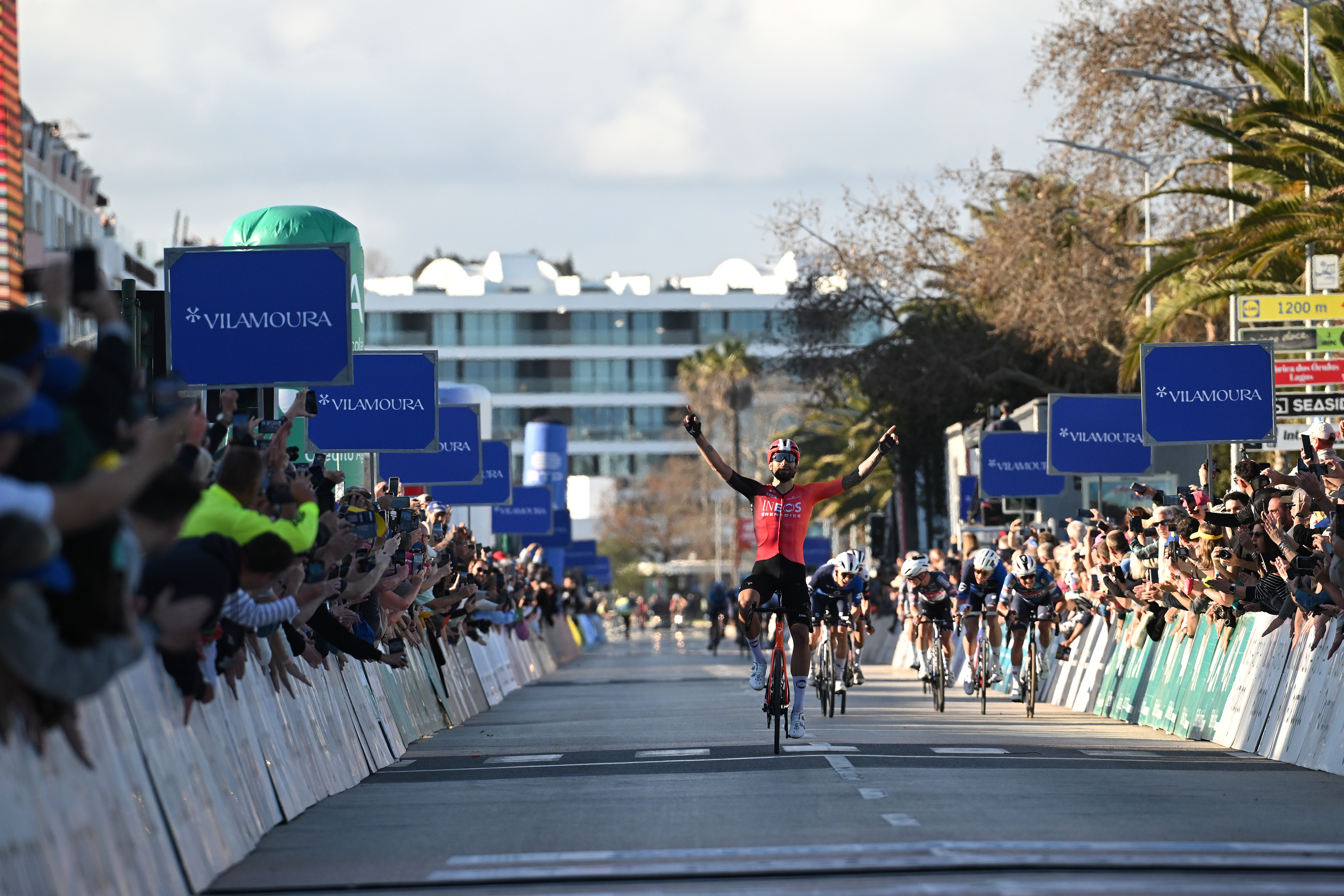
The one that stands out is stage 1 of the Volta ao Algarve, when the majority of the peloton took the wrong exit on a roundabout, and ended up sprinting along the open (to pedestrians) right-hand side of a wide road, whilst the finish line was on the left.
The whole situation was pretty dangerous, given that the spectators were on the outside of the barriers where the peloton came charging down on the wrong side, and there was clearly a lack of inattentiveness if the peloton was able to follow a moto down the diversion rather than towards the signposted right road.
Fortunately, there were no accidents, so the most unfortunate part of the day ended up being that Filippo Ganna, who went the right way and 'won', was not awarded the win as the whole stage was declared null and void. Sure, he may not have won if the whole peloton had been there, but maybe he deserved something for being one of only a few riders who were paying enough attention to go the right way.
Madly, the race chaos did not stop there, with an altogether more worrying situation unfolding at the Étoile des Bessèges in France, where several vehicles ended up on the race course, and led to multiple teams just up and leaving, quitting the race. You can totally understand why teams refuse to put their riders in danger if safety is not guaranteed – it was more surprising that some teams stayed and continued racing.
Safety was already a hot topic at the start of the year, but February offered a very stark reminder of the dangers and risks posed in pro cycling, and just how important it is that these things don't go wrong.
March: Sean Kelly says Tadej Pogačar would be crazy to ride Paris-Roubaix
I worked on many of these columns with Sean Kelly during the Spring, and as soon as I saw that he'd said Tadej Pogačar would be crazy if he raced Paris-Roubaix, I knew this column would be a winner, and it was.
What Kelly said was far from the most complex analysis, but it was straight to the point, and to be honest, very true. Even Pogačar's own team were telling the press that they thought it would be too big a risk for the Slovenian to line up on the cobbles, and open up a very big risk of crashing, getting injured, and jeopardising the rest of his season.
In a month which was full of Classics headlines and storylines, the topic of Pogačar riding Roubaix was one of the richest seams, precisely because, as Kelly said, it would be a fairly wild thing for the world's best Grand Tour rider to do.
The rumours that the Slovenian might ride Roubaix are still going around, especially after his win on the gravel on Saturday, but I think it’s a crazy idea at this point in his career. When he and the team were talking about it I just thought "what are they talking about here?"
Sean Kelly
The best bit, of course, is that Pogačar did ride Roubaix, and it was crazy – not because anything bad happened, but because he almost went and won the thing, on his very first attempt. Despite all the naysayers, despite the sensible choice of not riding it being right there. It said a lot about the man, and I think further endeared him to a lot of people. This is not a rider who is particularly keen on doing the normal or logical thing.
April: Massive solo attack lands Pauline Ferrand-Prévot stunning victory in debut at Paris-Roubaix Femmes
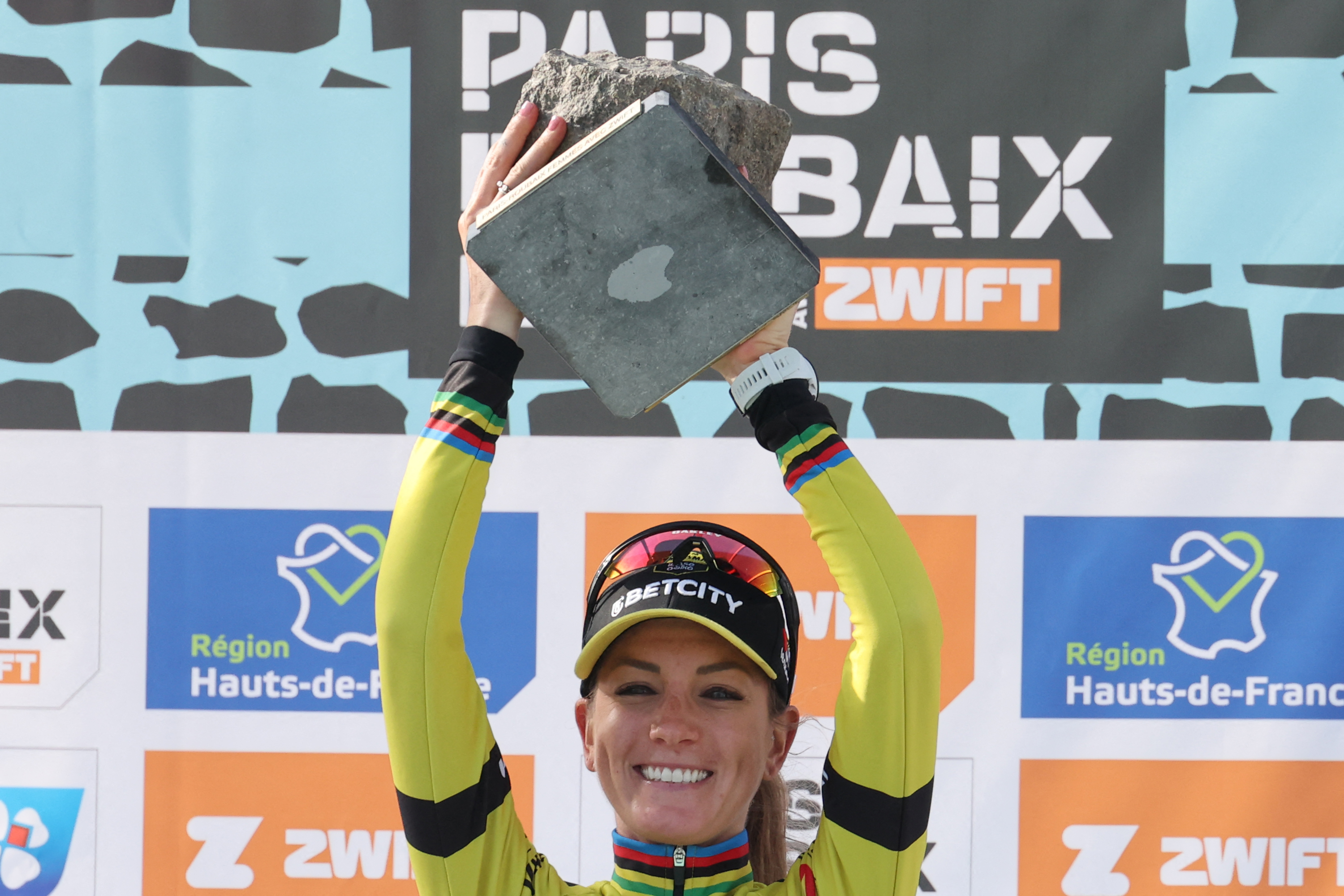
Paris-Roubaix always seems to be the biggest race in the month of April. It truly is the Queen of the Classics, one of the most unique races on the calendar, and often a real brute of a race.
We've already covered the defining element of the men's race – Pogačar's presence is probably more memorable than yet another win for Mathieu van der Poel – but the women's race on Saturday was just as thrilling.
As she's later revealed, Pauline Ferrand-Prévot wasn't even due to ride Roubaix, but asked to be put in because she was bored with training. Then, she woke up on the morning of the race sick and sat on the bus, hoping the team would just tell her to go home. She was cleared to race, though, and just a few hours later, she was standing atop the podium in the Roubaix velodrome, lifting a cobblestone trophy above her head.
The way Ferrand-Prévot was unusual, given that she was meant to be riding for Marianne Vos, and launched a move that just looked like it was setting something up for the Dutchwoman. But, weirdly, the peloton didn't react, and Ferrand-Prévot's gap got bigger and bigger until she was soloing to victory.
She had already shown her strength in races like Strade Bianche and the Tour of Flanders, but winning Roubaix was a genuine 'oh, she really is back' moment for the rider who hadn't raced a road season in years. Even in her post-race interview, she was already talking about winning the Tour de France Femmes, which still felt kind of wild at the time. If only we knew.
May: 'Sometimes you win, sometimes you lose' – Isaac del Toro defiant in Giro d'Italia defeat after tactical battle with Richard Carapaz goes askew
Even though Simon Yates won the Giro d'Italia (in a real fairytale way), it felt then and feels now that Isaac del Toro was really the story of that race. He broke through as a GC rider in a spectacular manner, ignited a leadership crisis at UAE Team Emirates-XRG that would result in Juan Ayuso's departure, and watched the chance of winning a Grand Tour ride away from him, all in the space of less than two weeks.
For any rider, doing that at the Giro would already make a remarkable year, but Del Toro went on to win 18 times across the season, including two GC titles and double national titles at the Mexican Championships, which hadn't taken place for years, and cycling in the nation has no doubt been reignited by Del Toro.
Simon Yates' redemptive victory was the emotional narrative of the moment, but the Giro will certainly be remembered as the start of Del Toro's story.
June: Tadej Pogačar wins stage 1 of the Critérium du Dauphiné as Jonas Vingegaard rips up the script
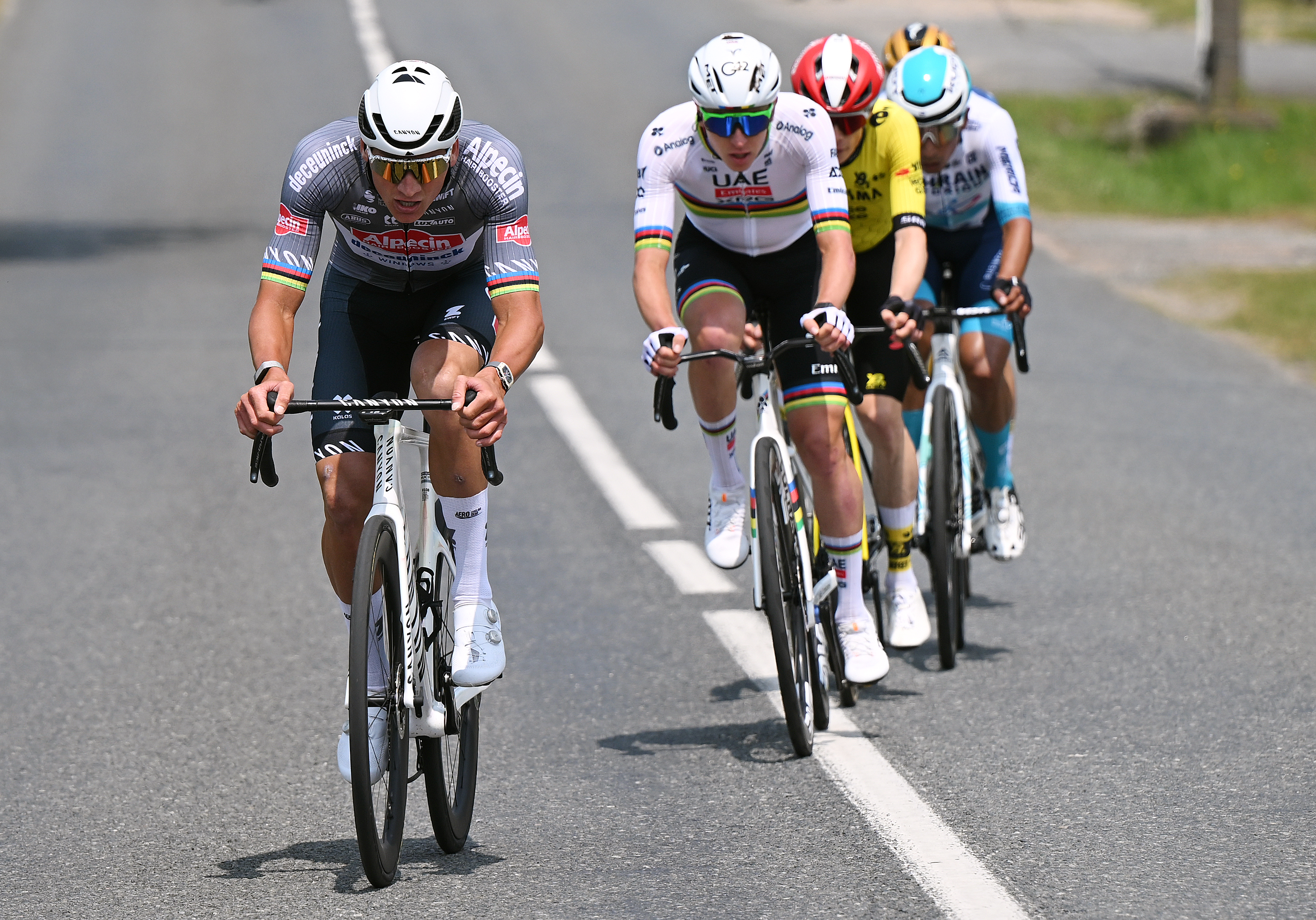
I think the opening day of the Dauphiné may go down as one of the most memorable race days of the whole year, because it was so unexpected. I remember I was on a bus at the time, not bothering to watch as it was surely just a sprint stage, and then scrambling to get the stage playing on my phone when I heard that the best riders in the world were on the attack.
On the first day of meeting in 2025, Pogačar and Vingegaard couldn't even wait a day before trading blows, with Vingegaard instigating a late-stage attack that saw him, Pogačar, Remco Evenepoel, Mathieu van der Poel and Santiago Buitrago get away in the finale of what was penned as a sprint stage. Seeing the top GC riders and the top Classics rider (and Santiago Buitrago, sorry to him) battling it out was so thrilling.
In the end, Pogačar's sprint got the better of Vingegaard, and no one actually gained any time as the peloton sped towards them on the line. However, it was a massive sign of intent from the Dane, and a signal that he wasn't going to just sit back and let Pogačar do his thing this year.
July: Thymen Arensman faces questions on reports of Ineos Grenadiers staff member doping link after Tour de France stage win
Just when you think we might finally have a Tour de France without a doping storyline, one comes out of the woodwork. This year, a story had been brewing since the Giro about how Ineos Grenadiers' head carer had been named in a court case surrounding Operation Aderlass, texting doping ring leader Mark Schmidt in 2012. Although it was over a decade ago, the fact that this person was now a senior figure on the team and working at the Tour made it a noteworthy story.
Whilst stories about Pogačar's wins and Jonas Vingegaard's losses dominated our site – as they had the year before – the topic of doping, albeit historic, still cut through, playing out via an awkward press conference after Thymen Arensman had won stage 14.
I have no idea about this. You'd have to ask the management to be honest. I'm just focused on my job and doing my own thing, so I don't really know, to be honest. You'd have to ask about the management; they are there for it.
Thymen Arensman, Ineos Grenadiers
I remember this press conference well, sitting in an event space in Bagnères-de-Luchon. An ASO staffer came up to the journalists waiting for Arensman to appear via video link to tell us that we were only allowed to ask racing-related questions – a request none of us had ever heard in a race press conference, neither before nor since, where the race organisers don't generally try to do teams' PR. Apparently, the request had come from the team, who later said it was because they didn't want questions about another incident that day, in which an Ineos car hit a spectator, but I'm still not clear on exactly why or how the request was made.
Anyway, it didn't work, as two of the four questions asked did end up being about the team staff member in question (with names taken of the journalists who asked, again not something I've ever seen before). Fairly, Arensman said he had nothing to say and knew nothing about the situation, and honestly, it was awkward and a shame that the biggest win of his career was followed by that. But it was meant to be difficult. No one thought Arensman was going to lift the lid on a scandal, but the press had to put pressure on Ineos to face up to questions themselves, and not let this happen to their riders again.
Did the pressure result in a better response from Ineos? The truth is it didn't really, and they remain to this day very closed to any questions about the topic. But that day, and this headline, underlined that the press weren't going to let it go.
August: 'I make every decision in my career by putting my health first' – Demi Vollering speaks out on rider weight issue after Tour de France Femmes
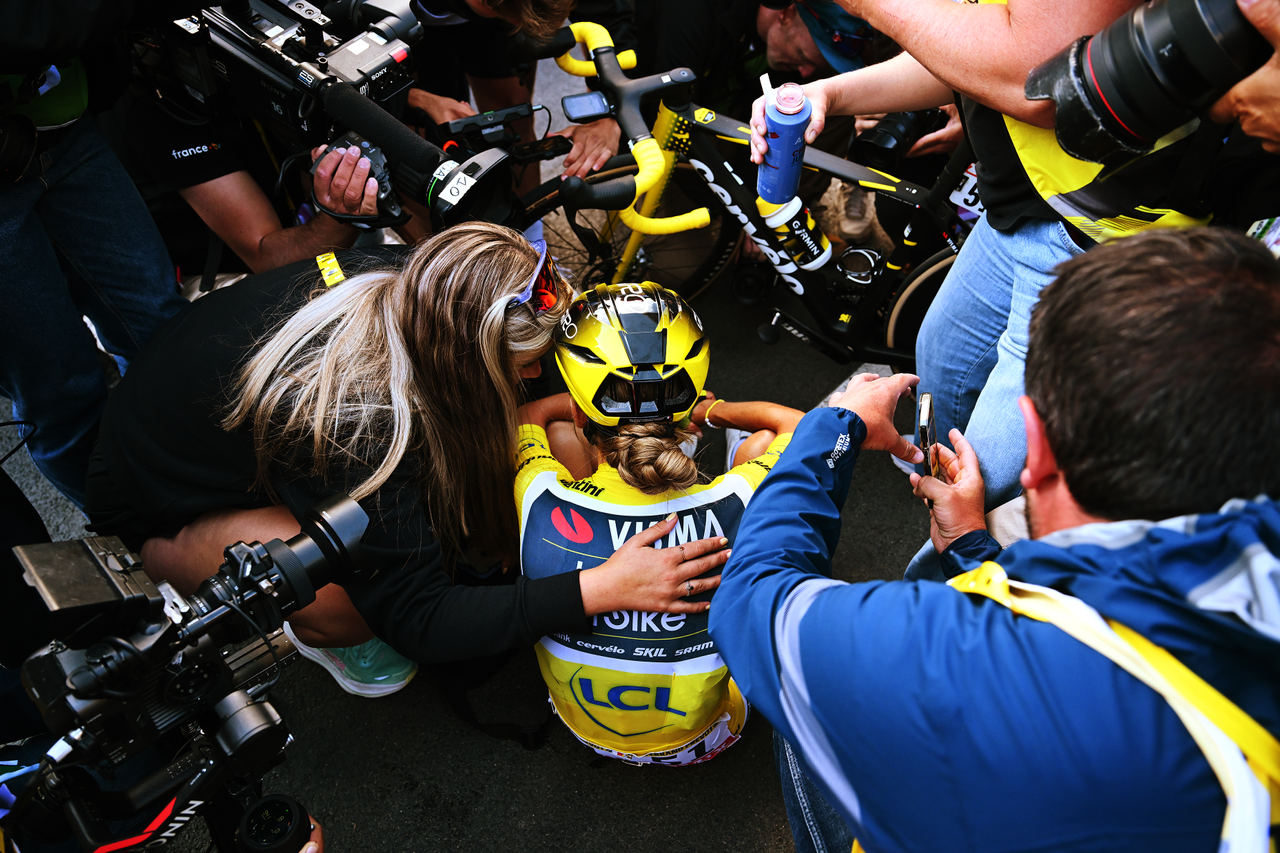
The biggest race of August was, of course, the Tour de France Femmes. Whilst much of the attention focused on Pauline Ferrand-Prévot's spectacular, nation-inspiring victory, including winning the final stage, solo, in the yellow jersey, it was a different topic that cut through and repeatedly made headlines.
This was the topic of weight – losing it, being lighter or heavier, what each rider thought about other riders' weights, what everyone thought about riders being asked about this. A small topic seemed to snowball and dominated the headlines with all different angles and views cropping up in the days that followed.
The fact that riders were even asked about this divided opinions. For some, asking women about their bodies and weight felt reductive, sexist even, reverting to lazy tropes when a woman has just done something incredible. But on the other side of that argument, weight is not entirely irrelevant when it comes to cycling. When watts per kilo can be the difference between winning and losing, weight is an aspect of performance, and Ferrand-Prévot would be the first to say that losing weight was a specific, planned part of her preparation, and part of why she won.
I think the pushback more came from the fact that it suddenly felt like the whole narrative was dominated by this one topic in the days following the race, rather than discussions about, say, tactics or race craft.
Perhaps the topic could have been handled with more sensitivity and not treated like a tabloid headline, as it was in places. We tried to be careful and balanced in our coverage, not to reduce the world's best athletes to their bodies, but to highlight the conversation.
September: 'Without a name change, without a flag change, we won't continue' - Israel-Premier Tech bike sponsor Factor pushes team owner to disassociate with Israel
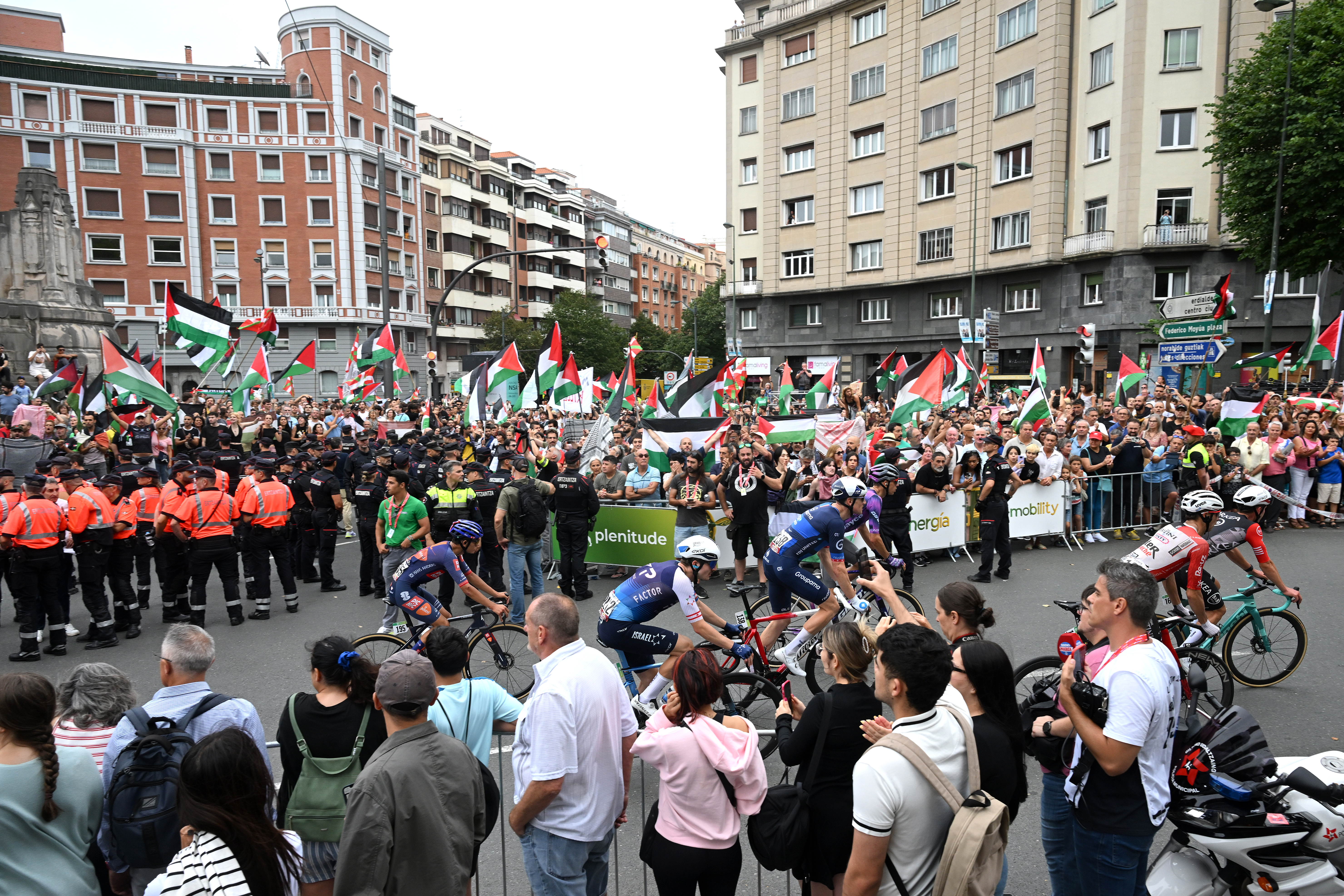
August and September were heavily defined by the dramatic, disruptive protests at the Vuelta a España, which will probably stick in many minds for much longer than Jonas Vingegaard's victory, particularly as he was crowned champion in a random car park rather than on the Madrid podium.
We wrote about those protests and their fallout almost every day during the race, it felt like, but it turned out that the protests were only just the beginning, and the impact would continue to unravel for weeks.
Despite affirming during the Vuelta that they weren't going to bow under the weight of the protests and give in to those who disagree with Israel's presence in the sport, the team then faced pressure much closer to home, as bike sponsor Factor threatened to pull out without a rebrand.
As it unfurled, Factor did pull out, even though IPT did follow through with a rebrand, as title sponsor Premier Tech also deemed that their relationship had become "untenable", no doubt because of the association with Israel and the ensuing protests.
During the Vuelta, many commentators and pundits were of the belief that protests would do little but cause inconvenience to a bike race, but in the weeks following the race, it became very clear that the protests were working. Wherever brands stand on the actual issue at hand, few desire to be linked with a team with an increasingly negative association.
October: Shirin van Anrooij feels 'my chance at the world title was taken away' as another Dutch rider helped close her solo lead at Gravel World Championships
Every year, the UCI Gravel World Championships grow in stature, and this year, a healthy dose of drama made the event the talk of the town for several days. The debate kicked off because, in the closing kilometres of the women's title race, Shirin van Anrooij looked to be on her way to a rainbow title, as she soloed to the finish.
But instead, she was denied the win, beaten by her own teammate Lorena Wiebes, after another one of her teammates, Yara Kastelijn, had done a big turn to close the gap to Van Anrooij. In the end, Van Anrooij didn't even medal.
This probably would have been a big story either way, but it really blew up as Van Anrooij didn't mince her words about the incident, saying she thought the world title was taken away from her. Kastelijn weighed in soon after, saying she'd regretted what she did and had apologised.
The story really took off because it raised so many points for discussion. First being this repeated theme of the Dutch women's team often not quite being able to work together as a team – probably because they have almost all of the peloton's best riders in their number – so it was an incident that felt like one of many.
Secondly, it raised the question of whether teamwork should even be a thing in gravel. It largely isn't, but nations do line up as teams at Worlds – albeit the Netherlands had nearly 30 riders and other nations only one, so it's not standardised like it is in a road race. Should the other Dutch riders have 'let' Van Anrooij win as a Dutch win is a Dutch win, or were they all racing for themselves? No one could decide on that.
November: 'We even considered him abandoning the race' – Tim Wellens reveals how close Tadej Pogačar was to missing out on fourth Tour de France victory due to knee injury
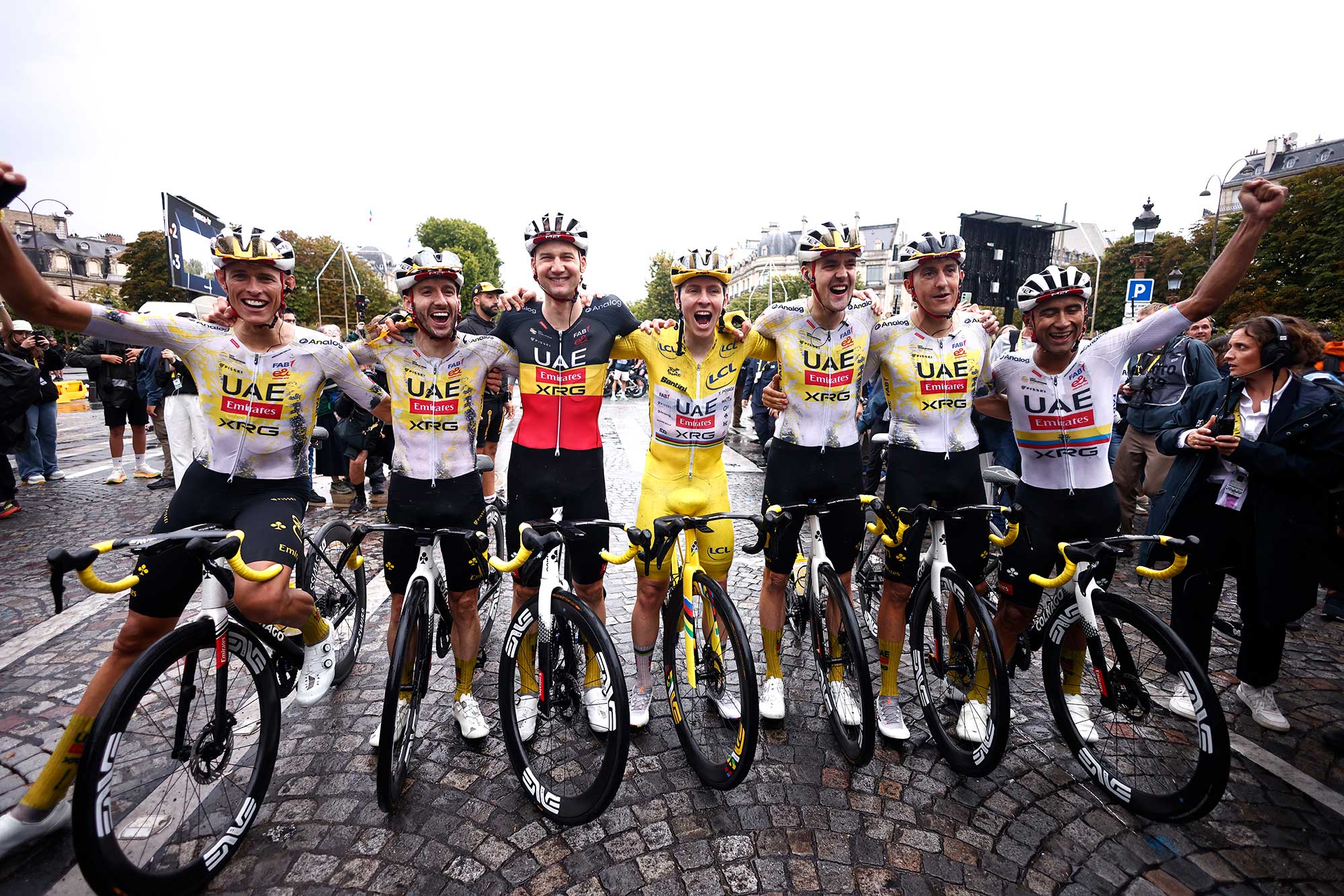
Even though we cover hundreds of stories during the season, it can take a while for all the storylines to actually play out, and it's not unusual to get to the winter, and we find out something that we didn't know about during the summer, and that's what happened here.
All through the final week of the Tour de France, the question among us journalists on the ground and the fans at home was 'what is wrong with Pogačar?' He just wasn't being his usual self, not going on big bold attacks, coming to the press conferences moody and ready to leave, talking about how tired he was. Was he just finally getting bored with the Tour, or was something going on behind the scenes?
We couldn't quite get to the bottom of it at the time – UAE Team Emirates-XRG must have felt relieved that it didn't leak out – but in November, the truth came out that Pogačar had been struggling with a knee injury and came close to dropping out of the race. It explained a lot, and obviously we had suspected something at the time, but it was still a pretty big revelation, and one that surprised us – and you readers too, judging by how many of you wanted to read about it.
He was in a lot of pain, we had doubts about his ability to finish. We even considered him abandoning the race. On the team bus, we could see his body wasn't well, he was all fluid, he'd gained weight.
Tim Wellens
It was a big reminder that Pogačar is fallible, and his dominance is at risk of injury, because he's only human. Perhaps we shouldn't just take his wins as so predetermined.
This story also made us, as journalists, ask questions of ourselves. There was once a time when the Tour press corps was so big that a rider could not slip off to the hospital without someone seeing, but resources and strategy mean that none of us were stationed at the UAE hotel during this Tour.
But were we perhaps not asking the right questions, not digging deep enough in the final week? Or is it just that teams are better at keeping secrets now, and we're less inclined to be doorstepping riders? I thought it raised an interesting debate, and I'm not quite sure where my view lies.
December: Oscar Onley signs for Ineos Grenadiers, cutting short Picnic-PostNL contract after Tour de France breakthrough
Oscar Onley was undoubtedly the storyline of the month in December, through mounting speculation to his eventual confirmed move to Ineos Grenadiers.
After much chatter over the off-season, my colleague Simone Giuliani went to the horse's mouth at the start of December, speaking to Onley at the Tour of Bright, where he was remarkably open. "It's still things up in the air a little bit," he told us.
"It's quite obvious that there's going to be interest in me after coming fourth in the Tour, and there's been, I think, probably 15 teams that have reached out to my manager or reached out to the team directly. And you know … you also have to capitalise on what I've done this year, but, yeah, I can't really say so much just now."
Things almost certainly were still up in the air at that point, as we understand that negotiations between Picnic-PostNL and Ineos to buy out Onley's contract took some time, but eventually the details were hammered out – with several millions of Euros changing hands – and the move was completed just two days before Christmas.
Though Onley's move was unique in being so late (though Derek Gee could still trump him with an even later move, possibly to Lidl-Trek), the notion of riders moving mid-contract has gone from a rarity to almost a given for top riders. Onley is at least the sixth major rider to do it this year alone, following Remco Evenepoel, Juan Ayuso, Cian Uijtdebroeks, Nienke Vinke and Charlotte Kool.
Each year, more and more of these moves are happening, and partly that's because the UCI regulated and formalised the process. But the very fact of their becoming more common clearly shows a problem. Teams are increasingly trying to lock riders into long-term contracts, as it helps with things like securing sponsorship, but the piece of paper is becoming meaningless as riders can get out of contracts for the right price, meaning deals are more and more one-sided, and provide stability for no one.
There's also the issue of smaller, development-focused teams constantly having their riders poached, like in the case of Onley. Of course, Picnic will receive a lump sum for their efforts in kickstarting his career, but the buy-out fee is not especially regulated, and teams have lost strong riders for a lot less.
If cycling is to become about contract wars and huge wages, like football is in Europe, maybe it's time to move away from traditions and also adopt football's contract model, where fees are big, and there are rewards for developing talent.