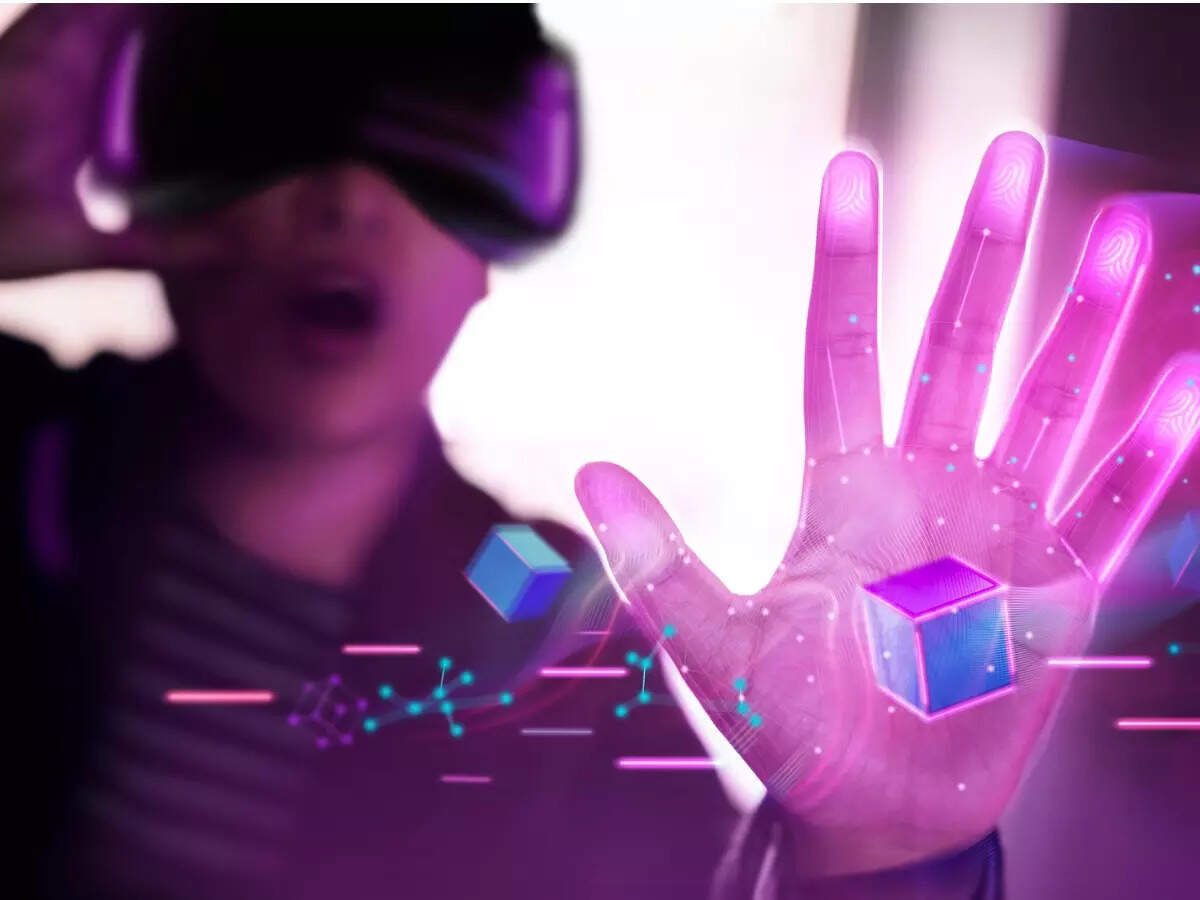
"A virtual-reality space in which users can interact with a computer-generated environment and other users is metaverse," defines Oxford Language dictionary.
"The “metaverse” is a set of virtual spaces where you can create and explore with other people who aren’t in the same physical space as you," says social media giant Facebook which recently rebranded itself as Meta and in a way started the buzz around metaverse.
This digital space is gradually becoming "a new reality" for the present generation of kids.
Kids these days prefer having a birthday party on metaverse where they can play and hangout with their friends in virtual avatars. Instead of having a small cozy party in the living room with cakes and chips, the inclination has shifted towards virtual celebrations, thus making it the new reality. Marriages have also been solemnised in metaverses!
While many see it as a better alternative to the physical world, many others, psychologists, especially see it as a trouble.
What is metaverse? Is it a new concept that you don't know?
If you ask anyone about metaverse, the most common response would be "it is related to online games", "online virtual world", "3D world". In order to understand the concept behind the metaverse and the craze for it, we need to observe and understand everything going around us.
For many of us, it is a new concept and is difficult to understand. Maybe that's what is generating more curiosity about it.
"You’ll be able to hang out with friends, work, play, learn, shop, create and more. It’s not necessarily about spending more time online — it’s about making the time you do spend online more meaningful," says Facebook about metaverse.
The word metaverse was first used in Neal Stephenson’s 1992 dystopic, cyberpunk novel Snow Crash. It is a portmanteau of the words meta and universe.
Virtual reality is as much a blessing as a curse to humanity. Virtual developers are trying to connect to every aspect of human being's real world. Be it human interaction, marketing, education, virtual reality is migrating into everything.
The Internet has made our lives easier. Today no one can think about staying off the internet. From booking a cab to getting suggestions on what movies you would like to watch further, the internet has interwoven human intelligence with human dependency and necessity.
The young generation is quick in grasping new things, and technology attracts them the most.
A research study carried by Pew Research Center in 2018 says that, "young people believe social media helps teens become more civically minded and exposes them to greater diversity – either through the people they interact with or the viewpoints they come across." The study found that 81% of the participants feel social media connects them to what’s going on in their friends’ lives, while around two-thirds say these platforms make them feel as if they have people who will support them through tough times.
It won't be wrong to say that mankind survived the global COVID pandemic without disrupting economic and social activities only because of the internet.
An evolution in the internet, widening the ambit of the virtual world, is definitely a blessing.
"Even if the Metaverse falls short of the fantastical visions captured by science fiction authors, it is likely to produce trillions in value as a new computing platform or content medium. But in its full vision, the Metaverse becomes the gateway to most digital experiences, a key component of all physical ones, and the next great labor platform," says Matthew Ball, the Managing Partner of EpyllionCo.
Why are psychologists worried about its impact on mental health?
"It was surreal. It was a nightmare," says 43 year old Nina Jane Patel recounting how she was verbally and sexually harassed on VR platform Horizon Worlds, created by Meta, or formerly known as Facebook in December 2021.
"Within 60 seconds of joining — I was verbally and sexually harassed — 3–4 male avatars, with male voices, essentially, but virtually gang raped my avatar and took photos — as I tried to get away they yelled — “don’t pretend you didn’t love it” and “go rub yourself off to the photo”," she wrote about the horrific incident on Medium. “Virtual reality has essentially been designed so the mind and body can’t differentiate virtual/ digital experiences from real,” she says.
Also Read: Feeling socially nervous about going out?
Psychologists consider metaverse to be worse than social media.
"Today’s social media platforms are already dangerous for some kids and teens. Virtual reality’s level of immersion could make those problems even worse," Albert “Skip” Rizzo, a psychologist who serves as the director for medical virtual reality at USC’s Institute for Creative Technologies, told CNBC.
In September 2021, a Wall Street Journal report cited studies of Facebook over the past three years and revealed how Instagram affects its young user base. The study said 32% of teenage girls had revealed that Instagram made them feel worse about their body images. As per reports, over 40% of Instagram users are below 22 years old.
Also Read: The 2-minute mental health workout to increase your productivity
The virtual avatars on metaverses can be modified as per the likeness of the individual and psychologists say this is a serious concern and can give rise to body image concerns among teens. "The use of 3D digital avatars in the metaverse carries another problem, too: Being able to modify your likeness to project a version of yourself that differs from real life can be “pretty dangerous for adolescents, in particular,” says Mitch Prinstein, Chief Scientific Officer, American Psychological Association.
The psychologists say the idea of having a virtual fictional identity can mess up with a person's identity and there can be situations where a person may find it difficult to accept his or her real identity and individuality.