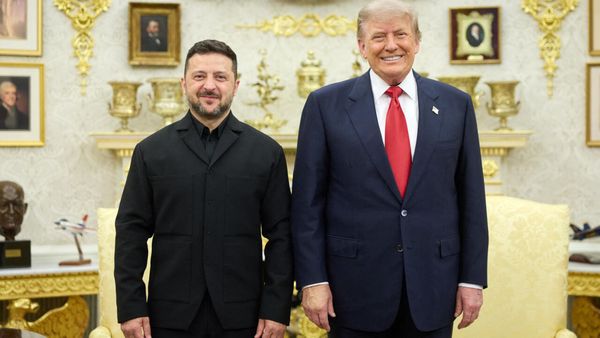

In a post on Truth Social, Trump made a striking statement suggesting catastrophic consequences.
“A whole civilization will die tonight, never to be brought back again. I don’t want that to happen, but it probably will,” he wrote. The remarks came hours before a deadline set by Trump for Iran to reopen the Strait of Hormuz or face widespread destruction of its infrastructure. Fresh Wave of Strikes Hits Critical Infrastructure
The latest coordinated strikes by US and Israeli forces focused on vital infrastructure, including energy facilities and transportation networks. Among the most significant targets was Kharg Island, a crucial oil hub in the Persian Gulf that handles nearly 90% of Iran’s oil exports, making it central to the country’s economy.
Additional targets included bridges, highways, and residential areas.
A rail bridge in Kashan was struck, reportedly killing two people.
Another bridge near Qom, south of Tehran, was also hit.
A key northern highway was forced to shut down following damage from strikes.
In Shahriar city, an explosive projectile struck a residential building, killing at least nine people and injuring fifteen others.
Following the attacks, the Israeli military confirmed it had completed this wave of strikes on Iranian infrastructure. Deadlines, Delays, and Rising Tensions
The escalation follows a series of shifting deadlines issued by Trump, who had repeatedly warned of military action if Iran refused to comply with US demands.
An earlier deadline set for March 23 was postponed multiple times, with Trump alternating between threats, extensions, and claims of ongoing negotiations. The final deadline was extended to Tuesday, set to expire at 5:30 am IST on April 8. Trump had earlier warned of severe consequences, stating:
“They’ll have no bridges. They’ll have no power plants. They’ll have no anything.”
Iran Rejects Ultimatum, Prepares Response
Iran has firmly rejected the US ultimatum, demanding guarantees and compensation for wartime losses as conditions for any potential ceasefire or negotiations. In response to the strikes, Iran’s Islamic Revolutionary Guard Corps (IRGC) issued a strong warning, stating that any crossing of its “red lines” would result in consequences extending beyond the region.
“Our response will go beyond the region,” the IRGC said. Iran has also reportedly suspended all diplomatic channels and indirect talks following the escalation.
Public Mobilization and Political Messaging
Amid rising tensions, Iranian authorities have called for civilian mobilization. Reports indicate that citizens were urged to form human chains to protect critical infrastructure such as power plants. Iranian President Masoud Pezeshkian stated that over 14 million citizens have registered their willingness to defend the nation.
“More than 14 million proud Iranians have so far registered to sacrifice their lives to defend Iran,” he said, reaffirming his own commitment to the country. Meanwhile, Iran’s embassy in Saudi Arabia sharply criticized Trump’s remarks, warning that the US and its allies would face “an unforgettable hit from the ancient civilization of Iran.”
A Critical Moment in Global Politics
Trump framed the situation as a निर्णायक turning point in global history, suggesting the possibility of “complete and total regime change” in Iran. “We will find out tonight, one of the most important moments in the long and complex history of the world,” he wrote. As tensions peak and military actions intensify, the unfolding situation marks one of the most serious confrontations between the US, Israel, and Iran in recent years, with potentially far-reaching consequences for the region and the world.