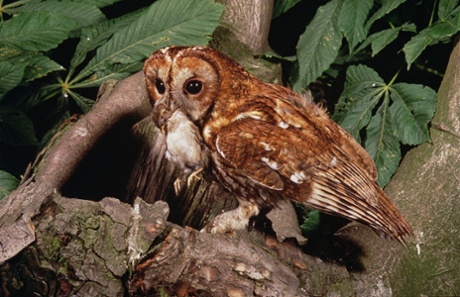
In 1965, Nigel Sitwell, editor of Animals magazine (which became BBC Wildlife Magazine), had an idea: why not encourage the new enthusiasm for wildlife photography by holding a competition? The time was right: the work of wildlife pioneers such as Sir Peter Scott and the growth in natural history broadcasting by the BBC had meant a newfound public curiosity about the natural world.
Sitwell’s aims were simple and remain true today: the competition should “encourage the work of wildlife photographers and enhance the prestige of wildlife photography … in the hope that ultimately the awards will benefit the animals themselves, by creating greater public interest in them and in that all-important topic – conservation.”
“It’s perhaps hard to grasp just what a novelty a wildlife photography competition was 50 years ago, given how mainstream, accessible and popular nature photography is today,” says Rosamund Kidman Cox, editor of BBC Wildlife Magazine from 1983 to 2004, and author of 50 Years of Wildlife Photographer of the Year: How Wildlife Photography Became Art. “It was the first event of its kind; truly ground-breaking.”
That first competition had just two sections: Britain and overseas. Each had three categories: birds, mammals and other animals. It attracted 361 entries, and CV Roger Dowdeswell won the first ever grand title for his colour image of a tawny owl carrying prey to its young.
Some things haven’t changed. Sir David Attenborough presented Dowdeswell with his award, and this year, he gave that same award to 2014’s grand title winner Michael “Nick” Nichols. But the world of wildlife photography and the challenges facing the natural world have seen massive changes since 1965 – and the awards have always reflected that.
The 1970s heralded a growing awareness of environmental threats as organisations such as Greenpeace began to make their voices heard. National Geographic was launched and became a worldwide phenomenon. Publications like this provided a new showcase for wildlife photographers – and still do today. The black and white category was launched in 1977, encouraging photographers – such as Fritz Pölking, the first winner of the category – to new heights of artistic expression.
In 1981, the number of categories increased to six, with the addition of urban and environmental categories, and saw the launch of a Young Photographer competition.
Three years later, the competition found its home at the Natural History Museum and added yet more categories, including underwater and landscape photography.
The decades that followed saw innovation and expression pushed even further. Technology became ever more sophisticated with the advent of digital photography in the 1990s, while images such as Cherry Alexander’s 1995 winning shot of chinstrap penguins in the Antarctic raised awareness of delicate environments under threat.
Award presenters over the years read like a roll call of the great and the good in the world of natural history; aside from Sir David, the competition has also welcomed Sir Peter Scott, Gerald Durrell, Virginia McKenna and David Bellamy.
As well as raising awareness of conservation issues on a huge scale, its presence at the Natural History Museum helps the public make that connection between theory and reality, says Fiona Scott-Johnson, business manager of Wildlife Photographer of the Year. “The museum is constantly seeking new ways to challenge the way people think about the natural world – its past, present, and future,” she says. “The images in the competition are the tangible representation of the museum’s purpose.”
All the while, the competition continued to grow. It now attracts more than 42,000 entries annually, from both amateurs and professionals, from 96 countries. Standards are high and the rigorous nature of the judging has always reflected that: this year, each of the images was critiqued by at least two jury members during first-round judging. Final-round images were evaluated and debated by the whole panel, chaired by renowned nature photographer, film-maker and 1988 grand title winner Jim Brandenburg.
And the future is bright. “This year we have introduced a time-lapse category, to allow us to explore natural events and moments otherwise lost in a blink. We’ve also introduced a category that is open to young photographers using mobile devices, such as smartphones or iPads, making wildlife photography accessible to almost everyone,” says Scott-Johnson. “We’re constantly evolving as a competition, to ensure that we are able to showcase the most innovative wildlife photography in the world.”
Bence Máté: ‘The best images are often close to home’
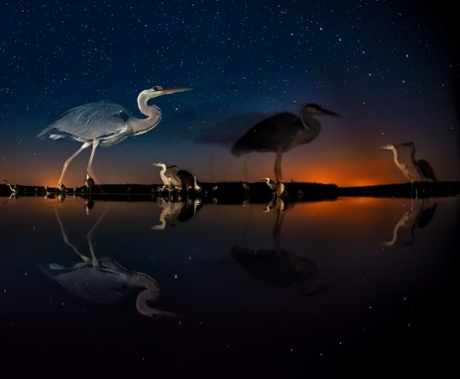
“At the beginning, winning helped my career a lot,” says Bence Máté. He was just 16 when his shot of a group of inquisitive moles was highly commended in the 15-17 age group of the Wildlife Photographer of the Year 2001. Since then, he’s become one of the most-awarded photographers in the competition’s history, scooping the Eric Hosking Portfolio award four times and winning the overall title in 2010 for A Marvel of Ants, a stunning shot of leafcutter ants in Costa Rica.
“Winning helped me not just abroad but also in my home country, Hungary,” he says. “It’s very good when you get a prize abroad and, especially when you’re from a small country, it’s a big thing. So when I won, it was in the Hungarian news and a lot of TV and magazines wanted to talk to me.”
Máté says that the publicity generated through his Wildlife Photographer of the Year wins has another benefit – spreading the word about the huge variety of bird and animal life in Europe. “Most of my prizes are images that I have done very close to my home,” he says. “People are always surprised by that. They always think you have to take photos of lions or tigers when you want to get a winning shot.”
Charlie Hamilton James: ‘It raises the bar for everyone’
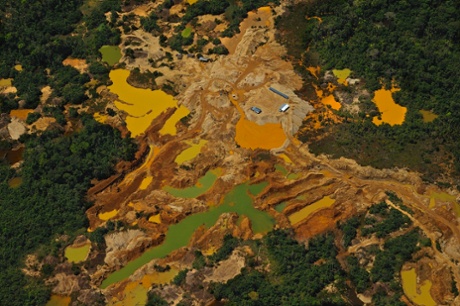
Charlie Hamilton James has less than fond memories of the shot that won him Young Photographer of the Year in 1990. “It was of two rabbits, and I hated it,” he remembers. “My mum made me enter it. I was amazed when I won. The following year I entered and won again with a shot of otters in a huddle looking at the camera, which I much preferred.”
Hamilton James has since forged a prestigious career as a wildlife cameraman, documentary maker, photojournalist and TV presenter. But he has returned to wildlife photography, focusing particularly on kingfishers, which he has shot for National Geographic. Most recently, his aerial shot of the devastation of gold-mining has wreaked on the rainforests of Peru was a finalist in the Wildlife Photographer of the Year 2014 world in our hands category.
“The competition was important to me personally, because it made me very competitive,” he says. “It was good for my career and it was one of the things that spurred me on. I worked so hard to improve my photographs, and winning meant everything to me when I was a kid, even though I didn’t pursue stills photography as my main career. I think that it also serves that purpose for all of wildlife photography. It raises the bar for everyone and means that that standard is consistently high.”