
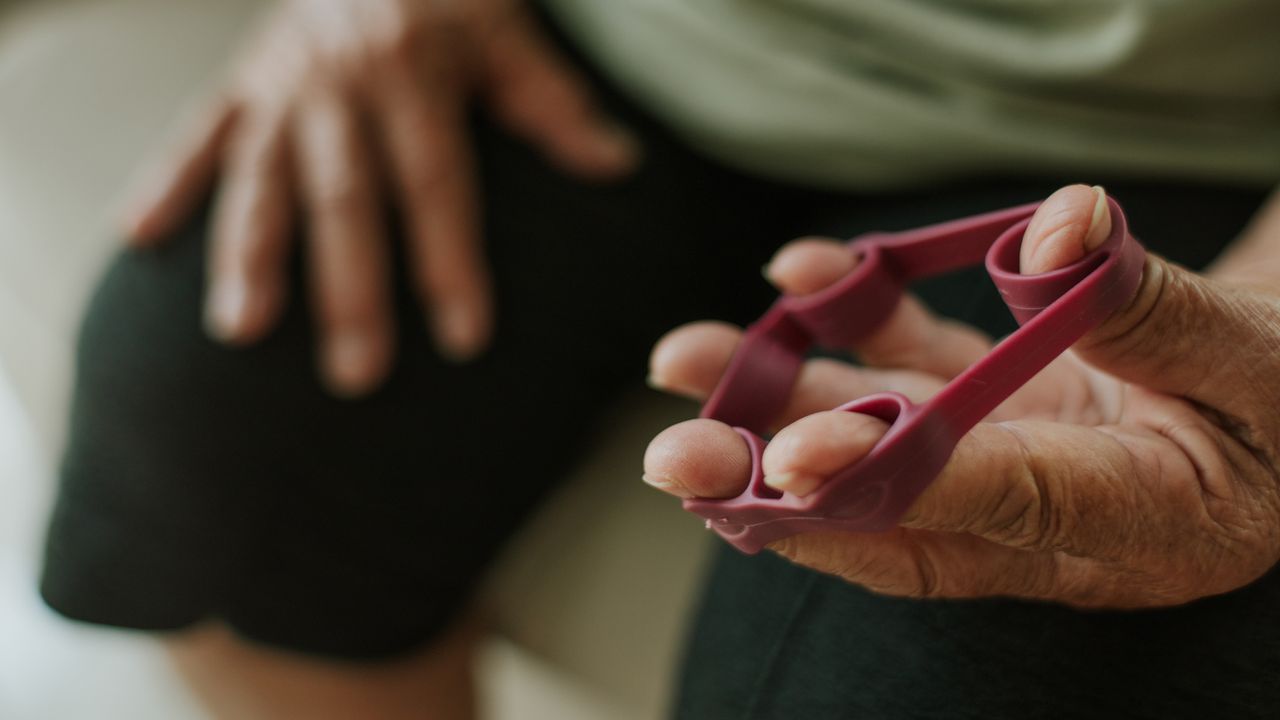
One of the things that worries me most about getting older is losing the ability to use my hands properly.
I’ve been helping my grandmother to catalog several lifetimes’ worth of pictures—some taken, some inherited—because she struggles to hold a pen for more than a minute or two.
While spending more time with my grandmother has been a wonderful experience, watching her struggle has left me thinking about how grip strength and fine motor skills can begin to deteriorate later in life.
“Grip strength often doesn’t get much attention, but it plays a huge role in overall health,” explains Devin Trachman, clinical director of Physical Therapy Central. “This is especially true as we get older.
“It is about so much more than opening jars or carrying groceries. Strong hands help us stay independent and continue doing the things that make daily life feel normal and enjoyable.
“As the years go by, we rely on our grip for countless small but important tasks like holding a glass of water, using silverware, buttoning a shirt, or safely using a walker or cane. When grip strength starts to fade, these everyday moments can become frustrating or even unsafe.”
Trachman explains that physical therapists use grip strength as a clinical indicator for a number of different health factors.
“It is closely linked to overall muscle strength, functional ability and even long-term health,” she says. “That is why it is often used as a quick check-in on neuromuscular health, because it tells a much bigger story than most people realize.”
While it may seem to be a problem that only affects the hands, Trachman says that a person’s grip strength can reflect overall muscle loss, nervous system changes, and impaired coordination and control. It is also an indicator that someone may be becoming more frail.
“In some cases, declining grip strength has been linked to a higher risk of falls and a reduced ability to bounce back after illness or injury,” she says.
“In other words, what’s happening in the hands can give us valuable clues about strength, resilience, and overall health.”
She stresses that while declining grip strength is a good indicator of health, it is not an inevitable part of aging.
How to check your grip strength
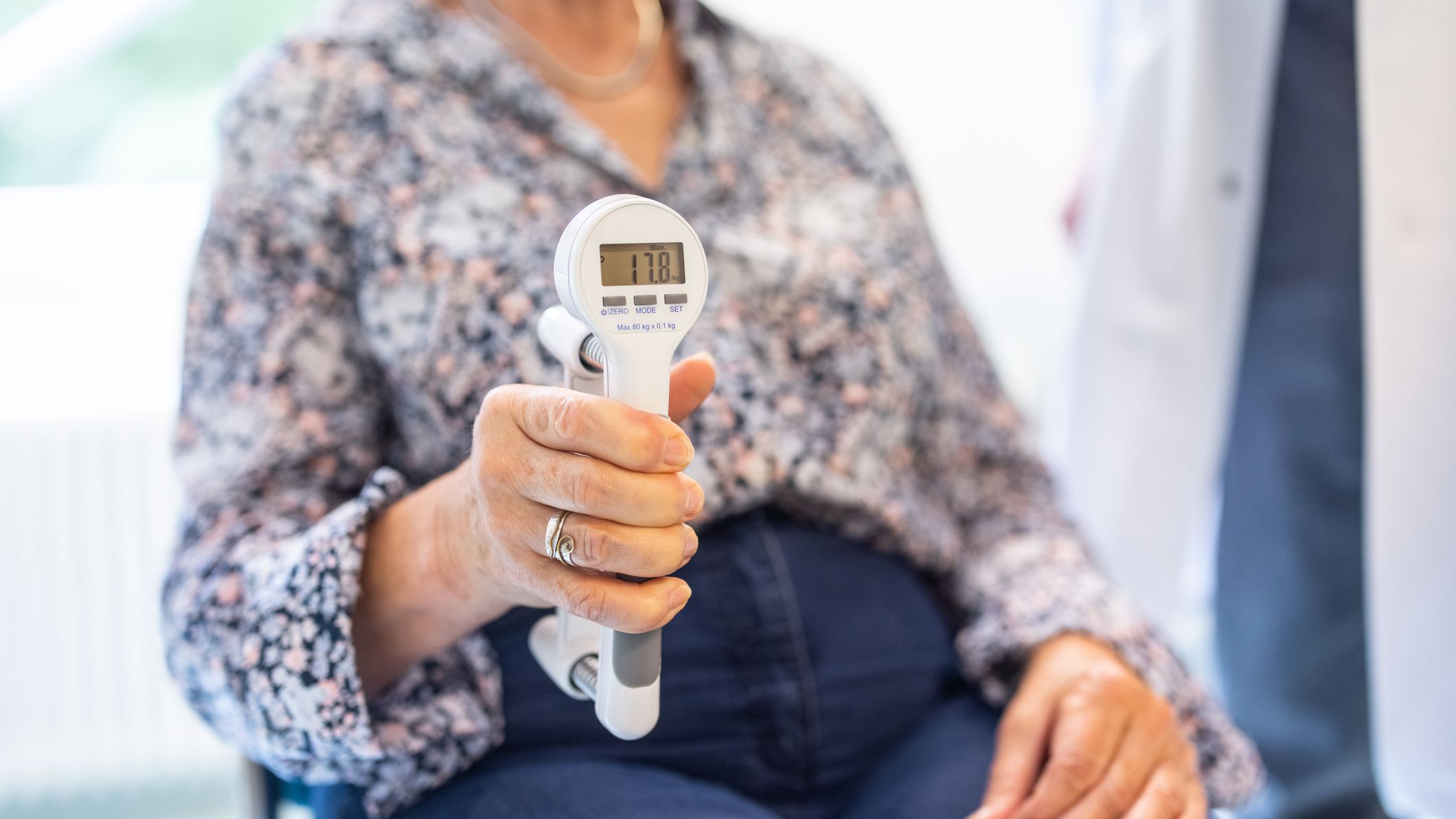
“In a clinical setting, grip strength is most accurately measured using a handheld dynamometer,” says Trachman. “This gives us objective information that we measure in pounds that can be tracked over time and compared to what’s typical for someone’s age.”
But there are indicators you can look out for in your everyday life, too.
“People may notice they are dropping things more often, like cups, phones, or utensils,” she explains. “They may report struggling to open jars and packaging.
"Tasks like turning a doorknob, using keys, or writing can start to feel harder than they used to. Even simple activities like buttoning clothes or handling silverware may cause noticeable hand fatigue.”
Trachman explains that these changes can be easy to brush off, as they tend to happen gradually. “Over time, they can begin to affect confidence, safety, and day-to-day independence.”
How to improve your grip strength
As Trachman says, deteriorating grip strength isn’t inevitable, and even if you have started feeling some decline, there are a few things you can do to work on improving grip strength.
She recommends the following exercises, stating they are joint-friendly and accessible for someone with already reduced grip strength. You don’t need any specific equipment to perform them, just things you already have around the house.
How to do the grip strength exercises
1. Towel squeeze hold
Time: 2min each side
“This exercise builds baseline grip strength without requiring any specialized equipment,” says Trachman.
How to do it:
- Roll up a small hand towel and hold it in one hand.
- Squeeze the towel as hard as possible for five to 10 seconds.
- Relax your hand for a few seconds.
- Continue until the two minutes have elapsed, then repeat on the other side.
2. Rubber band finger extension
Time: 2min each side
“Grip strength needs both squeezing and opening hand strength. This exercise works on the latter,” says Trachman.
How to do it:
- Place a rubber band around all five fingers.
- Slowly open your hand, stretching the fingers against the resistance of the band.
- Hold for five to 10 seconds.
- Relax your hand for a few seconds.
- Continue until the two minutes have elapsed, then repeat on the other side.
3. Seated dumbbell hold
Sets: 2 Time: 2min each side
“You get the same grip stimulus as a farmer’s carry, but without adding in balance or walking,” says Trachman.
How to do it:
- Hold a light dumbbell, a water bottle or a can of food in one hand with your arm positioned comfortably by your side. The object should be heavy enough that you experience fatigue by the end of the hold.
- Hold for time.
- Repeat on the other side.