
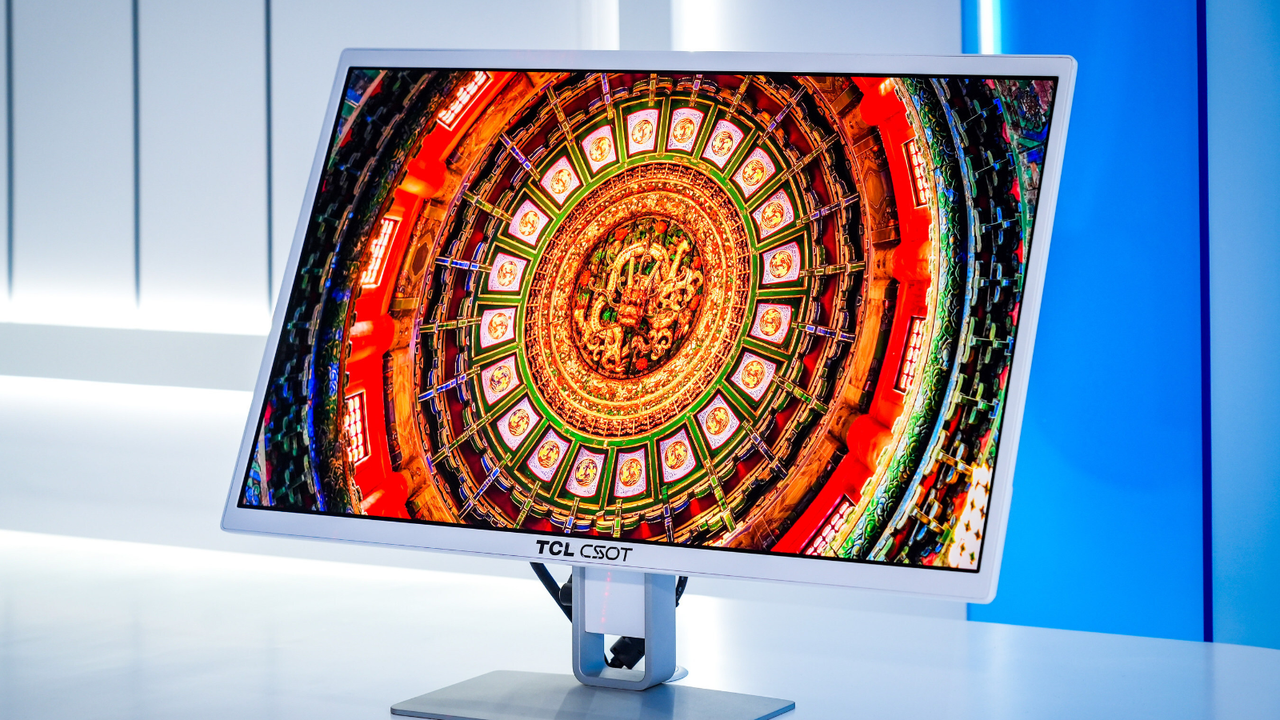
- IJP OLED could be 30% to 35% cheaper than current OLED production
- Challenges remain, especially power consumption and blue OLED lifespan
- Expect to see the tech in premium laptops first, but TVs are on the cards
A new report says that the long-awaiting arrival of inkjet-printed OLED will slash the price of OLED production, making the tech much more cost-effective and the resulting displays much more affordable.
That's good news in the relatively short term for laptops (such as a near-future OLED MacBook Pro), and for smaller displays in devices such as phones and in-car consoles. And in the longer term it's good news for TV buyers too.
The dominant production technology in OLED production is FMM, which is short for Fine Metal Mask. According to display analysts Omdia, FMM costs are getting lower — but inkjet printing will be even cheaper, with a price difference of between 30 to 35% compared to FMM production. Given that OLED is an expensive tech to produce, that could make a big difference.
And price isn't the only benefit. Inkjet printing offers some significant advantages over FMM. However, it's important to note that those lower costs are a prediction for the future, not a measurement of how much IJP OLED costs to produce at the moment.
This is still a very new screen tech, and that means it's still expensive to manufacture because the yields — meaning the amount of panels produced that are good enough to sell — still need to be improved.
We've been told by TCL, the biggest player in the IJP OLED game right now, that it'll be several years before it's affordable in mass-market TVs — but in laptop and even monitor-sized panels, the tech is rolling out.
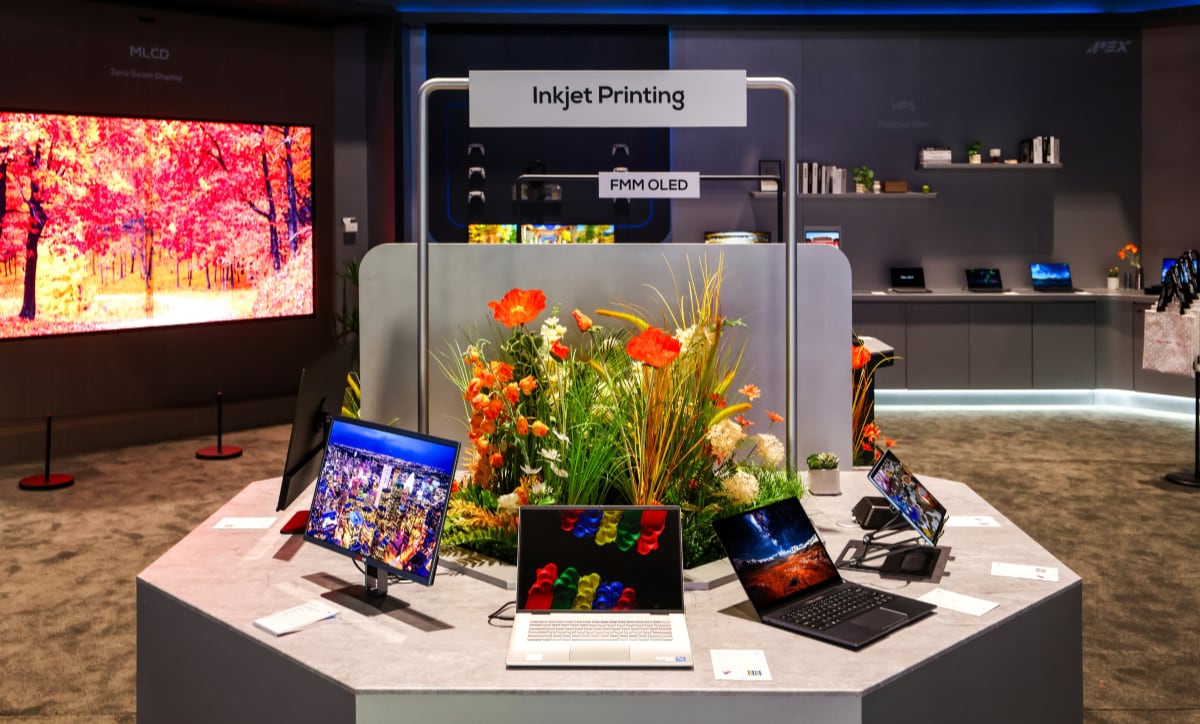
What's so exciting about inkjet-printed displays?
For manufacturers, the lower cost of inkjet printed displays isn't the only benefit. It's set to be much more efficient once it's working at full quality — Omdia says that for 16.3-inch OLED laptop displays, manufacturers can produce 10% more panels from a single substrate compared to FMM processes — and the machines cost less to buy.
That's the good news. But there are still some challenges for inkjet-printed OLEDs to overcome. One of the key challenges has been the lifespan of blue OLEDs made using the IJP process: according to TCL CSOT, in 2020 the lifespan of its blue pixels was just 40 hours. Power consumption was also a significant issue.
However, by late 2025 TCL CSOT had improved the longevity of its blues by ten times to 400 hours, and it had reduced power consumption by one-third — the technology has continued to develop since then.
This is a very fast-moving sector, and there's big money being spent on developing it: TCL CSOT alone has invested $4 billion in its T8 plant, which will be located in Guangzhou in China. It's intended to produce 22,500 substrates per month.
Those panels will be destined for monitors, notebooks and tablets, but TVs are on the roadmap too: as we reported last year, TCL has been showing off TVs with panels up to 65 inches in size. Mass production of the first panels from the plant is likely to commence in late 2027.
Thinking of buying a new TV?
Try our TV size and model finder! You tell it how far you sit from your TV, we'll tell you what size to buy based on viewing angle advice from image quality experts, and we'll recommend our three top TVs at that size for different prices.