NASA’s Curiosity rover just made a strange discovery.
The vehicle stumbled upon honeycomb-like patterns of polygons on the surface of the Martian valley known as “Valle Grande” last month.
While this isn’t the first time the mission has seen the polygonal shapes, scientists have never seen so many of the features in one place before.
They also still don’t know how they formed - though they hope to determine the cause.
“We’ve seen a lot of fascinating landscapes through Curiosity’s eyes, but this sea of polygons took our breath away,” Curiosity mission project scientist Ashwin Vasavada, of the agency’s Jet Propulsion Laboratory in Southern California, said in a statement. “We measured their shapes and chemistry carefully and are hopeful there are clues in the data as to how these features formed.”
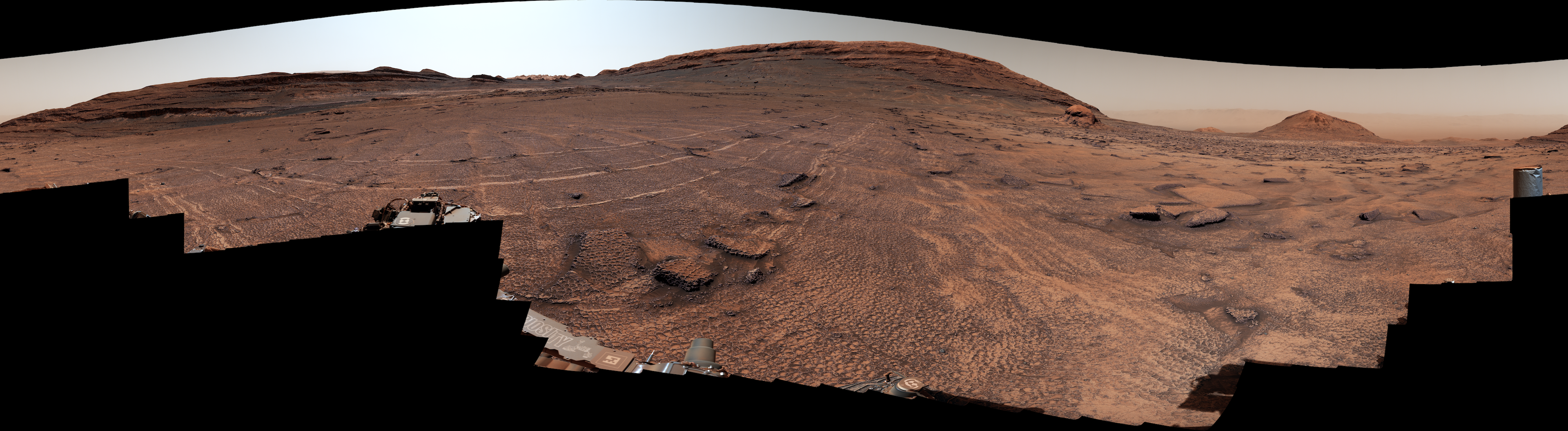
The polygons are between 1.3-3 inches in diameter and wrap around the sides of a nearby hill nicknamed “Miraflores.”
Some of the polygons spotted in the past were clearly formed as cracks in ancient mud.
Researchers previously said these were signals of the Red Planet’s past seasonal cycles - and potential signs for how life began there.
“This is the first tangible evidence we’ve seen that the ancient climate of Mars had such regular, Earth-like wet-dry cycles,” William Rapin, of France’s Institut de Recherche en Astrophysique et Planétologie, said in a statement in 2023. “But even more important is that wet-dry cycles are helpful – maybe even required – for the molecular evolution that could lead to life.”
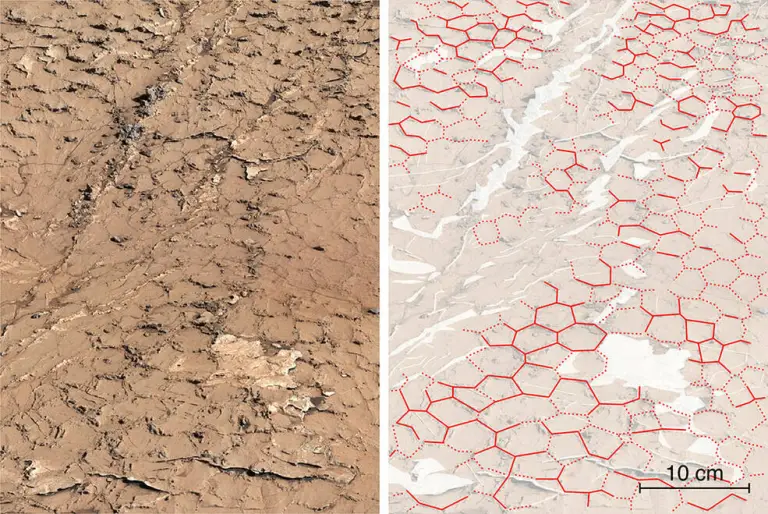
That said, a variety of processes can contribute to honeycomb textures, according to the laboratory. Another potential explanation is that water was squeezed out of the sediment when the surface was buried.
This is not the first discovery from Curiosity that’s surprised project mission researchers.
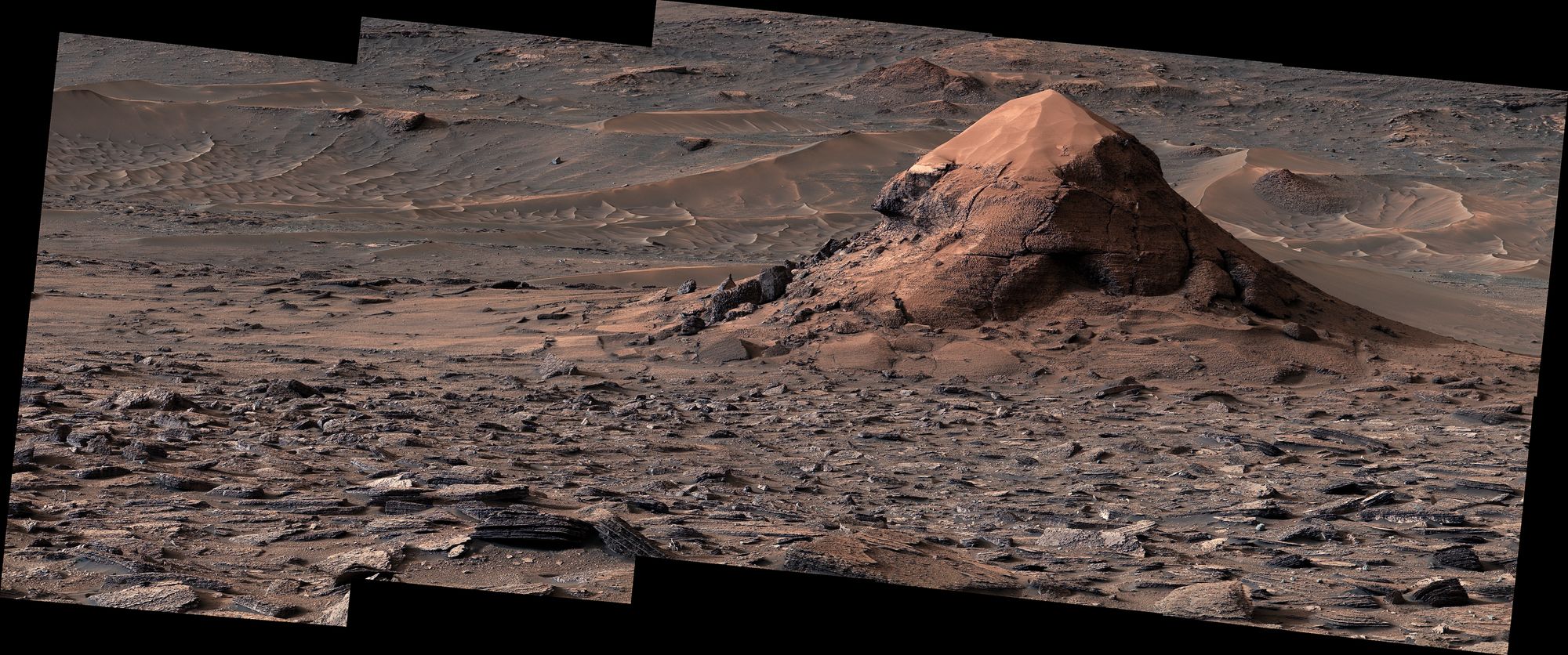
Curiosity has found evidence that ancient Mars was able to support microbial life, but it’s also found sulfur crystals and shiny meteorites.
The rover landed on Mars in August 2012. Since 2014, it’s been climbing the three-mile-tall Mount Sharp, which was covered with lakes and streams billions of years ago.