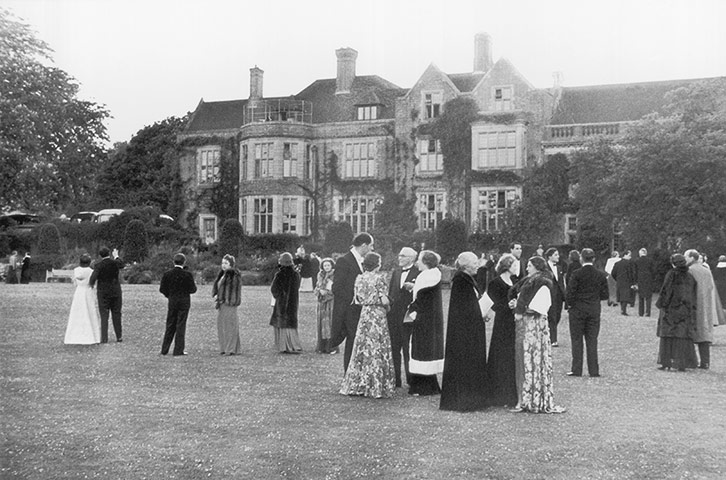
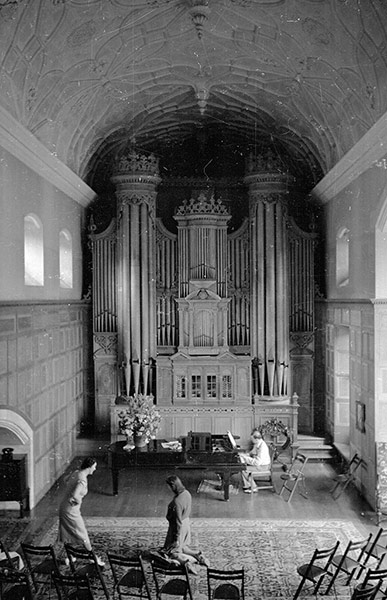
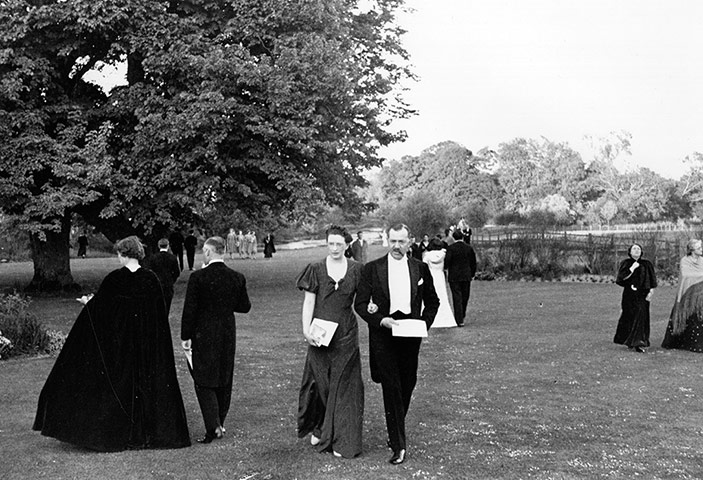
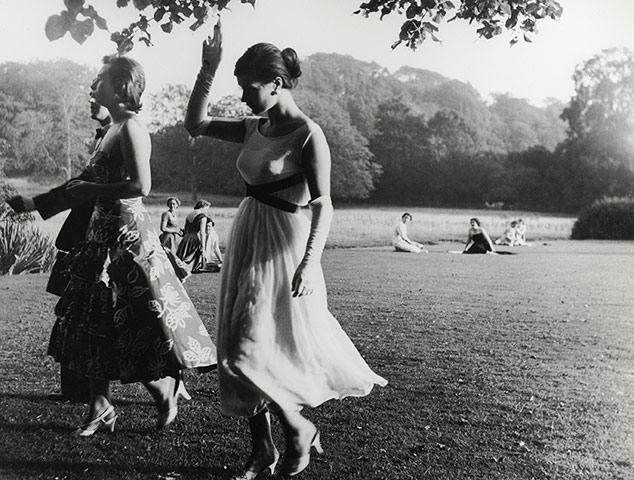
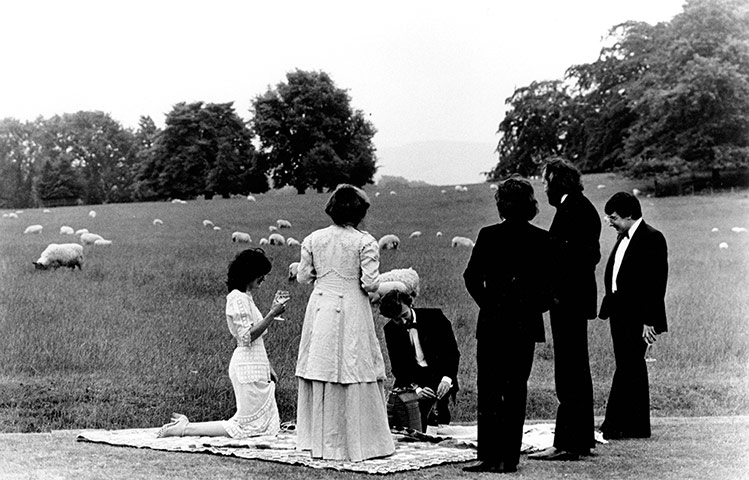
The audience enjoy the gardens in 1939. John Christie inherited the Glyndebourne estate in 1920. The music lvoer mounted amateur opera productions in the grand house's organ room, but following his marriage to singer Audrey Mildmay, set about creating a small purpose-built theatre to hold 300 people, an orchestra pit and a stage. The first festival was in 1934.Photograph: Felix Man/Getty ImagesSingers rehearse Mozart's le Nozze di Figaro in the Organ Room in 1939. This, and Mozart's Cosi fan tutte were the first operas to be performed at the festival in 1934.Photograph: Felix Man/Getty ImagesOpera-goers walk in the gardens during an interval, in 1939. From 1941-45 the festival was suspended, and the house became an evacuation centre for East London children.Photograph: Felix Man/Getty Images
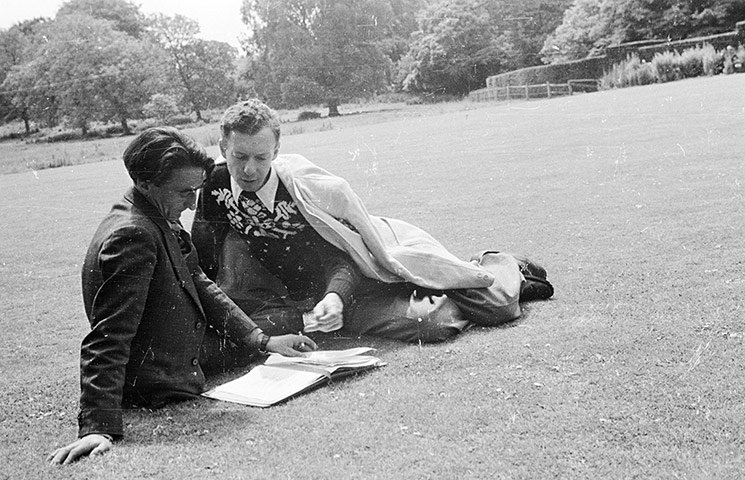
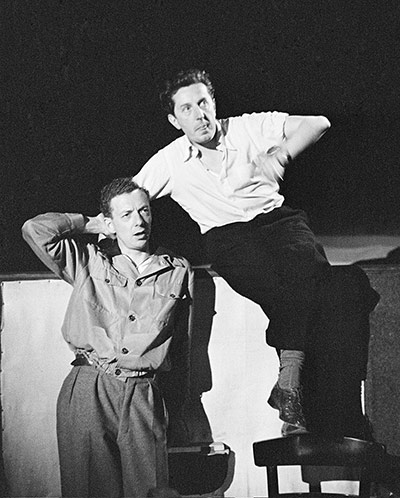
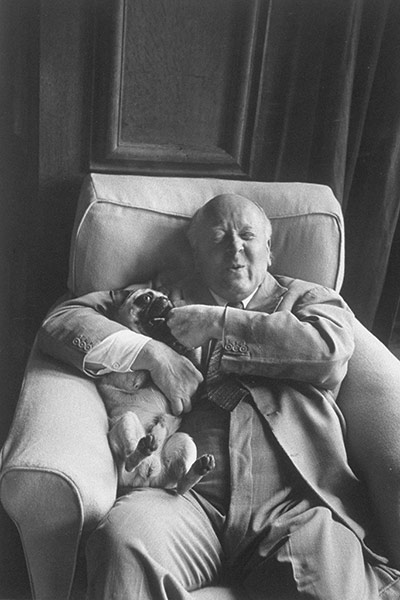
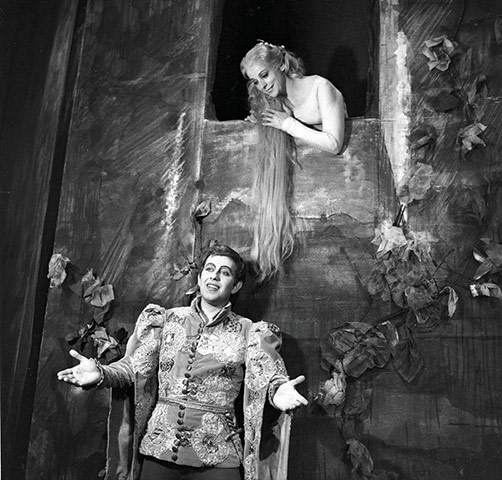
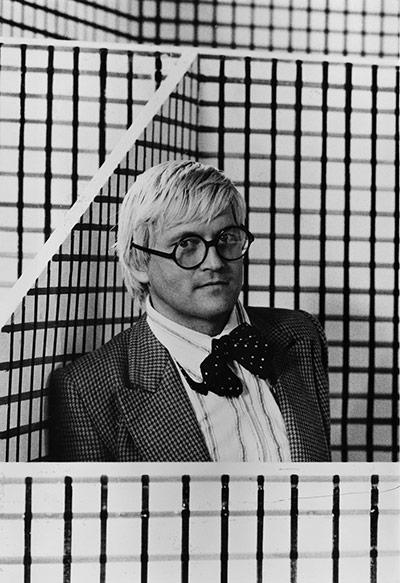
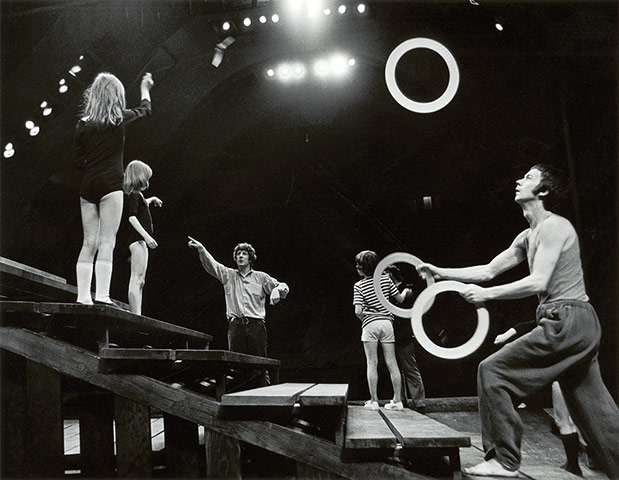
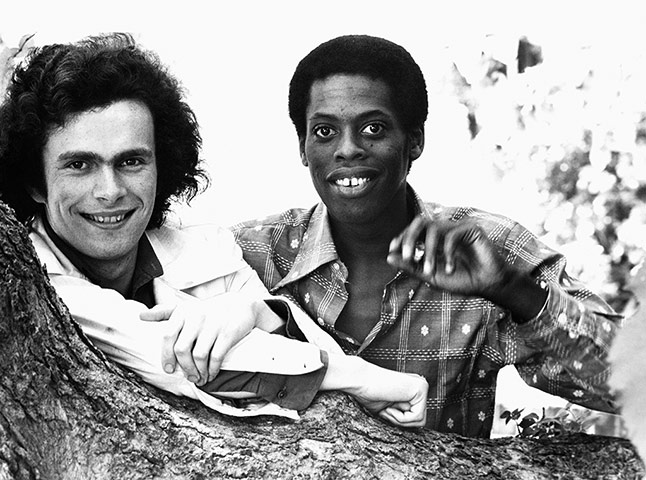
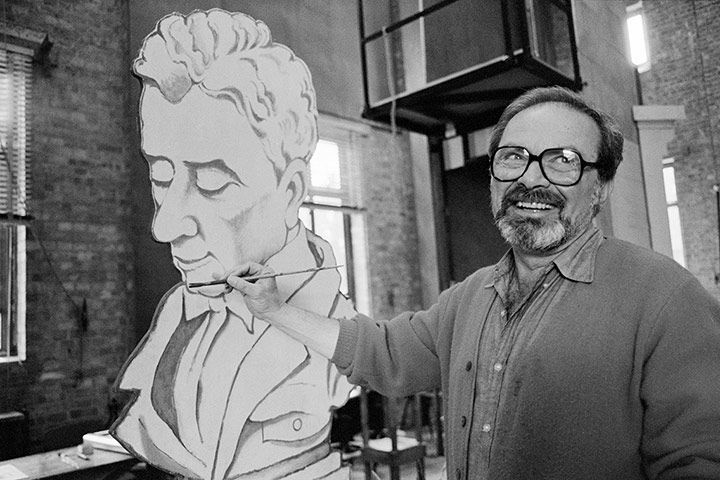
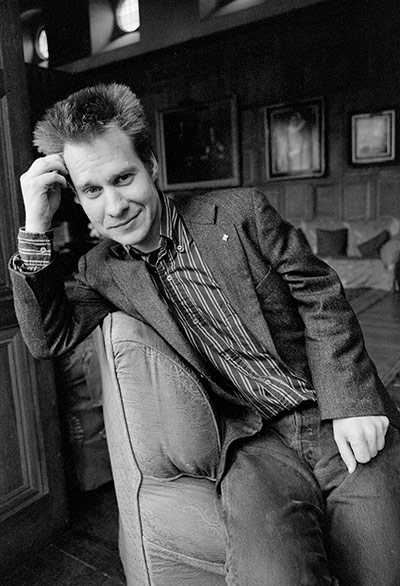
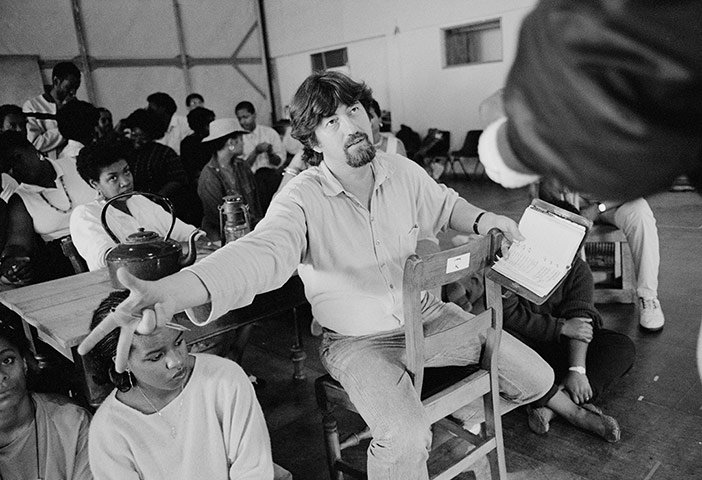
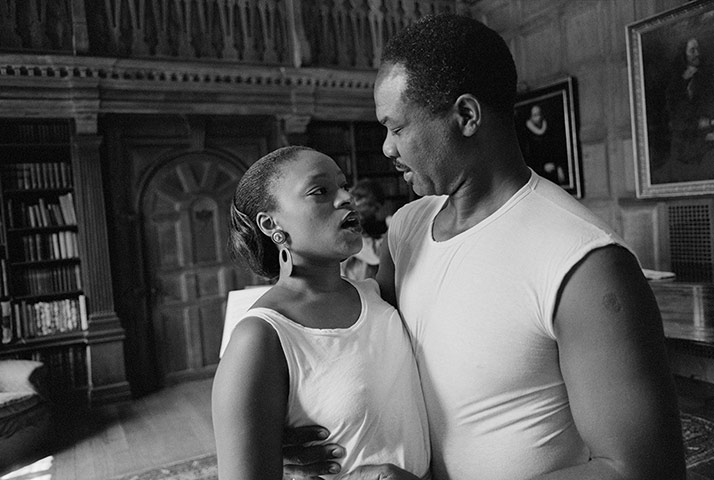
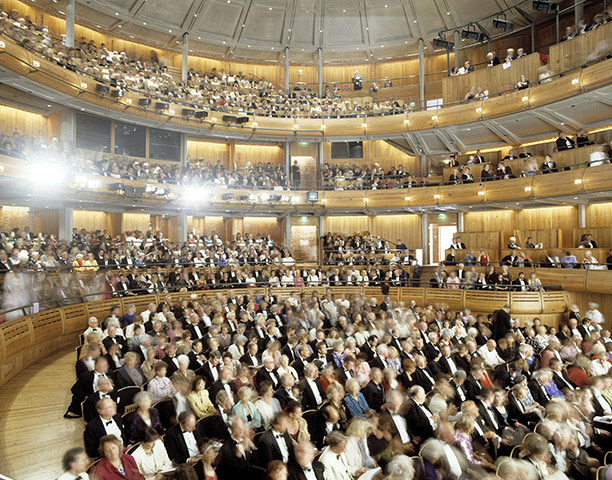
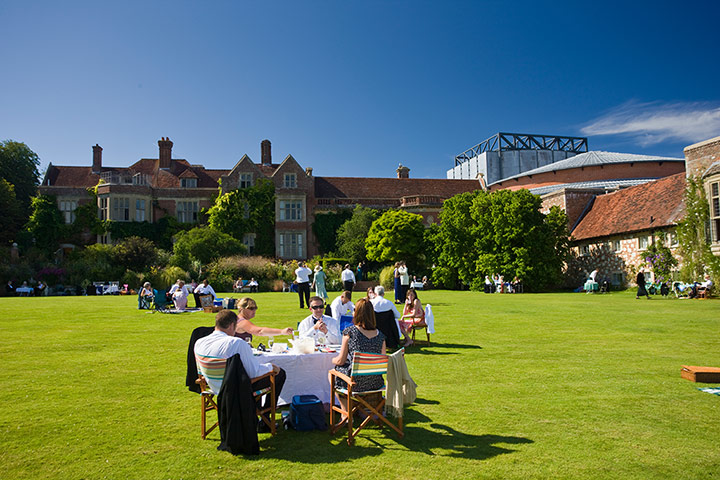
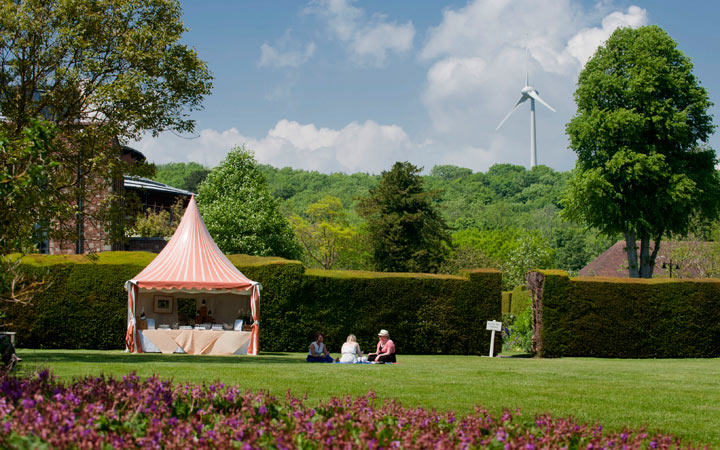
Rape of Lucretia librettist Ronald Duncan sits with Benjamin Britten on the lawn at Glyndebourne, in 1946. Their chamber opera was premiered at the festival that year. Photograph: Gerti Deutsch/Getty ImagesPicnicking by the parked cars, 1946Photograph: George Rodger/GettyBenjamin Britten and Frederick Ashton during a rehearsal of Britten's comic opera Albert Herring. Ashton directed and Britten conducted the first performances of the opera at Glyndebourne in 1947.Photograph: Gerti Deutsch/Getty ImagesGlyndebourne Festival founder John Christie (1882-1962) relaxes with his pet pug in 1951.Photograph: Cornell Capa/GettyFestival-goers in the gardens, 1955 Photograph: Jane Bown for the ObserverDenise Duval and Michel Roux in Pelleas and Melisande, 1963. This production was the last to be directed by Carl Ebert. Photograph: GlyndebourneDavid Hockney stands in the set of The Rake's Progress, which he designed in 1975. The celebrated production was last revived in 2010.Photograph: Graham Wood/Getty ImagesJonathan Miller directs a rehearsal of Janeck's Cunning Little Vixen in 1975Photograph: AlamyConductors Simon Rattle and Calvin Simmons, who both worked with Glyndebourne early in their careers in the mid 1970s.Photograph: Roy Jones/ Hulton-Deutsch Collection/CORBISFestival-goers picnic during the interval, 1982Photograph: Jane Bown for The ObserverMaurice Sendak paints a portrait of Maurice Ravel for the production of Ravel's L'Heure Espagnole and L'Enfant et les Sortilèges, 1987, one of five productions he designed for Glyndebourne during the 80s.Photograph: Ira Nowinski/CorbisPeter Sellars sits in the organ room in 1987. He was there at that time to direct the opera The Electrification of the Soviet UnionPhotograph: Ira Nowinski/CorbisDirector Trevor Nunn rehearsing Porgy and Bess in 1987Photograph: Ira Nowinski/CorbisWillard White and Cynthia Haymon rehearse Porgy and Bess in 1987. The production (directed by Trevor Nunn, conducted by Simon Rattle) was expanded for television broadcast in 1993.Photograph: Ira Nowinski/CorbisThe interior of the new opera house which seats 1,200 and was opened in 1994, 60 years to the day after the old theatre's first performance.Photograph: Mike Hoban/AFP/Getty ImagesFestivalgoers picnic in the grounds, 2008Photograph: Tim Graham/GettyA view of the grounds, with the wind turbine in the background. The turbine was officially launched in January 2012, making the opera house the UK's first arts organisation to thus generate its own power. Photograph: Andrew HassonPhotograph: Andrew Hasson/Andrew Hasson
Sign up to read this article
Read news from 100’s of titles, curated specifically for you.