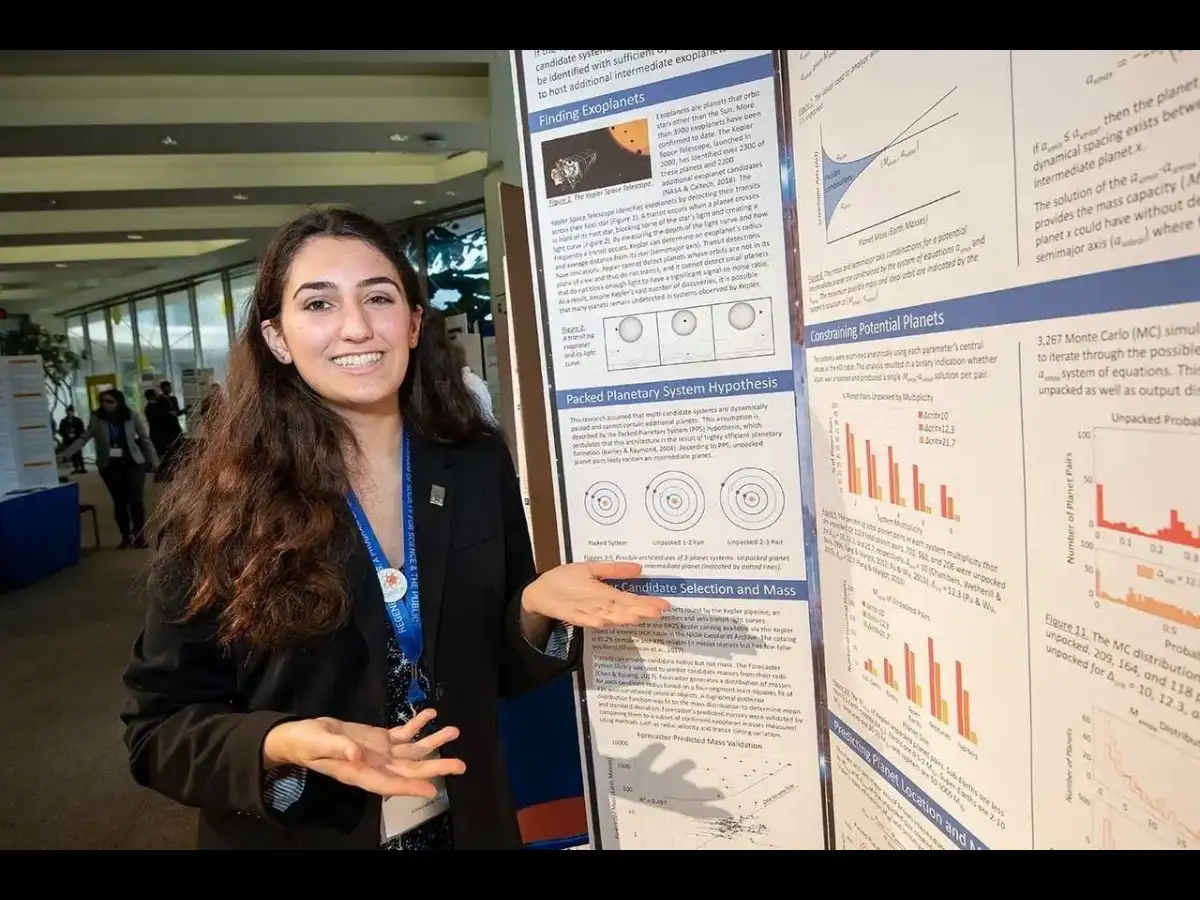
The interest in a particular project carried out by a high school senior stems from the fact that, unlike most class projects, this one went beyond theory to investigate ongoing efforts by scientists to discover Earth-like planets outside the solar system. In her study, Ana Humphrey examined Kepler Space Telescope archives to see where there could be more undiscovered Earth-sized planets lurking in the mission's data set.
Apart from the age of the student who conducted the study, the importance of the project lies in the question it raises. According to NASA, the Kepler Space Telescope was built for the purpose of looking for planets around other stars, especially those that resembled Earth in terms of size. Even after the retirement of the spacecraft, the archive became one of the biggest planetary datasets ever compiled.
Humphrey's project entailed the estimation of how many more Earth-sized planets might still be lying hidden in Kepler's observations, and the importance of this part of the description lies in the fact that the project was not about searching for any signal in the data.
Kepler’s archive still holds scientific value years after the mission ended
The goal of launching the Kepler telescope by NASA was to address one of the most significant issues in astronomy: how frequently are planets like Earth orbiting other distant stars? Kepler did not take pictures of planets but rather observed the minute drops in brightness of stars when planets transited the stars from Earth’s perspective. The recurring brightness changes of stars were used to find thousands of planets during the Kepler mission. As mentioned in the NASA Kepler Mission Overview, many planets were found by the telescope, including those ranging from Earth-like rocky planets to giant gas planets orbiting other distant stars.
It is precisely because of the large amount of data collected that the analysis conducted by Humphrey is significant. Many astronomical surveys involve signals that are faint and ambiguous at first glance; however, as techniques of data analysis evolve, researchers come back to their data and discover new planets that were not seen during the initial analysis. This phenomenon has occurred previously with NASA: a NASA discovery report describes how scientists discovered an Earth-sized exoplanet lurking in Kepler’s old data.