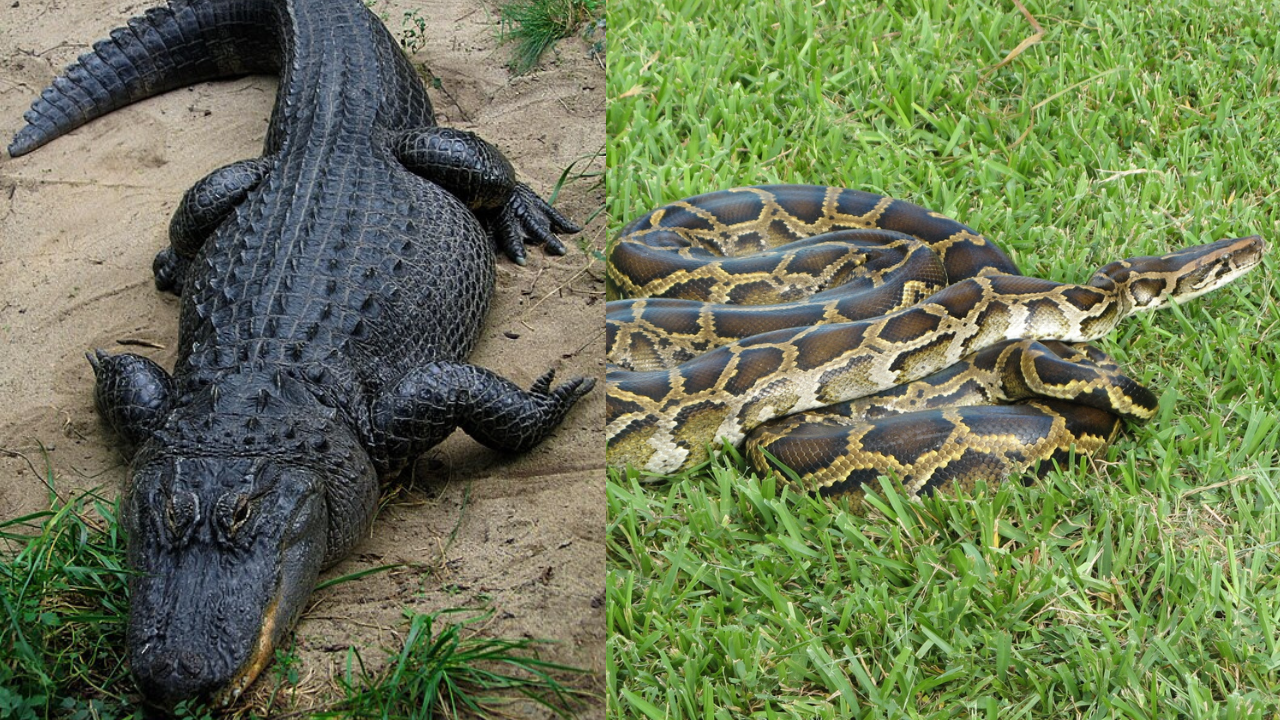
A cyclist moving through Shark Valley in Florida’s Everglades encountered a predator-prey scene that has become symbolic of South Florida’s long battle with invasive Burmese pythons: an American alligator gripping one of the giant snakes in its jaws, biting at the carcass before swimming away with the python still clamped in its mouth. The footage offers a rare close look at a native predator consuming an invasive snake that has spent decades reshaping the Everglades food web, although previous records show that alligators have eaten pythons before and the encounter should not be interpreted as evidence that Florida’s python crisis is suddenly reversing.
Get breaking news anytime, anywhere. Download the TOI app now!
According to the original Storyful record of Alison Joslyn's footage , Joslyn encountered the alligator while cycling in Shark Valley in Everglades National Park and initially wondered whether both animals were dead before the alligator opened an eye and looked toward her. The licensed video record identifies Joslyn as the photographer and shows the alligator consuming a large Burmese python, an encounter she described as a “score one for the home team.”
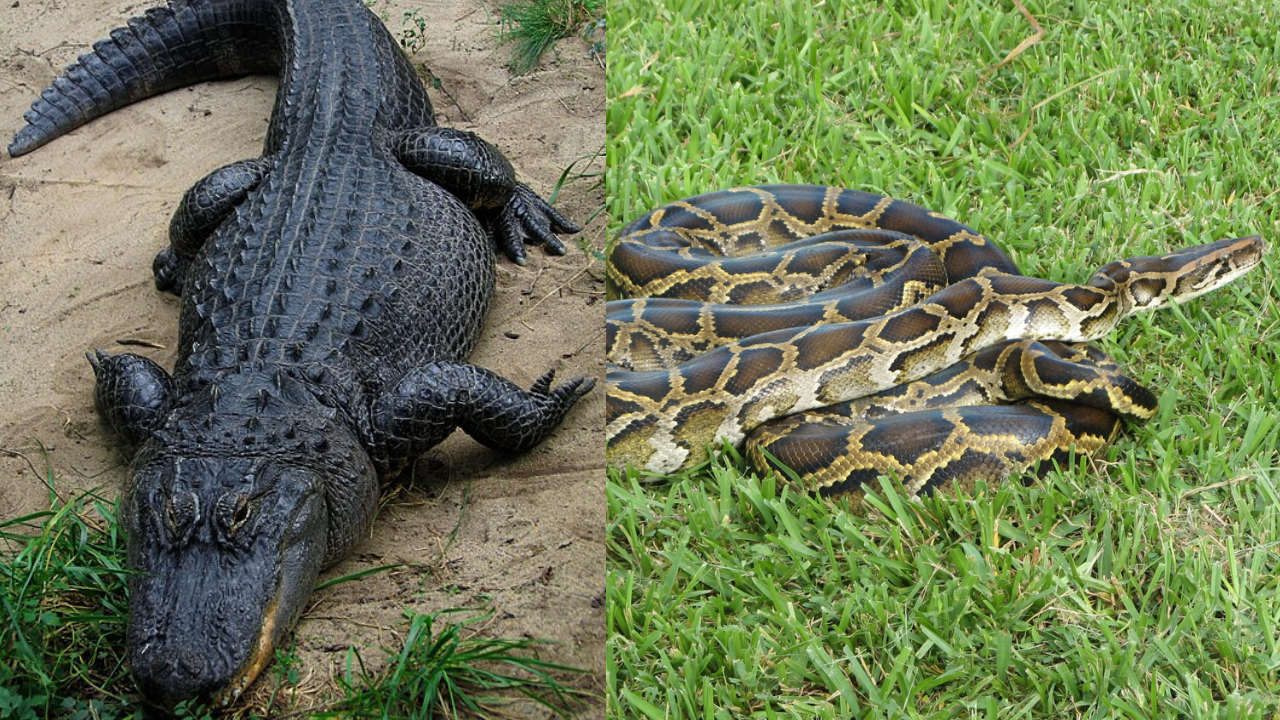
Burmese pythons have already transformed parts of the Everglades
The reason one alligator eating one python attracts so much attention lies in what the snakes have done since establishing a breeding population in South Florida. Burmese pythons are native to Asia, but according to the US Geological Survey's official Burmese python species profile , Florida’s invasive population became established through snakes associated with the commercial pet trade that either escaped or were intentionally released. The same USGS profile notes that American alligators have been recorded eating adult pythons, making the filmed encounter striking but not biologically unprecedented.
The ecological damage linked to the python’s expansion is far more serious than the loss of individual prey animals. According to the exact 2012 Proceedings of the National Academy of Sciences study, “Severe mammal declines coincide with proliferation of invasive Burmese pythons in Everglades National Park” , road surveys conducted between 2003 and 2011 recorded a 99.3 percent decline in the frequency of raccoon observations, a 98.9 percent decline for opossums and an 87.5 percent decline for bobcats compared with earlier observations, while rabbits were not detected during the later surveys. The researchers reported that the geographic and temporal pattern of these declines coincided with the spread of Burmese pythons.
Pythons now consume mammals, birds and reptiles across the ecosystem, and their ability to occupy difficult-to-survey wetlands makes population control exceptionally challenging. According to the USGS explanation of python impacts on Florida ecosystems, the snakes have established a breeding population in South Florida and compete with native wildlife for food while preying on multiple groups of native animals.
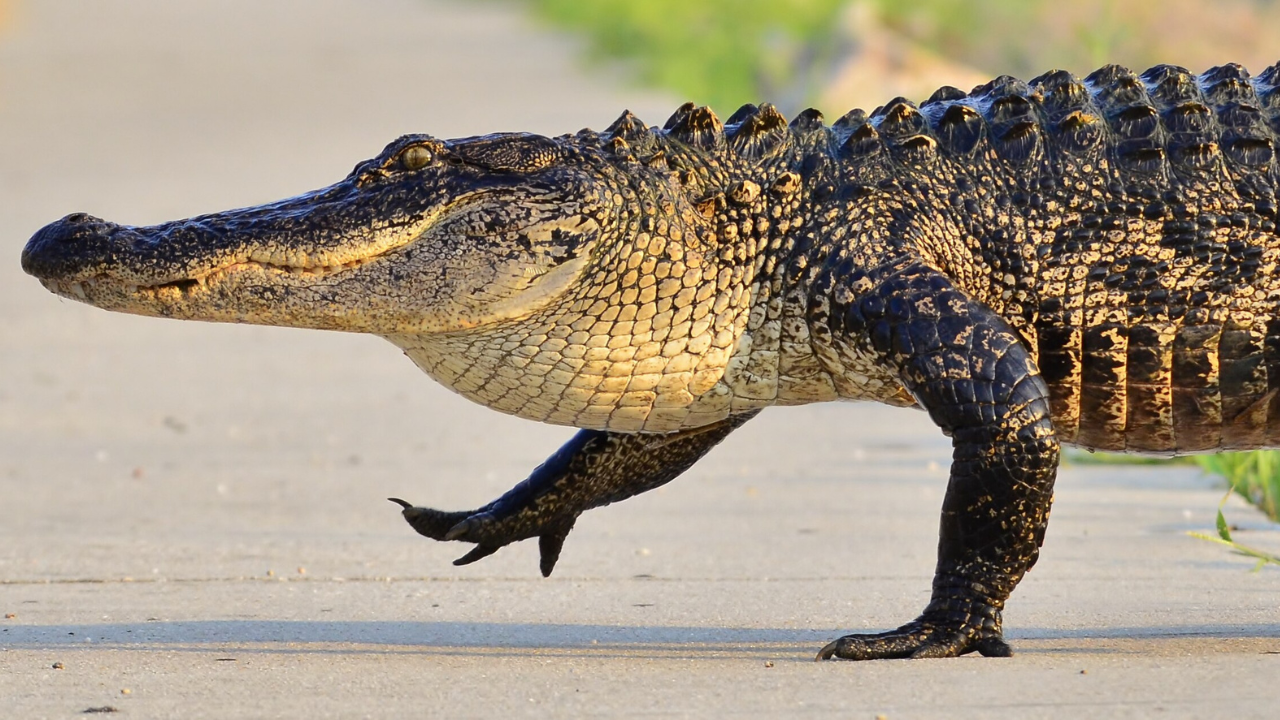
The alligator won this encounter, but the python problem remains
Florida has responded with organized removal programs, research and public participation efforts. The Florida Fish and Wildlife Conservation Commission's official Burmese python program describes the species as a major threat to native wildlife and says the agency works with partners through multiple management approaches while also encouraging trained public involvement in python removal. Some individual snakes have demonstrated just how large the invasive population can become. The Conservancy of Southwest Florida's official 2022 record documented a female Burmese python measuring nearly 18 feet and weighing 215 pounds, the heaviest Burmese python recorded in Florida at the time.
The Shark Valley footage therefore captures a real reversal of the usual narrative surrounding invasive pythons, but not the beginning of a new ecological counterattack. Alligators can and do prey on Burmese pythons, while pythons themselves have also consumed alligators. One native predator winning one encounter cannot undo decades of population expansion or mammal decline. What the video shows, more precisely, is that even in an ecosystem heavily disrupted by an invasive apex predator, the Everglades’ original predators are still capable of turning the tables.