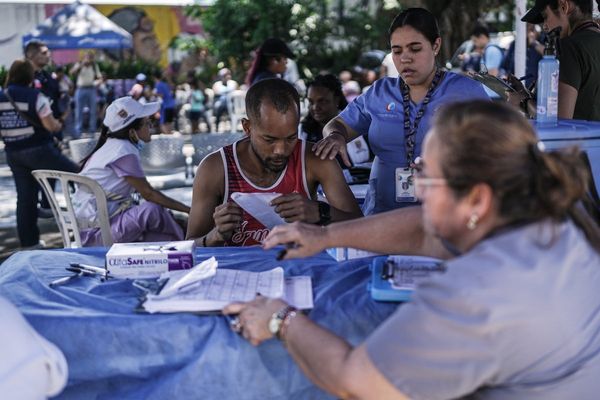
Patients with chronic lung disease have been arriving at a Flathead Valley clinic during a stretch when wildfire smoke from Oregon and Washington sank into northwest Montana's valleys. The air quality index in Columbia Falls peaked at 211 on Sunday, a level the federal scale rates as very unhealthy for everyone, before easing to 99 by Tuesday afternoon. The index sat above 150 for much of the previous week.
Dr. Timothy Nuce, medical director at Greater Valley Health Center, told the Daily Inter Lake that he has seen multiple patients struggling with poor air quality. "Most commonly, they are seen and treated for chronic obstructive pulmonary disease, COPD, and asthma exacerbations," Nuce said.
Those are clinical observations from one clinic, not surveillance data, and they should be read that way. No state agency has published emergency department counts tied to this smoke episode. What the observations do is put a face on a number that otherwise sits on a dashboard.
The Montana Department of Environmental Quality issued an air quality alert covering northwest Montana and much of the western half of the state, with conditions expected to improve by midweek.
Why Fine Particles Reach Deeper Than Ordinary Air Pollution
Wildfire smoke is dominated by particulate matter smaller than 2.5 micrometers, and the size is the whole problem. Kerri Mueller, an air quality specialist with Missoula Public Health, explained to NBC Montana earlier this summer that these particles are small enough to bypass the filtering structures of the upper airway.
"They don't get caught in our upper respiratory system; they actually go deeper into our lungs," Mueller said, adding that from there the particles can pass into the bloodstream and affect the rest of the body.
In a person with COPD or asthma, that deposition triggers airway inflammation and constriction on top of a baseline that is already narrowed. Rescue inhaler use climbs, oxygen saturation can fall, and a patient who was stable on their regular regimen can slip into an exacerbation within hours to a day of heavy exposure rather than over weeks.
Mueller also described longer-term effects, including reduced lung capacity and cardiovascular risk. Those are population-level findings from the broader literature rather than measurements of this specific smoke event.
The Valley Inversion Pattern Driving Overnight Spikes
Air quality in western Montana this month has not been uniformly bad. It has been worse overnight and in the early morning, and that pattern has a physical explanation worth understanding before planning a day.
Missoula Public Health described the mechanism in its wildfire smoke air quality updates: as smoke settles into valleys, air quality worsens overnight and improves through the day as ground-level air warms, rises, and mixes with the upper atmosphere. Calm evening conditions, when mixing heights drop, let overhead smoke sink back into the valley floor.
The practical translation is that a morning walk during an inversion can deliver a heavier dose than an afternoon errand. Households making decisions about school drop-offs, outdoor work, and exercise should check current readings rather than assuming the day matches yesterday.
Missoula Public Health has repeatedly noted that while Montana fires in the Pioneer and Sapphire Mountains and just across the Idaho border in the Selway-Bitterroot Wilderness are producing local smoke, westerly transport winds are carrying the bulk of the smoke sitting over the state from much larger fires burning in Oregon and Washington.
Who Faces the Most Risk in This Episode
Risk in a smoke event is not evenly distributed. People with COPD, asthma, other chronic lung disease, coronary artery disease, or heart failure sit at the top, followed by older adults, pregnant people, infants and young children, and outdoor workers who cannot avoid exposure. Federal wildfire smoke guidance identifies the same groups and notes that most healthy adults and children recover quickly from smoke exposure.
Healthy adults are not exempt from symptoms. Public health agencies advise that when the index reaches the red or unhealthy category, everyone should shorten outdoor activity and reduce its intensity. Coughing, irritated eyes, sore throat, headache, and difficulty breathing are the common complaints.
The distinction that matters clinically is between irritation and decompensation. A scratchy throat and a cough in a healthy person during a smoke episode are expected and usually resolve when the air clears. Increasing shortness of breath, a rescue inhaler that is not lasting as long as usual, chest tightness, or confusion in someone with lung or heart disease is a different situation and warrants contacting a clinician. Severe difficulty breathing, chest pain or altered mental status calls for emergency evaluation.
Practical Protection While the Smoke Sits
The most effective household measure is creating one cleaner room rather than trying to filter the whole house. That means keeping windows and doors closed, running a portable air cleaner with a HEPA filter, and limiting activities that add indoor particles, such as frying, burning candles, or vacuuming with a non-filtered vacuum.
Mueller noted that HEPA cleaners are well suited to this pollutant because they filter particles down to 0.3 microns, and that a MERV 13 furnace filter attached to a box fan is another effective option. Central air systems can help when set to recirculate with a high-efficiency filter. For people who must be outside for work or recreation, health officials recommend a properly fitted N95 respirator and frequent breaks.
People with asthma should follow their existing asthma action plan and keep quick-relief medication accessible. Anyone with COPD should confirm they have an adequate supply of maintenance and rescue medications before the next episode, since refills become harder to arrange during a flare. Nobody should start, stop, or change a prescribed medication based on a news report, and those with heart or lung disease who develop symptoms during smoke exposure should contact their provider.
Residents can check current conditions through the federal fire and smoke map, which combines permanent monitors with temporary sensors deployed during fire season. Montana DEQ posts smoke forecasts describing where alerts are in effect and which communities are recording unhealthy particulate levels.
Fire activity in the Northern Rockies typically continues into September, and conditions can reverse within a day when winds shift. Households that build a cleaner room and a medication plan now will not have to improvise during the next inversion. MedicalDaily will report on state or county health data if agencies publish counts tied to this smoke season.
Key Questions Answered
What is happening? Wildfire smoke, mostly from large fires in Oregon and Washington, has settled over western Montana. The Montana Department of Environmental Quality issued air quality alerts, and the index in Columbia Falls peaked at 211.
Are people getting sick? A Flathead Valley clinic reports treating multiple patients for COPD and asthma exacerbations. Those are clinical observations from a single clinic, not official surveillance data.
Why is wildfire smoke worse than ordinary pollution? The particles are small enough to bypass the upper airway, reach deep into the lungs, and enter the bloodstream, according to Missoula Public Health.
Who is at the highest risk? People with COPD, asthma, or other chronic lung disease, people with heart disease, older adults, pregnant people, infants and young children, and outdoor workers.
When is the air worst? Typically overnight and early morning, when smoke settles into valley bottoms. The smoke usually lifts as the valley floor warms and air mixes upward through the day.
What should households do? Keep windows closed, run a HEPA air cleaner in one room, reduce outdoor activity, avoid adding indoor smoke or dust, and follow existing asthma or COPD action plans.
When should someone seek care? Contact a clinician for worsening shortness of breath, a rescue inhaler that is not lasting as long, or chest tightness. Seek emergency care for severe breathing difficulty, chest pain, or confusion.