
All photographs and illustrations: Poddit Hole Holidays
Tolkien enthusiasts alert! Suffolk glamping business West Stow Pods has planning permission to build the first habitable, authentic hobbit hole or halfling house in the UK and is raising funds for the construction via crowd-funding website Kickstarter.
The plan is to build the partially subterranean holiday accommodation – the Poddit hole – into a grassy bank in a woodland glade on the West Stow site and make it as close as possible to the hobbit hole with the round yellow door depicted in The Lord of the Rings trilogy.
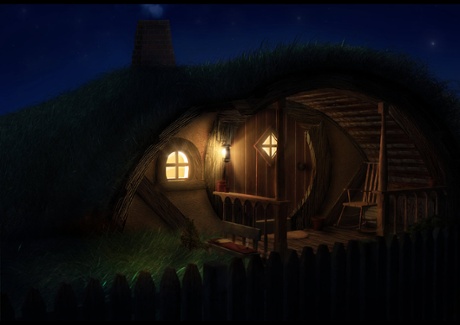
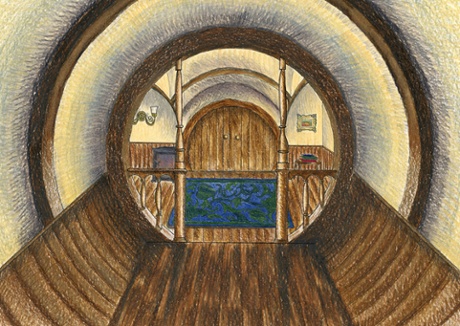
The eco-efficient Poddit hole will sleep four to five people in a Victorian-styled interior with a log burner, two double bedrooms, kitchen and bathroom.
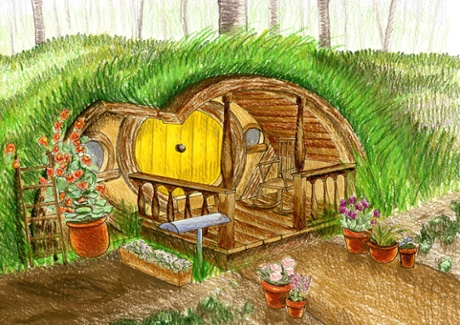
If the owners, Ed Lengyel and her husband Jan, raise the £50,000 needed, building will start in September. It will be carried out by Hartwyn Natural Building, a local firm, under the supervision of Tolkien Society member Alan Baxter to ensure authenticity.
The project will be a sustainable development, using natural building techniques such as rammed earth, straw bale and roundwood timber framing and natural materials such as straw, lime plaster, mud, stone and turf, much of it sourced on site or nearby. New technologies, including green roofing and rainwater harvesting will be used to make the Poddit hole as energy-efficient as possible.

West Stow, England’s oldest village, should appeal to Tolkien fans as it seems an apt location for a hobbit hole. It is home to a reconstruction of an Anglo-Saxon settlement, the only one of its type in the world. The original Middangearth of the Anglo Saxons, which partly inspired Tolkien’s creation of his own “Middle Earth”, will be the subject of adventure tours for Poddit hole visitors at the settlement.

Donors can pledge from £2 to make the building of the Poddit hole a reality and those who pledge larger sums will get significant rewards if the project goes ahead. These include two nights in the completed Poddit hole for a pledge of £160, a discount of 20%-30% on what the eventual rental will be.
Crowd-funding on Kickstarter is all-or-nothing. If the project raises its full £50,000 funding goal by 21 August at 3.14pm, pledges will be cashed in (backers’ credit cards charged) and the build will go ahead. If the project fails to raise that amount, it does not proceed and donors are not charged.