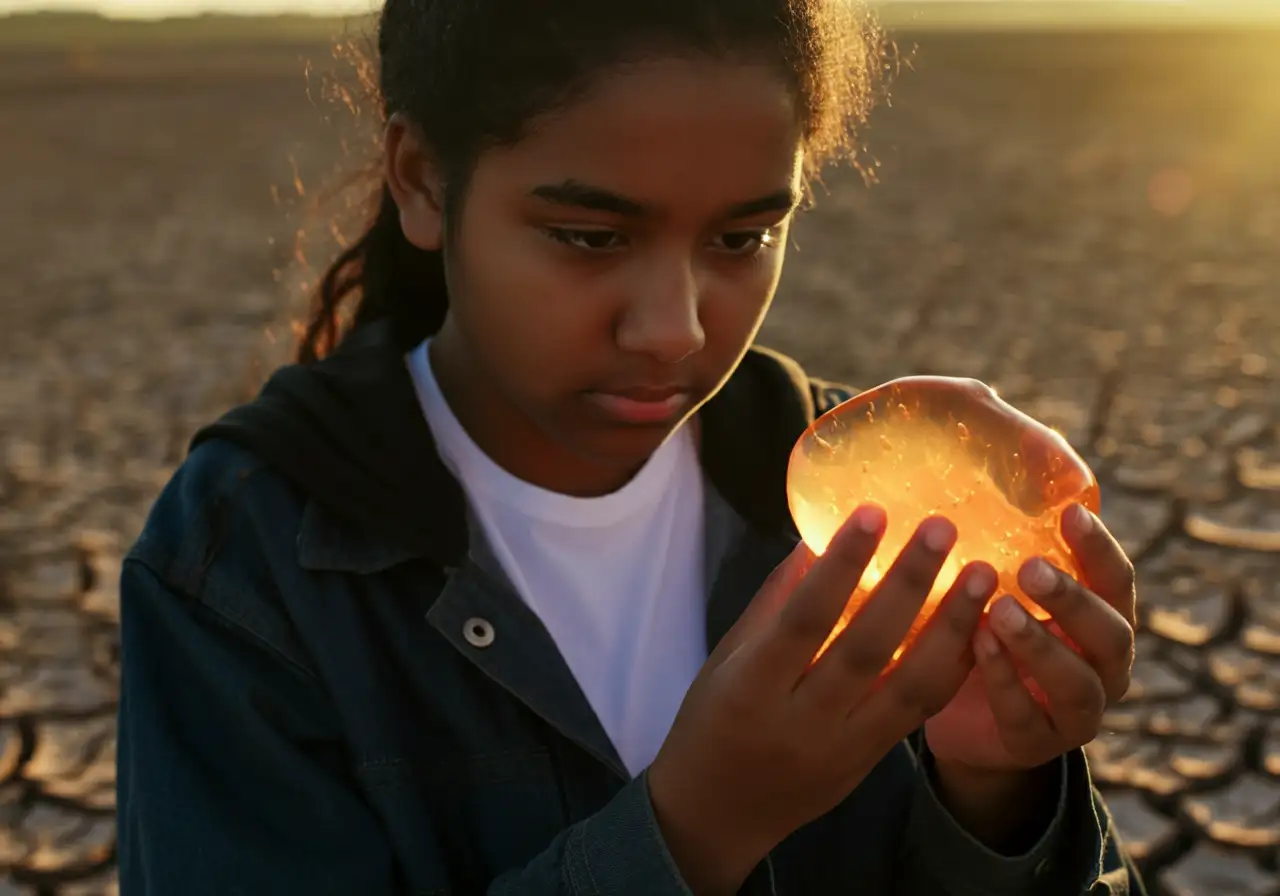
An innovative South African teenager caught worldwide attention because of his creation of a material from orange peels that would enable the drying soils to retain water. This idea came as a result of an increasing world challenge. There is a shortage of rainfall on many farms across the world, together with high temperatures and poor water retention in soils.
Kiara Nirghin, at the age of 16, investigated the possibility of turning orange peels into a hydrogel material able to retain water in soils. The idea might sound easy, but scientists state that the investigation underlying it has a connection with a genuine and rapidly evolving scientific area of agricultural materials science.
Recent studies proved that the hydrogels made from orange peels could help in retaining water in certain soil conditions, particularly those sandy soils that dry very fast.
Why did orange peels become a part of the solution?
Orange peels are considered to be food waste. However, the researchers proved that citrus peels contained substances that could help create absorbent materials referred to as hydrogels. These are compounds which have the ability to hold water. They have been widely applied in agriculture to keep the soil moist.
According to a peer-reviewed article published on PubMed Central, the use of orange peel-based superabsorbent hydrogels increased the water retention capacity of sandy soil and exhibited soil conditioning properties.
A study was conducted by comparing the performance of hydrogels produced from orange peels and melon peels. The tests were done to evaluate their water absorption capacity, reusability, and moisture retention capacity of the soils. This information helped in validating the scientific theory behind Nirghin's innovation.
How hydrogels benefit dry farms
The use of hydrogels has been established in certain forms of agriculture due to their efficiency in retaining water within the soil. In general, there are reviews on biopolymer-based hydrogels which explain that they are valuable in retaining water within the soils and reducing water loss requirements in case of drought.
According to scientists, they are valuable in sandy or fast-draining soils since water is lost quickly. It absorbs water when there is any, and then gradually releases it to the soil around it. This may allow for longer stretches between irrigations of crops.
According to experts, low-cost agricultural hydrogels are likely to gain more significance in future as climate change increases drought conditions in many farming areas.