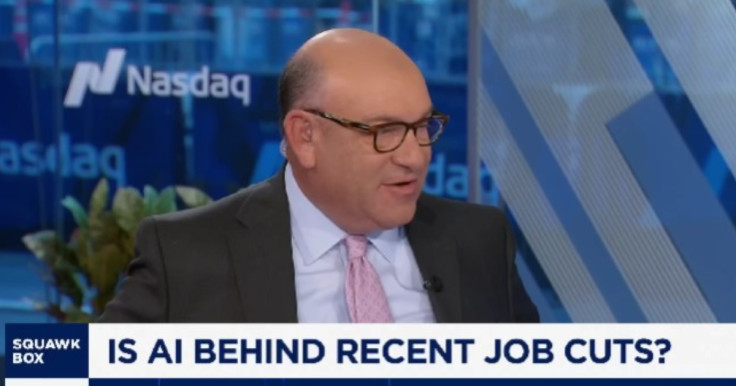
Artificial intelligence is no longer a future workplace disruption. For many executives, it is already becoming a workforce strategy.
A new Mercer survey of 825 C-suite leaders found that 99% of CEOs expect AI to result in at least some headcount reduction within the next two years, underscoring how quickly automation is moving from a productivity tool to a driver of workforce restructuring.
The findings arrive as workers are already showing signs of growing anxiety about their job prospects. Mercer's 2026 Global Talent Trends report found employee 'thriving' has fallen from 66% in 2024 to 44% in 2026, while 40% of workers now fear losing their jobs because of AI.
For employees, the concern is not simply whether jobs disappear. It is whether they can clearly demonstrate value in a labour market where routine tasks are increasingly being automated. That is the risk personal finance expert Suze Orman says many workers underestimate.
CEOs Prepare for Leaner Workforces
The Mercer findings suggest corporate leaders are becoming increasingly confident that AI can replace or reduce certain categories of work.
That shift is already showing up in employment data. According to Challenger, Gray & Christmas, employers announced more than 97,000 job cuts in May 2026, the highest monthly total since 2020. Roughly 40% of employers cited AI as a primary factor behind those reductions.
Several major companies have also linked workforce reductions to automation initiatives and AI-driven efficiency programmes. While the circumstances differ from company to company, the broader pattern is becoming increasingly clear: businesses are investing heavily in technology that can perform tasks once handled by human workers.
For executives, the appeal is obvious. AI promises productivity gains, lower costs and faster decision-making. For workers, it raises new questions about long-term job security.
Why Entry-Level Workers Face the Greatest Risk
The threat is not spread evenly across the workforce. A separate study by consulting firm Oliver Wyman found that the proportion of CEOs planning to reduce entry-level positions rose from 17% in 2025 to 43% in 2026.
99% of CEOs are planning AI layoffs in the next 2 years, according to a new study from Mercer.
— Brian Solis (@briansolis) May 29, 2026
The "2026 Global Talent Trends report" surveyed 825 C-suite leaders, along with 1,650 HR leaders.
98% are planning organization design changes in that same time period.
just 32% of… pic.twitter.com/WgovJwk928
Many of the tasks traditionally assigned to junior employees—including research, administrative work, scheduling, data analysis and basic content creation—are increasingly being handled by AI systems.
That creates a particular challenge for younger workers. Entry-level roles have historically provided the experience needed to progress into higher-paying and more specialised jobs. If those opportunities shrink, the pathway into many professions could become narrower.
The concern is no longer just competition between workers. In some cases, it is competition between workers and software.
Suze Orman's Warning to 'Invisible' Workers
As companies prepare for AI-driven restructuring, Orman is urging workers to make themselves harder to overlook.
Her warning centres on what she describes as becoming 'invisible' inside an organisation. Employees may be doing valuable work, but if their achievements exist only within internal systems or are known only to their immediate manager, future employers may struggle to recognise their contribution.
That can become especially problematic during layoffs, restructuring or job searches.
Orman argues that workers should actively document their accomplishments, maintain professional portfolios where appropriate and keep a record of measurable results. The goal is not self-promotion for its own sake, but creating evidence of value that can be understood outside a current employer.
In a labour market increasingly shaped by AI, visibility may become a competitive advantage.
Worker Confidence Continues to Slide
The Mercer report suggests that anxiety about these changes is already affecting employees.
The decline in employee 'thriving' from 66% to 44% over two years points to a workforce that feels significantly less secure than it did only a short time ago.
At the same time, fears surrounding automation are becoming more widespread. Four in ten workers now say they worry about losing their jobs because of AI, highlighting a growing disconnect between executive enthusiasm for automation and employee concerns about stability.
The challenge is not limited to any one industry. Advances in generative AI are affecting administrative, creative, analytical and technical roles alike, broadening the conversation beyond manufacturing and traditional automation.
Preparing for an AI-Driven Job Market
Orman has also stressed the importance of financial preparation.
She has argued that workers should build larger emergency savings than many traditional financial guidelines recommend, warning against relying on debt to bridge periods of unemployment.
Still, the direction of travel is becoming harder to ignore. CEOs are preparing for workforce reductions, entry-level jobs face growing pressure and employee confidence is weakening.
For workers, the question is no longer whether AI will change the labour market. The more immediate challenge is remaining visible, adaptable and financially prepared as that transformation accelerates.