
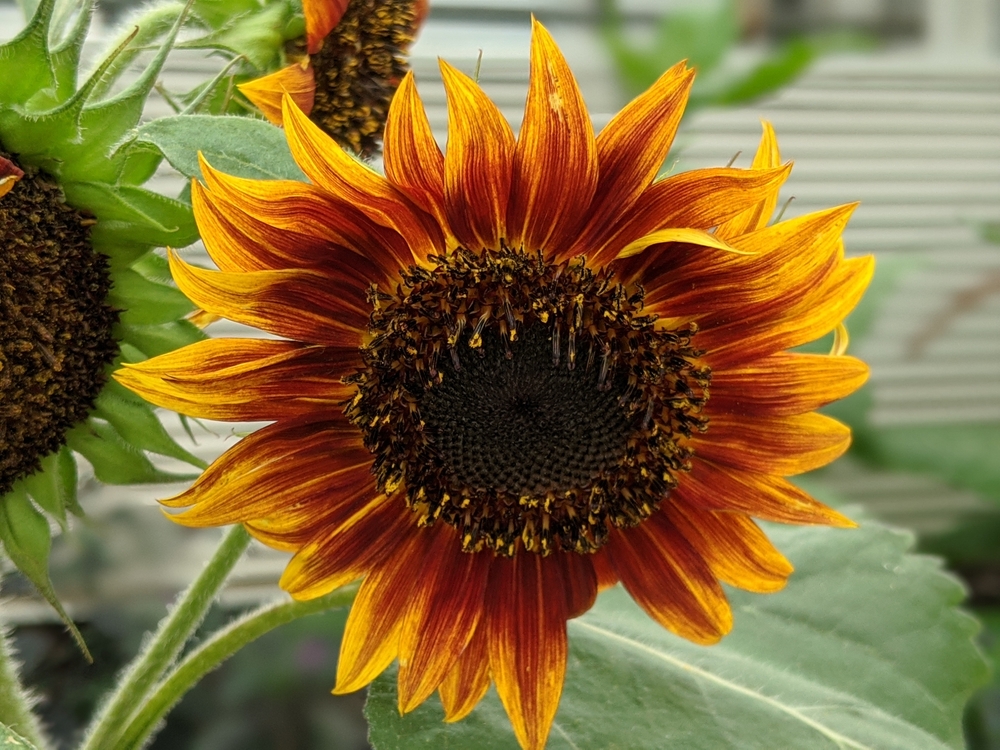
A garden can keep feeding birds long after the last bee disappears from the flowers, and the trick often involves doing absolutely nothing. Instead of cutting every faded bloom to the ground, gardeners can leave mature seedheads standing so finches, sparrows, chickadees, and other seed-eating birds can pick through them as fall progresses. Cornell Lab of Ornithology specifically recommends leaving plants such as purple coneflower, black-eyed Susan, and sunflowers standing because their seeds provide food for birds in fall and beyond.
That changes the usual fall cleanup routine in a wonderfully lazy way. The flowerbed does not need to look perfectly manicured when birds are still treating it like a buffet, and those dried stems can add winter texture while protecting food supplies from disappearing under a rake or into a compost bin. The key involves choosing plants that actually produce useful seeds, then giving birds enough time to find them.
1. Sunflowers
Sunflowers practically announce themselves as bird feeders with petals, and their large seedheads make the job wonderfully obvious. Common sunflower, Helianthus annuus, produces seeds that attract a wide range of seed-eating birds, while Cornell Lab notes that sunflower seed ranks among the most broadly useful bird foods.
For a fall bird garden, leave the flowerheads standing after the petals fade instead of immediately pulling the plants. American goldfinches and other birds can work directly through the seedhead, often clinging to the stalk while extracting individual seeds. Tall varieties also create useful perches, although gardeners with small spaces can choose shorter cultivars and still provide the same basic food source.
2. Purple Coneflower
Purple coneflower, Echinacea purpurea, earns its place twice because it supplies nectar earlier in the season and seeds later. Its distinctive raised center develops into a seedhead that attracts birds such as American goldfinches, and Pennsylvania State University Extension specifically lists coneflowers among plants whose seedheads provide winter food.
The temptation to cut those brown cones down can become surprisingly strong once summer color disappears, but patience pays here. Leave the stems standing through fall, and birds can investigate the seedheads as the seeds mature. The dried cones also provide architectural interest when frost arrives, making this one of those rare garden chores where postponing the chore actually improves the landscape.
3. Black-Eyed Susan
Black-eyed Susan, particularly Rudbeckia hirta and related species, turns from cheerful summer flower into useful fall seed source without requiring much fuss. Cornell Lab specifically identifies black-eyed Susans as plants whose mature seedheads attract goldfinches and other seed-eating birds during the colder months.
Once the yellow petals drop, resist the urge to declare the plant finished. The dark central seedhead still has a job to do, and birds can pick through it after the flowers fade. Leave several plants intact rather than cleaning the entire patch, especially if the goal involves creating a steady supply of natural food instead of one giant autumn buffet that disappears overnight.
4. Asters
Asters bring valuable late-season flowers to the garden, but their contribution does not stop when those blooms fade. New England aster and other native asters produce seedheads that can provide food for seed-eating birds later in the season, with Cornell Lab noting that nuthatches, cardinals, and other birds seek out aster seeds.
That makes asters particularly useful in a garden designed around seasonal succession. Their flowers arrive when many other perennials are winding down, then the developing seedheads take over as a food source. Leave the stems intact through fall rather than treating every spent flower as garden debris, and the same planting can serve both pollinators and birds at different points in the year.
5. Coreopsis
Coreopsis may look delicate, but those cheerful yellow flowers eventually produce plenty of tiny seeds that seed-eating birds can use. The simplest approach involves letting at least some flowerheads mature instead of deadheading every bloom. Gardeners can continue deadheading plants that need tidying while deliberately leaving other stems untouched, creating a balance between flowers for people and seeds for wildlife. That little compromise works especially well in mixed borders, where a few untidy seedheads hardly dominate the landscape.
6. Goldenrod
Goldenrod deserves more respect than its reputation as a fall sneeze culprit, because goldenrod itself generally does not cause the widespread hay fever that people often blame on it. Species in the Solidago genus produce late-season flowers followed by seeds, and Pennsylvania State University Extension recommends leaving goldenrod seedheads for birds.
Native goldenrods also support insects earlier in the season, which gives birds another reason to visit the garden before seed production begins. Once the flowers finish, the plant continues contributing instead of becoming something destined for the compost pile. Choose a goldenrod suited to the available space, because some species can spread vigorously and grow substantially taller than a tidy little border plant.
7. Native Grasses
Native grasses bring a completely different look to a bird-friendly garden, and their seedheads can keep food available after many flowering perennials have gone brown. Grasses such as switchgrass and little bluestem are useful bird-garden plants, with their structure providing habitat and their seedheads contributing food for birds.
Choose species that fit the local climate and garden size, then leave the seed stalks standing through fall and winter. One important detail matters here: ornamental grass cultivars can differ from straight native species, and some cultivars may produce fewer viable seeds than others. A local native-plant nursery can help identify productive species and forms suited to the region, turning an ordinary grass planting into both winter texture and a useful bird resource.
Let the Garden Get a Little Messy
The biggest mistake in a fall bird garden involves treating every brown plant as a problem that needs immediate removal. Birds cannot eat a seedhead that has already landed in a yard-waste bag, so delaying cleanup gives them more time to forage naturally. Professionals recommend leaving seedheads from plants such as sunflowers, coneflowers, asters, black-eyed Susans, goldenrod, and other perennials standing for birds.
That does not mean the garden needs to become an abandoned jungle. Remove diseased plant material, clear paths and hazards, and tidy areas where dead vegetation could create a genuine problem, but leave healthy seed-bearing stems whenever practical. A few brown stalks can provide food, cover, perches, and winter structure while also reducing the amount of fall cleanup waiting at the end of the season. In other words, the best bird buffet may already be growing in the flowerbed, and it comes with one wonderfully simple instruction: leave it alone.
Which of these plants already grows in the garden, and which one would make the most tempting addition for visiting birds?
You May Also Like…
8 Edible Flowers That Can Bridge the Gap Between Summer and Fall
Should You Cover Freshly Sown Seeds With Burlap?
What Is the Cheapest Way to Keep Berries Away From Birds?
7 Summer Plants That Attract Hummingbirds Almost Instantly
8 Nectar-Rich Options That Attract Hummingbirds
The post 7 Plants That Offer Seeds Birds Can Eat Through Fall appeared first on Frugal Gardening.