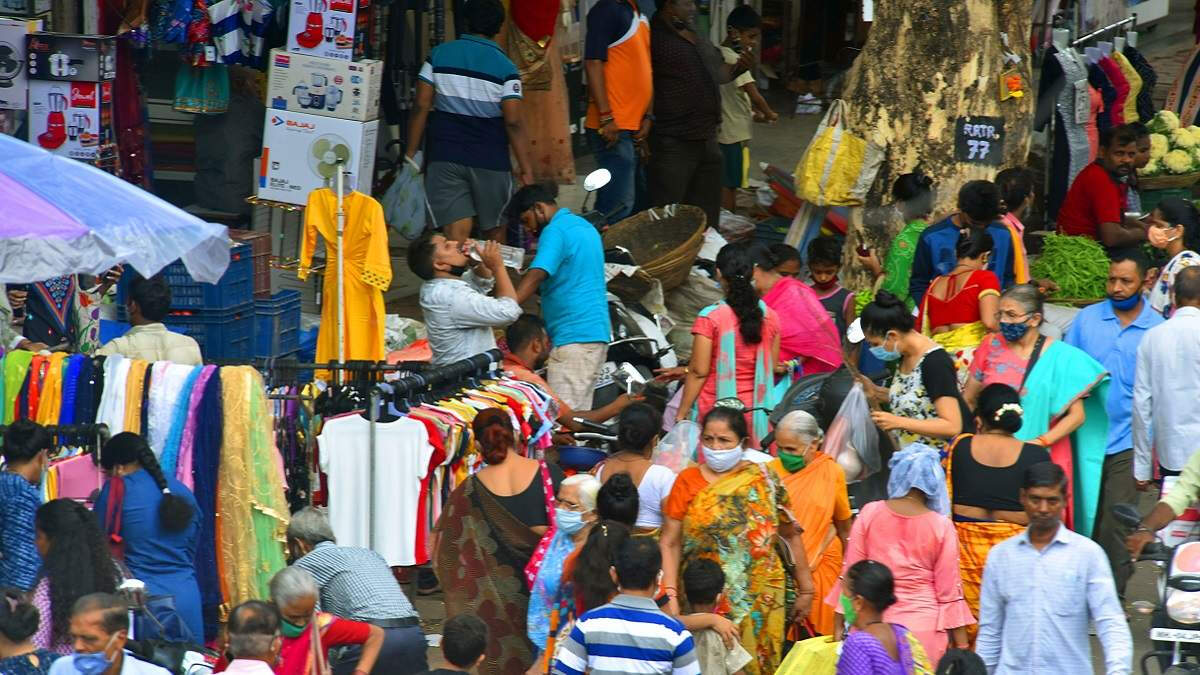
PUNE: A survey of 3,538 people from cities, towns and villages of Pune, Kolhapur, Solapur, Satara and Sangli has found that 59.3% of them believe the Covid pandemic is now over, due to the current drop in cases.
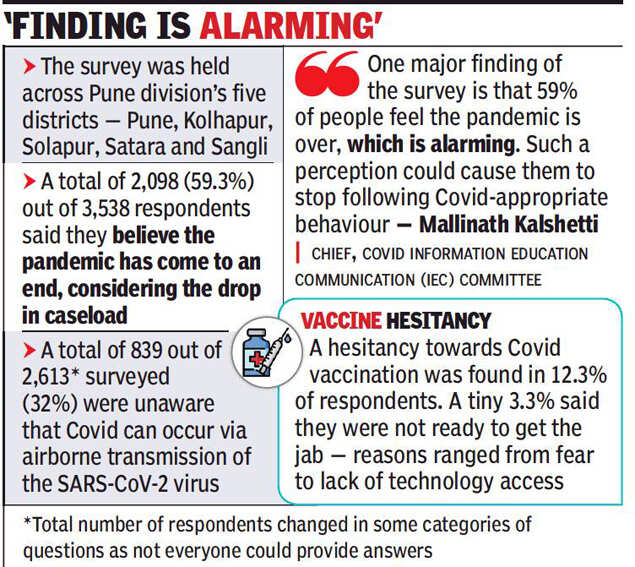
The Knowledge, Attitude and Practices (KAP) Covid-19 survey — conducted to determine awareness levels and people's perception of the pandemic — was carried out by the Covid-19 Information Education Communication (IEC) Committee, formed by the Pune divisional commissioner. The five surveyed districts are part of Pune division.
"One major finding of the survey is that 59% people feel the pandemic is over, which is alarming," said Mallinath Kalshetti, head of the IEC committee. "Such a perception could cause them to stop following Covid-appropriate behaviour. As part of IEC campaigns, we have devised suitable messages to be disseminated among residents of these districts - on usage of masks, importance of physical distancing, hand-washing and vaccination," he said.
Another finding is that people are still relying on information generated during the first Covid wave, with newer insights not percolating fully. Nearly 3,390 out of 3,450 who were able to answer queries in this category (98%) knew Covid spreads via droplets, but 839 out of 2,613 respondents (32%) did not know the droplets can be airborne and can travel some distance.
"So we need to have sufficient ventilation and open-air settings while battling the spread," Praveenkumar Pawar, a risk-governance specialist from UNICEF, who was part of the survey, told TOI. The IEC committee study was supported by UNICEF.
A small percentage of respondents - 1% to 2% - also thought Covid could spread via mosquito bites, unclean water, contaminated food, sweat or blood transfusion.
Many (43% or 772 out of 1,790 who answered) also said they have come across instances of discrimination against those infected with Covid-19.
The surveyors also looked for vaccine hesitancy, which they found in 12.3% of the respondents. At least 3.3% said they were not ready to get themselves vaccinated. Their reasons varied from fear, doubts about the shots, lack of any identification and lack of knowledge on how to get themselves registered for the jabs.
"Vaccine hesitancy is minimal, according to the survey. It will be addressed through targeted interventions”, Anuja Sankhe, a public health expert with UNICEF said.