The dystopia of Mad Max (1979) and its automobile-engineered brutalities — a highway patrolman’s preferred method of dispatching criminals involves maneuvering them into fiery crashes — originated from a terrifying everyday reality for writer-director George Miller. Having earlier trained as a doctor and worked as an emergency room physician in Sydney, he made the film as a way of processing the vehicular accident injuries he routinely saw, and the pervasiveness of such violence in his country. “In Australia, we have a car culture in the way Americans have a gun culture,” he told Starlog magazine in 1982. “The cult of the car.”
Five years earlier, Australian filmmaker Peter Weir had experienced a similar despairing sentiment, channeling it into the bleak unease of his feature debut The Cars That Ate Paris, which premiered on this day in 1976. A signpost that appears early in the horror film, diverting travelers off the highway and onto the narrow, unpaved road leading to the fictional town of Paris, reads ‘One Way’: an ominous warning in hindsight. For those who’ve fruitlessly waited in line outside the rural employment office before driving on, however, the advertised promise of work in Paris is enticing. And so these travelers persist.
Unwisely disregarding the low nighttime visibility, one such driver, George Waldo (Rick Scully), accelerates in his rush to get there. Blinded by a sudden, disorienting flash of light, he loses control of his car, careening off the edge of a steep hill. Only the passenger, his brother Arthur (Terry Camilleri), survives.
Such accidents aren’t just commonplace in Paris, but unnervingly prevalent; a radio news report announcing that the ensuing death toll has hit an all-time high here is reflective of Weir’s observation that automobile-related deaths were on the rise in Australia. He realized that the public’s only reaction to such fatalities was to shrug them off as an inevitable part of modern life, their unfeeling attitude mirrored by the Parisians’ apathy towards road accident victims. When Arthur confesses to having run over an elderly pedestrian in the past, Paris’ Mayor (John Meillon) is nonplussed. He simply responds: “These old pedestrians are a real problem, aren’t they?” (That Arthur was acquitted of manslaughter points to the country’s legal systems sharing the same unsympathetic viewpoint.)
The newcomer’s way out of Paris is stalled by not just physical roadblocks but by his fragile mental state being weaponized against him. Arthur’s deep-seated fear of getting behind the wheel once more has paralyzed him. There’s no public transport in Paris. He couldn’t leave if he tried.
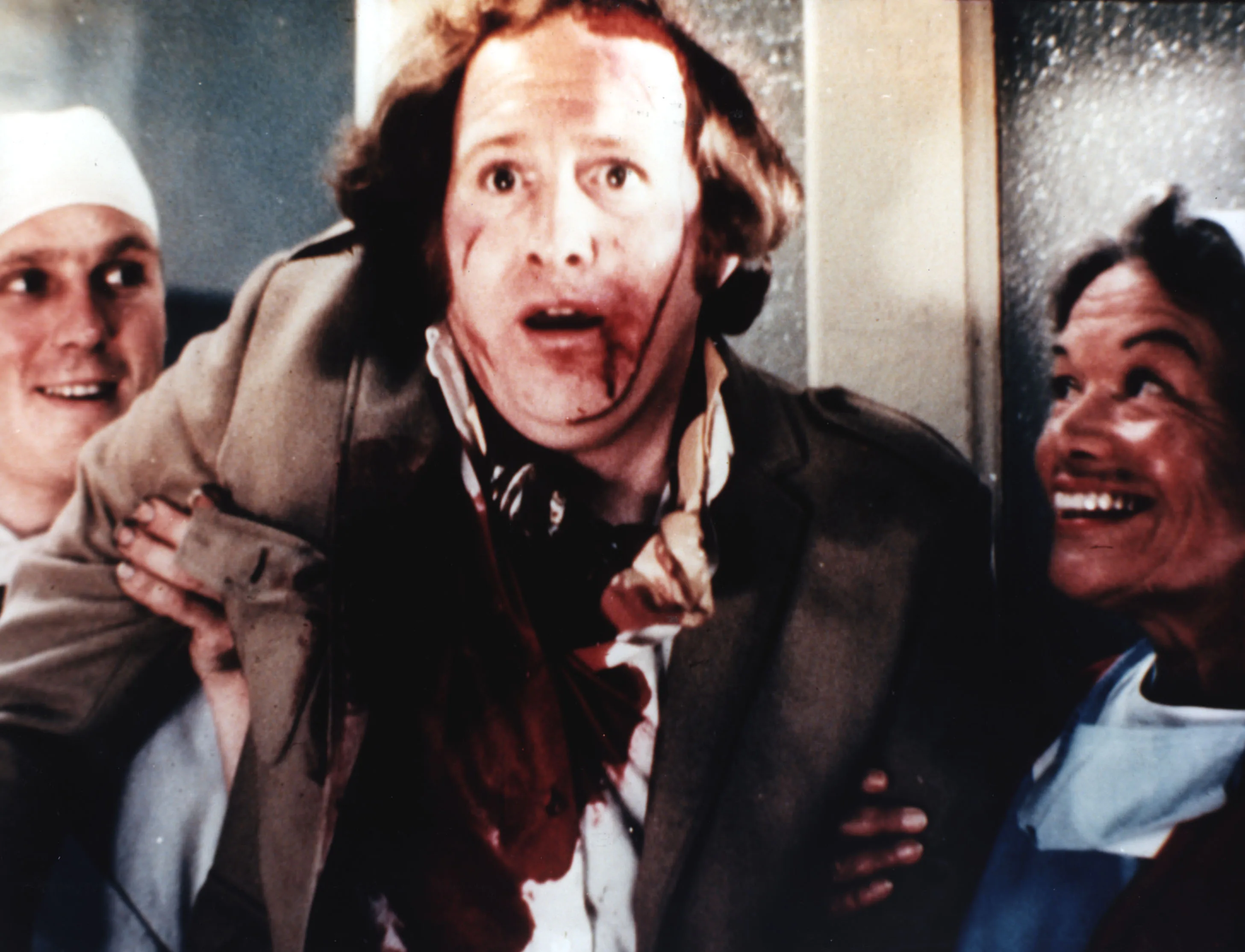
With sharp efficiency, Weir depicts a town whose inhabitants share a secret that only a single resident remains oblivious to, as well as an entire economy built off cruelty and deception — ideas he would return to in his 1998 drama The Truman Show (1998). Paris’ car “accidents,” like the one that killed Arthur's brother, are revealed to have been deliberately caused by the locals. In their well-oiled operation, auto parts scavenged from the wreckage are bartered for groceries, the drivers’ valuables are divvied up and any survivors are sent to the local hospital to have barbaric experiments performed on them. Human beings are expendable; cars are currency. It’s how this insular community survives.
The economic anxieties of Weir’s film propel Mad Max too. While a newspaper headline in The Cars That Ate Paris announces an increase in oil prices, it’s the scarcity of this fuel in Miller’s envisioned wasteland that spurs the total collapse of civil order. Violent nomadic biker gangs not only steal vehicles, but also target fuel tankers and siphon their petrol. Mad Max co-writer James McCausland was drawing on the 1973 oil crisis, particularly the “ferocity” with which Australian motorists demanded their tanks be filled anyway. “Long queues formed at the stations with petrol — and anyone who tried to sneak ahead in the queue met raw violence,” he wrote in the Courier-Mail.
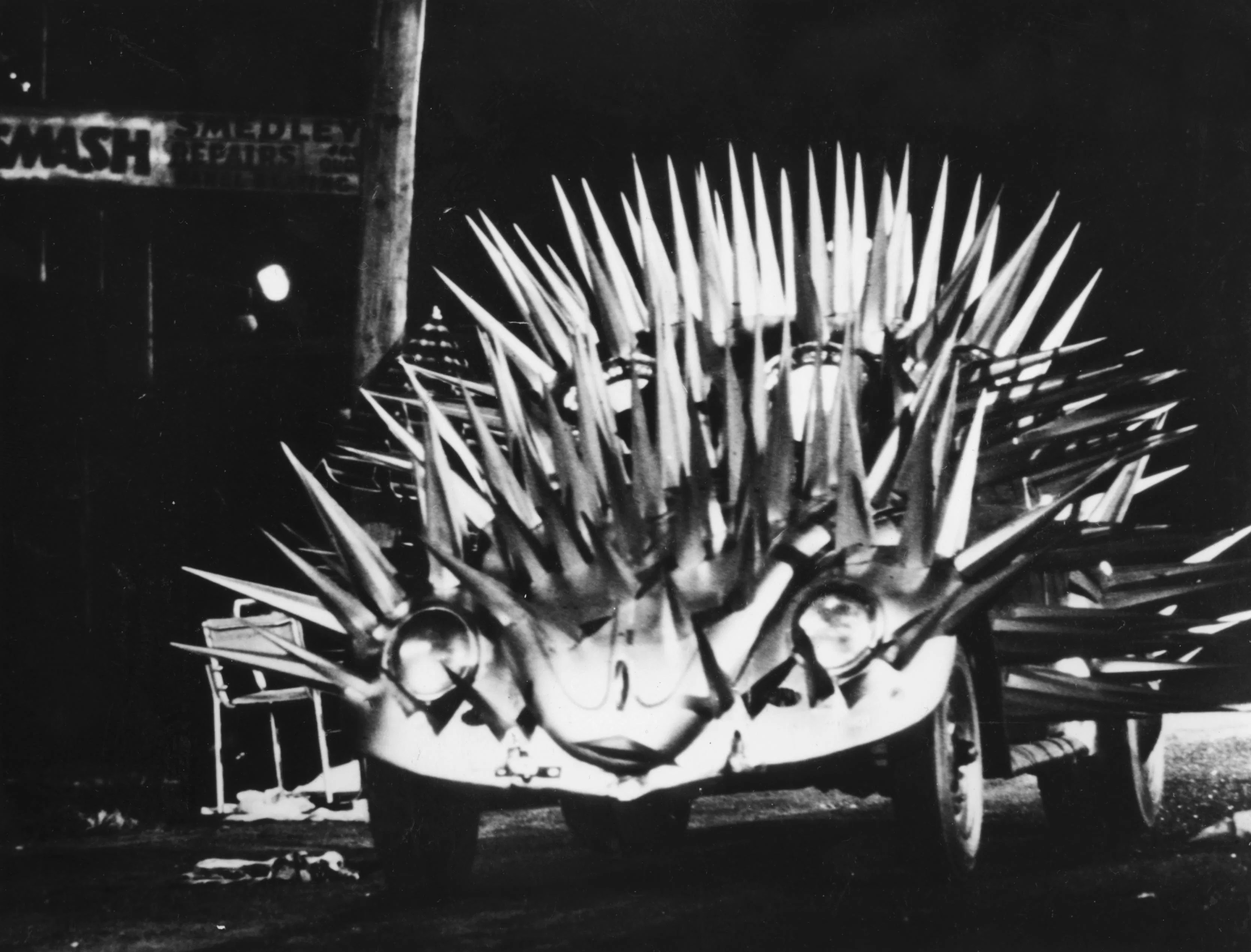
As in The Cars That Ate Paris, modified vehicles are a major driver of Mad Max’s narrative — the Plymouth Rock dune buggies in Mad Max: Fury Road (2015) were even Miller’s homage to the a Volkswagen Beetle in Paris that was painted bright silver and retrofitted with deadly spikes, giving it the appearance of a “gigantic mechanical hedgehog,” as film critic Luke Buckmaster put it. But while Mad Max’s central conflict is between a wild motorbike gang and one of the few remaining law enforcement agencies, Weir’s film hones in on an intergenerational rift.
The town’s feral youth refashion wrecked vehicles into instruments of intimidation, zipping around the town at high speeds and terrorizing the elders. Their resentment at not being included in the distribution of the accident loot eventually boils over into all-out anarchy. In the aftermath of the ensuing rampage and mass deaths on both sides, there’s an exodus of the survivors. Arthur has finally conquered his fear, driving out with a smile. Everyone else, ironically, is on foot. Paris might’ve been abandoned, but the impact of Australia’s “first car crash film” endured.