For as much as cinema is a medium of innovation, it’s also played a role in preserving certain long-standing cultural mythologies. One might look no further for evidence than the legends of King Arthur. Originating as an oral folk hero sometime around the 6th or 7th century (with debate on his existence persisting to this day), the mythic monarch of Britain has been depicted on the silver (and small) screen almost as long as cinema has existed. From a 1921 silent film adaptation of Mark Twain’s A Connecticut Yankee in King Arthur’s Court to John Boorman’s ‘80s cult gem Excalibur, to 21st century outings like King Arthur: Legend of the Sword, Hollywood is still keeping a Dark Ages legend alive.
Part of this is, of course, cinema’s love affair with high fantasy of all sorts. It’s the power fantasy, of course: virtuous conquerors wield magic and overcome evil hordes. That simplistic lens is part of the genre’s charm and its fatal flaw — there’s lots of high fantasy spectacle in literature and on-screen that flattens concepts like honor and courage into weightless depictions of medieval battles and Great Man flattery, trivializing the grim circumstances and imperial histories many of these stories are based on. But five years ago, David Lowery looked to another member of the Round Table to tell a story in which Arthurian legend and high fantasy come-of-age, and made an instant arthouse classic.
After a hallucinogenic and foreboding opening prophecy, The Green Knight lets viewers know early on that its vision of Camelot is one far less dazzling than epics past. The glitz and glamor has been eaten away by the passage of time — the castle looks as ancient as the King (never explicitly named as Arthur and played by Sean Harris) and the grey snow clouds smothering the kingdom impart a sense of wistfulness to the film’s opening, as if to tell the audience that this time of benevolent kings and glorious adventure will soon fade into legend.
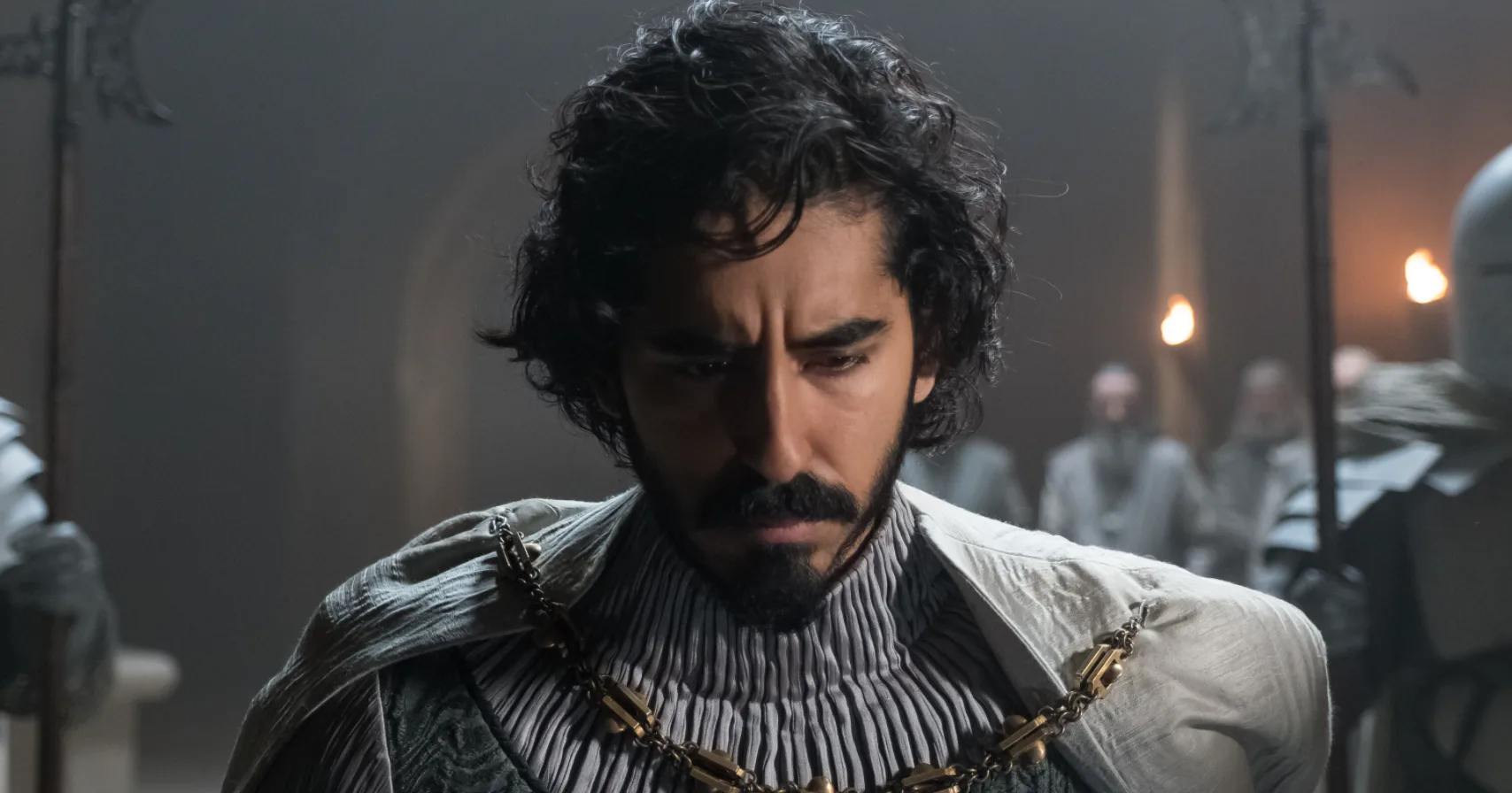
It’s amidst this sea change that we meet our hero Gaiwan (Dev Patel). The original legends paint Sir Gaiwan as a courteous knight and fearsome warrior, crusading for the common folk and rescuing fair maidens, but Lowery’s version hasn’t yet become a knight; instead he spends his days philandering in brothels and running away from the shadow of his legendary uncle and the helicoptering of his sorceress mother Morgan le Fay (a hypnotic Sarita Choudhury). Patel inhabits Gaiwan as a manchild terrified of adulthood and yet painfully aware of the potential for greatness within him, and his presence as an Indian actor within King Arthur’s mostly white court adds another layer to his longing for an opportunity to prove himself.
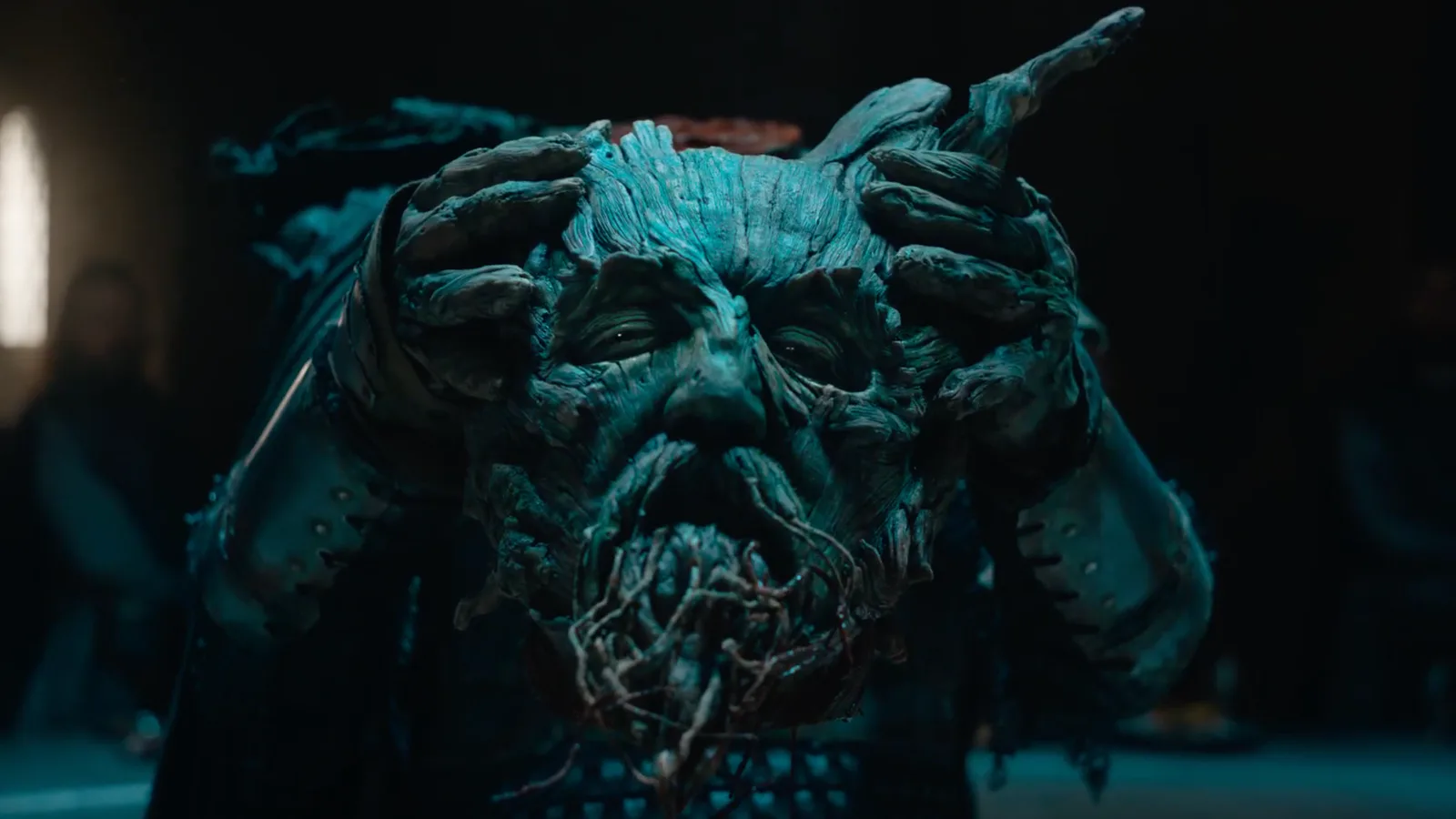
That opportunity comes on Christmas Day in the form of the mysterious and imposing Green Knight, a forceful reminder of the fearsome magic lingering in the world. Embodied by a solemn Ralph Ineson (who had to undergo three-and-a-half hours of makeup every day to achieve the characters gnarled tree-like appearance) and potentially beckoned by a ritual conducted by Gaiwan’s mother, the Knight appears at a celebration in the castle and begs the revelers to indulge him in a “friendly” game: any knight brave enough to deliver a blow upon him will earn the glory of holding onto his axe, but in a year’s time that same warrior must seek him out and have his blow returned in kind. The Green Knight, a living embodiment of nature, represents the harmony of mortality itself, and when the overzealous Gaiwan lops his head off, he takes the first step onto a hero’s journey of his own — but one more ominous and introspective than those in most fantasy.
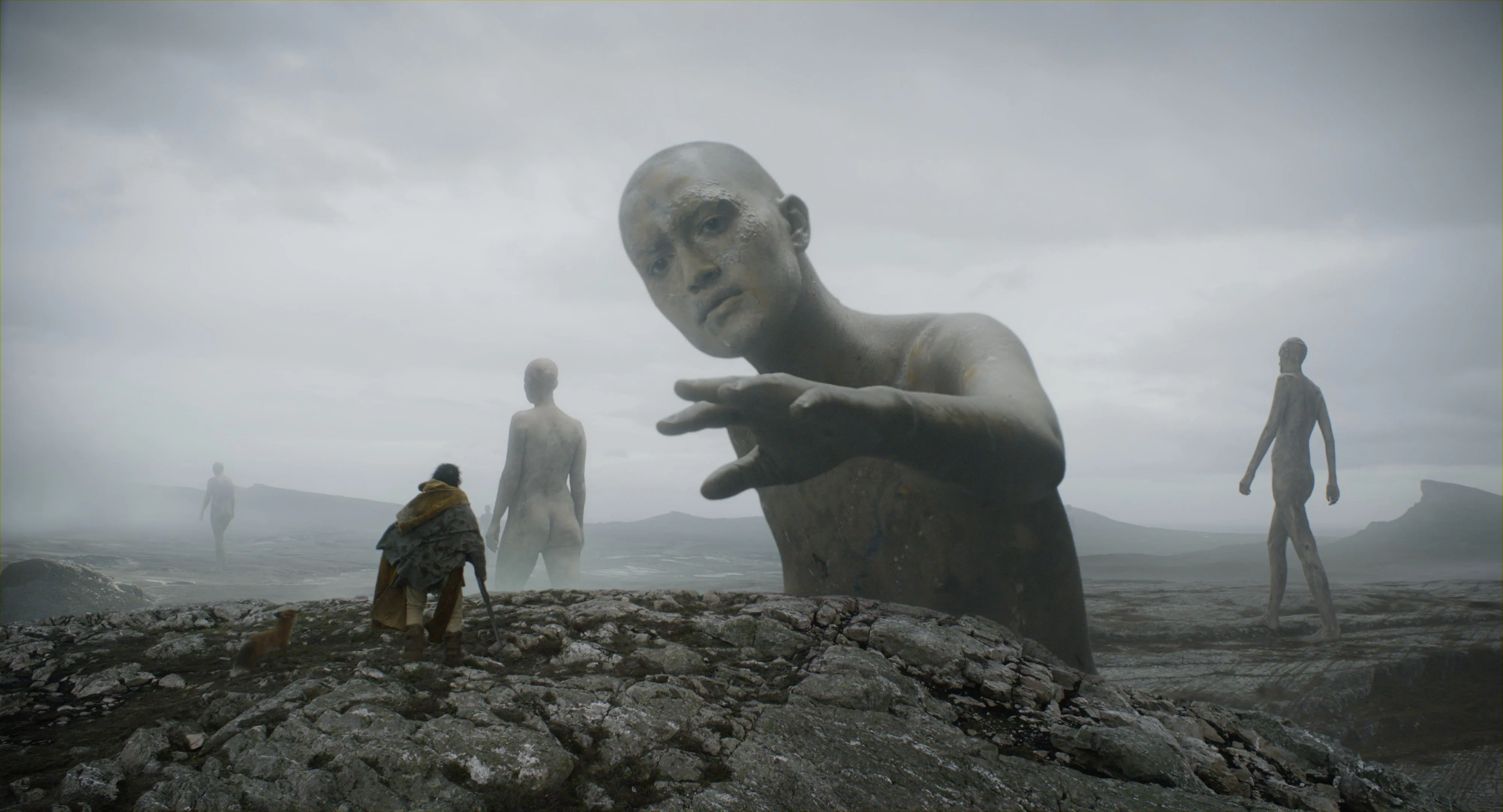
Gaiwan’s quest takes him out of Camelot and into the vast unknown outside the kingdom, and the film’s grandiose sense of scale highlights the staggering majesty of its Irish locations. Lowery and cinematographer Andrew Droz Palermo’s choice to shoot on large-format digital pays off in seismic wides where the landscape threatens to swallow Gaiwan whole, whether it be an open field strewn with the aftermath of battle or a valley passed through by nomadic giants.
Despite a less-than-fortunate encounter with some bandits (led by an expectedly mischievous Barry Keoghan) early on, Gaiwan’s journey isn’t defined by riveting action or flashy swordplay. Much of it plays out in vignettes, episodic trials that test his resolve and push him to live up to the convictions of the chivalric code; one of the film’s best and most contemplative scenes directly engages with Gaiwan’s status as a savior of maidens. At a decrepit shack in the woods Gaiwan encounters the ghost of Saint Winifred, a woman murdered by a spurned suitor and who can only find peace upon the recovery of her severed head from a well. When Gaiwan asks what he’ll get in return, her flabbergasted response of “why would you ever ask that” lays bare the film’s core ethos: the reward of a good deed is not in the glory that may come but in having done it regardless.
Although it initially appears like a dour deconstruction of chivalry and honor through a modern lens, The Green Knight ends up a powerful reaffirmation of the most important parts of those everlasting ideas and stories. When Gaiwan goes to face his fate and lays his neck before the Green Knight’s blade, he’s tempted to run, and watches a potential future flash before his very eyes: a decades-spanning head-trip in which he abandons his every moral and pays an even greater price down the road. Gaiwan ultimately chooses to face his fate at the mercy of the Knight’s axe, and is warmly and proudly embraced for it in the end — because growing up means realizing that true greatness, the kind that transcends history and legends and fables, comes from staying true to your convictions.