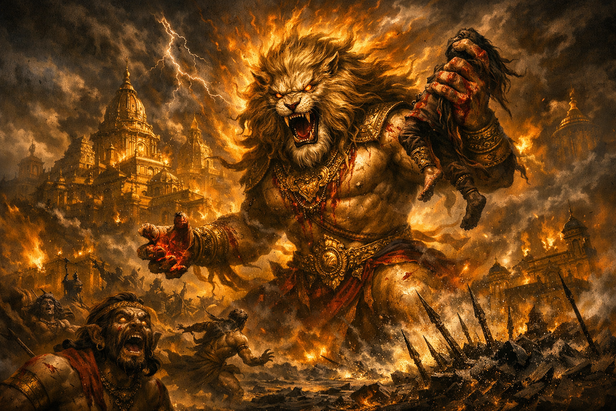
Among all the avatars of Lord Vishnu, few inspire as much awe, devotion, and spiritual intensity as Lord Narasimha. Half lion and half man, Narasimha is not merely remembered as a fierce divine form. For millions of devotees, he represents the unstoppable power of divine protection, the destruction of arrogance, and the victory of pure devotion over evil. The story of Narasimha Avatar, described in sacred Hindu scriptures such as the Bhagavata Purana and Vishnu Purana, remains one of the most emotionally powerful episodes in Hindu spirituality. It is a story filled with fear, tyranny, devotion, faith, cosmic justice, and divine intervention.
At the center of this divine story stands Prahlada, the child devotee whose unshakable faith in Lord Vishnu changed the course of destiny itself. Opposing him was Hiranyakashipu, the demon king whose arrogance became so extreme that he demanded worship for himself instead of God. The appearance of Narasimha Avatar was not random. It was a divine response to protect bhakti and restore dharma when fear and ego had crossed all limits. Even today, devotees continue chanting Narasimha mantras and offering prayers to Lord Narasimha seeking courage, protection from negativity, relief from fear, and spiritual strength during difficult phases of life. Hidden within this powerful avatar are timeless lessons that continue guiding devotees even in modern times.
Fear Can Never Defeat True Faith
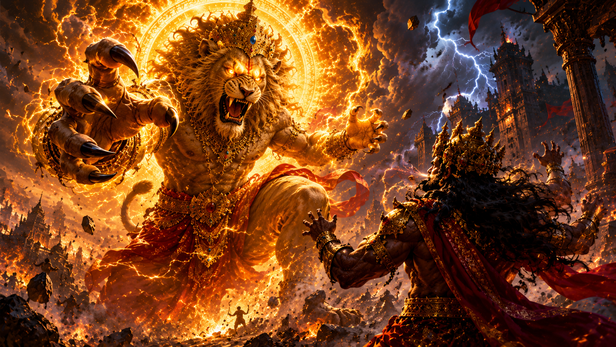
One of the deepest lessons from the Narasimha Avatar story is that genuine devotion becomes stronger than fear itself. Prahlada faced terrifying suffering because of his devotion to Lord Vishnu. He was threatened, tortured, poisoned, thrown from heights, and attacked repeatedly under the orders of his own father Hiranyakashipu. Yet throughout every trial, Prahlada never abandoned the name of Lord Vishnu. This unwavering devotion forms the spiritual heart of the story. Prahlada did not possess armies, weapons, or worldly power. His only strength was absolute faith. Hindu devotional traditions often highlight this moment to teach that sincere bhakti creates divine protection even in the darkest circumstances.
For devotees, this lesson remains deeply emotional because fear continues to affect human life in many forms. People struggle with fear of failure, enemies, illness, uncertainty, betrayal, and loss. The Narasimha story reminds worshippers that divine grace is believed to stand beside those who remain spiritually sincere.
This is why many devotees chant:
“Narasimha Kavacham”
or
“Ugram Veeram Maha Vishnum”
during times of emotional distress and danger.
The fierce form of Narasimha is therefore not viewed as frightening by devotees. Instead, it is seen as the protective rage of divinity standing against injustice.
Ego Eventually Destroys Even the Most Powerful
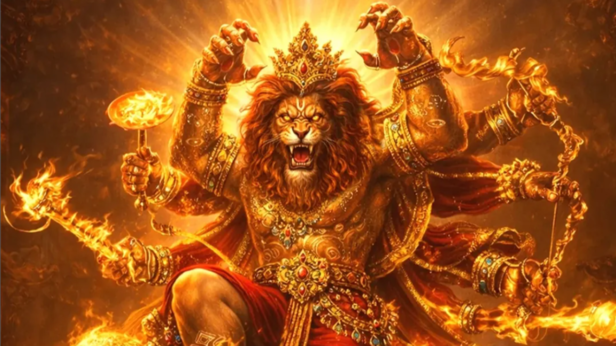
Hiranyakashipu’s downfall remains one of Hindu mythology’s greatest warnings against arrogance and ego. After receiving powerful boons through severe penance, Hiranyakashipu became convinced that he was undefeatable. His pride grew so extreme that he demanded everyone worship him as supreme above all gods. His hatred toward Lord Vishnu became uncontrollable because his own son Prahlada continued chanting Vishnu’s name.
The deeper spiritual lesson here is profound. Hindu scriptures repeatedly teach that ego blinds individuals from truth, humility, and dharma. Hiranyakashipu believed his power could control life, death, destiny, and even devotion itself. But divine justice arrived in a form he could never predict. Lord Vishnu appeared as Narasimha, neither fully man nor animal, during twilight, neither day nor night, on a threshold, neither indoors nor outdoors, using claws instead of weapons. Every condition bypassed the protections Hiranyakashipu believed made him immortal. For devotees, this moment symbolizes a timeless truth. Human arrogance may appear powerful temporarily, but ego ultimately collapses before divine will. This lesson continues resonating strongly because it applies not only to kings and warriors but to ordinary human life as well. Pride, anger, greed, and the desire for control often create suffering and spiritual downfall. Narasimha Avatar therefore becomes a reminder that humility keeps devotees closer to divine grace.
Divine Protection Can Arrive Unexpectedly
One of the most beloved aspects of Narasimha devotion is the belief that Lord Vishnu protects devotees in unimaginable ways. The appearance of Narasimha from the pillar remains one of the most dramatic and emotionally charged moments in Hindu mythology. When Hiranyakashipu mockingly asked Prahlada whether Vishnu existed inside the pillar, Lord Narasimha emerged instantly with explosive divine force. For devotees, this moment carries enormous spiritual significance. It symbolizes that God’s presence exists everywhere, even where human beings fail to recognize it. More importantly, it teaches that divine protection may arrive suddenly when hope appears completely lost.
This belief explains why Lord Narasimha is worshipped as a protector against:
- fear
- enemies
- negativity
- black magic fears
- emotional suffering
- spiritual obstacles
Many devotees believe prayers to Lord Narasimha create courage during difficult times and remove unseen negativity from life. Temples dedicated to Narasimha across India continue attracting worshippers seeking strength during periods of uncertainty and hardship. The devotion surrounding Narasimha is deeply emotional because it reassures believers that no sincere prayer goes unheard forever.
Bhakti Is More Powerful Than Birth or Status
Another powerful lesson hidden inside the Narasimha story is that devotion matters more than power, status, wealth, or lineage. Prahlada was born into an asura family ruled by a feared demon king. Yet despite his surroundings, his devotion toward Lord Vishnu remained pure. This spiritual truth holds enormous importance in Hindu bhakti traditions. Divine grace is believed to respond not to social position or external power, but to sincerity of heart. Prahlada’s devotion became stronger than the authority of kings, armies, and fear itself. For devotees, this lesson remains incredibly inspiring because it teaches that anyone can develop a relationship with the divine through faith and surrender. This is one reason why Prahlada is worshipped as one of Hinduism’s greatest child devotees. His story reminds devotees that even in hostile circumstances, devotion can survive and transform destiny.
Divine Anger Exists to Protect Dharma
The fierce appearance of Lord Narasimha often surprises devotees because Vishnu is usually associated with calmness, compassion, and preservation. Yet Narasimha Avatar reveals another important spiritual truth. Divine anger in Hinduism is not born from hatred or ego. It arises to destroy adharma and protect righteousness. Narasimha’s terrifying form emerged specifically to save Prahlada and end the suffering caused by Hiranyakashipu’s cruelty. For devotees, this lesson carries deep meaning. It teaches that dharma is never abandoned forever. Even when evil appears dominant temporarily, divine justice eventually restores balance. The image of Narasimha therefore represents courage, fearlessness, and protection for devotees facing difficult struggles in life.
This is why many worshippers keep Narasimha images, chant Narasimha mantras, and observe Narasimha Jayanti with deep devotion. To devotees, Lord Narasimha is not simply fierce. He is the compassionate protector whose divine rage appears only to defend truth and devotion.
Why Narasimha Devotion Remains So Powerful Today
Even in modern times, Narasimha devotion continues growing because the emotions connected to the story remain timeless. People still struggle with fear, injustice, uncertainty, betrayal, anger, ego, and emotional pain. The story of Prahlada and Narasimha provides spiritual reassurance that devotion can survive even during overwhelming darkness. Many devotees believe:
- Narasimha protects sincere worshippers
- Narasimha mantras remove negativity
- Narasimha worship strengthens courage
- Narasimha blessings calm fear and anxiety
The emotional intensity of this avatar makes the connection deeply personal for worshippers. Unlike distant philosophical concepts, Narasimha devotion feels immediate, protective, and emotionally alive.
Conclusion
The story of Narasimha Avatar is far more than a dramatic episode from Hindu mythology. It is a timeless spiritual teaching about fear, devotion, ego, courage, and divine protection. Through Prahlada’s unwavering faith and Hiranyakashipu’s downfall, devotees continue learning that true bhakti can survive even the greatest darkness. The fierce form of Lord Narasimha reminds believers that divine grace may appear suddenly when all hope seems lost. For millions of devotees, Narasimha is not merely the terrifying avatar of Vishnu. He is the eternal protector who destroys fear, crushes arrogance, and stands beside those who remember God with complete faith and surrender.
Unlock insightful tips and inspiration on personal growth, productivity, and well-being. Stay motivated and updated with the latest at My Life XP.