Getting better at golf as an amateur takes a lot practice, perseverance and resilience - but there are also a number of steps high-handicappers must take to improve their scoring (that many currently ignore).
As the golf season starts, you will surely be looking for ways to cut your handicap in 2026 - but did you know that much of that success (or failure) will come down to what you do before you hit the golf ball?
Ged Walters is a PGA professional and Top 50 Coach with more than two decades of experience coaching golfers just like you to improve their golf game.
After teaching countless lessons and witnessing the common mistakes that plague high-handicappers, Ged decided to share his wisdom in order to help you foster better habits that will slash your handicap this year...
5 Steps All High-Handicappers Must Take To Improve Scoring
1. Assess The Lie
The lie is the most important thing that amateurs should check before hitting every shot. It's what dictates whether or not you can select your 150 club from 150 - or not.
Lots of amateurs play the same golf course over and over and they will walk up to their ball with a club already in their hand or an idea of what they are going to hit in their mind before they get there.
The tendency is to think you should play the same shot you might have played from a similar spot or distance on that hole before, without even assessing the lie, and that error can be very costly.
So, if you've got lie ‘A’, which is the perfect lie on a lovely tight piece of turf, then you have scope to choose whichever shot you want.
If you have type ‘B’, where the ball is sitting up in the first cut or short rough like a gooseberry, you don't actually know how much grass is underneath that golf ball.
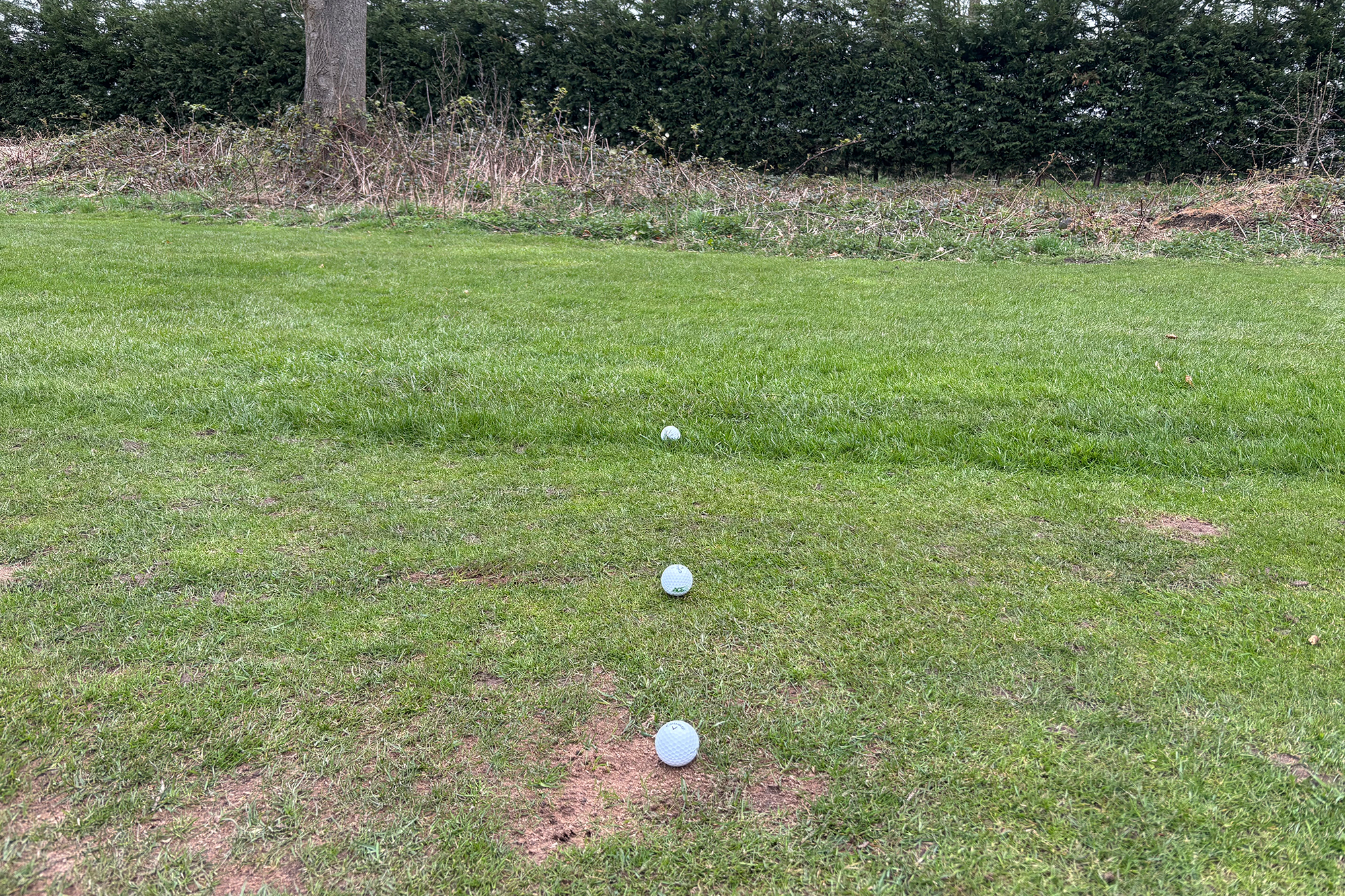
We don't know how high it is off the soil. So in an ideal world, you would go somewhere reasonably close by where you didn't disturb the golf ball and put your golf club on the ground to see how far up the face the grass reaches. You then get an idea of what you’ve got underneath it.
Once you've got that information, you can adjust your ball position accordingly.
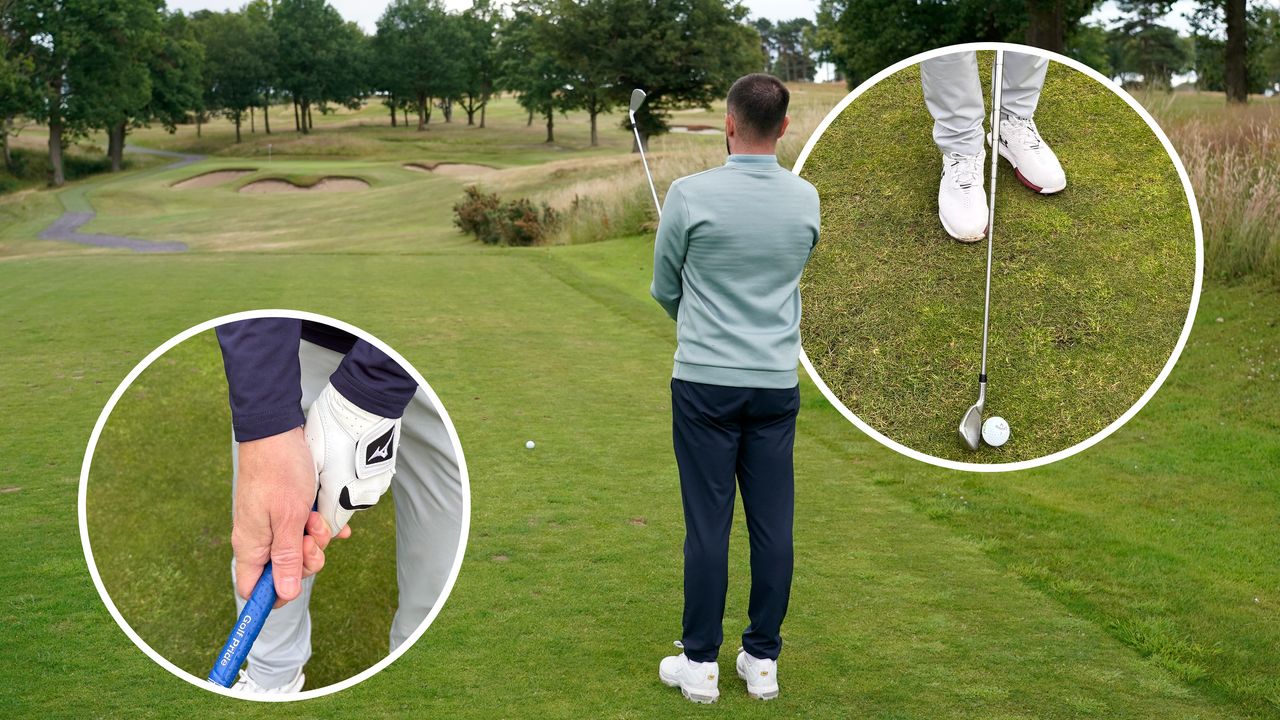
If the ball is sitting up I would generally suggest putting the ball position a little further back in the stance, with weight more forwards on the lead side, allowing you to catch the ball earlier in the swing arc and increase your chance of a centred strike with irons.
When you've got lie ‘C’, the sort of in-between scabby one, you need to do a little investigating. As long as you're not in a depression, you're okay to choose your normal club because you can get full contact on the golf ball.
Most high handicappers have chosen their club 20 yards from the ball. They're pulling their club out of their bag while they're pushing a trolley.
Very few put their bag down and stop to answer the questions the golf course is asking - but by assessing the lie you can save yourself crucial shots.
2. Test The Conditions
The next thing all high-handicappers should do before hitting the golf ball, which they often do not, is testing the conditions.
Wind strength and direction both have a significant impact on the flight of the golf ball, so you should definitely be calculating distances in the wind with the help of some basic information.
As a ballpark formula, one mile an hour of wind into your face will hurt your distance by one yard. So, if it's a 15 mph wind into your face, then you will likely come up at least 15 yards short if you do not factor that into your club selection.
If it's downwind, one mile an hour helps half a yard. So, a 20mph helping wind would help you to hit the golf ball 10 yards longer than normal.
You can work out the direction and of the wind by throwing up some grass, and while you can’t check your weather app during competition you can check the forecast before you go out to give a rough indication of wind strength.
While on the course, you should also use other methods to gather this information - particularly if you are in a sheltered location or playing a course that is heavily tree-lined.
Focus your attention on the treetops, because as the ball reaches peak height it will likely be affected by whatever is going on up above that treeline.
Lot’s of people just look at the flag, but this can be misleading. Use all the available information to do some basic calculations before hitting your shot and you will notice much more consistent results.
3. Check Your Grip
This is the only point of contact with the club, so nailing your golf grip is a great way to improve your ball striking. A lot of high-handicapped golfers don't have a functional grip.
The reason I say functional is that I don’t believe there is a ‘good’ or ‘bad’ grip, it’s about matching it to your swing profile and technique.
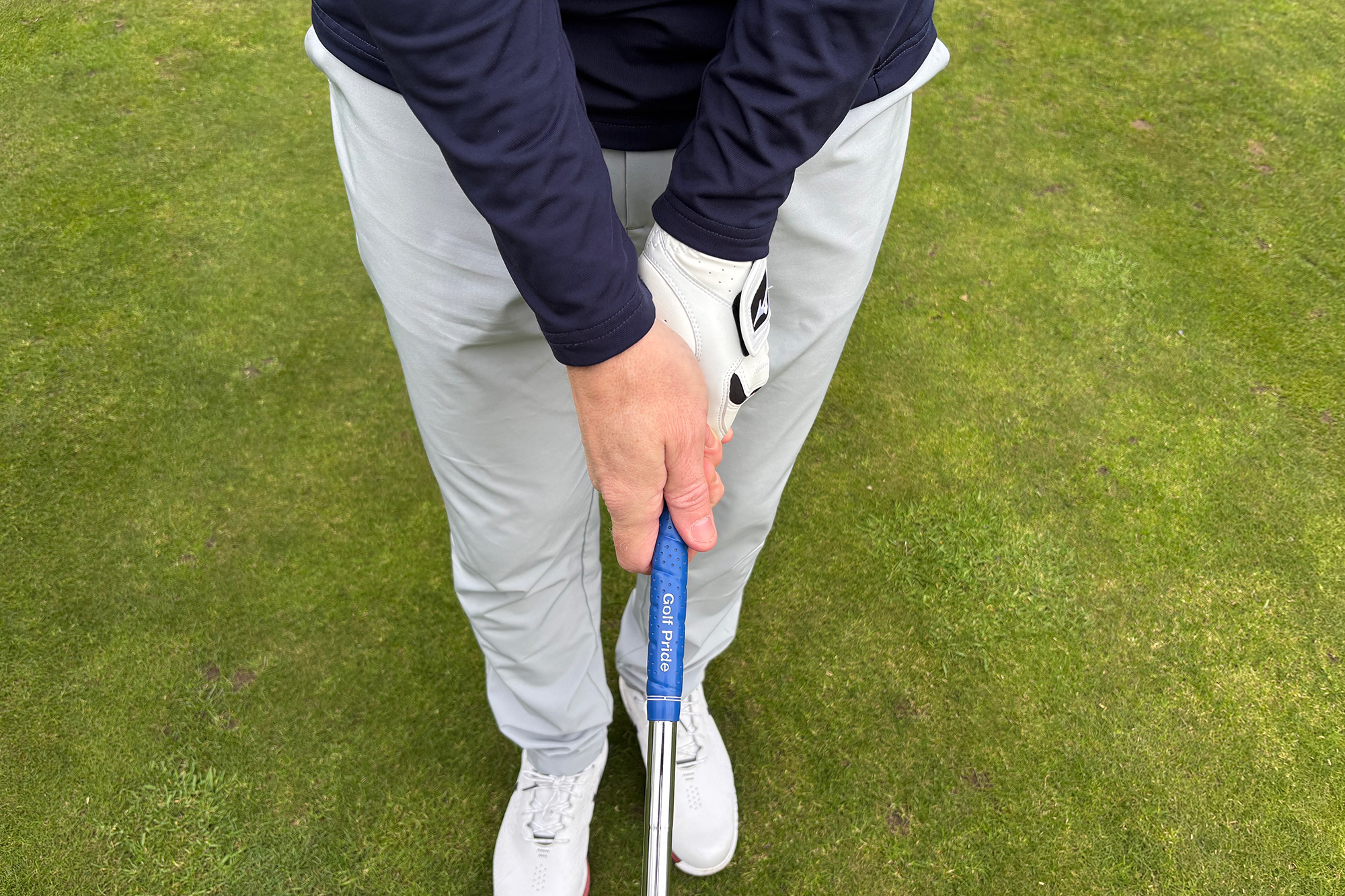
The textbook would tell you that Jim Furyk's grip was ‘bad’. But it was functional.
When you are working on your grip on the range, it doesn't have to be 'textbook' looking. But if you're hitting really poor shots, changing your grip is a way to see significant improvements in your ball striking.
I would advise seeing your local PGA pro for some advice on this aspect, as it’s very individual and extremely important, but once you have done that, take a few seconds before each shot on the course to check you have nailed the fundamentals of your ‘functional’ grip.
4. Be Precise With Your Aim
If you think about the one thing that moves the golf ball, it is the club face - which is why finding a centred strike with irons is so important.
If we aim the club face in a position that is not relative to our target, then the chances of us hitting the golf ball in that direction are drastically reduced.
Lot’s of high-handicappers will step into their shot, place their feet shoulder width apart, look over the shoulder at their target and think they have aimed correctly.
The thing is, when you look over your shoulder, your shoulders turn. Therefore, when you return to look at the ball, you are miles off where you think you are aiming.
That leads to amateurs questioning why they are hitting it off to the right, but in reality they are actually aiming that way.
A better routine is to place the club behind the ball, pointing the face towards your target, before you step in to take your stance.
You can also use a blemish on the ground, an old divot or a particular blade of grass in front of you that is on your intended line to help you align effectively.
This small change in your routine will save you shots around the golf course by actually allowing you to hit the golf ball where you intend too.
5. Flare The Feet
The knee joint is a hinge, so it only works in one way. Relative to how flexible the individual is, having your feet square at setup can restrict how much hip rotation they can achieve.
This often leads to swaying and a lack of stability of the body, which then becomes a variable in whether or not you're going to hit the ground way behind the ball as you struggle to control your low point with any consistency.
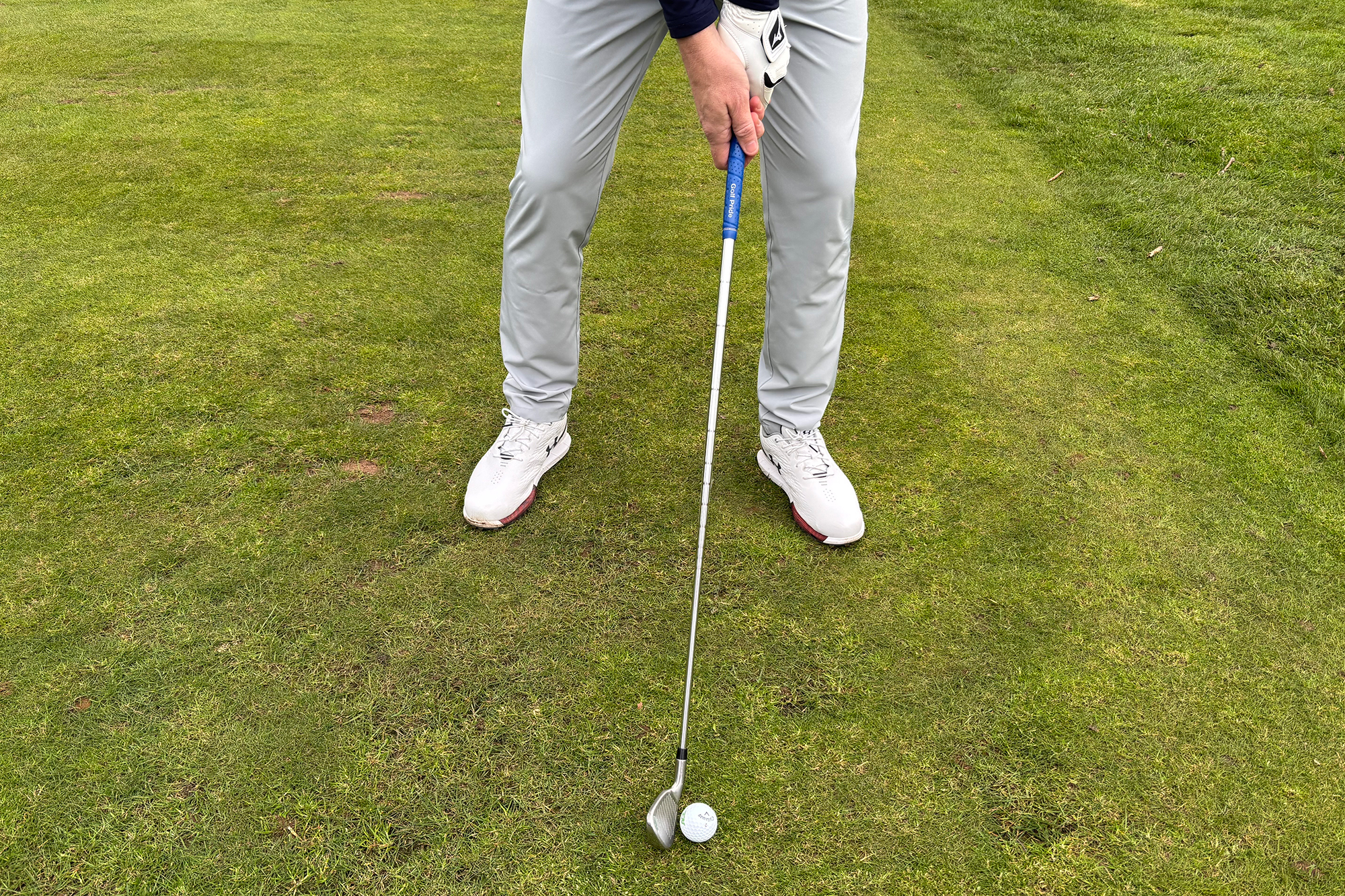
Flaring the feet out slightly sets the knee joint on an angle, allowing the hip to rotate with greater freedom.
This makes it easier for you to stay more stable and keep your weight forward for longer in the backswing, helping you to move the weight forward in the downswing rather than having that sway and timing issue.
By simple adjusting the position of your feet before you hit the golf ball, you’ve mechanically given yourself a much better chance of getting into the right positions in the golf swing - and ultimately improved your chances of hitting better golf shots.