
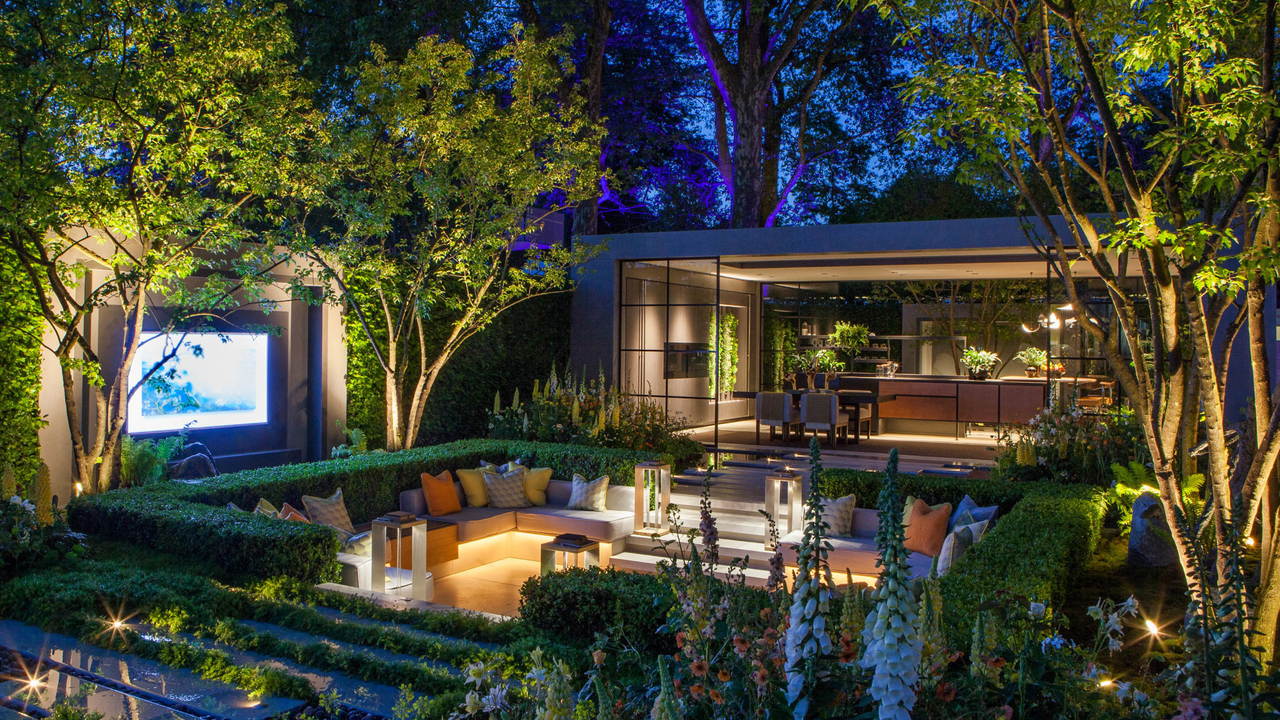
In the warmer months, your garden lighting facilitates those laid-back, languid summer nights, soaking your garden in a warm glow. And then, once we return to the cold, those same lights maintain that glimmer of summer warmth outdoors as we appreciate them instead from the other side of the window. And no one element is more effective at achieving this than the garden spotlight.
It's easy to think of your outside lighting as a purely functional addition, something that needs to keep your space well-lit through the night. But this is just one aspect of what your garden lighting is there for. Beyond function, your garden lighting should bring atmosphere to your outdoor space, something that a well-placed spotlight does so well.
Understanding the right way to use a spotlight can completely transform the effect of your outdoor lighting, bringing in a depth and complexity you didn't even know you could achieve. To help you unlock the hidden potential in your outdoor space, these are the five places experts position spotlights for an elevated scheme.
1. Beneath a Tree
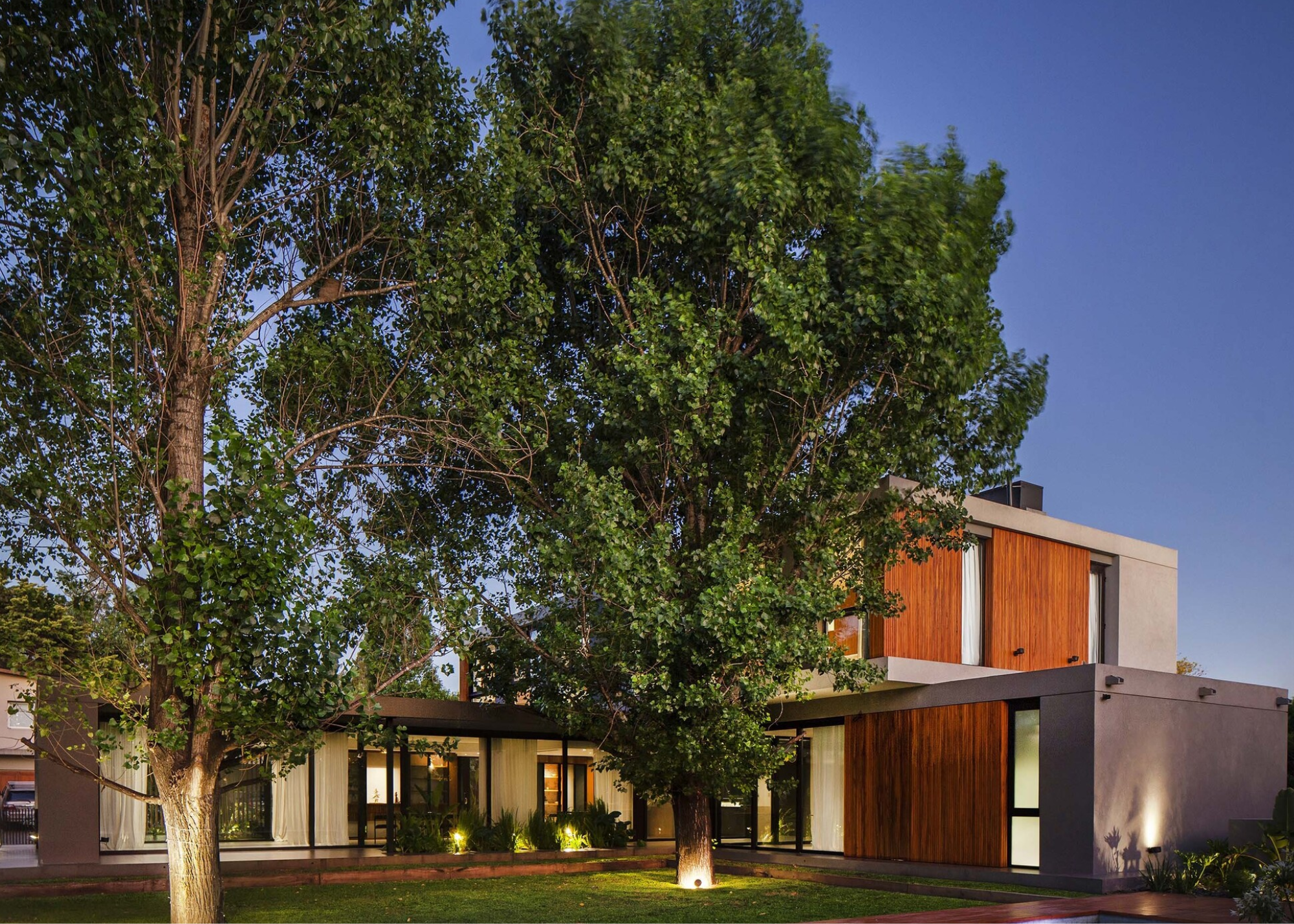
Perhaps one of the most popular uses of garden uplighters, and for good reason; positioning your spotlights beneath a tree is always a good idea.
Just take it from expert landscape designer Amanda Patton. With over two decades of experience under her belt, Amanda is well acquainted with what does and does not work in modern garden design, and in her opinion, uplighting a tree is one of the best things you can do for your outdoor space.
"Uplighting a multistemmed tree from below, especially if the tree has been crown-lifted to show off its branches, adds drama and can be used to highlight key moments through the garden," she explains.
By placing the light in front of the tree, you illuminate the complex structure of the branches, highlighting them against the dark backdrop behind. Or, for a different look, great for evergreen trees, Amanda suggests that "Shining a light from below into the canopy of a single-stem tree will accentuate the texture of the foliage."
For the best of both worlds, though, Amanda says, "A good effect is to position two lights on either side of the tree a little way away, angled into the canopy so the beams cross and just catch the trunk."
2. By a Window
When planning your lighting, you don't just want to think about the design of your modern garden, but also the structure of your home, too.
Most of the year, you'll primarily be viewing your garden from inside your home, so it can be helpful to plan your lighting scheme with this in mind.
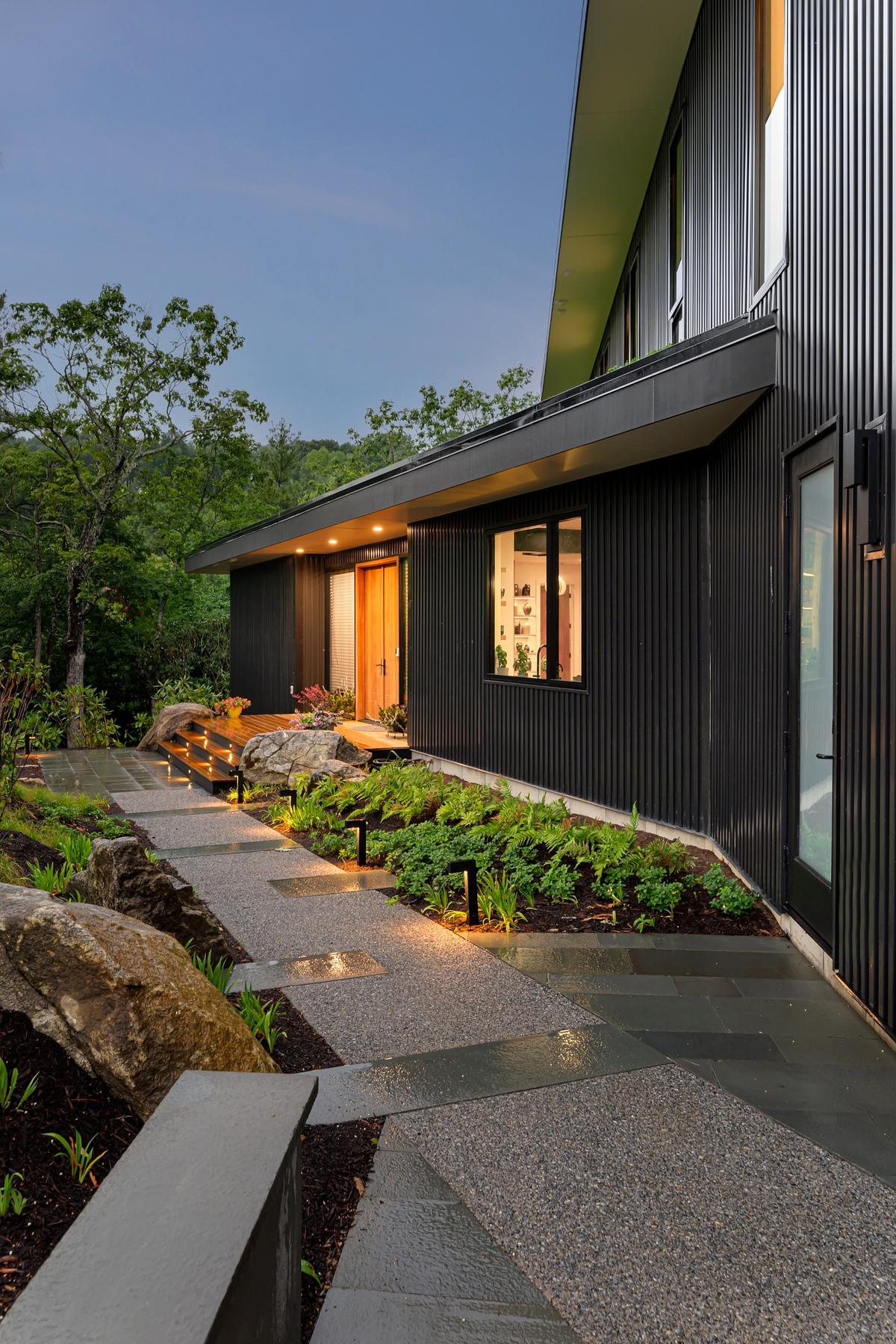
For example, Luke Thomas, design director at award-winning John Cullen Lighting, says, "I like to position discreet spotlights in pots or borders just outside glazing. This draws the eye into the garden after dark, helping the interior feel larger and more connected to the outdoor space."
Making use of this window treatment and lighting up the areas surrounding it can make your garden look even more inviting from within.
3. Around a Garden Sculpture
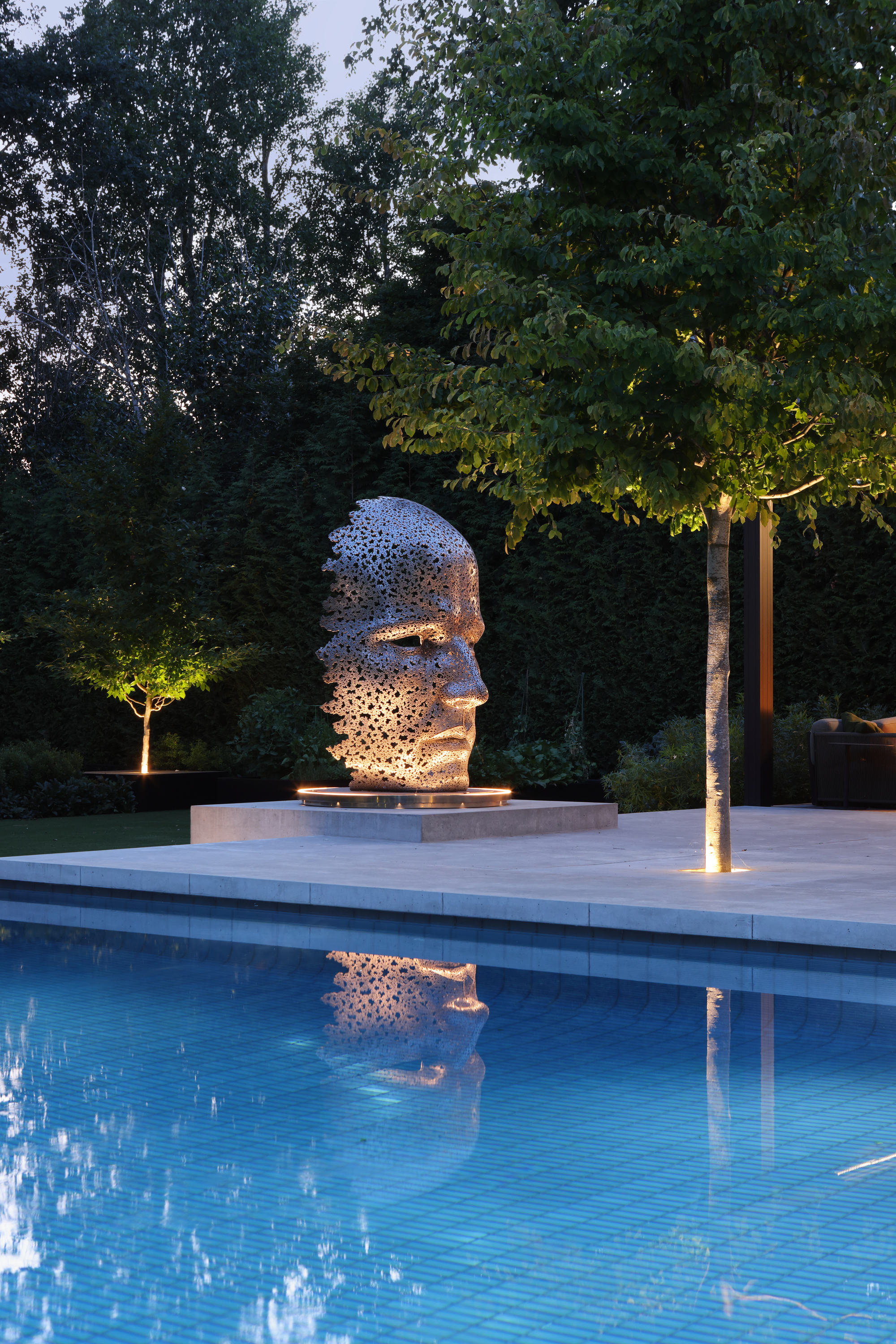
Your garden spotlights are excellent for drawing even more attention to the focal points of your design, and what could be a better focal point than a beautiful garden sculpture?
For the best results, Amanda says, "lighting the feature from behind (backlighting) will throw the feature into silhouette, which is more interesting than lighting from the front."
The size and shape of your sculpture will, of course, dictate what type of lighting will look best, so spend some time playing around with different options before committing to anything.
4. Around Textured Plants
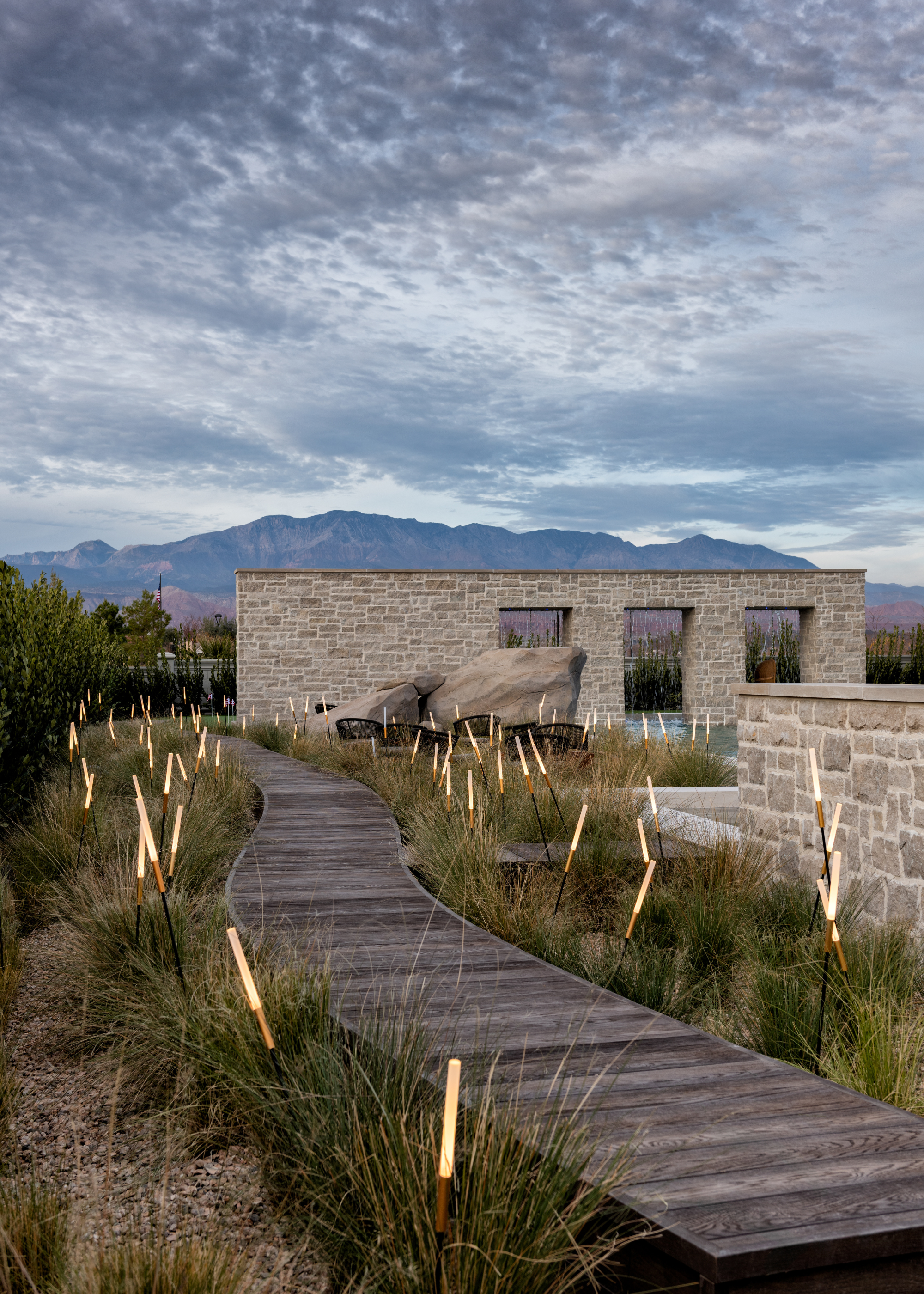
At the core of any beautiful fairy tale garden is a good selection of plants, so it's only right to draw more attention to them with your lighting. The best plants to illuminate are ones with any kind of dramatic, elaborate textures or shrubbery.
For example, Kat Aul Cervoli, garden design expert and founder of Staghorn NYC, recommends highlighting any specimen plantings with spotlights, explaining, "these often have interesting shapes that can be beautifully highlighted by a spotlight, and their placement is usually conducive to being ideal for an uplight.
Rich, textured plants, like ferns and ornamental grasses, also make great candidates for this treatment.
5. Near Textured Finishes
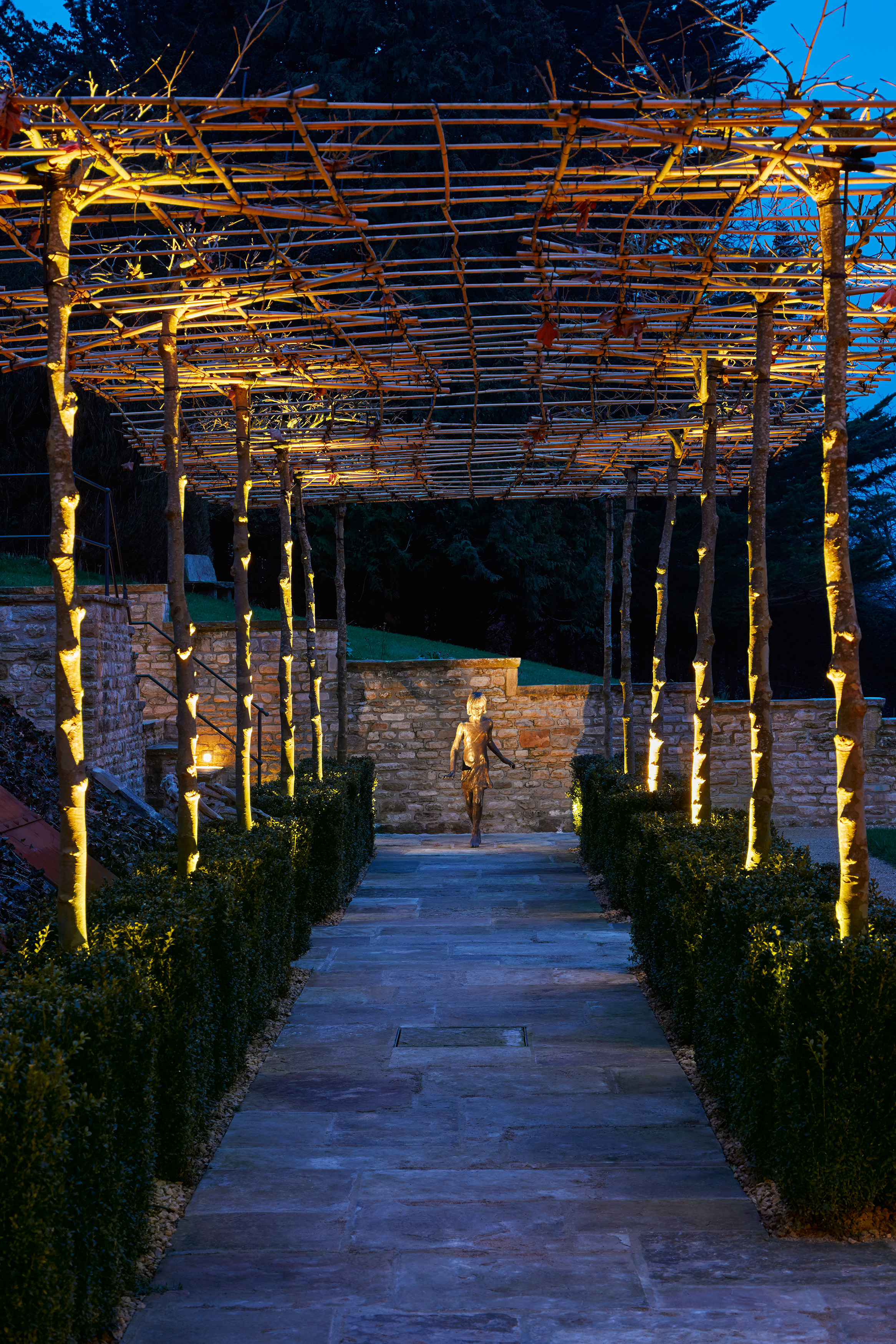
"Spotlights are also effective for highlighting textured walls, arches, sculpture, or beautiful stonework," says Luke.
By positioning your spotlights around any particularly textural hardscaping materials, or near architectural features like an arch or exterior wall, you help accentuate the sense of depth within your garden.
"These focal points lead the eye through the garden and give the scheme structure after dark," explains Luke.
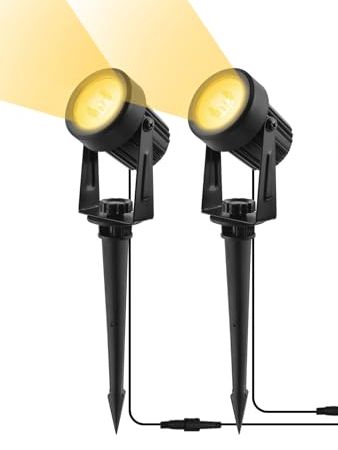
Powered by an attached solar panel, these clever uplighters require zero installation and wiring, and you don't even have to worry about constantly recharging them, either.
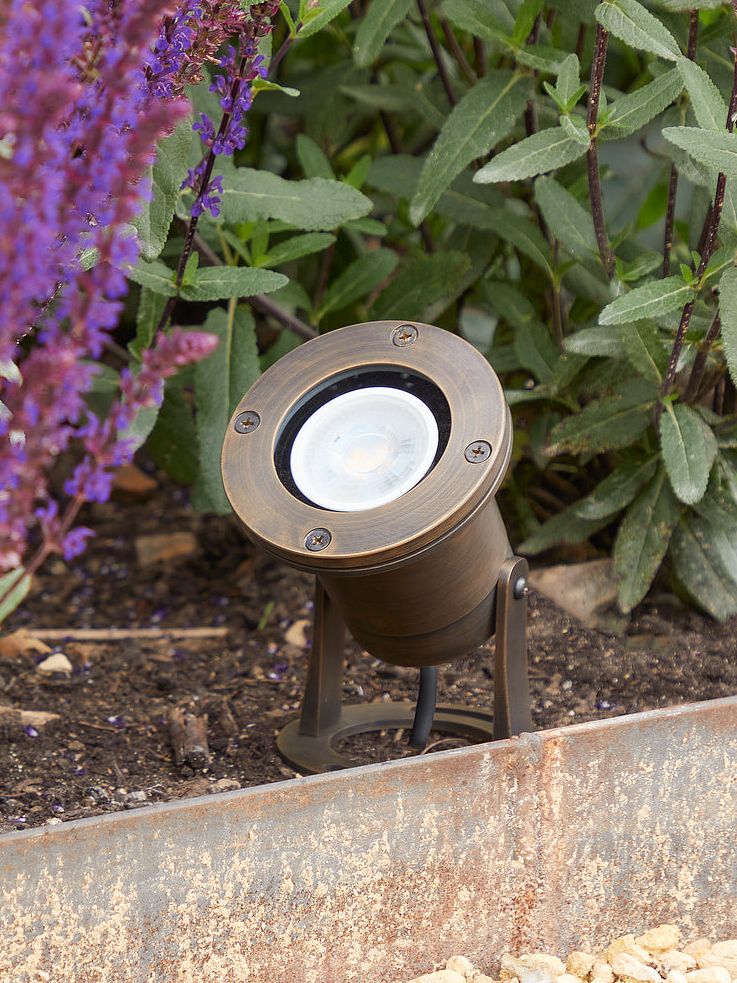
Easily hidden within the shrubbery, this bronze spotlight is powerful yet discreet, and the slightly aged finish makes it a gorgeous choice for vintage-inspired outdoor spaces.
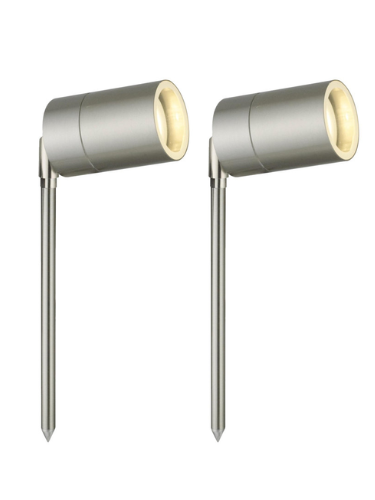
These sleek, spike lights have clever directional heads, which are completely adjustable, allowing you to dictate the exact angle in which the light will shine.
Your outdoor lighting deserves just as much care and consideration as the lighting inside your home. If you're looking for some more inspiration, the designers love using these outdoor lighting styles to make gardens look more expensive.
And for even more design inspiration, subscribe to our newsletter.