
Five people were shot dead in the central Sudanese town of Al-Obeid on Monday during demonstrations against shortages of bread and fuel.
"Five martyrs succumbed to direct wounds from sniper bullets during a peaceful rally in Al-Obeid," said a doctors' committee linked to the protest movement.
Prominent protest leader Babikir Faisal told AFP that the dead included "four high school students".
Al-Obeid residents and a local journalist also confirmed that the dead included high-schoolers.
Authorities announced a night-time curfew in four towns following the deaths in Al-Obeid, as a key protest group called for nationwide rallies against the "massacre".
The Sudanese Professionals Association, said "live ammunition" had been used against a "rally of school students".
In a post on its Facebook page, it urged "all citizens and medics" to head to hospitals treating the wounded.
In a separate statement, it called for nationwide protests against the "massacre," demanding that "the perpetrators be brought to justice".
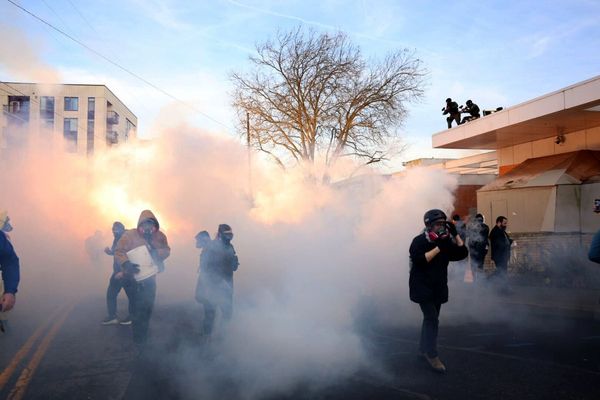
Hundreds of protesters later rallied in Khartoum's two districts of Bahri and Burri, but they were swiftly confronted by riot police who fired tear gas, witnesses said.
The violence erupted a day before protest leaders and ruling generals are set to hold new talks on the country's transition.
The ruling military council and protest leaders earlier this month inked a power-sharing deal providing for a joint civilian-military administration which in turn would install civilian rule.
That is the main demand of a nationwide protest movement that led to the April ouster of longtime leader Omar al-Bashir and has since demanded that the generals who took his place cede power to civilians.
The office of North Kordofan's governor announced an overnight curfew in four towns including Al-Obeid, starting Monday and continuing indefinitely.
It added that all schools in the province had been told to suspend classes.
Residents of Al-Obeid said the rally had been over a shortage of bread and fuel in the town.
It was a sudden tripling of bread prices that initially triggered December protests against Bashir, which later turned into a nationwide movement against his three-decade rule.
"For the past few days there has been a shortage of fuel and bread," an Al-Obeid resident told AFP by telephone.
"School children were affected as there is no transport to help them reach their schools. Today, they staged a rally and when it reached downtown there were shots fired."
The town had not previously witnessed major rallies against Bashir even as provinces, cities and towns were swept up by the campaign against his rule.
Monday's deaths sparked calls for talks set for Tuesday to be suspended.
"We cannot sit at the negotiating table with those allowing the killing of revolutionaries," Siddig Youssef, a prominent protest leader, said in a statement.
Tuesday's talks were set to cover issues including the powers of the joint civilian-military ruling body, the deployment of security forces and immunity for generals over protest-related violence, according to protest leaders.