
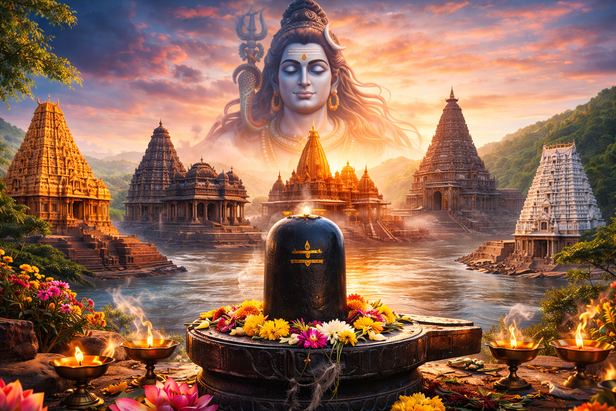
ॐ नमः शिवाय।
नमः शिवाय शान्ताय कारणत्रयहेतवे।
निवेदयामि चात्मानं त्वं गति: परमेश्वर॥
People usually turn to Shiva not in celebration, but in moments of weight and uncertainty. When life feels overwhelming, when words fail, and silence feels more honest than hope, Shiva becomes that presence which does not judge or promise, but simply stands with you. This is why devotees often say Shiva is not just believed in, He is felt.
Among all Shiva temples, the Jyotirlingas hold a special place because they are described in the Shiva Purana as manifestations of Shiva’s infinite consciousness as light. These are not symbolic shrines, but spaces where devotees across centuries have felt a living presence. At certain Jyotirlingas, prayer feels quieter, deeper, and more personal, as if Shiva is not being reached out to, but already present.
1. Kashi Vishwanath Jyotirlinga
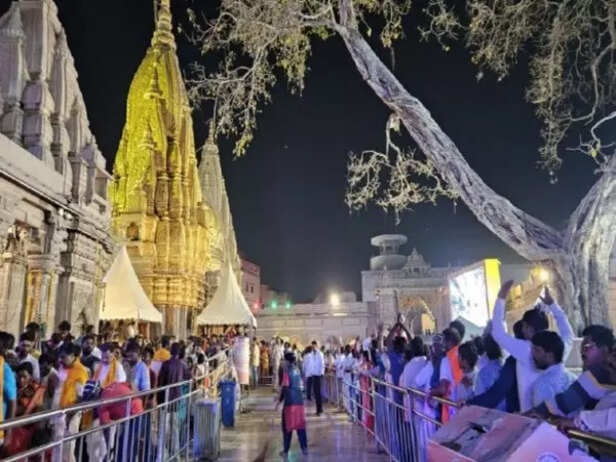
Kashi is considered the spiritual center of Shaivism. Ancient texts describe it as a city that exists beyond time. The Skanda Purana states that Kashi never truly falls, even when the universe dissolves. Shiva is worshipped here as Vishwanath, the lord of the universe and time itself.
What makes Kashi unique is its association with death and liberation. Scriptures mention that Shiva grants moksha here by whispering the Taraka Mantra at the moment of death. This belief has shaped centuries of spiritual thought. Devotees feel Shiva’s presence here not as fear or judgment, but as assurance. The constant cycle of life and death around the temple makes mortality feel less threatening and more meaningful.
2. Mahakaleshwar Jyotirlinga
Mahakaleshwar is the only Jyotirlinga where Shiva is worshipped as Mahakala, the controller of time. The south-facing linga is considered extremely significant in Shaiva philosophy, as the south symbolizes transformation and dissolution.
The temple is closely associated with the concept of impermanence. The daily bhasma aarti uses sacred ash, reminding devotees that everything material eventually dissolves. Texts describe Mahakala as the one who removes fear by revealing the truth of time. Devotees often feel Shiva’s presence here as intense but protective, especially during periods of anxiety, instability, or major life change.
3. Kedarnath Jyotirlinga
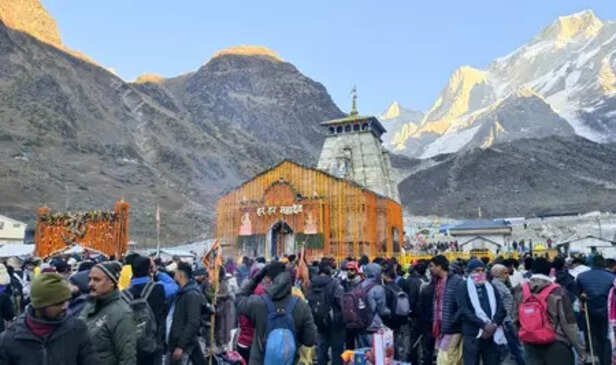
Kedarnath stands as one of the most physically demanding Jyotirlinga pilgrimages, and that effort is deeply symbolic. According to the Mahabharata, the Pandavas sought Shiva here to atone for the consequences of war. Shiva appeared in a form that demanded persistence rather than emotional pleading.
Located high in the Himalayas, Kedarnath reflects Shiva as the detached ascetic. Ancient traditions describe this region as a place where ego naturally weakens. Devotees often speak of profound inner silence here. The presence of Shiva is felt not through ritual grandeur but through stillness, endurance, and acceptance.
4. Bhimashankar Jyotirlinga
Bhimashankar is associated with Shiva as a protector of balance. The Shiva Purana narrates that Shiva manifested here to destroy forces that disrupted cosmic harmony. The temple’s forested surroundings align with Shiva’s identity as a force beyond human control.
This Jyotirlinga is also connected to the origin of the Bhima River, emphasizing Shiva’s role as both destroyer and sustainer. Devotees often feel Shiva’s presence here as grounding and stabilizing. The energy associated with Bhimashankar is believed to support clarity, responsibility, and inner strength rather than withdrawal from life.
5. Rameshwaram Jyotirlinga
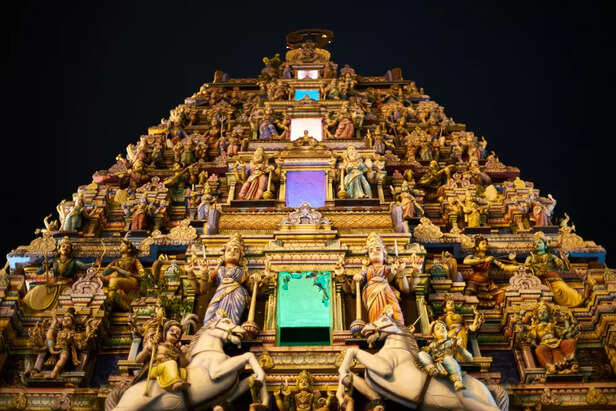
Rameshwaram holds a unique place because it connects Shaiva and Vaishnava traditions. According to the Ramayana, Lord Rama worshipped Shiva here before crossing to Lanka. This act symbolized humility and moral accountability, even for divine figures.
The temple is closely linked with purification through water, with multiple sacred theerthams within its complex. Devotional texts describe Shiva here as compassionate and receptive. Devotees feel Shiva’s presence in Rameshwaram as calming and inclusive, offering emotional balance rather than austerity.