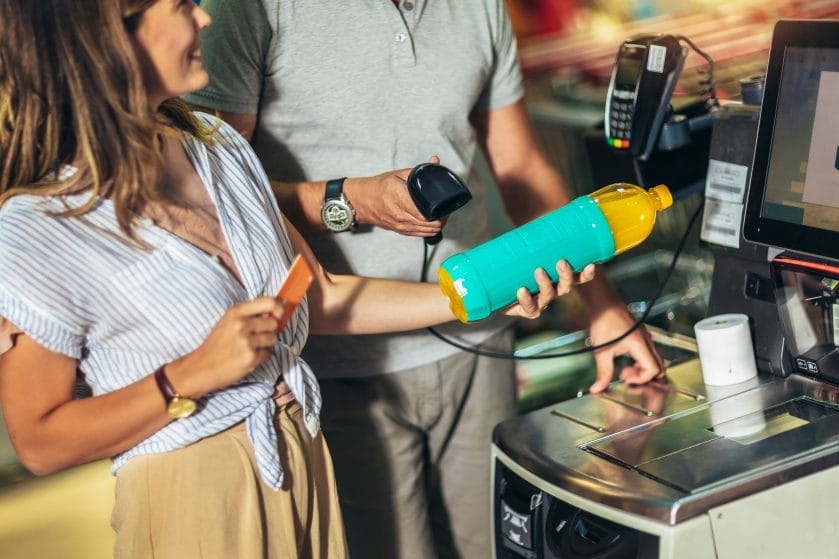
For years, self-checkout was marketed as the ultimate convenience—a way to skip the line and control your own bagging. However, in 2026, the value proposition has inverted. Retailers have introduced aggressive new anti-theft technologies and interface updates that transform the self-checkout lane from a time-saver into a liability. What was once a fast lane is now a friction-filled gauntlet that exposes you to accusation, higher costs, and unnecessary stress. This month, the smartest move is to return to the human cashier.
1. The “Phantom Theft” Flag
Retailers like Walmart and Target have rolled out AI-powered cameras directly above the scanner. These systems monitor your hand movements to detect “miss-scans.” Unfortunately, the technology is hypersensitive. If you move your hand too fast, or if a shadow falls across the barcode, the machine freezes and flashes a “Help is on the Way” message, flagging you as a potential thief. You then have to wait for a harried employee to review the footage and unlock your screen. This turns a quick trip into a public interrogation, erasing any time you might have saved.
2. The Disappearance of “Yellow Sticker” Savings
Clearance items—the meat and bakery goods marked with yellow discount stickers—are the lifeblood of a frugal budget. However, self-checkout scanners frequently struggle to read these secondary barcodes. Often, the machine scans the original barcode instead, charging you full price without you noticing. Or, the sticker requires a manager’s override code, forcing you to wait for assistance anyway. A human cashier knows how to input these codes manually and ensures you get the discount you earned.
3. The “Tip Creep” Invasion
A frustrating new trend in 2026 software updates is the introduction of “donation” or “tip” prompts at self-checkout kiosks in certain grocery environments. The machine asks you to round up for charity or tip the store staff, adding a layer of moral pressure to a transaction where you did all the labor. Navigating these extra screens slows down the process and creates decision fatigue. A human cashier typically processes the transaction efficiently without the algorithmic guilt trip.
4. The “Exit Audit” Bottleneck
The trade-off for scanning your own groceries was speed, but retailers have negated that benefit by intensifying security at the door. To combat the rise in “missed scans,” stores ramp up receipt checks. This specifically targets self-checkout users. You now save three minutes scanning your own items, only to spend minutes waiting in a second line. This “guilty until proven innocent” protocol transforms the simple act of leaving the building into a friction-filled checkpoint that a staffed lane allows you to bypass completely.
Choosing Efficiency Over Tech
The technology that was supposed to liberate us has now encumbered us. Between the risk of being flagged as a shoplifter by a glitchy AI and the likelihood of missing out on clearance discounts, the self-checkout lane has become a bad deal. Walking to a staffed lane ensures your coupons scan, your clearance is honored, and you leave the store with your dignity intact.
What to Read Next
Costco Change: Why the Warehouse Giant Is Removing Self-Checkout Machines in 2026
How Self-Checkout AI Is Changing In-Store Deals (and Your Prices)
If You Do Any Of These 8 Things At The Self-Checkout, Everyone Secretly Hates You
Why Self-Checkout Lines Make Some Shoppers Feel Watched and Nervous
10 Times Self-Checkout Cameras Caught More Than Just Shoplifters
The post 4 Reasons to Stop Using Self Checkout This Month appeared first on Grocery Coupon Guide.