

Think back, if you can, to the summer of 2001. Our phones flipped open, our jeans rose low, and America was going to be on top of the world forever. An arrogant nation allowed Staind, Creed, and the gentlemen known as Limp Bizkit to approach the summit of the Billboard 200. In theaters, Shrek had just been released on an unsuspecting world, and people willingly paid money to see Pearl Harbor and Tim Burton’s Planet of the Apes. Don’t let the zoomers yearning for the Y2K they never witnessed fool you; the times were bleak.
Into this troubling milieu strode Lara Croft: Tomb Raider, released 25 years ago today. While not even the year’s most successful archeology 'em up (that honor belongs to The Mummy Returns), it raked in nearly $275 million and reached 14th place at America’s benighted domestic box office, a record-smashing success for a video game movie that wouldn’t be bested until 2010. And much like the success of an album called Chocolate Starfish and the Hot Dog Flavored Water says a lot about where America’s psyche was at, Tomb Raider’s success can tell us how gaming movies, and the broader gaming industry, were doing.
A new console generation was starting in 2001, with the PlayStation 2 already available, the Dreamcast already dead, and the GameCube and Xbox both arriving by Christmas. And when gaming technology changes, franchises have to change with it. A year before Angelina Jolie strapped on the iconic dual pistols, Tomb Raider: Chronicles set franchise lows in sales and review scores on last generation’s machines. The next game, 2003’s Angel of Darkness, would flub the jump to the PS2, forcing the series to switch developers and undergo the first of several major reinventions.
So while no one knew it yet, Lara Croft: Tomb Raider represented the apex of Croft’s meteoric rise as a cultural and sexual symbol. Despite giving her a pair of polygons that could poke your eyes out, Lara’s creators were never comfortable with cringeworthy honors like Game Babe of the Year, to say nothing of the unofficial artwork that circulated the internet (publisher Eidos, on the other hand, happily took the free PR and worked Croft’s ostensible sexual appeal into much of its marketing, although the line was drawn at Playboy’s attempt at an unlicensed Tome Raider feature).
You wouldn’t know it from the Prima Games book about Croft’s success, which carefully analyzes Lara’s “imposingly voluptuous breasts” and “luscious rear end,” but Tomb Raider helped create the modern 3D-action adventure. Lara Croft: Tomb Raider, then, had to reinvent Indiana Jones’ cinematic action-adventures for the 21st century, while also acknowledging that a not-insignificant portion of fans were there to see Angelina Jolie wear an outfit more befitting a hot yoga session than a globetrotting adventure.
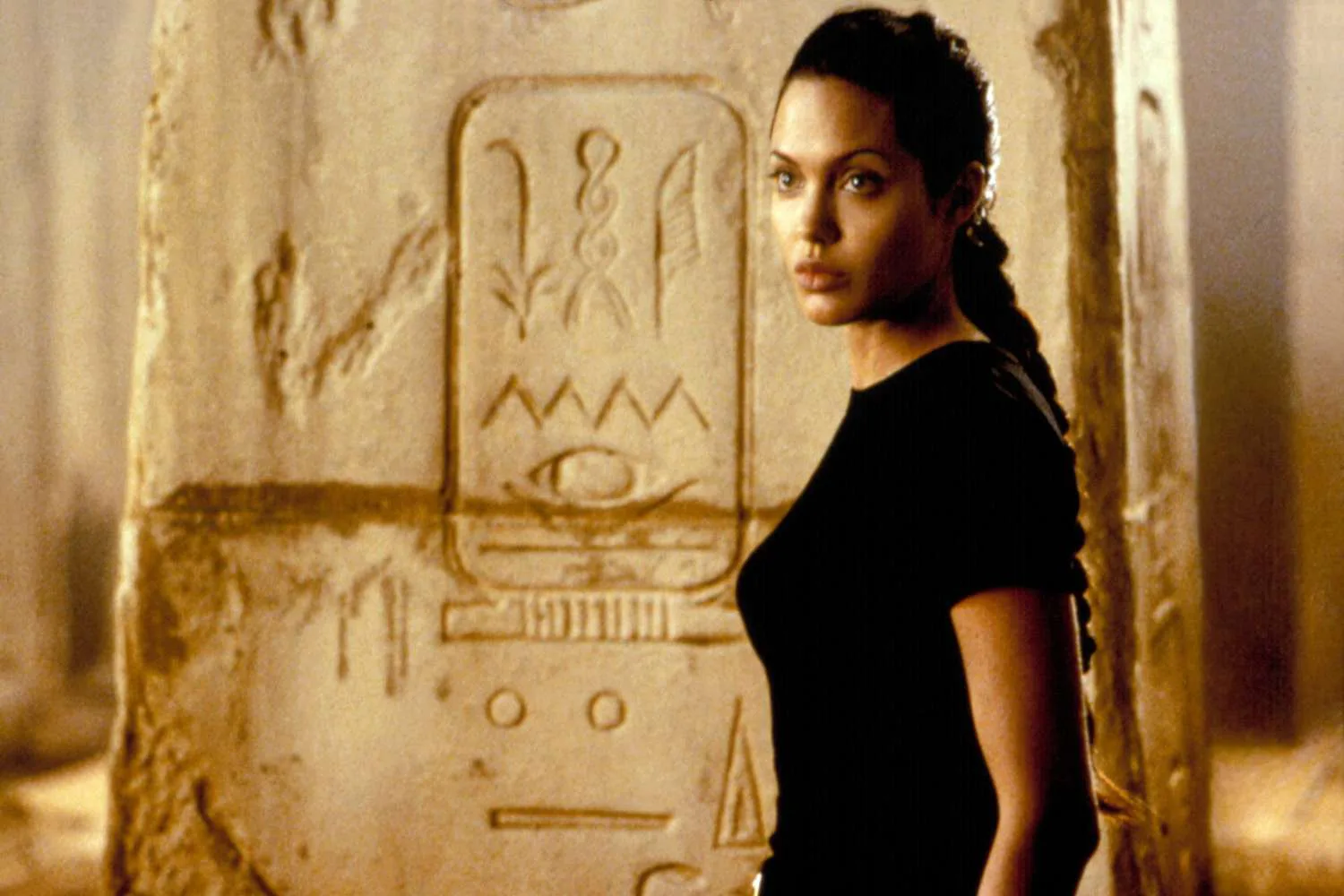
Filmed and scored with the creative ethos of, “Well, The Matrix sure made a lot of money,” Tomb Raider is an extraordinarily of-its-time experience, from the random slow-mo, to the sensuous shower scene crammed in by the seven-minute mark, to the soundtrack featuring everything from Fatboy Slim and Missy Elliott to a U2 remix and the sultry sounds of “Where’s Your Head At.” One half-expects Jolie’s Croft to update her Angelfire page and tell frenemy Daniel Craig that he’d just been “pwned.”
That maximalism’s not always a bad thing; the film opens with Croft fighting an evil robot, and it only gets wackier from there. Featuring a story about Croft trying to stop an Illuminati plot to seize an ancient artifact capable of time travel, this is a film that sees Jolie plainly state the presence of a “time storm,” as though the meaning of her words should be obvious to everyone present. You have to admire any film that climaxes atop a gigantic, man-crushing orrery at the height of a planetary alignment, and Roger Ebert lovingly declared the film too ridiculous to criticize.
Most critics disagreed; starting off silly even by Lara’s supernatural standards, and eventually veering into flat-out nonsense, Lara Croft: Tomb Raider failed to win over many of its viewers. IGN even slapped it with a zero, despite “Angelina's Amazing Physics-defying Boobies,” finding nitpicky fault after nitpicky fault. It was a harsh, whiny conclusion, although retroactive reviews have since recognized it as a passable movie from a questionable time.
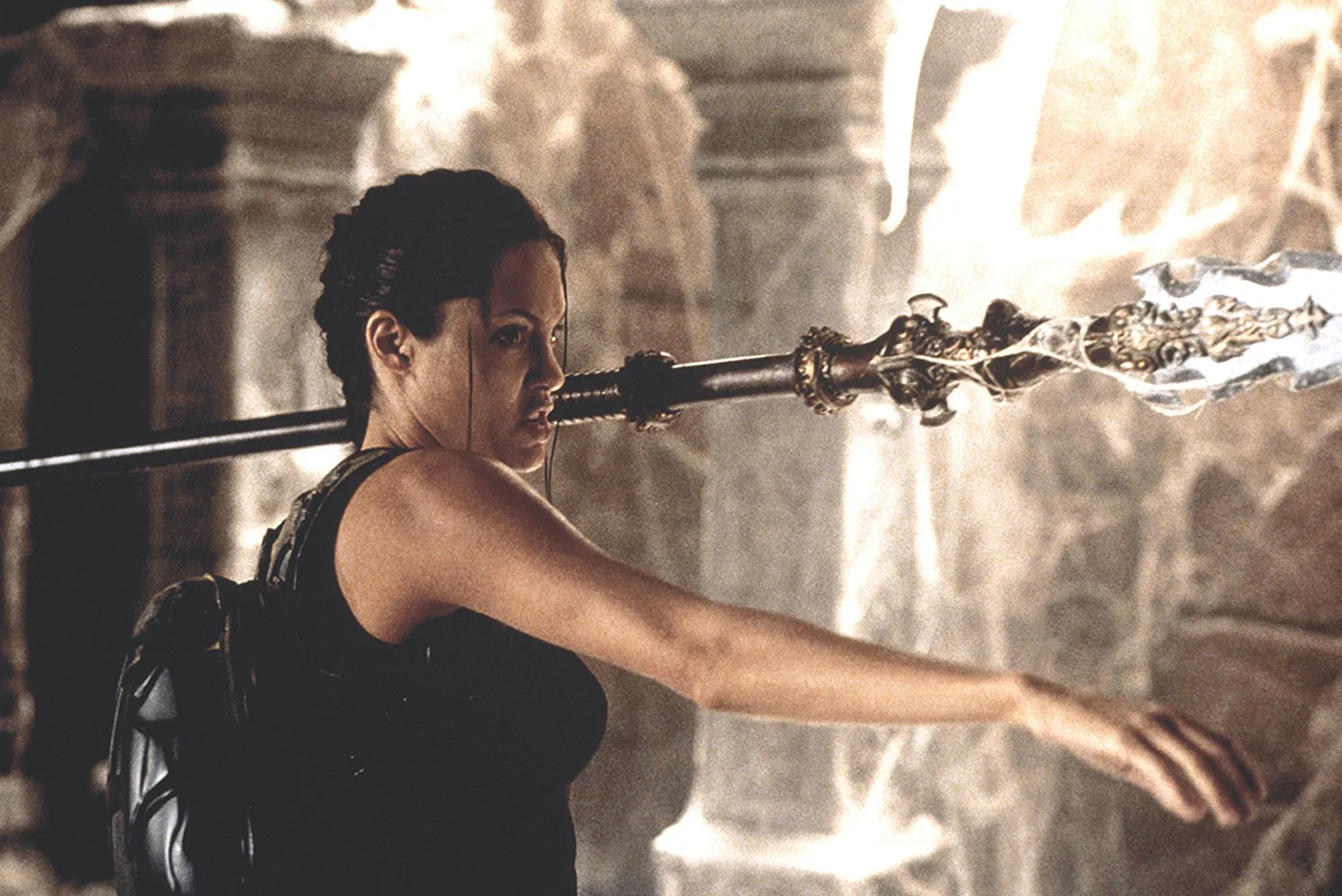
Fittingly, Tomb Raider is now as interesting as a relic as it is a movie. The franchise is going through another sea change after its gritty 2010s era, with the Illuminati at Amazon overseeing an upcoming TV series starring Sophie Turner and a pair of video games slated for 2027. It’s unlikely that EW’s press coverage of the former will again lead with a discussion of the star’s cup size, and equally unlikely that the latter will again be advertised with images of some dweeb asking his girlfriend to dress up in Croft’s form-hugging attire. And if an edgy U2 remix gets near either product, something will have gone horribly wrong.
With gaming having (sort of) matured since 2001, Croft is just another action star now, and Amazon will have to work with that fact if it wants to give her franchise an interesting future. That’s for the best, even if it means we probably won’t get any more bungee-fu sequences. Lara Croft: Tomb Raider belongs in a pop culture museum, one that will make our distant descendants wonder how on Earth we could have found it compelling, even as they’re forced to admire its sheer audacity.
Lara Croft: Tomb Raider is available on YouTube.