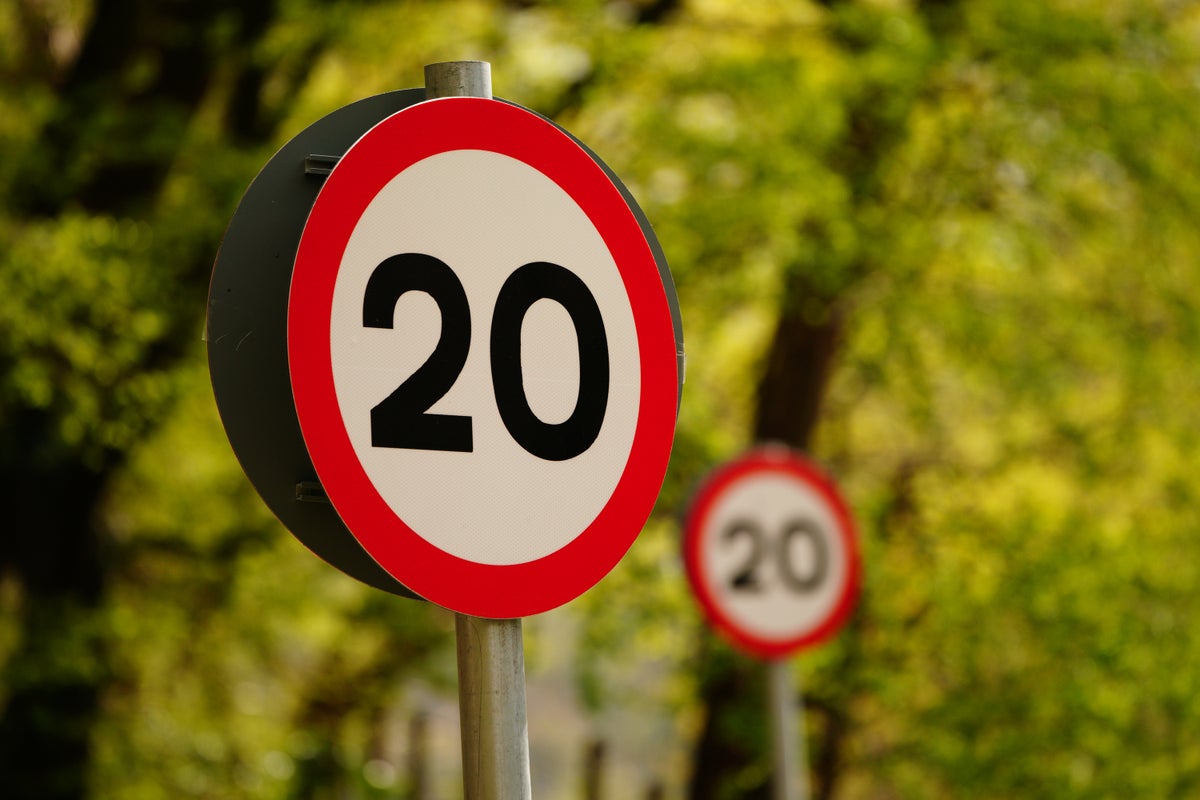
A default 20mph speed limit on roads in built-up areas across England would save money and reduce accidents, government advisers have said.
The independent Parliamentary Advisory Council for Transport Safety (Pacts) said reducing the limit from 30mph would be more economical.
Jamie Hassall, executive director at Pacts, told the Commons Transport Select Committee that requiring local authorities to implement 20mph zones individually is "expensive" due to more signage and paperwork.
Mr Hassall said: "A much cheaper way is to mandate (the roads) as 20mph, and let the local authority, if they want to move (the speed limit) up, give them that ability to do so because that’s where it’s more expensive. Rather than making (lowering speed limits) the expensive option."
He added that a national approach, allowing local decisions to increase limits, would be "a more sensible way forward."
This recommendation follows a trend of 20mph limits becoming increasingly common across the UK and Europe. Wales has already adopted a 20mph default in built-up areas, and the Scottish Government has committed to implementing the limit where appropriate. Some 62 out of 153 local authorities in England have also adopted similar policies.
Mayor of London Sir Sadiq Khan has made reducing speed limits a key transport policy, with over half the capital’s roads now at 20mph.
However, the widespread implementation has drawn criticism, with location technology company TomTom blaming it for London being the world’s "slowest capital city to drive in".
The Conservative Party also launched a "Plan for Drivers" in April, pledging to "end blanket 20mph schemes."