With ongoing geopolitical tensions keeping inflation stubbornly high, investors have been hunting for businesses that don't just survive a higher-cost environment but actively benefit from one. It's a harder search than it sounds, because most companies are hurt by persistent inflation, whether through squeezed margins, rising input costs, or nervous consumers reining in their spending.
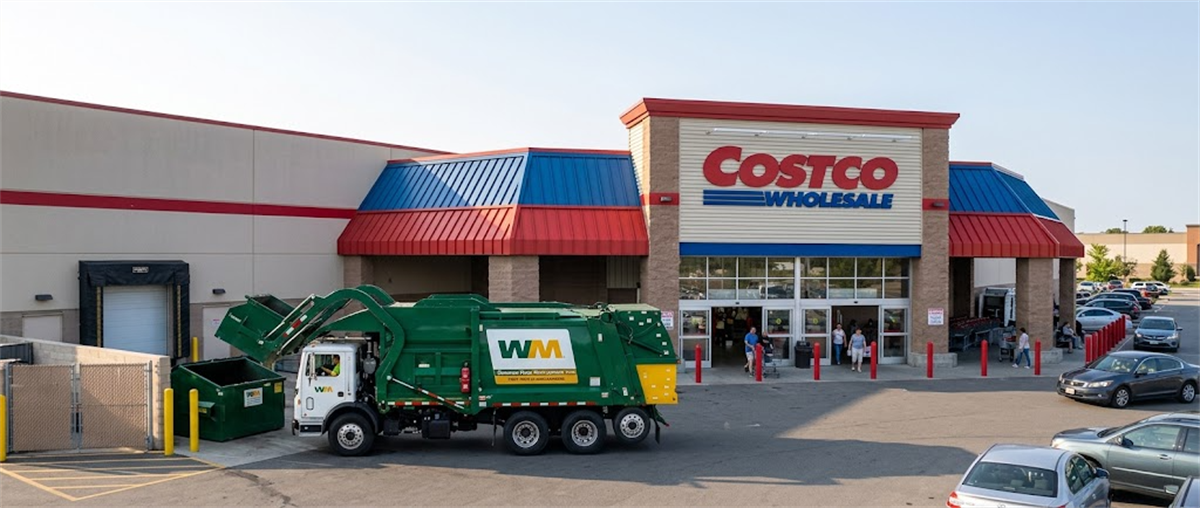
A small handful, though, are built differently. Two names in particular stand out as businesses whose entire models are arguably strengthened when prices stay elevated longer than the market expects: warehouse-club giant Costco Wholesale Corp. (NASDAQ: COST) and waste-collection leader Waste Management Inc. (NYSE: WM).
Each offers a very different kind of inflation protection, but both are built for exactly the environment investors are starting to worry more and more about.
Costco: Where Inflation Sends Shoppers Hunting for Value
The bull case for Costco rests on a simple behavioral truth. When household budgets tighten, shoppers don't stop spending; they just get more deliberate about where they spend. That tends to push them straight toward the kind of bulk-buy value Costco is built around.
Analysts at Bernstein recently leaned into exactly this logic. The team there raised its price target on the stock last month on the view that sticky inflation will keep pushing consumers toward warehouse-level prices. At $1,194, they're targeting around 30% upside from where the stock is currently trading.
The basis for that bullish view is a dynamic that plays directly into one of Costco's greatest competitive strengths, its membership model. The company earns a solid chunk of its revenue, more than $5 billion in fact, from the annual fees members pay for the privilege of shopping there.
What makes that model so attractive is the combination of high margins and remarkable stickiness, with membership renewal rates consistently above 90%. In other words, almost every inflation-driven visit from a cost-conscious shopper turns into a recurring, high-margin revenue stream that lasts for years.
Waste Management: Inflation Protection Written Into the Contracts
Waste Management offers investors an interesting form of inflation protection, too, albeit a far more formal one than Costco's. Whereas the latter relies on consumer behavior, Waste Management simply has inflation defense written directly into its customer contracts.
In plain terms, when inflation rises, a large chunk of Waste Management's prices automatically rises with it, shielding margins from the cost pressures that would erode margins in a less well-structured business.
Sure, there might be a lag of a quarter or two before those adjustments feed through, especially if inflation is rampant, but that's still a level of protection most companies would trade anything for. Whereas other businesses have to worry about customers fighting to cut costs and win discounts, Waste Management's customers are contractually bound to pay more.
Crucially, the underlying business is about as defensive as they come. Waste still needs collecting, whether the economy is booming or struggling, which gives Waste Management a remarkably reliable revenue base regardless of the broader backdrop. It's the kind of dull, unglamorous business that gets overlooked when markets are running hot and suddenly looks very appealing when the outlook turns murky.
All of which makes the company's upcoming earnings report worth watching closely, and investors should watch closely for more evidence that those contract increases are continuing to translate into expanding margins.
Costco and Waste Management Offer Different Defensive Advantages
What makes this pair of stocks interesting is that they arrive at the same outcome by two very different routes. Costco's protection is behavioral, drawing cost-conscious shoppers into a sticky membership as their budgets tighten. Waste Management's is contractual, mechanically passing rising costs straight through to customers. One leans on consumer psychology, the other on the fine print of its agreements.
There's also a subtle difference in how much investors can lean on each of them. Waste Management's protection is mechanical, so it works whether or not consumers behave as expected. Costco's depends on shoppers reacting to pressure the way they historically have, which is a reasonable assumption but not a contractual one.
Paying Up for Pricing Power May Be the Smarter Trade
Both also share a second, subtler advantage. In a nervous market, high-quality defensive names like these tend to attract capital rotating out of riskier, more volatile corners, which can provide a further tailwind for the shares just when the broader mood is souring.
Neither is cheap, with both currently trading at price-to-earnings ratios near decade highs. But that's the trade-off, and it looks considerably more palatable next to the growth names whose entire story depends on cheap borrowing to fund their expansion. If inflation really is going to stick around, paying up for businesses that get stronger as prices rise may end up looking like a bargain.
The article "2 Stocks Built to Thrive If Inflation Refuses to Fade" first appeared on MarketBeat.