A 19-year-old US Army soldier from Texas has been named among two service members killed in an Iranian missile and drone attack on Muwaffaq Salti Air Base in Jordan. The deaths have lifted the confirmed US military toll in the 2026 war with Iran to at least 17.
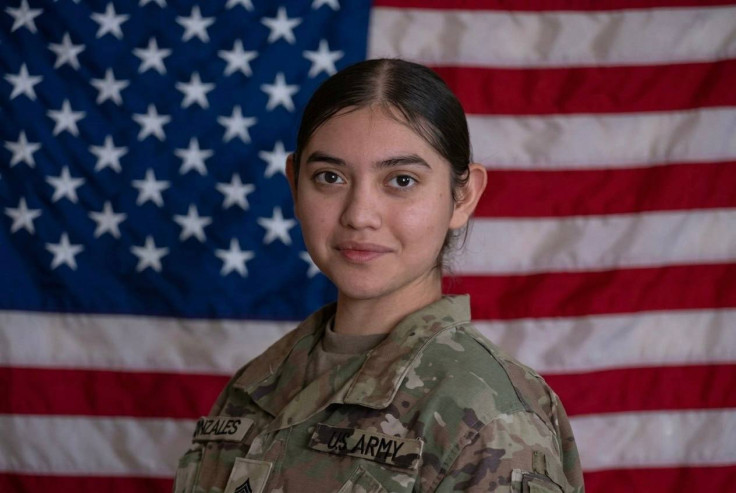
Pvt Isabella Gonzales, of Carrollton, Texas, died on 17 July while defending the base during the overnight strike, while 1st Lt Tyler James Feehan, 25, from Ewa Beach, Hawaii, died the following day from wounds sustained in the same attack, officials said. Gonzales served with the 1st Battalion, 57th Air Defense Artillery Regiment, under the 52nd Air Defense Artillery Brigade and 10th Army Air and Missile Defense Command, and was deployed to Jordan in support of Operation Inherent Resolve.
Who was Pvt Isabella Gonzales? The Young Texan Who Volunteered for the Front Line
Gonzales was an active-duty air defence operator based with the 10th Army Air and Missile Defense Command in Ansbach, Germany, before her deployment to Jordan. She was part of Operation Inherent Resolve, the long-running US-led mission to help partner forces secure a lasting defeat of the Islamic State group.
At just 19, she was among the youngest American service members to die in the 2026 Iran conflict. Her parents and relatives were met at their Texas home by military chaplains and casualty assistance teams after the Department of War made her name public.
Fellow soldiers described Gonzales, in preliminary statements, as a dedicated member of the air defence battery who had volunteered for repeated rotations in high-threat environments. Her death has already begun to galvanise discussions among veterans' groups and lawmakers about the risks faced by young troops on the front lines of a war that has increasingly moved from airstrikes and proxies to direct state-on-state clashes.
What Happened in the Muwaffaq Salti Air Base Attack?
Iran launched ballistic missiles and one-way attack drones at Muwaffaq Salti Air Base, a Royal Jordanian Air Force installation in the Azraq desert of Jordan's Zarqa Governorate, overnight between 17 and 18 July 2026. The base, home to Jordanian F-16 squadrons and hosting US and allied forces, had already withstood an earlier Iranian barrage of eight ballistic missiles on 9 July, all intercepted without casualties.
US Central Command (CENTCOM) said at least two missiles struck the base, hitting an area where personnel living quarters were located. Gonzales and Feehan were killed while defending against the incoming strikes, while four additional service members were evacuated to Jordanian hospitals and later discharged, according to a CENTCOM statement. A third American, killed separately during a controlled detonation of unexploded ordnance from a downed Iranian drone in northern Iraq, was also confirmed dead that same weekend. However, the Pentagon initially withheld that individual's name pending next-of-kin notification.
SECOND US SOLDIER KILLED in Iranian STRIKES IDENTIFIED
— RT (@RT_com) July 20, 2026
25-YEAR-OLD Tyler James Feehan pic.twitter.com/ApZx7CSiUH
The Attack in the Context of the 2026 US-Iran War
The attack on Muwaffaq Salti was part of an intensifying exchange between Washington and Tehran that began on 28 February 2026, when the US and Israel launched strikes on Iran, prompting Iranian retaliation against US military assets across the Gulf region. A ceasefire memorandum signed on 17 June briefly paused large-scale hostilities, but renewed fighting erupted on 7 July, with both sides trading near-nightly strikes.
By the time Gonzales and Feehan were killed, the US had conducted nine consecutive nights of attacks on Iranian targets, while Iran had struck US-linked sites in Jordan, Kuwait and Qatar in response. Military analysts have noted that Iran's strike doctrine increasingly combines expensive ballistic missiles with cheap, mass-produced Shahed-type drones, forcing defenders to make rapid, imperfect decisions about which threats to intercept. Inside the Pentagon and Department of War, senior officials have begun a formal investigation into the incident, though they have not yet disclosed how the missiles evaded the coalition's air defence systems.
Trump and Congress Clash Over Response To Troop Deaths
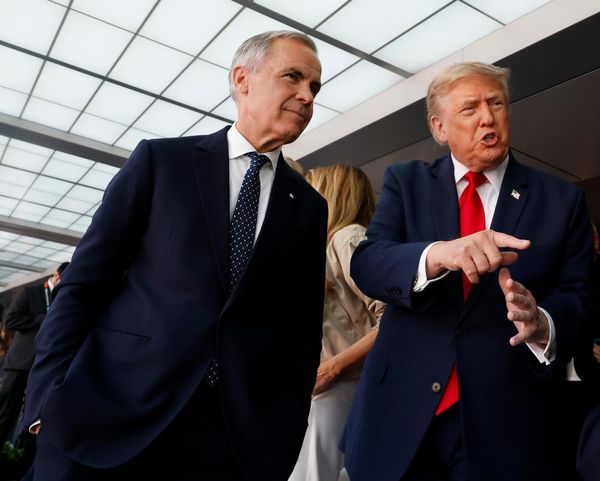
President Donald Trump called the deaths 'a very sad thing' and vowed that the US would continue striking Iran 'very hard' in response, reiterating that Iran would never be allowed to obtain a nuclear weapon. In public remarks, he framed the loss of Gonzales and Feehan as a reason to double down on the campaign, not pull back.
In Congress, the reaction was mixed, with Republicans such as House Speaker Mike Johnson and Senator Lindsey Graham backing President Trump's hard line on Iran. Democrats and a handful of Republicans pressed for briefings on the strategic rationale for keeping large numbers of US troops in Jordan, Kuwait and Qatar.
The death of Gonzales has sharpened concern over the vulnerability of US forces in Jordan, while the Pentagon investigation continues into how Iranian missiles breached air defences at Muwaffaq Salti Air Base. Officials have yet to explain the failure, leaving both the human toll and the operational questions unresolved.