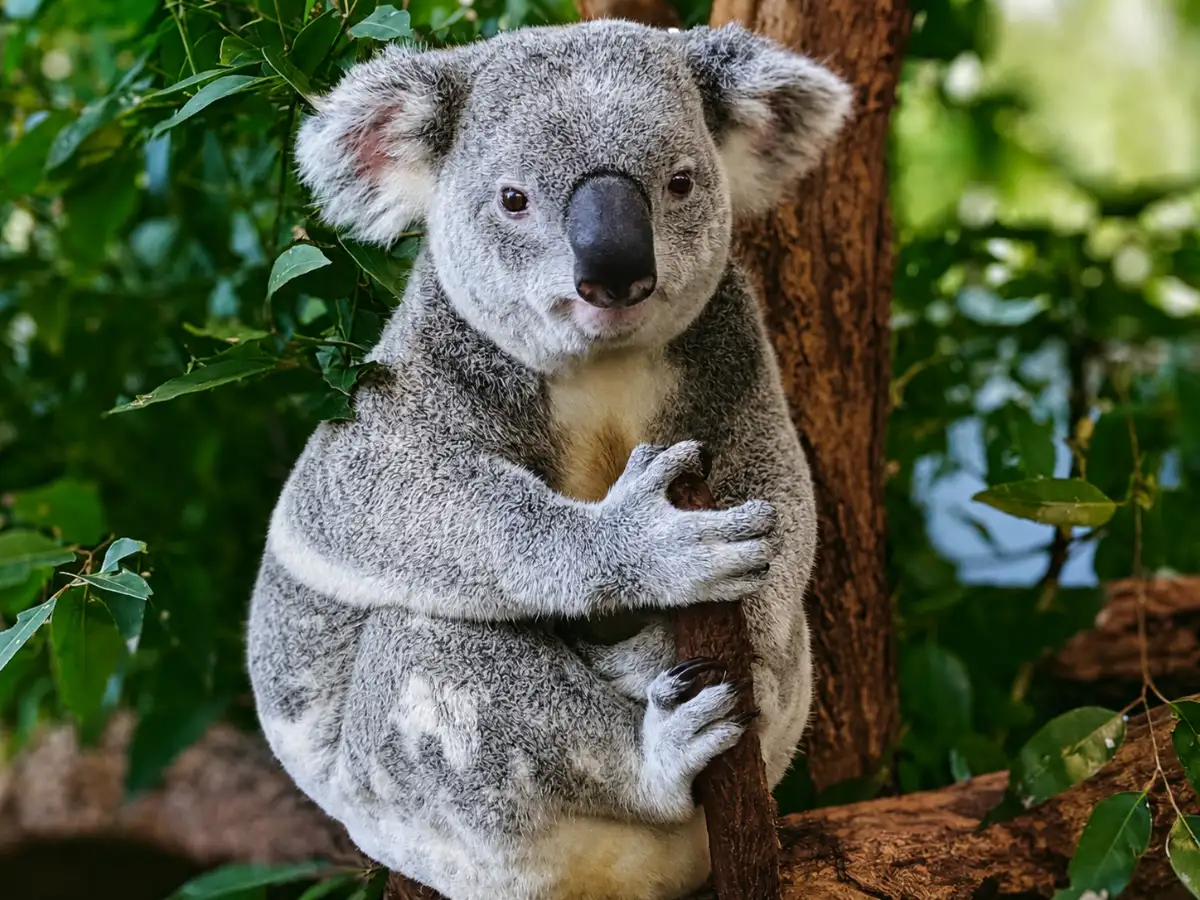
Most Americans picture a fluffy marsupial clinging to a tree when they think of koalas and a species slowly disappearing from the wild. That image isn't wrong. But in one corner of Australia, this situation is reversed. The koalas are not disappearing. They're multiplying so fast that scientists are now warning of an impending ecological disaster.
According to a new study published in Ecology and Evolution led by Dr. Frédérik Saltré of the University of Technology Sydney and the Australian Museum, alongside researchers from Flinders University and the University of Wollongong, South Australia’s Mount Lofty Ranges has a koala population that has grown far beyond what the land can cope with. According to this research, which delivers the first detailed population estimate ever conducted for the area, this one area now holds roughly 10% of all koalas in Australia. And without action, that number could increase by another 17 to 25 percent over the next 25 years, putting enormous strain on the forests that these animals rely on for food.
This isn't the first time South Australia has been here
The story of how koalas can overrun a habitat has played out before, just a quick boat ride away. A peer-reviewed study in Wildlife Research by Masters, Duka, Berris and Moss, "Koalas on Kangaroo Island: from introduction to pest status in less than a century", states that only 18 koalas were released on Kangaroo Island between 1923 and 1925. The population grew rapidly according to this research, reaching an estimated 27,000 animals by 2001. The ecological profile of the koala on Kangaroo Island changed within a century from being a species introduced for conservation reasons to one of pest status, with overbrowsing of the eucalyptus trees threatening the forests and the koalas themselves. The 2019-20 Black Summer bushfires temporarily reduced the population, but numbers have since recovered to at least 15,000. Researchers warn that the pattern could happen again.
Too many koalas, and that's the problem
The twist is that koalas are in steep decline across much of eastern Australia but are thriving in South Australia. According to the Australian Government's Department of Climate Change, Energy, the Environment and Water, the koala, specifically its combined populations across Queensland, New South Wales, and the Australian Capital Territory, was federally listed as endangered under the Environment Protection and Biodiversity Conservation Act in February 2022, largely because of bushfires, drought, deforestation and disease. This makes the South Australian population a conservation bright spot, but also a serious warning.