Immediate hurdle to Government plans to create 6000-plus jobs in 30-year project to amalgamate and upgrade the country's ageing drinking water, wastewater and stormwater infrastructure
New Zealand's biggest city could walk away from the Government's $120 billion-plus water reforms, unless the city's water infrastructure remains in the ownership of its ratepayers.
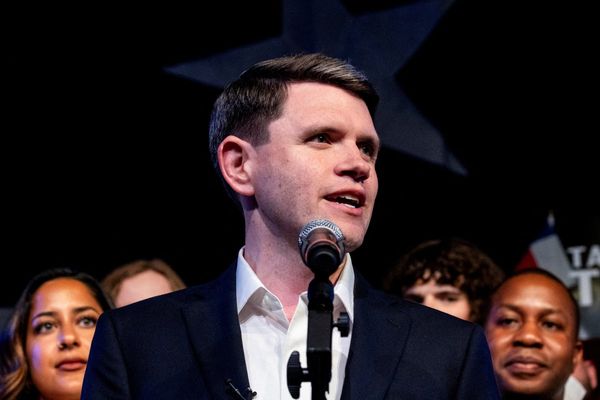
Auckland Mayor Phil Goff said he supported improved cost-efficiency and water quality, but not if it meant splitting off valuable public assets into independent organisations that could be privatised by a future government.
Goff told Newsroom there was still a clause allowing councils to opt out of the reforms by the end of 2021, and Auckland councillors could choose to do so.
His warning comes as Local Government Minister Nanaia Mahuta confirms she intends to take drinking water, wastewater and stormwater infrastructure off the council's 67 councils and vest them in the ownership of about four big new regional water organisations. The water infrastructure makes up half the balance sheets off many provincial councils – and more than half the debt.

The genesis of the restructuring was in the fatal Havelock North campylobacteriosis outbreak in 2016, which highlighted small councils' lack of expertise and scale to manage complex water infrastructure. More than 5500 of the town’s 14,000 residents were estimated to have become ill from drinking the infected town water; some 45 were subsequently hospitalised, an official report found, and four died.
Councils have already been provided a $700 million 'carrot' to work together in their regions on their three waters infrastructure, as a first step towards divesting the assets entirely. And that $700m looks barely any bigger than a carrot, compared to the elephantine anticipated cost of getting the country's old and broken pipes and water plants up to international standards.
The $120b is the conservative estimate of the required investment. Mahuta acknowledges it could cost households and the Government as much as $185b over the next 30 years, to meet the standards set by jurisdictions like the UK and Europe.
And even then, that doesn't factor in the potentially enormous additional costs of seismic protection and climate mitigation. For instance, existing sewers and stormwaters could be swamped by rising seawaters and aquifers.
Official advice says: "In order to meet quality and growth outcomes, spending will need to more than double over the next 30 years although these figures could ultimately be even higher, as they do not take account of investment uncertainty associated with the need to provide for seismic resilience, climate change, or responding to changing societal standards around environmental impacts – including iwi/Māori expectations."
Just before Christmas last year, the Cabinet agreed to push through the biggest local infrastructure reform since the council amalgamations of the 1980s. And now, Mahuta has published four new reports that spell out the costs – but also outline the benefits.
“The case for reform is boosted by an economic impact report also released today," she said. "Produced by Deloitte, it shows this mahi will provide for more jobs for people, opportunities for businesses and a net increase in GDP by $14b to $23b over 30 years."
"Without service delivery reform, and the associated efficiency gains, the real cost increases to communities (households and businesses) of meeting the required investment would be significant, and likely unaffordable for many smaller communities and low-income customers." – ministerial advice
Deloitte calculates the water infrastructure upgrades and maintenance will create between 5900 and 9300 new full-time jobs from 2022 to 2051.
There will be about 8000 new jobs in trade, financial services, business services and construction, but those will be offset by about 2000 fewer jobs in actually supplying water services. That suggests that as the upgrade pace slows at the end of this construction phase, there may ultimately be fewer jobs overall.
It is understood that Cabinet is required to sign off an 18-month transition, starting next year, in which council investment in local water infrastructure must be approved and overseen by a transitional authority.
The Government does not want councils to stop maintaining their water supplies because they're about to lose ownership of them. But neither does it want them to go off half-cocked building new water plants that may not mesh with neighbouring councils' facilities.
There is potential for efficiencies of scale if big regional authorities build big water plans and cohesive horizontal infrastructure networks. At present, households in rural areas pay $500 to $2600 a year for their water services, on average.
Without reform, average household bills in 2051 are forecast to range from $1900 to an eye-watering $13,900. Some households bills would be 13 times more expensive. With reform amalgamating 67 councils into four water organisations, on the other hand, the projected household water costs are from $800 to $1600 a year.
It is understood more households will be connected up to town supplies, too, though the Government is not matching Scotland's goal of 100 percent connected. At present there are about about 4.3 million people connected to local water supplies – which means about 15 percent of New Zealanders aren't connected up. The Far North, Kaipara and Southland have particularly low rates of connection.
After the transition, ownership of the assets will move to the new regional water organisations – probably four of them – and thus far, more is known about who won't own those organisations than about who will own them. The plan is that the water organisations will not be owned by local authorities, will not be owned by iwi, and will not be owned by the Government.
They will be publicly-owned, but it's not yet clear what that will look like.
They will have two tiers of governance: a governing body containing representatives of all the local councils and iwi. which would appoint a professionally-equipped board, which would in turn appoint a chief executive.
In the case of the northernmost water organisation, the Auckland, Kaipara, Whangarei and Far North council would all be represented, as would about 15 iwi.
Phil Goff said that was unwieldy, and would mean Auckland's ratepayers would end up subsidising upgrades to the old water infrastructure in Northland. (That would also mean remedying the low connection rates in Kaipara and the Far North).
Goff said he was sympathetic to Northland's plight, but Auckland shouldn't have to pick up the tab for their councils' failure to maintain their infrastructure.
He said Auckland already represented a third of the New Zealand population, and so its people should continue to own their own water infrastructure without the need for further amalgamations with the Northland councils, or (less likely) Hauraki and Thames-Coromandel.
Mahuta said the new analysis by the Water Industry Commission for Scotland, Farrierswier, Beca and Deloitte provided New Zealanders with a clear picture of the "urgent problems" they faced, and highlighted the economic benefits that could be unlocked by tackling them.
“It is clear the affordability challenges facing our water infrastructure are too great for councils alone," she said. "This research underscores the overall benefits of reform reducing future costs on households, creating new jobs and contributing to regional economies and local industry – all of which build on our economic recovery."
A few hours before the reports were published, officials briefed local government leaders on the proposal to combine the country’s 67 council-owned and managed water service providers into a small number of publicly-owned providers. “Together, the reports confirm the need for major reform to upgrade and maintain our water infrastructure, protect our environment, and avoid unaffordable increases to household bills," Mahuta said.