Purple vetches are climbing the hedgerows, where pink-tinged roses are far more abundant after the slight showers of yesterday. Skullcaps are out amongst the yellow flags which strive, without success, to reach the light amidst the tall, still lengthening reeds, and within the fringe of reeds and rushes the figwort shows its deep-hued lips. The green of the woodlands is flecked with white, massed, flattened bosses adorning every elder; abundant dead-white blossoms on the brambles give promise of future fruit. Even if the rain was insufficient it helped the scorched foliage and flowers and cleaned off some of the accumulation on the dusty hedges.
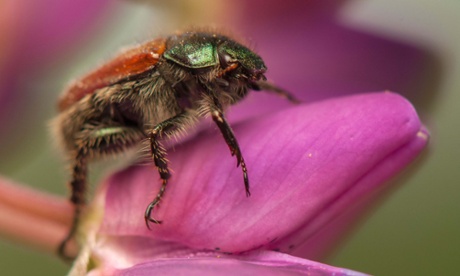
The coch-a-bon-ddu (“cockybundy” is the angler’s corruption) is still swarming, later than usual. This small fern chafer, with brown wing-eases fringed with fine grey hairs and bottle-green body, has caused annoyance in at least one camp; when it blundered on to uniforms, into kit and food, the soldiers accused it of biting, blaming it with the crimes of midges, gnats, or clegs. Two which arrived for identification I released in the garden. Within a few seconds they spread their long wings, swept round clear of the trees like soaring pigeons, and rose swiftly towards the upper air, where the wheeling swifts and martins no doubt attended to them.