The cult classic: a term used to describe a piece of media with a passionate fanbase despite its lack of mainstream success. Cult films, depending on who you ask, can include anything from a transgressive or gory genre movie, to a financial flop from a major studio. What unites these projects, no matter their style or story, is that they resonate with a particular niche, leading their loyal disciples to advocate for their brilliance until they receive rightful acclaim years later.
The Nice Guys bombed at the box office in 2016, grossing an estimated $62 million at the end of its theatrical run with a $50 million budget. This commercial turnout is largely credited to releasing the same weekend as the Angry Birds movie, and in the 10 years since critics and fans alike have bemoaned the loss of potential sequels this action-comedy could have spawned had it received more spotlight. To this day, cast and crew still get asked about the possibility of it in interviews.
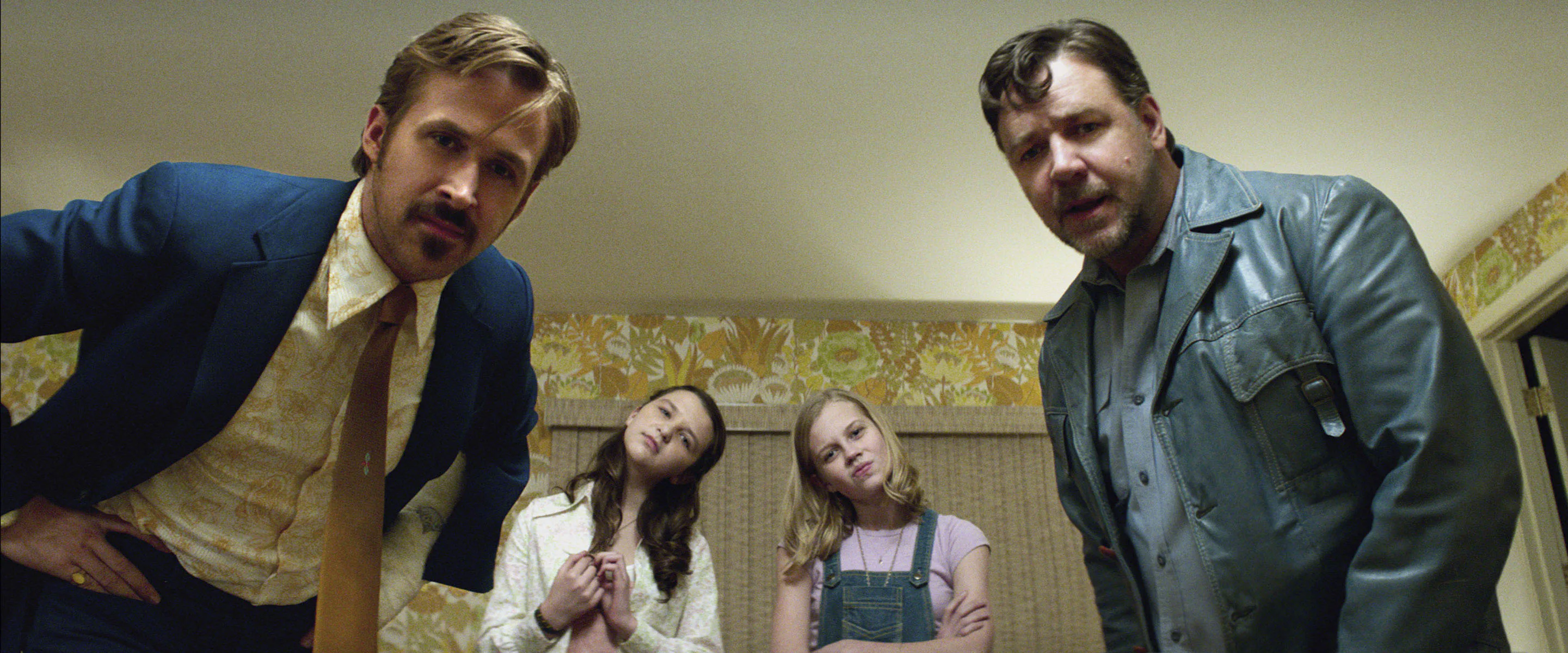
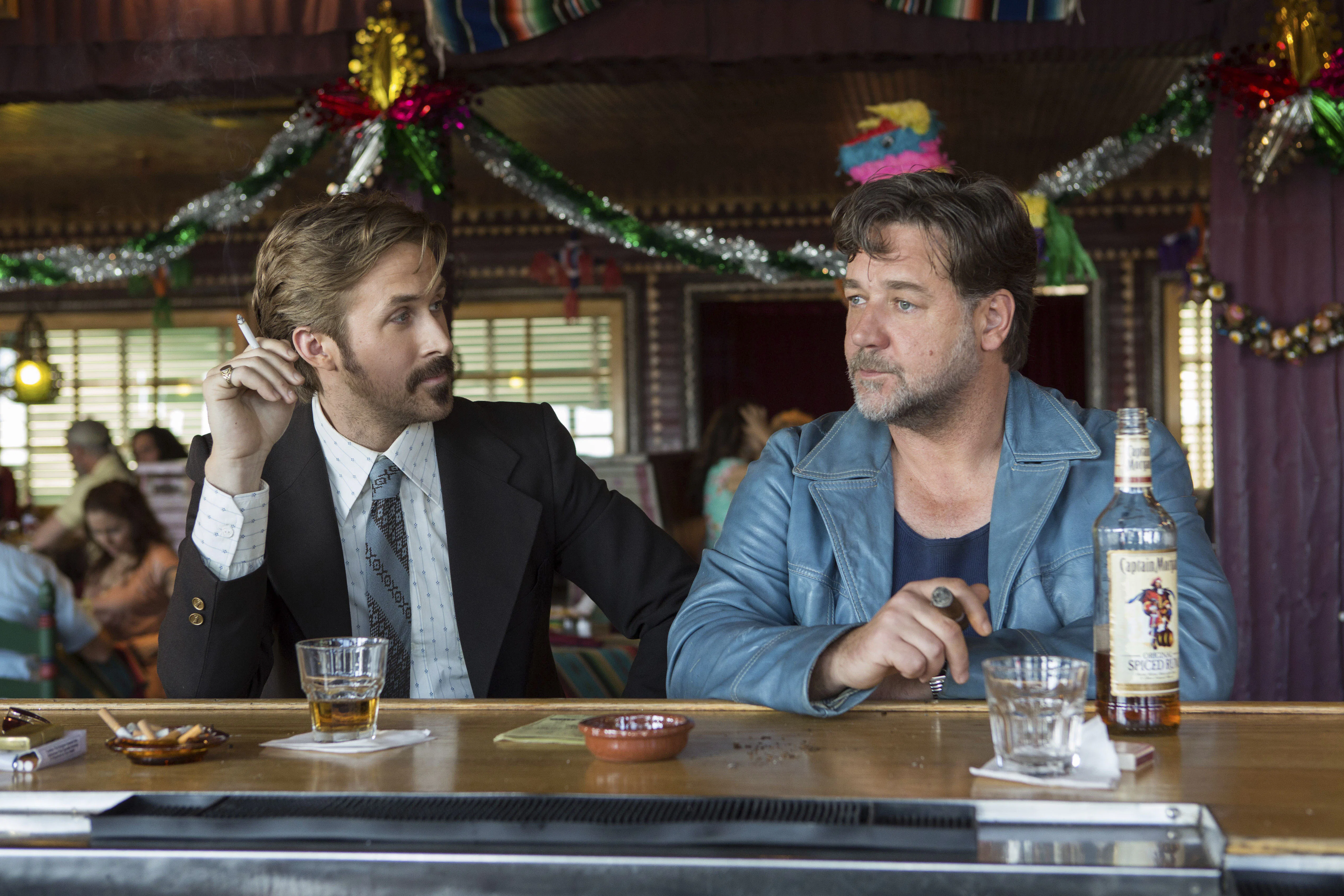
Those titular nice guys are the stars Russell Crowe and Ryan Gosling as hitman Jackson Healy and private eye Holland March, respectively. In 1977 Los Angeles, this buddy-not-quite-cop duo team up when the investigation into the demise of an adult film actress coincides with the disappearance of a teenage girl named Amelia (Margaret Qualley). As the two attempt to find Amelia, cartoonish hijinks ensue and a deeper conspiracy reveals itself.
It’s easy to see why this film’s acolytes have such a huge chip on their shoulder. Its parodic pairing of the noir genre with slapstick comedy is one of writer-director Shane Black’s signatures. Previous films like Kiss Kiss Bang Bang had proven him to be an adept craftsman of sleazy mysteries with jesting dialogue, and Crowe and Gosling fully execute his vision here through their riveting performances. Healy is the experienced but jaded veteran to March’s spry but clumsy deadbeat. With their mutual experiences of past marriages and difficulties managing their alcoholism, their rapport becomes like that of a bickering couple. This is hammered home by their co-parenting dynamic with March’s daughter Holly (Angourie Rice), who keeps tagging along for their investigation despite their protests.
What has made this film truly unforgettable for so many is Ryan Gosling’s verbal and physical comedy performance as Holland March. It’s as if he was born to get battered around and tumble down hills, and March's dialogue in particular is chock full of memorable one-liners. This character helped solidify Gosling as a notable comic actor, a mode he has reveled in since.
The fact that this film never got a sequel despite its charm continues to sting for many, and it's clear that our current cinematic ecosystem has upped the pain. The modern obsession cinephiles have with box office success and franchising is an understandable one. Hollywood is currently in a time of great uncertainty, with the industry still recovering from writer’s strikes and shutdowns while massive mergers are threatening to upend any stability that might be found. With this economic environment, there is a preference from studios for the financial security of established intellectual property, leading fans to sweat over box office projections, as an auteur having a poor opening weekend feels like the nail in the coffin for a studio ever funding a project like that again.
But that has limited our imagination. We now idealize a world where “good” movies get turned into IP instead of “bad” ones, and hope that this might stop cinema from becoming slop. “If only we lived in the timeline where The Nice Guys had three movies instead of Angry Birds.” It’s an alluring thought, but ultimately a naive one. The reality is that this obsession with franchise expansion is what leaves films vulnerable to becoming slop in the first place; when artists are now beholden to what has come before, and the burden of expectations (financial and otherwise) that come with it.
The Nice Guys has continued to resonate in our culture 10 years later, which proves that it doesn’t need a sequel to be important. Its DNA can be seen in the comedic detective romps that have been made since, such as Ethan Coen’s recent solo ventures and the Knives Out film series. We also wouldn’t have Ryan Gosling’s latest comic characters without his performance here. There are blatant parallels between the way he plays Holland March and Project Hail Mary’s Dr. Ryland Grace, with both being selfish individuals who have clear expertise in their field while rising to the challenges ahead of them. His performance as Ken in Barbie also contains notes of March in his complete commitment to playing the clown. There are nice guys everywhere for those with the eyes to see.
When an original story excites us, our desires should not bend towards transforming it into the next Marvel universe. As fun as it would be to see this pair solve another case, the cult status and long-lasting impact of this film should increase our appetite for more original stories to get made instead of causing us to cling to nostalgia. A legacy like that is more meaningful than any number of sequels it could have had.