You probably think your kitchen is a sanctuary of health because you scrub the counters every night. Honestly, most of us are unknowingly inviting invisible guests to dinner every single time we cook. These microscopic invaders do not care how expensive your backsplash is or how organized your spice rack looks. They thrive on the small, overlooked habits we picked up from our parents or TikTok trends. Understanding where these risks hide is the only way to truly protect your family from foodborne illness. Here is the truth about what is actually happening on your countertops.
1. The Myth of Rinsing Raw Chicken
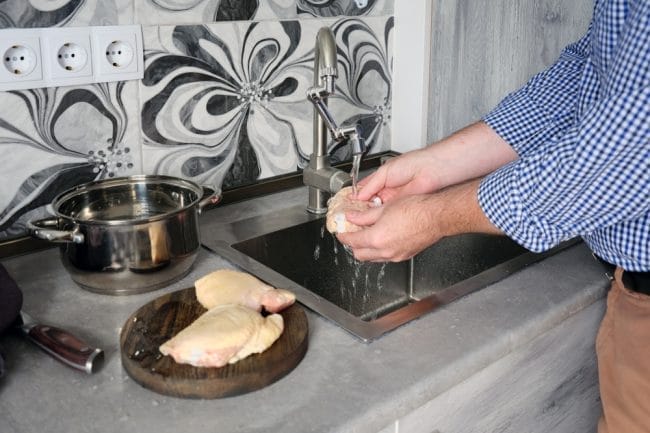
Stop washing your chicken immediately because you are actually making things much worse. When water hits that raw meat, it creates a fine mist of bacteria that travels up to three feet away. This aerosolized spray lands on your clean drying rack, your sponges, and even your face. Scientists have proven that heat is the only thing that kills the pathogens, not a quick rinse in the sink. You are essentially power-washing salmonella onto your kitchen surfaces.
2. Relying on a Single Cutting Board
Using one board for everything is a recipe for cross-contamination in the modern kitchen. Even if you think you rinsed it well, deep grooves from knife marks trap bacteria that soap often misses. Ideally, you should have separate boards for produce and proteins to keep them isolated. Transitioning to a color-coded system ensures you never prep a salad where raw steak just sat. It is a simple switch that significantly lowers your risk of a midnight emergency.
3. Using the Same Sponge for Weeks
Your kitchen sponge is likely the dirtiest object in your entire home right now. These porous tools stay damp and dark, creating the perfect breeding ground for millions of bacteria. Instead of waiting for it to smell, you should replace it or sanitize it every few days. Some people swear by the microwave, but frequently swapping for a fresh one is much safer. A dirty sponge does not clean your dishes; it just moves the germs around in circles.
4. Thawing Meat on the Counter
Leaving a frozen steak out at room temperature is an open invitation for bacterial growth. The outside of the meat reaches the danger zone long before the center even begins to soften. This window of time allows pathogens to multiply at an alarming rate while you are busy at work. It is much safer to plan ahead and let items thaw slowly in the refrigerator overnight. If you are in a rush, a cold water bath is a far better alternative than the countertop.
5. Skipping the Produce Wash
Many people assume that organic labels mean the fruit does not need a thorough cleaning. On the contrary, all produce passes through many hands and transport crates before reaching your bowl. Hidden residues and soil-borne bacteria can linger on the skin of every apple and bell pepper. A quick scrub under cool running water is essential for removing these unwanted hitchhikers. Do not let a healthy snack become a hidden source of digestive distress.
6. Forgetting the Fridge Handles
Think about how many times you touch your refrigerator handle while prepping a meal. You might touch raw egg and then immediately grab the handle to get the butter. We often scrub the floors but completely ignore the high-touch points that bridge the gap between raw and cooked. Wiping these areas down daily with a disinfectant is a habit that saves lives. It prevents the invisible transfer of germs throughout your entire household.
7. Tasting While You Cook
Double-dipping your tasting spoon is a habit that introduces oral bacteria into the entire pot. While it feels domestic and cozy, it is a primary way that illnesses spread through shared meals. Use a clean spoon every single time you need to check the seasoning of your soup. This ensures that your personal germs stay with you and do not end up in everyone else’s bowl. Your guests will thank you for the extra layer of hygiene you provide.
8. Drying Dishes with a Used Towel
That decorative towel hanging on your oven handle is probably teeming with moisture and skin cells. If you use it to dry clean dishes, you are undoing all the work the dishwasher just did. Damp towels are notorious for harboring mold and bacteria that thrive in the kitchen heat. Air drying is significantly more hygienic than using a fabric that has been used to dry hands all day. If you must use a towel, make sure it is a fresh one from the linen closet.
9. Neglecting the Sink Basin
Your kitchen sink is not a cleaning zone; it is actually a high-risk area for contamination. Most people think the soap running through it keeps it clean, but the opposite is true. Food particles and moisture turn the drain and basin into a bacterial colony very quickly. You should treat your sink like a toilet and disinfect it thoroughly after every heavy use. A clean sink is the foundation of a truly healthy and safe cooking environment.
10. Storing Eggs in the Fridge Door
Most refrigerators have a built-in egg rack in the door, but this is the worst place for them. The temperature fluctuates every time you open the door, which can lead to faster spoilage and bacterial growth. Eggs need a consistent, cold environment to stay safe for consumption over long periods. Keep them in their original carton on a middle shelf toward the back of the fridge. This small adjustment protects the integrity of the protein and keeps your breakfast safe.
Rethinking these kitchen habits is not about being paranoid; it is about being informed and proactive. You deserve to cook in a space that nourishes your family without the hidden threat of illness. By making these small shifts, you take control of your environment and stop being a victim of tradition. Honestly, your kitchen should be the safest place in your house, and now you have the tools to make it that way. Small changes lead to big results when it comes to your family’s daily well-being. Which of these habits was the most surprising to you? Let me know in the comments below!
What to Read Next…
- Kitchen Safety: Stop Washing Your Chicken (It Spreads Bacteria Everywhere)
- Health Insurance Premiums Could Spike in 2026 — Why Millions May Pay More
- Federal SNAP Freeze Could Worsen Chronic Health for Older Adults Across the U.S.
The post 10 Kitchen Habits That Are Secretly Spreading Bacteria (Stop Washing Chicken) appeared first on Budget and the Bees.