Australia has uncovered what officials believe is the country's biggest-ever seizure of illegal exotic invertebrates after authorities confiscated more than 100,000 exotic cockroaches from a property in Bathurst, New South Wales. The massive collection, estimated to be worth around AUD 200,000, has shocked wildlife authorities and renewed concerns about the risks linked to the illegal trade of non-native species.
A Giant Insect Collection Hidden in Plain Sight
The seizure was carried out as part of an investigation into the suspected illegal importation and breeding of exotic invertebrates, according to Australia's Department of Climate Change, Energy, the Environment and Water (DCCEEW).
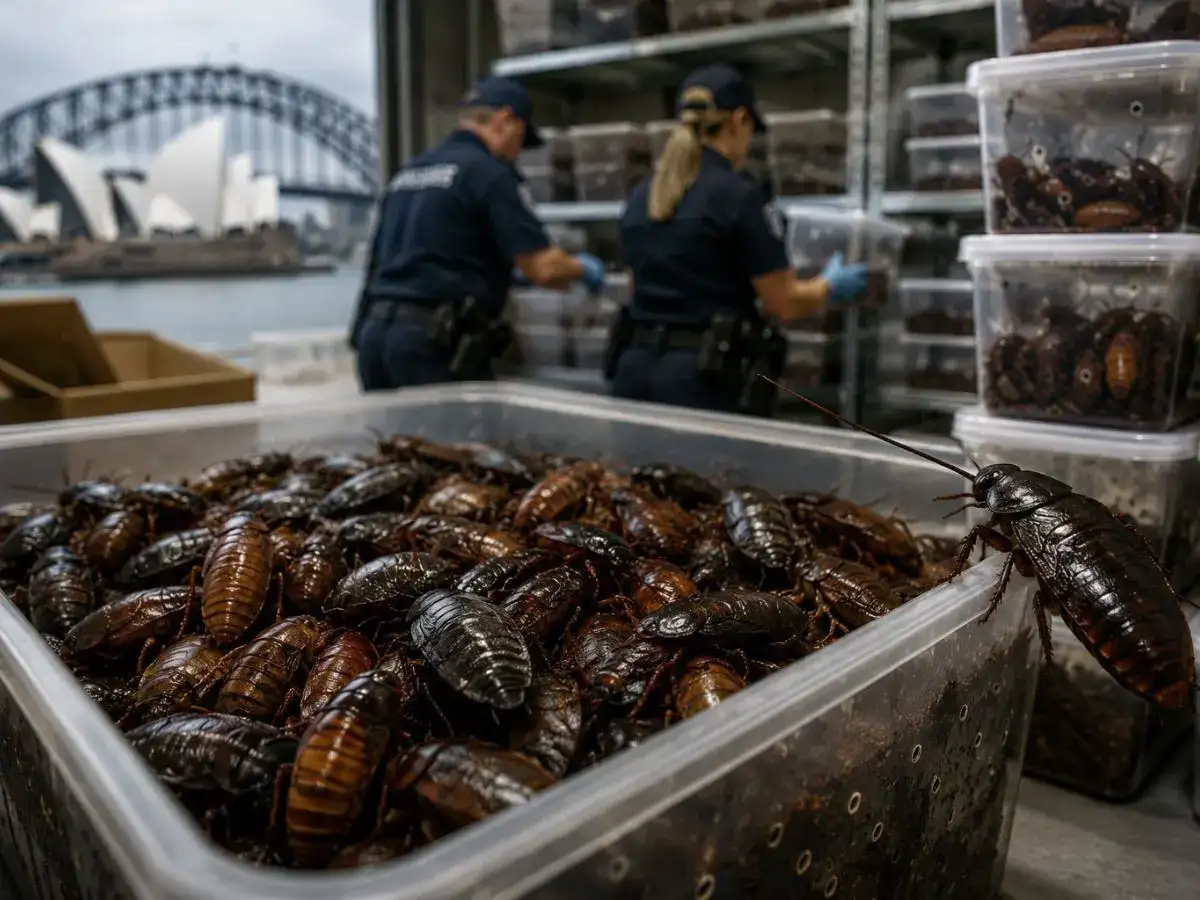
Officials described the discovery as unprecedented due to its scale. Images released by the department revealed rows of shelves packed with plastic containers filled with thousands of cockroaches and breeding colonies.
Authorities estimate the collection included more than 100,000 insects, making it the largest confiscation of illegal exotic invertebrates ever recorded in Australia.
Madagascar Hissing Cockroaches Among Species Found
One of the most notable species discovered during the operation was the Madagascar hissing cockroach.
Native to Madagascar, these insects rank among the world's largest cockroach species and can grow to the size of a human hand. They are best known for producing a distinctive hissing sound when they feel threatened.
Their unusual appearance and rarity have made them popular among exotic insect enthusiasts and collectors.
Thousands of Breeding Colonies Seized
According to reports cited by Australian media outlets, authorities also seized more than 3,000 breeding colonies in addition to the individual insects.
Some of the species recovered from the property are considered highly valuable within the exotic pet and insect-collecting community. Officials believe this demand contributed significantly to the collection's estimated value of around AUD 200,000.
Why Authorities Are Concerned
The case has highlighted the dangers posed by the illegal wildlife trade.
DCCEEW warned that non-native insects could cause serious environmental damage if they escape into the wild. Exotic species may become invasive, compete with native wildlife for resources and disturb fragile ecosystems.
Australia maintains some of the world's strictest biosecurity rules because of its unique wildlife and environment. Officials say preventing the introduction of potentially harmful species remains a key priority.
Investigation Continues
Authorities have not identified the person connected to the collection, and investigations are ongoing.
Officials are examining whether wildlife trade laws and biosecurity regulations were breached. The outcome of the investigation could determine whether further legal action follows.
For now, the extraordinary discovery has drawn attention not only because of its size but also because it involved a creature many people try to avoid, the humble cockroach.