

Who knew Lionel Messi was going to learn this much about the AFC North?
The Inter Miami superstar is set to play at M&T Bank Stadium on Saturday. Typically the home of the NFL’s Baltimore Ravens, this weekend it will be the temporary lodgings for D.C. United, who moved their match against the Herons about 40 miles up the road.
The decision to move the game from the 20,000-seat Audi Field to the 10th largest NFL stadium (with 71,000 seats) mirrors one made last year by the Columbus Crew, who share ownership with the Cleveland Browns. Rather than play their Eastern Conference tilt at their home stadium in Ohio’s capital, they shifted it more than 140 miles north to the over 64,000-seat Huntington Bank Field.
These moves have been decried by some of MLS’s most hardcore fans, but when used in moderation, it’s a powerful tool that puts the league’s most marketable asset in new markets.
Why Are Clubs Moving Their Games to Football Stadiums?
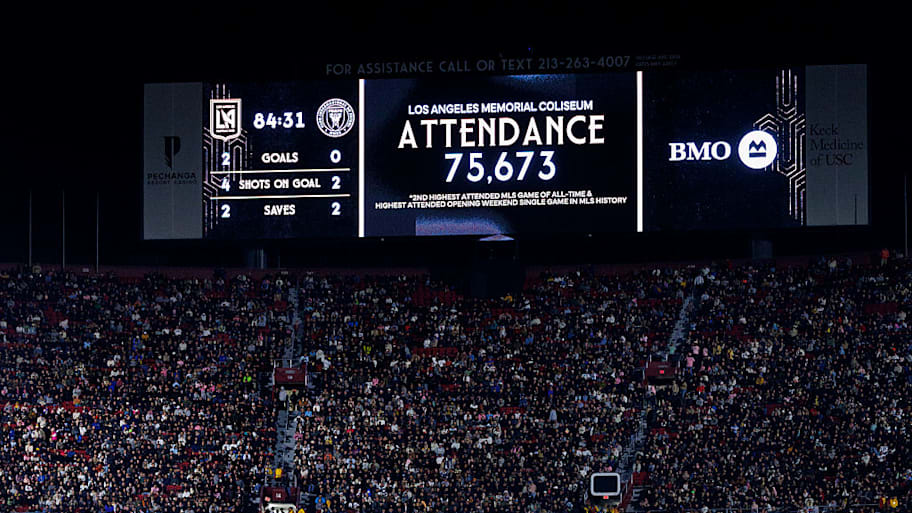
Let’s get one thing clear: The moves are made to make more money.
That’s not a huge mystery. The Crew often sell out their gorgeous 20,371-seat venue, but the Cleveland game drew more than 60,000 fans. Even if ticket prices were the same, moving three times the inventory is going to mean a significantly larger profit. But even with a bigger capacity, owners often are charging more for the matches at NFL stadiums. Tickets to the Cleveland game started at $95, according to the Columbus Dispatch, though there were options for $63 on the resale market leading up to the opening whistle.
In Baltimore, the cheapest ticket on the official resale market is $71 with fees, though some sellers in the lower bowl are looking for more than $500 per ticket. D.C. included the game in many of their season ticket packages and encouraged fans to buy seats for more than just Inter Miami’s visit.
Another year, another special stadium unlocked for @InterMiamiCF. 🔐
— Major League Soccer (@MLS) March 6, 2026
DC hosts MIA at M&T Bank Stadium on Saturday at 4:30pm ET: https://t.co/sZ7GSSpJxC pic.twitter.com/iGgammAWRB
Still, whatever attempts are made to get fans out to multiple games, it’s obviously all about the bottom line. Messi is one of the biggest draws in the world, no matter the entertainment industry. Seeing his magic on the field is on a lot of bucket lists, and while he continues to play at an MVP level, time is drawing short as he approaches his 39th birthday this summer.
Are These Venue Changes Beneficial?
There are positive benefits for the sport in the U.S., too, not just for the owners lining their already flush pockets.
While some fans in Baltimore may make regular treks to Audi Field in Buzzard Point, plenty will be deterred by the distance. Now, MLS is coming to their city—one of the largest in the country without an active professional team.
Others may be there only to see Lionel Messi but will nevertheless become intrigued enough by what they see on the field to at least consider signing up for Apple TV or clicking over to the MLS menu if they’re already subscribed for Formula 1 or Shrinking. With the league’s entire television inventory on a streaming service, it must take its matches to new fans rather than expect supporters in markets that don’t have MLS to stumble upon its product.
Messi is the main attraction spurring teams to find a bigger-capacity stadium and bring in more revenue, but he’s not the only reason teams have changed locations. The San Jose Earthquakes have moved rivalry matches against the LA Galaxy or LAFC to bigger stadiums and this year will again play the Galaxy at Stanford Stadium and host Son Heung-min’s LAFC at Levi’s Stadium. Last season, both of those matches drew more than 50,000 fans.
SON HEUNG-MIN SCORES INSIDE THE FIRST MINUTE AT LEVI'S STADIUM!!
— Major League Soccer (@MLS) September 14, 2025
ELECTRIC. 😱
📺 #MLSSeasonPass: https://t.co/a7szswweyh pic.twitter.com/6DiVqTprQl
One of the most memorable matches in 2024 was a July 4 “Tráfico” between the Galaxy and LAFC played in front of more than 70,000 fans at the Rose Bowl in Pasadena. And just a few weeks ago, LAFC moved its opening match of the season to the Los Angeles Memorial Coliseum, facing Inter Miami in front of a record-setting 75,673 fans just a few hundred feet west of the club’s usual home, BMO Stadium.
That’s a much shorter distance, though, than D.C. United is asking its fans to go or than the Crew hoped supporters would trek.
Why Are Some MLS Fans Against the Venue Changes?

There’s plenty to be said for the rhythm and routine of fans who go to the same place each week, sit in the same seat, see the same faces, sing the same songs. That frequency builds community, which ties together people. It is what makes so many soccer teams around the world actual clubs, not just franchises.
Moving one of the 17 home dates that will allow fans to come together isn’t a decision that should be made lightly, but the opportunity to bring new fans into the fold and to expand the community is still one most MLS teams can’t neglect.
While a community is important no matter its size, plenty of MLS teams are still struggling for relevancy in their markets. That might not be the case for LAFC, whose fans turned out in the Coliseum decked out in black and gold rather than large sections wearing Inter Miami’s pink. But there will be far more neutrals—or Messi fans—at M&T Bank on Saturday.
That’s a jumping-off point.
These Decisions Are Forward-Thinking for the League.
D.C. United was once MLS’ s proudest team, winning three MLS Cup titles and a Concacaf Champions Cup before the year 2000. Since then, they’ve generally been miserable to follow. They are one of many MLS originals with an inertia of poor results, fans in and around their market having made up their mind that it’s not an organization on par with the other major sports teams in the region.
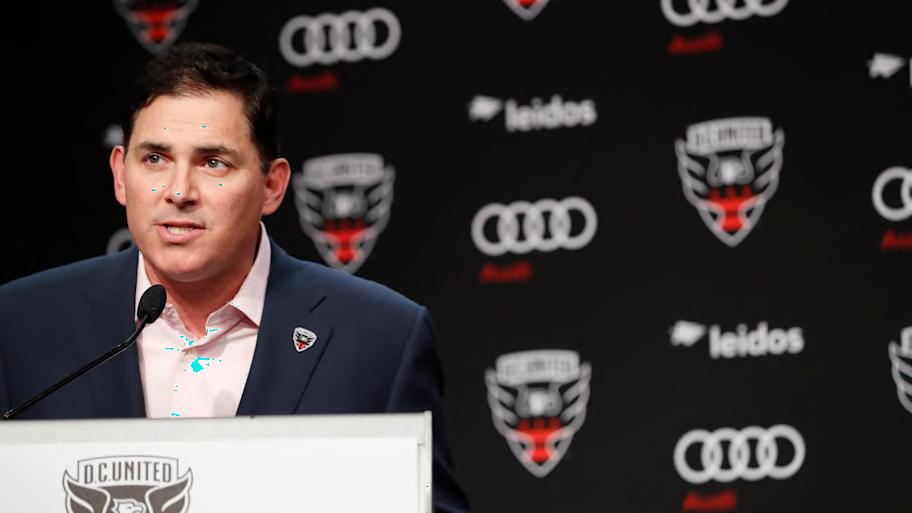
Their plans in Baltimore go beyond one game, with CEO Jason Levien hoping to build a small soccer stadium where a pro women’s team and a lower division men’s team could give Charm City representation in the global soccer market.
If teams are able to convince fans whose cities they visit that it’s worth giving them another look, it’s worth the gamble. Some will buy their ticket, see Messi and go home. Others may be relatively neutral, there to be won over.
D.C. United’s match against Inter Miami tomorrow — being played in Baltimore at the Ravens home of M&T Bank Stadium — has sold more than 62k tickets and club is expecting to be a sellout of the 71k capacity stadium, I’m told. pic.twitter.com/ZkmTDgo9Jq
— Tom Bogert (@tombogert) March 6, 2026
That won’t happen just because one game moves location, but it could happen with a strong, sustained marketing push.
As owners continue to see the chance to grow their audience—both for one game involving a global superstar and long-term if new fans are won over—expect Messi and friends to continue to do the tour of NFL stadiums and expand into new divisions. If teams play it right, it also will be the first chapter of many supporters’ origin stories for decades to come.
READ THE LATEST MLS NEWS, ANALYSIS AND INSIGHT FROM SI FC
- MLS Predictions: Cascadia Cup Begins, LAFC Seeks Continued Dominance
- Inter Miami XI vs. D.C. United: Berterame Seeks First Goal—Injury News, Predicted Lineup
- How Toronto FC Used the Raptors’ Playbook to Sign Josh Sargent and Push for Global Relevance
- ‘Better Than Pele’—President Trump Praises Lionel Messi, Inter Miami in White House Visit
This article was originally published on www.si.com as The Lionel Messi Factor Is Forcing MLS Teams to Make Venue Changes.