More U.S. assets including special ops aircraft and troops arrived in the Caribbean this week as Donald Trump reiterated on Monday that ground-based operations targeting drug traffickers in Venezuela would soon begin, according to a Wall Street Journal analysis.
The newspaper cited U.S. officials as well as open-source flight data. The most recent deployments occurred this week, according to the Journal, days before the Christmas holiday and occurring as the president unveiled his plans for new “Trump-class” warships during a special announcement from Palm Beach, Florida, with his top Cabinet aides, including Defense Secretary Pete Hegseth.
During the event on Monday, the president confirmed that the U.S. would continue targeting small vessels that his administration claims are carrying drugs with military strikes, while also escalating interdictions of oil tankers off Venezuela’s coast for sanctions violations. Dozens of vessels off the coast of Venezuela are part of the so-called “shadow fleet” of ships that help Venezuela skirt U.S. sanctions by transporting oil to other countries while disguising their location data.
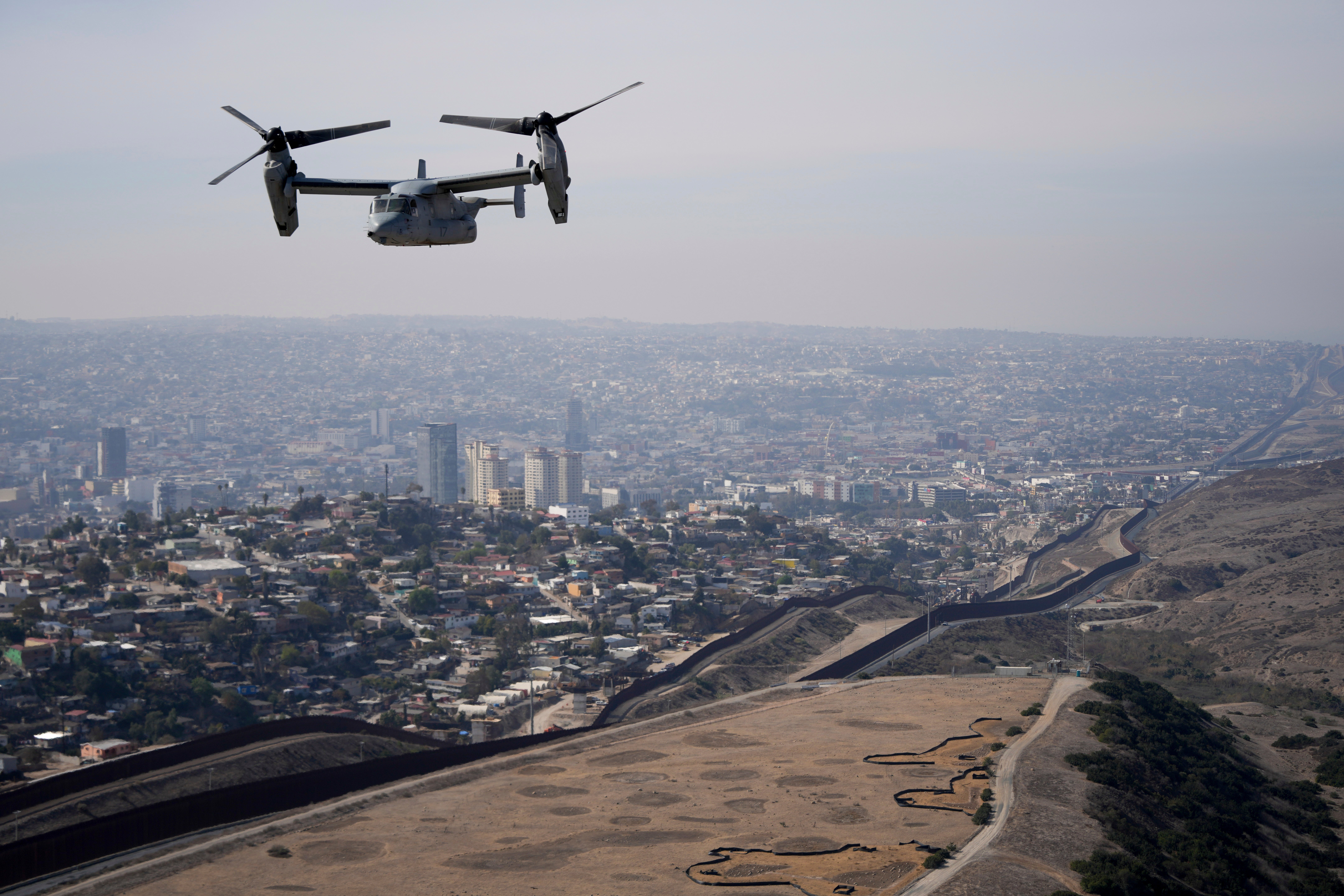
The latest deployment included a “large number” of assets, according to the Journal, including at least 10 Osprey aircraft used by U.S. special forces. U.S. Southern Command declined to comment to the paper on the deployments.
On Monday, the president did not go as far as to say that the positioning of forces off of Venezuela’s coast was aimed at forcing the country’s government to abandon power. Nicolas Maduro continues to control Venezuela after being declared the winner of elections in 2024 that were widely condemned as fraudulent.
The Trump administration further argues that Maduro operates “Cartel de los Soles”, a narco-trafficking organization alleged to be made up of top Venezuelan officials and military brass.
The Trump administration has directed a campaign of military strikes around Venezuela for months, targeting small vessels that U.S. officials allege are carrying drugs. The strikes have been condemned by Maduro and other leaders in the region as illegal, but so far, the U.S. has refrained from coming directly into conflict with Maduro’s government or any others in the region. Maduro remains adamant, however, that the U.S. is aiming to overthrow him and claimed that the country will fight a guerrilla war against U.S. forces if invaded.
White House officials and the Pentagon have danced around questions about a full-scale war with Venezuela as the strikes have continued and the death toll has surpassed 100. Last week, Trump told NBC News he would not “rule it out”, referring to a war, even as he has repeatedly played up his diplomatic overtures and the work of his administration to (supposedly) bring peace around the world.
"He can do whatever he wants. It's alright. If he plays tough, it'll be the last time, it'll be the last time he's ever able to play tough, though,” said Trump of Maduro on Monday.
Estimates indicate there are more than 15,000 U.S. military personnel now operating in the region, which is the largest force assembled in South America in many years.
The force includes the U.S.’s largest aircraft carrier, the USS Gerald R. Ford, and 10 escort craft, including a submarine.
The Trump administration has offered little outside of classified briefings to Congress as the death toll has quickly climbed in what was once treated by the U.S. government as a law enforcement matter requiring prosecution rather than the application of lethal military force. Administration officials also refuse to lay out a long-term goal beyond the destruction of individual drug boats, which have a minimal effect on the regional narcotics trade.
In Congress, Republican majorities control both chambers. A number of lawmakers in both parties have expressed opposition to all-out war, though support for regime change exists particularly among old-school Republicans in the House and Senate, such as Sen. Lindsey Graham.
Many, particularly on the left, have said that the strikes against suspected drug traffickers amount to extrajudicial killings, but the president’s party staunchly supports those attacks and attempts to rein in the president’s military buildup in the region, using War Powers resolutions have failed.
Polls show that Americans broadly disapprove of the idea of entering any kind of war with Venezuela.
Trump’s new line of battleships, which are part of an effort to develop his new “Golden Fleet,” will replace the Arleigh Burke-class line of destroyers and cost around $5bn each.
The ships will be 30,000-40,000 tons, according to the president, and will carry the capacity for hosting futuristic technology like directed energy lasers and railguns, a U.S. official claimed to the Wall Street Journal.