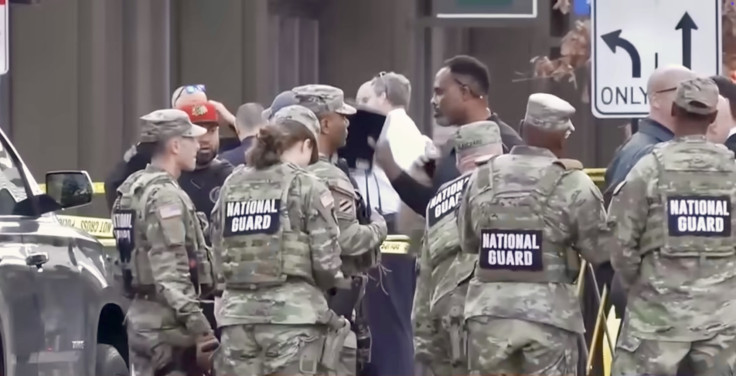
The Supreme Court on Tuesday blocked President Donald Trump's effort to deploy National Guard troops in Illinois, declining the administration's emergency request to allow the planned deployment in the Chicago area while legal challenges proceed.
In the issued order, the Supreme Court refused to overturn U.S. District Judge April Perry's ruling, which had halted the federal deployment of National Guard soldiers in Illinois. The decision means troops cannot be placed on the streets of Chicago and surrounding communities for now, even as the underlying lawsuits continue to work their way through the courts.
The move marks a rare setback for the Trump administration at the Supreme Court, which is dominated by a 6-3 conservative majority. Conservative Justices Clarence Thomas, Samuel Alito, and Neil Gorsuch publicly dissented from the court's decision not to grant the emergency relief the administration sought.
The case comes from a legal challenge filed in October by the state of Illinois and the City of Chicago after the Trump administration sent roughly 300 National Guard troops to support immigration enforcement actions around an ICE enforcement facility in Broadview, a Chicago suburb. State and local officials argued the deployment was unlawful, asserting it violated both federal restrictions on the domestic use of military force and state sovereignty.
Judge Perry initially blocked the deployment on October 9, finding that the government failed to show an imminent threat justifying the use of military forces under the relevant statutes and that the claimed unrest did not rise to the level of rebellion or inability to enforce the law. Her order was later extended indefinitely while the Supreme Court reviewed the case.
The administration's appeal to the Supreme Court sought to lift Judge Perry's order so that National Guard soldiers could be placed on the ground in Chicago pending full litigation. But in Tuesday's action, the court declined to grant that stay, leaving in place the ruling barring the deployment.
The Chicago case is part of a broader series of legal battles over the Trump administration's expanded use of federal and military resources in domestic contexts. Similar challenges have arisen in Oregon, where a federal judge permanently blocked a planned National Guard deployment, and in Tennessee, where state officials also secured judicial relief against troop deployments.
Meanwhile, in Washington, D.C., a separate federal appeals court ruled that a Trump-ordered National Guard presence in the nation's capital could remain in place pending appeal, even as other legal challenges continue.