Colleen Babcock, property expert at the property website Rightmove, has taken a look at the state of the UK housing market, following the latest data from the Office for National Statistics (where are a bit backward-looking).
Today’s ONS figures reflect the seasonal uplift we typically see at the start of the year, which mirrors what we’ve already observed in our own January and February data. With the number of homes for sale now at its highest level in over a decade, buyers are benefiting from significantly more choice, and that competition between sellers is becoming more apparent.
We’re seeing the longest average time to secure a buyer at this point in the year since 2019, with homes now taking around 64 days to find a buyer on average. This underlines how important it is for sellers to price realistically from the outset. In a market with plenty of available stock, homes that are priced correctly are better placed to attract early interest and secure a sale.
While some movers may be taking a pause with their home-moving plans amid wider global uncertainty, overall activity has remained resilient. Sales agreed are just 3% below the busy market this time last year and still 15% ahead of 2024 levels. The market is still moving, albeit at a steadier and more considered pace as we head further into spring, despite ongoing global uncertainty.
ECB could raise eurozone rates ‘as soon as next month,’ Lagarde says
Even a modest overshoot of the European Central Bank’s inflation target on the back of the energy price shock could warrant “measured” policy tightening, the central bank’s president Christine Lagarde said this morning.
The ECB left rates unchanged last week but warned about a coming surge in prices, and policymakers are now debating at what stage they would need to raise interest rates to ensure higher inflation doesn’t become entrenched.
Lagarde said the ECB would have to respond “forcefully” or in a “persistent” way if inflation looked set to stay well above its 2% target for an extended period, but added that even a modest overshoot could still prompt a “measured” rate move. She said in a speech in Frankfurt:
If the shock gives rise to a large though not-too-persistent overshoot of our target, some measured adjustment of policy could be warranted.
To leave such an overshoot entirely unaddressed could pose a communication risk: the public may find it difficult to understand a reaction function that does not react.
In the ECB’s most benign “baseline” case, inflation will average 2.6% this year, rising from around 2% in the past year. In the adverse scenario, inflation will peak above 4% in the second half of this year but return to target by mid-2027, while in the severe scenari, inflation peaks above 6% early next year and does not return to target for years to come.
Lagarde said:
If we expect inflation to deviate significantly and persistently from target, the response must be appropriately forceful or persistent. Otherwise, self-reinforcing mechanisms would kick in and the risk of de-anchoring would become acute.
As expected deviations from our inflation target grow larger and more persistent, the case for action becomes stronger.
She said the bank stood ready to act “at any meeting” and, while it would wait for “sufficient information” before shifting policy, it would not allow itself to be “paralysed by hesitation”.
Speaking after his boss, ECB chief economist Philip Lane flagged companies’ price-hike expectations and wages for new hires as some of the key indicators that the ECB will monitor.
Financial markets now expect two to three rate hikes from the ECB this year as they see inflation above target for several years.
The ECB was criticised for acting too late during the 2021-2022 inflation surge, when it thought the spike was temporary. But Lagarde argued that the current situation is quite different and several factors point to a lesser pass-through.
The energy shock so far is smaller, especially in the case of natural gas, the labour market is not as tight, there is no post-pandemic pent-up demand, fiscal policies are tighter and the central bank rate is higher, she said.
German business confidence fell sharply in March, as the Iran war led to more pessimism among companies, putting the long-awaited recovery of Europe’s biggest economy at risk.
The Munich-based Ifo institute’s business climate index fell to 86.4 in March compared with a revised 88.4 in February. Analysts had forecast a decline to 86.1.
Clemens Fuest, president of the institute, said:
The war in Iran has, for the time being, ended hopes of an economic upswing.
Updated
Wes Streeting defends government's approach to energy bills
Wes Streeting sought to defend the government’s approach to an expected jump in energy bills amid the Iran war, which he warned would make improvement in the economy “much harder”.
Asked whether “targeted support” meant that the middle-class would have to feel the pain without any help, the UK health secretary told BBC Radio 4’s Today programme:
Or put a different way, I will be feeling, as a higher earner in this country, a difference in my living costs.
Will they be pinching me in the pockets in the same way that they might impact on my mum, who is a cleaner on the minimum wage? No.
Asked whether he thought that was fair, he said:
Look, we know that the public finances are in a precarious situation. That’s what we inherited.
We know that the economy has had to go through a huge amount of strain over the last decade, partly as a result of things like the pandemic, partly as a result of reckless political choices like Liz Truss’s mini-budget, and the challenge the chancellor has is, she’s got to try and drive improvement in the economy, confronting the world as it is, not as we would wish it to be.
And I can’t tell you how much my heart sank when the chancellor was delivering the spring statement only weeks ago, where she was able to talk confidently about falling interest rates, falling inflation, wages finally rising faster than the cost-of-living as a result of the choices she is making, knowing full well, as she did, we all did, that what was going on in Iran would make those numbers and that improvement much harder, but she’s confronting that challenge head-on.
Europe could face Iran war fuel rationing by April, warn Shell boss and German economy minister
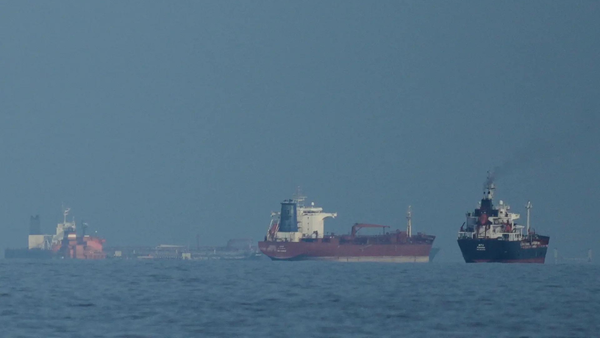
Europe could face energy shortages and fuel rationing as soon as next month without a reopening of the strait of Hormuz, Shell’s chief executive has warned.
The boss of Europe’s biggest oil company said it was working with governments to help them address the oil and gas supply crisis, which has already led to energy rationing in Asian countries.
Oil prices dipped back to about $100 a barrel on Wednesday from highs of about $114 at the start of the week, on the back of reports that the White House has sent a 15-point peace plan to Iran’s leaders.
However, without a return of crude deliveries from the Gulf to global buyers via the crucial Hormuz channel, Europe could face shortages of fossil fuels within weeks, according to Wael Sawan.
The Shell boss told a major oil industry conference in Texas:
South Asia was first to get that brunt. That’s moved to south-east Asia, north-east Asia and then more so into Europe as we get into April.
Sawan said the crisis, now in its fourth week, had already affected supplies of jet fuel – which has doubled in price since the start of the conflict – and he predicted diesel would come under pressure next, followed by petrol as the summer driving season begins in the US and Europe. He said shortages could begin in Europe as soon as April.
The stark warning echoed Germany’s economy minister, Katherina Reiche, who also warned at the same industry conference that energy supply scarcity could occur in late April or May if the conflict continues.
She added that Germany’s decision to phase out nuclear energy was a huge mistake and that greater imports of gas via super-chilled tankers from overseas would be an important part of the solution.
Updated
Slide in gold prices has further to run, says economist
The slide in gold prices has further to run, according to Hamad Hussain, climate & commodities economist at Capital Economics.
Weaker structural demand for gold left prices vulnerable to a pick-up in real yields and reduced risk appetite on the back of the conflict in Iran. But even if the conflict were to de-escalate soon, the same forces that had driven the gold rally could go into reverse and trigger further falls in prices this year.
On the face of it, the 16% fall in gold prices [now a 13% fall as gold is up 2% today] since the start of the Iran conflict seems unusual given the perception of gold as a hedge against geopolitical and inflationary risk. But looking back at past geopolitical shocks, the price of gold has often fallen when a crisis has coincided with higher real [bond] yields. Recall that since gold pays no interest, the opportunity cost of holding it rises when yields also rise.
Admittedly, this relationship has weakened significantly in recent years as buyers less sensitive to changes in yields, such as central banks and private Chinese investors, became the key drivers of marginal gold demand. But those tailwinds for gold could be going into reverse or, at the very least, becoming weaker.
IMF data show that central banks’ net purchases slowed by around 80% in January relative to the monthly pace of buying in 2025. Russia’s central bank has sold gold this year while others seem to be considering doing the same. Meanwhile, the nature of gold demand in China – as well as in the West – has taken a speculative turn. As a result, gold has arguably behaved more like a risky asset rather than a safe haven, and so the risk-off mood in markets has probably also weighed on prices.
The momentum that had supported prices now appears to be shifting against gold, Hussain said.
A second episode of sharp price falls within two months arguably undermines gold’s reputation as a safe haven asset – an oft-cited reason for holding gold. Regardless, even if the conflict were to end, the loss of momentum could lead to the same forces which previously helped gold defy changes in real yields may now work in the opposite direction. For what it’s worth, options data on gold-backed ETFs suggest there is still scope for leverage to be flushed out the market. All told, our view is that gold prices will remain volatile as they fall back towards to a below-consensus $3,500 per ounce by end 2026.
UK rents rise 3.5% while house price growth slows
Rent increases in the UK have slowed in recent months, while house price growth has also moderated, according to official figures.
The Office for National Statistics said the average private rent went up by 3.5% to £1,374 in the 12 months to February, the same as in January.
Average rents increased to £1,430 (3.6%) in England, £828 (5.5%) in Wales, and £1,022 (2.4%) in Scotland, in the 12 months to February. In Northern Ireland, average rents increased to £875 (5.2%), in the 12 months to December 2025.
In England, private rents annual inflation was highest in the North East (7.6%), and lowest in London (1.7%), in the 12 months to February.
The average value of a home increased by 1.3%, to £268,000, in the 12 months to January; this annual growth rate is down from 1.9%, in the 12 months to December.
Average house prices increased to £290,000 (1.1%) in England, £210,000 (2.0%) in Wales, and £188,000 (1.3%) in Scotland.
Average UK house prices up by 1.3%, to £268,000 in the 12 months to January 2026, down from 1.9% in the 12 months to December 2025.
— Office for National Statistics (ONS) (@ONS) March 25, 2026
Average UK private rents rose by 3.5%, to £1,374 in the 12 months to February 2026, unchanged since January 2026.
➡️ https://t.co/7XGAsOYHMM pic.twitter.com/IBZxsY225E
UK fixed mortgage rates invert, where five-year is cheaper than two-year
As inflation and interest rate expectations have shifted dramatically since the start of the Iran war, fixed mortgage rates have gone up. Financial markets are now pricing in several interest rate hikes from the Bank of England, rather than cuts.
The average two-year fix has risen from 4.83% at the start of March to 5.56% today – the highest since September 2024, according to Moneyfacts. Mortgage rates have inverted, where the five-year is now priced lower than the two-year fix.
The average five-year fix has risen from 4.95% to 5.54%, the highest since January 2024.
Rachel Springall, finance expert at Moneyfacts, said:
The turmoil in fixed mortgage rate pricing has worsened, as ongoing hikes have made the two- and five-year fixed rates invert, where five-year is slightly cheaper on average. Swap rates have been inverted for a few days now, so it was only a matter of time for the market to catch up. There is hope this will be a temporary blip until the markets settle down, but it depends how long volatility prolongs. This is unusual, however, its all down to how the markets foresee interest rate setting, many expect higher rates over the shorter-term.
This abnormality happened after the fall out from the mini-budget, and it took around three years for the inversion to end. In a traditional market, the average two-year fixed deal would be lower than the five-year, but the unrest in the Middle East is causing concerns over path of interest rate setting, with inflation expected to spike in the months ahead.
The uncertainty around the future of interest rates has led to mortgage lenders pulling more than 1,500 deals from the market since the start of March, leaving less than 6,000. Springall said:
If deals come back within the coming days, they will likely be at inflated rates to catch up with the current state of play. After all, a volatile mortgage market tends to be a more expensive one.
Seeking advice will be essential right now, but even brokers are rushed off their feet trying to keep on top of the mortgage mayhem.
Peter Kyle: 'everything is on the table' to offset energy price surge
The UK business secretary Peter Kyle has said the prospect of high oil prices lasting months, pushing up inflation and interest rates, meant “everything is on the table” as the government searches for ways to limit the impact on households and businesses.
Speaking at an event in London last night to reward companies that pay suppliers on time, Kyle said tackling profiteering and high import prices were top of his agenda along with closer ties with the EU to spur growth.
Kyle, who said the Iran conflict meant he was getting little sleep, started working with Rachel Reeves on Monday to identify imports where the tariff could be cut or in some cases raised to protect domestic industries. He recently increased tariffs on steel imports.
We know there will be an impact on our economy from the events in the Middle East. We are making assessments as to what those impacts could be, so that we are prepared and resilient should any of the waves being created in that region begin lapping at our shores.
My department has begun outreach to a whole variety of businesses deep into the roots of the economy. Everything will be assessed – supply chains and products that are central to a thriving and successful economy and society.
He said the range of interventions could be broad and he would act “with urgency and boldness”.
Kyle was animated about the need to crack down on businesses profiteering from the conflict by hiking prices, even where a particular industry is little affected.
In the financial crisis and during the Covid-19 pandemic we saw people profiteering for personal gain. We have an outstanding regulator in the Competition and Markets Authority and we will be tasking them with making very rapid interventions.
Turning to the EU, he said there were collaborations on health and climate technology in addition to defence tie-ups that could promote growth while it was going through a difficult period.
He said there were “no treaty obligations” in many areas where the UK could join forces with the EU.
BlackRock boss warns oil price rise towards $150 could trigger global recession
If oil prices stay above $100 a barrel for years and move closer to $150, it will spark at global “stark and steep recession,” the boss of the US fund manager BlackRock has told the BBC.
Larry Fink, the chief executive of BlackRock, which controls assets worth $14tn (£10.4tn) and is one of the biggest investors in businesses around the world, said that if Iran “remains a threat” and oil prices remain elevated there would be “profound implications” for the global economy.
Fink said he could envision two scenarios – one where the conflict ends and Iran is accepted by the international community, which would allow the price of oil – currently just below $100 a barrel – fall back to levels seen before the war.
In the other scenario, Fink said there could be “years of above $100, closer to $150 oil, which has profound implications in the economy” which would result in “a probably stark and steep recession”.
Fink said countries need to be pragmatic about their energy mix by using all sources available to them. While the UK has some solar and wind power and hydrocarbons, if oil prices were to rise to $150 for three or four years, “you would have so many countries moving so rapidly towards solar and maybe even wind,” he said.
Some analysts have suggested that there are some echoes of the run-up to the 2007-08 financial crisis in the markets.
Oil and gas prices are surging and there are some signs of cracks in the financial system. BlackRock is one of several firms to have limited withdrawals by nervous investors from private credit funds.
But Fink insisted that there won’t be a repeat of the financial crisis, when several banks around the world collapsed or had to be rescued, because he believes financial institutions today are more secure.
“I don’t see any similarities at all,” he said. “Zero.”
The BlackRock boss also denied there was an AI bubble. Brushing off fears of massive job losses, he said that artificial intelligence will create an “enormous amount of jobs” – but “electricians and welders and plumbers” rather than office jobs. Fink said:
I do not believe we have a bubble at all.
Could we have one or two failures in AI? Sure, that I’m fine with.
I believe there’s a race for technology dominance. I believe that if we do not invest more, China wins. I believe it’s mandatory that we are aggressively building out our AI capabilities.
Last year, BlackRock was part of a consortium that bought one of the world’s largest data centre providers, Aligned Data Centres, in a $40bn deal.
The biggest problem that is holding back the expansion of AI in the US and Europe is the cost of energy, he said.
Earlier this week, in his annual letter to shareholders, Fink said the boom in artificial intelligence risked widening inequality, with only a small number of firms and investors going to reap benefits.
European stocks, gold rise while oil falls 6%
European stock markets have risen following strong gains in Asia overnight, while the price of gold has risen.
The FTSE 100 index in London is 1% ahead, a rise of nearly 100 points, at 10,063. Germany’s Dax and Italy’s FTSE MiB both climbed 1.7% while France’s CAC increased 1.5% and Spain’s Ibex is 1.6% ahead.
Spot gold climbed more than 2% to $4,564 an ounce. However, it has lost 13% since the Iran war started on 28 February, having traded at $5,277 an ounce the day before, raising questions over its status as a safe-haven asset.
Oil prices have fallen this morning on hopes of a ceasefire in the Middle East, after Donald Trump sent his 15-point peace plan to Tehran – although Iran launched further missile attacks. Brent crude has dropped 6.3% at $97.96 a barrel.
Updated
UK offers to host international summit on reopening strait of Hormuz
The UK has offered to host an international security summit to draw up a “viable, collective plan” to reopen the strait of Hormuz as economic fallout from the Iran conflict continues.
Defence chiefs have been discussing how they could unblock the vital shipping lane, through which about 20% of global oil supplies usually pass, amid the Middle East crisis unleashed by the US and Israel.
The Ministry of Defence has already sent military planners to US Central Command to look at options for getting tankers through the strait, which has in effect been closed by Tehran’s threat of retaliatory attacks.
More than 30 countries including the United Arab Emirates, the UK, France, Germany, Canada and Australia have signed a joint statement agreeing to work on “appropriate efforts” to safeguard the waterway.
Here’s our full story on UK inflation:
Rachel Reeves, the UK chancellor, has responded to the inflation figures.
In an uncertain world we have the right economic plan, taking a responsive and responsible approach to supporting working people in the national interest.
We’re taking £150 off energy bills [from measures in November’s budget] and providing targeted support for those facing higher heating oil costs. We’re also acting to protect people from unfair price rises if they occur, bring down food prices at the till, and cut red tape to boost long-term energy security — building a stronger, more secure economy.
On Tuesday, she ruled out universal support to deal with any future rise in energy bills, saying any government help would be targeted, and criticised the support offered by Liz Truss’s government as unaffordable and irresponsible.
The chancellor also said she would review the planned fuel duty rise in September, but did not commit to delaying or postponing it.
UK food price inflation eases but industry group warns it's 'the calm before the storm'
Food price inflation in the UK has also eased, but the Food and Drink Federation warned this could the “the calm before the storm,” as the conflict in the Middle East threatens to push up food prices again, becaue of higher energy and fertiliser costs.
Food and non-alcoholic drink prices rose at an annual rate of 3.3% last month, down from 3.6% in January.
Confectionery, particularly chocolate, pulled the annual rate lower, as prices fell in February but rose a year ago. This was partially offset by small upward contributions from dairy products and vegetables.
Prices fell in nine categories, with the largest drops for: olive oil (-10.4%), flours (-8.3%) and pizza (-4.9%).
Prices rose the fastest for beef and veal (20.6%), offal (17.0%) and whole milk (13.1%).
Karen Betts, chief executive of the Food and Drink Federation, said:
While food inflation fell slightly in February 2026, I am concerned that this is the calm before the storm. The longer the conflict in the Middle East goes on, the bigger its impact will be on food prices. With food and drink price inflation already running above historical averages, heightened energy, maritime fuel and fertiliser costs will put further pressure on prices.
Food and drink is an essential, bought by every household, every week. While it can take several months for cost rises to filter fully through to shop shelves, the cost of the Iran conflict will be felt by shoppers this year. If government is serious about tackling the rising cost of living, it must provide our industry with at least the same support as other manufacturing sectors. The current energy shock is yet another structural shock our industry will have to absorb, on top of the Ukraine war, the costs of realigning food law with the EU once again, and new regulatory burdens.
The federation’s members have reported that UK haulage companies have implemented an increase on emergency fuel surcharge of up to 20%. And the ocean freight lines have also implemented an emergency bunker surcharge of around $400 per container to cover higher oil cost.s
Updated
The detail shows UK clothing and footwear prices rose by 0.9% in the 12 months to February, compared with no change in the 12 months to January. The February figure was the highest recorded since March 2025, when the rate was 1.1%.
Prices normally rise in February, as the spring ranges start to enter the shops following the new year sales period, the Office for National Statistics said.
This was offset by a drop in petrol prices, as the ONS collected the data before the US and Israel launched air strikes on Iran on 28 February.
Transport prices overall rose by 2.4%, down from 2.7% in January. The largest downward effect came from motor fuels, where the average price of petrol fell by 1.6 pence a litre between January and February to 131.6p, compared with a rise of 2p a litre a year earlier.
Similarly, diesel prices fell by 1.4p a litre to 141.1p, compared with a rise of 2.3 pence per litre a year earlier.
Commenting on today’s inflation figures for February, ONS Chief Economist Grant Fitzner said 💬 pic.twitter.com/mLBEUqv3oD
— Office for National Statistics (ONS) (@ONS) March 25, 2026
Introduction: UK inflation steady before Iran war; oil dips on Trump comments
Good morning, and welcome to our rolling coverage of business, the financial markets and the world economy.
Inflation in the UK was unchanged last month, as expected – before the Iran war drove up global energy costs, threatening a renewed price jump.
Official figures showed the consumer prices index (CPI) stayed at an annual rate of 3% in February, the same as in January. Economists had expected it to stay at 3%.
Clothing made the largest upward contribution to the monthly change while motor fuels made the largest, offsetting downward contribution, the Office for National Statistics said.
The Consumer Prices Index (CPI) rose by 3.0% in the year to February 2026, unchanged from the 12 months to January 2026 as various price movements offset each other.
— Office for National Statistics (ONS) (@ONS) March 25, 2026
Read more ➡️ https://t.co/cLNa4ga5bT pic.twitter.com/DbDfPdr7b0
The outlook for inflation has changed dramatically since the onset of the Middle East conflict, which has sent oil and gas prices soaring after the effective closure of the key transit route of the strait of Hormuz.
This means the interest rate outlook has also shifted, with markets now expecting several rate hikes, rather than cuts, this year.
Charlie Ambler, co-chief investment fficer at wealth management firm Saltus, said:
While we expected February’s inflation data to remain stable around 3%, increasing oil prices are widely expected to push up the headline rate of inflation to near double the 2% target later this year, threatening the Bank’s slow and steady rate cutting cycle and frustrating markets. Should this materialise, markets are unlikely to respond well.
While the Bank of England has signalled a cautious and data dependent approach to monetary policy, resulting in a hold at 3.75% last week, financial markets have already reacted sharply to the changing global outlook. Investors are now pricing in the possibility of multiple interest rate increases this year, with some expectations pointing to as many as four rises before the end of 2026. The gap between market expectations and the Bank’s own guidance highlights just how uncertain the inflation outlook has become.
Oil prices dipped this morning to hover around $100 a barrel, after Donald Trump sent a 15-point peace plan to Iran and voiced optimism about ending nearly a month of war.
Brent crude fell 4.1% to $100.2 a barrel, while New York light crude lost 3.5% to $89.12 a barrel. Both benchmarks rose nearly 5% on Tuesday.
However, Iran’s Revolutionary Guards said it had launched a new wave of attacks against locations in Israel including Tel Aviv and Kiryat Shmona, as well as US bases in Kuwait, Jordan and Bahrain, according to Iranian state media.
Asian stock markets rebounded strongly, with Japan’s Nikkei up 2.87% while South Korea’s Kospi rose 1.6%.
The Agenda
8.45am BST: ECB president Christine Lagarde speaks
9am BST: Germany Ifo business climate
9.30am BST: UK house prices and rents
11am BST: US Weekly mortgage applications
Updated