The Trump administration has imposed visa restrictions on 75 individuals tied to the Sinaloa Cartel, expanding its campaign against transnational drug trafficking networks and signaling a broader strategy aimed not just at cartel leaders but at their inner circles.
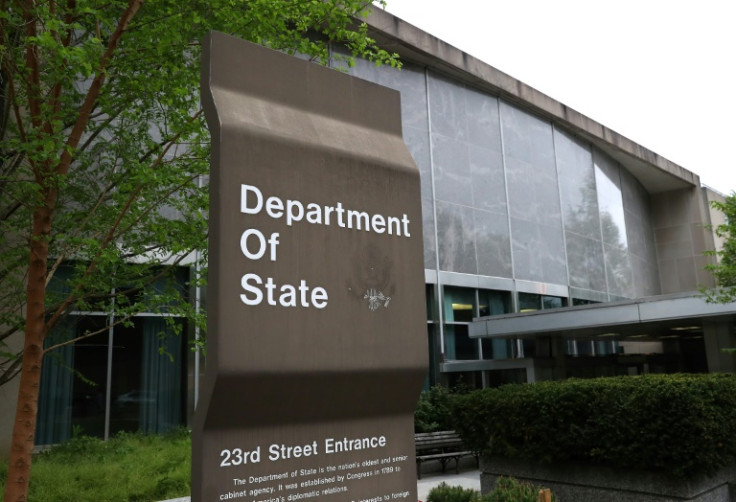
The announcement, shared by the State Department, targets family members and close associates of individuals already sanctioned under Executive Order 14059, a framework designed to disrupt global illicit drug operations and financial networks.
"Today, I'm taking steps to impose visa restrictions on 75 individuals," said the Secretary of State Marco Rubio, emphasizing that those affected are connected to cartel figures previously identified under U.S. sanctions authorities.
The names of those affected by the measure weren't revealed.
The move marks an escalation in how Washington is applying immigration tools as part of its anti-cartel strategy. Rather than focusing solely on traffickers themselves, the policy extends consequences to relatives and business associates, a tactic officials argue can weaken support structures that allow criminal organizations to operate.
Executive Order 14059, signed during the Biden administration and now being actively enforced and expanded, allows the U.S. government to sanction foreign individuals and entities involved in the global drug trade. It has become a key legal mechanism for targeting groups linked to fentanyl trafficking, a crisis U.S. officials have repeatedly tied to Mexican cartels, particularly the Sinaloa organization.
-
U.S. Sanctions Six Entities Connected with Mexico's Cartel del Noroeste: All About this Drug Trafficking Organization

-
Report: ICE Approves $12 Million Contract for AI System to Analyze and Track Potential Targets

-
El Mayo Zambada Sentencing Delayed Again in U.S.: What's Behind the Second Postponement


The Sinaloa Cartel, one of the most powerful drug trafficking groups in the world, has long been accused by U.S. authorities of playing a central role in the production and distribution of fentanyl and other synthetic opioids. The organization operates across Mexico and maintains international networks that stretch into the United States, Europe, and Asia.
By extending visa restrictions to associates, the administration is effectively widening the scope of enforcement beyond direct criminal actors. According to State Department guidance, such restrictions render individuals ineligible to enter the United States, a move that can carry financial and reputational consequences even if the individuals are not formally charged with crimes.
The decision aligns with a broader tightening of immigration and national security policies under President Donald Trump, whose administration has prioritized aggressive action against cartels and labeled them a major national security threat. Earlier measures have included expanded screening, visa suspensions, and efforts to designate certain criminal groups as terrorist organizations.
Recent State Department actions also show a pattern of increasing reliance on visa restrictions as a geopolitical tool. Just days earlier, officials announced expanded visa bans targeting individuals across the Western Hemisphere accused of undermining U.S. interests, underscoring how immigration policy is being used in tandem with foreign policy and law enforcement objectives.
© 2025 Latin Times. All rights reserved. Do not reproduce without permission.