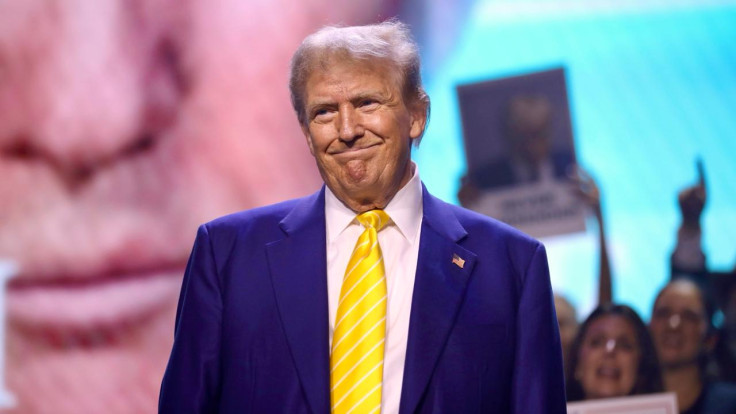
President Donald Trump's disclosure that he takes a daily dose of aspirin far above standard medical recommendations has intensified questions about his health and judgment at a critical juncture in his presidency.
In a Wall Street Journal interview, Trump admitted that he takes 325 milligrams of aspirin each day, four times the 81 milligram dose typically prescribed for cardiovascular prevention, and defended this practice as a safeguard for his heart, despite advice from his own doctors to reduce it.
The revelation comes as the 79-year-old leader confronts heightened public scrutiny over visible bruising on his hands and other signs of ageing. Trump's explanation for the bruises, attributing them to his high-dose aspirin use and frequent handshakes, has drawn sharp responses from medical experts who warn that the regimen may pose more risk than benefit.
Medical Risks Versus Standard Guidance
Aspirin is widely prescribed in low doses to reduce the risk of heart attack or stroke in select patients, particularly those with known cardiovascular disease.
The US Food and Drug Administration notes that daily aspirin use may be helpful in people with certain heart conditions but emphasises that not all adults should take it, especially without clinical guidance, because it can cause serious side effects such as bleeding in the stomach and brain.
Leading clinical guidelines recommend that low-dose aspirin, typically between 75 mg and 100 mg, with 81 mg common in the United States, is appropriate for secondary prevention in patients who have already experienced a cardiac event. For adults over 70 without established cardiovascular disease, routine aspirin for primary prevention is not generally advised because the risks of bleeding may outweigh any preventive benefits.
President Trump takes 325 mg aspirin/day. The randomized trials tested 75-81 mg/day. His doctors recommended low-dose aspirin for heart event prevention. That recommendation is ill-founded based upon best evidence in older individuals.https://t.co/nk8TlJtcd8… pic.twitter.com/1yUVMXJXua
— Eric Topol (@EricTopol) January 1, 2026
By contrast, Trump's stated daily dose of 325 mg sits at the upper boundary of what some clinicians might prescribe for acute scenarios (such as immediate care during a heart attack) rather than long-term preventive therapy, and is significantly higher than the low-dose typically recommended for routine prophylaxis.
Trump's Statements and White House Context
In his interview, Trump said he chooses the higher daily dose despite doctors preferring the lower one because he believes the larger dose offers better protection. He acknowledged that the regimen results in easy bruising and that his doctors have advised lowering the dose, but said he has refused based on superstition and long-standing habits.
This @WSJ about Trump’s health and diet which also includes an interview with him, is INSANE.
— Maine (@TheMaineWonk) January 1, 2026
- 325mg of Aspirin Daily
- McDonalds Burgers/Fish Filets + Diet Coke
- Refuses exercise because “boredom”
- Rejects medical advice because “good genes”
🎁 https://t.co/2mF0eubmDw pic.twitter.com/LAVPdrFudO
Trump's physician, Navy Captain Sean Barbabella, confirmed the president takes 325 mg of aspirin daily as part of his cardiac prevention strategy and defended his overall health. Barbabella told the Journal that an October CT scan, initially misconstrued in some reports as an MRI, showed no cardiovascular abnormalities.
The White House has publicly described Trump as being in 'exceptional health and perfectly suited to execute his duties as Commander in Chief', citing medical evaluations and an AI-based analysis estimating his cardiac health to be equivalent to that of a person in their mid-60s.
Broader Concerns About Cognitive and Physical Fitness
Trump's age makes his health regimen especially salient. At 79, he is the second-oldest person to serve as US president; his predecessor, Joe Biden, left office aged 82 amid intense public scrutiny of his cognitive and physical fitness.
Trump himself has sought to deflect concerns about possible decline, at times highlighting that he 'aced' cognitive examinations and asserting robust health in social media posts following publication of his interview.
Yet some medical observers caution that longevity and high activity levels, such as Trump's frequent rounds of golf, do not replace evidence-based preventive care strategies. They stress that deviation from established guidelines, particularly in the absence of peer-reviewed medical documentation, can be inappropriate for public figures whose health directly impacts governance.
Trump's insistence on maintaining a high-dose aspirin regimen against medical advice has sparked debate across clinical and political spheres, stressing broader concerns about how personal health decisions intersect with public leadership responsibilities.
In choosing to reject lower-dose guidance, he has fuelled a conversation about age, medical risk and transparency at the highest level of government that will likely continue to resonate throughout the year.