Gerson Turcios didn’t recognise the men standing next to a couple of dark SUVs outside his house one July afternoon last year. He figured they were lost and approached to see if he could help. A slim 23-year-old with short dark hair and big brown eyes, Turcios had just finished work mowing lawns in the pretty town of Rhinebeck, in New York’s Hudson Valley. The men asked if he knew someone called Jimmy – he did, but Jimmy hadn’t lived in the small, white weatherboard house with Turcios, his brother and his brother’s girlfriend for a while.
The men noted Turcios’s accent and asked where he was from. Turcios didn’t answer, so one took out his phone and snapped a photograph. The next thing Turcios knew, he was in handcuffs in the back of one of the SUVs and on his way to an ICE processing centre in Newburgh, New York, then on to a detention centre.
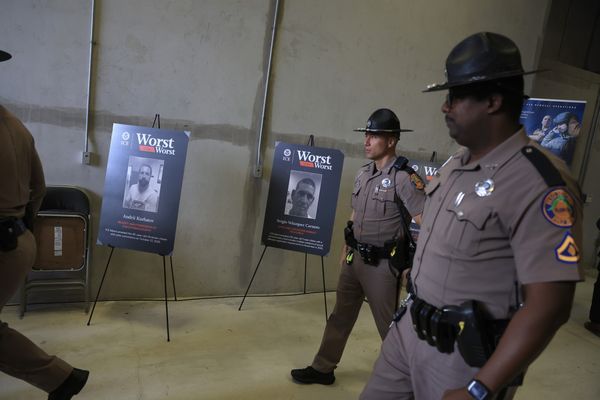
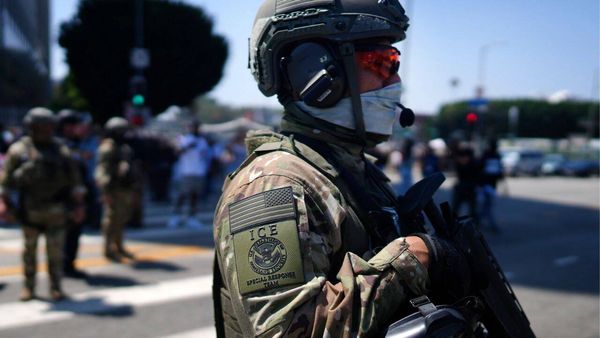
Mass deportation has been the defining mission of Donald Trump’s second presidency. In the year since he took office, ICE – United States Immigration and Customs Enforcement – has deported nearly a quarter of a million people from inside the US (half a million including from its borders) as part of an immigration crackdown. These forceful apprehensions, which have in some cases resulted in fatal shootings of potential deportees and bystanders, have resulted in protests – and sparked international outrage. Behind the statistics, though, are stories of hope and perseverance; of young immigrants who risked everything crossing rivers and deserts to build lives, start businesses and put down roots in communities that are now fighting to keep them.
Back then, as he was shackled and led to his cell, sure he was about to be deported back to Honduras, Turcios – an immigrant who had made a terrifying journey as a teenager, fleeing violence there – had no idea that his community in Rhinebeck was already mobilising; that they would raise tens of thousands of dollars in days, galvanise support from Hollywood actors and film-makers who also called the town home, and even recruit the lawyer who essentially wrote the book on stopping ICE deportations around the nation to represent him.
I’d moved to Rhinebeck with my own family from Texas during the pandemic, drawn to the bucolic countryside and good schools. Our own daughter now walks the same high school hallways Turcios once did. For me, and a lot of other people who call this small town home, Turcios’s arrest was personal.
“Well, it’s happened,” wrote actor Griffin Dunne on Instagram. “ICE has come to my beloved Dutchess County and kidnapped a hard working kid with his own local lawn care business, and without a criminal record, off our tranquil streets.” But he added, “This is only the beginning.” Dunne, who has a home in Rhinebeck, told his followers that the community had started a war chest to defend Turcios. “Our pressure has brought about a hearing for Gerson at 11:00 tomorrow morning at Thurgood Marshall Courthouse for those who wish to show support. To my Rhinebeck neighbors, a bus will leave from Tops [grocery store] at 7:00 am.”
* * *
Six years earlier, around 9pm on a freezing December night, Turcios and three other migrants had stood by the southern banks of the Rio Grande river in Mexico, looking across into Texas as flames torched the desert brush behind them; Mexican soldiers had set it alight to flush them out.
With nowhere left to go, Turcios turned to the others. “We are right here,” he told them. “The other side is the United States.” Another boy checked that everyone was able to swim – they were – but all Gerson could think about was alligators, which had occasionally been known to inhabit the Rio Grande.
The four boys jumped into the black water together, fighting the current as it pushed them downstream. Along that stretch, near McAllen, Texas, the width of the Rio Grande ranges from 45 to 90 meters. Finally, soaking wet, they scrambled up a concrete wall on the US side. They ran through scrubland until headlights appeared behind them, then three German shepherds. A heavier boy was dragged down by the dogs as he scaled a fence; the others scattered. Turcios sprinted until three cars boxed him in and US immigration officers emerged with guns drawn. “If you keep running,” they shouted, “we’re gonna shoot your legs.” Turcios stopped, put his hands up, then fell to his knees and felt a boot between his shoulder blades as they threw him to the ground and handcuffed him. He had spent six weeks on a journey that had nearly broken him. Against all odds, he had made it across the river. And now he’d been caught.
In 2019, during the first Trump administration, an adult detained by Border Patrol crossing into the US was increasingly likely to be sent back to Mexico to wait for their immigration case to be heard. Turcios, though, was under 18, and the law dictated he be taken to refugee resettlement housing for minors. Turcios stayed at a facility in Long Island for almost a month until his brother, Henoch, and Henoch’s girlfriend, Yorleny Weigel, were allowed to pick him up and return to Weigel’s home in Rhinebeck.
Henoch had come to the US in 2017 via a tortuous route, and Turcios hadn’t seen him for six years. Their first stop was a Wendy’s fast food joint for a burger – “So big,” Turcios now recalls, “I didn’t know how to eat it.”
He would have to wait for the government to notify him of his first immigration hearing, but soon the Covid pandemic would throw the courts into chaos, with some hearings postponed indefinitely and others rescheduled then postponed again, leaving Turcios in limbo.
Weigel showed Turcios his room, then drove him across the river to a big outlet store in the city of Kingston to buy clothes. He spoke no English, so Weigel registered him with a county language integration programme and with the local high school. In the summer of 2020, ahead of the start of the school year, he was introduced to Anna Lawson, who would be one of his classmates. Lawson was in advanced Spanish and, as Covid was still forcing people to meet virtually, they spoke regularly over Zoom. “He is a really lovely, positive person,” Lawson says. “He’d often be sitting outside, talking about how much he enjoyed Rhinebeck.”
On the first day of school, Turcios was afraid he’d be arrested by the police officer who sat outside in his car for an hour each morning as kids entered the building – just under half of US state schools have police patrol on campus – but after his first day, that fear passed. “After that I wasn’t afraid. I was excited,” he says. “But I didn’t speak any English at all.” Turcios immediately hit it off with his classmates. Brendan Dougherty shared a study hall with him. “Gerson is a very sociable guy, so it wasn’t difficult to strike up a conversation with him,” Dougherty says. “And his English progressed very quickly. Each day we’d go outside and play basketball.”
Turcios finished high school in the early summer of 2022 and began working in the kitchen of a local French restaurant and, in his spare time, for a crew that did landscaping and house maintenance, and mowed lawns. One of his first clients was Jenny Friedberg, a creative director and producer who had moved up to Rhinebeck from the city during the pandemic. Turcios and the maintenance crew painted her basement in Brooklyn, and excavated 24in of bedrock under her barn in Rhinebeck. “Whatever they did, Gerson was always there,” Friedberg says. “He was the youngest of the crew, the smiliest, the most helpful, and my favourite.”
In the summer of 2025, Turcios left the restaurant and went to work full-time with the crew. At 7.30pm on 18 July 2025, Friedberg’s phone rang. It was Carlos, Turcios’s boss. Turcios had been detained by ICE, he told her, and he didn’t know what to do.
Friedberg made several calls that evening. The first was to Luciano Valdivia, a local restaurateur and president of Rhinebeck’s chamber of commerce. The next was to Amanda Miller, a local attorney. Then John Reinish, a political communications strategist she knew. Within 24 hours, they’d set up a Spotfund, an online fundraising platform, to raise money for Turcios’s legal battle. Miller called Gregory Copeland, a law school friend who had pioneered legal strategies to stop ICE deportations and had also moved to Rhinebeck.
Copeland was a nationally recognised civil rights and immigration attorney, and co-founder of the Rapid Defense Network, a non-profit providing pro bono legal support to immigrants facing deportation. He was also the subject of the documentary Guerrilla Habeas, which looked at the legal strategy it employed to stop deportations at the last moment. That strategy hinged on filing habeas corpus petitions, which empower federal judges to compel the authorities to justify detentions, a power enshrined in the constitution. Doing this forces cases out of immigration courts and into federal court, where due process can be properly considered and immigrants have a fairer shot at justice.
Miller says Copeland had experience fighting “the biggest machine there is – the federal government”. But since his move to Rhinebeck, he had stopped practising civil rights and immigration law, and had turned his attention to estate planning for clients. Still, Miller knew there was no one better to help Turcios.
“It wasn’t clear to me immediately that I would help him, but I went into triage mode, gathering information and figuring out what our options were,” Copeland says. As soon as Copeland got Turcios’s “A-Number” – the alien registration number assigned by the US Department of Homeland Security to non-citizens– he could check his status in the system. He discovered that, years earlier, Turcios had been ordered deported “in absentia” for missing a hearing. During Covid, courts repeatedly moved locations; Turcios missed a notice despite living at the same address he’d always provided.
Copeland knew it was now vital to get the Rhinebeck community to show up for him. “If you consider what the government evaluates when justifying someone’s detention, it’s whether they’re a danger to the community and a flight risk,” Copeland says. “The community is typically not going to show up for a dangerous person. And you’re less of a flight risk if there’s a strong community around you.”
It was a matter of urgency to identify where Turcios was being taken and where he was going next. Copeland says it’s not an exact science, but after working these cases as long as he had, you get a feel for it. A red flag was if he had been sent to Louisiana, a staging location for deportations – at this point, he had not. However, Turcios had been detained with his passport – another red flag. “[The government] needs two things to remove you: a travel document and a final order of removal,” Copeland says. “They need something to show who you are because in immigration court one of the first things they need to establish is that you’re not a citizen.” If an immigrant picked up by ICE doesn’t have a travel document on them, that buys their attorneys more time.
Meanwhile, Valdivia asked Leah Conklin, another resident who worked in international criminal justice reform, to get involved. Within days of Turcios’s arrest, a crack team was coming together, but time was of the essence. “One of the reasons they make arrests on Friday, I think, is because you can’t catch up,” Valdivia says, “and if you don’t know where they’re going, you don’t know how to stop it.”
Copeland was looking at the online detainee locator system, trying to get a feel for where Turcios was moving – through which processing centre; which detention centre. In New York state, if you are taken to Federal Plaza in Manhattan and then your location “goes dark”, that’s an indicator you could be bound for a deportation flight. “It’s very relevant for filing a habeas petition,” Copeland says, “because you have to file where they’re detained.” If you don’t know where your client is, you can’t file and they can be deported. “So it’s a game they’re playing – hiding the person.”
Conklin had been calling around law firms but found it impossible to get a lawyer quickly enough. On Sunday, Copeland agreed to take on Turcios’s case himself. “I had created the Rapid Defense Network because there’s a small window in which you have to do this. It’s like a death penalty case: you have to strike while the iron’s hot or you’re dead.” By that evening, with Miller’s help, Copeland had filed an emergency petition on Turcios’s behalf, seeking a stay to allow him to consult with lawyers and challenge his removal order. Conklin says that the community came together in record time.
Valdivia messaged some other Rhinebeck residents he knew could amplify Turcios’s story. He called Dunne, the actor and writer who had starred in An American Werewolf in London and After Hours, and whom Valdivia counted as a friend. He texted film-maker Andrew Jarecki, who donated, as did actor Paul Rudd, who co-owns a sweet shop in Rhinebeck and lives there with his family. Word spread. Other contributions came in from all over the US and beyond.
Dunne began posting about Turcios’s case on social media. “It was the first time I’ve ever used Instagram without kind of being embarrassed about self-promotion because I had a movie coming out,” he says. “It made sense to me for the first time. I was just struck by the inhumanity and the contagion of cruelty.”
Friedberg says that when Turcios was arrested, she had a reckoning with herself: “This sort of recognition of how we don’t often know the people that have been working for us or near us for years.” She had never asked about Turcios’s story.
* * *
Turcios spent his early childhood in the small town of Balfate on Honduras’s northern coast. His father, Juan, raised cattle. Irma, his mother, gave birth to 10 children. The disappearance of his eldest brother, Amilcar, is one of Turcios’s earliest memories. He was four when his brother went missing after travelling by boat to Roatán, a Honduran island, to seek a better life. Of the five people who made the trip, authorities recovered the bodies of three. Amilcar and the boat’s captain were never found. Turcios’s family never learned the truth; they suspect it had something to do with organised crime, but they’ve come to accept that Amilcar is dead.
While there has been a drop in violent crime in the last couple of years, historically Honduras has been one of the most dangerous countries in the world, with gangs vying for control of drugs and extortion rackets. A decade ago, it frequently topped global lists of the highest murder rates in non-war zone countries, fuelled by its position as a major transit hub for South American cocaine heading to the US.
“My mother was afraid, so she decided we should move from that place where she lost her son,” Turcios says. The family relocated to just outside the large city of San Pedro Sula and stayed there for nine years. Turcios went to school, but eventually they sold up and moved to a house in the mountains. It was beautiful, he says, but dangerous; you could never be sure which was more deadly – the criminal gangs who stole livestock, or the venomous snakes and other wildlife.
They had 10 cows to tend and a few horses, and they began constructing their own house. Laundry was done in a small stream and cooking over fire. Walking to the city took nine hours, over mountain passes; Turcios recalls jumping on his father’s shoulders to cross rivers.
By the time Turcios moved to the mountains, his brother Henoch had already migrated to the US. Henoch says he travelled from Honduras, across Mexico by train, without any money and had to beg for food. He spent three months in Monterrey, where he almost had to have his left hand amputated due to an infection. A friend helped him pay for the medication – the same friend would eventually take in Henoch in Rhinebeck. After he’d recovered enough, he hitched a ride on a train to the border town of Sonoyta, then spent 22 days walking through the southern desert into Arizona. He says he nearly died after spending weeks without eating, surviving on nothing but water.
Eventually, Turcios’s parents decided to move back to town as they wanted his younger sisters, aged eight and 10, to go to school, and to be nearer to a hospital in case they got sick. Turcios stayed in the mountains, living alone for six months so his father wouldn’t have to sell his animals, but he was an hour away by foot from the nearest house. His father gave him a gun for safety and most nights he’d lie awake, clutching it, and listening to the cries of animals in the wilderness.
After the 16-year-old son of his nearest neighbour was murdered over drugs, Turcios’s siblings decided it was time for him to leave Honduras. One day, when visiting his sister in town, he was told that the following morning a man would arrive who would help him cross into Mexico and travel to the US to join his brother. “I didn’t have a future in Honduras,” he says. “If you wanted to go to college, you had to pay a lot of money and my parents couldn’t afford it. And I knew if I went to the United States I would learn how to speak English and it would be better for me.”
Two days later he was travelling across Guatemala by bus and car, under the “care” of a coyote – a people smuggler he had paid 12,000 Honduran pesos, the equivalent of about £350 – or, as he recalls, the amount he’d received for a cow he’d sold five days earlier. Turcios had been told the back route through the mountains would keep him safe. He, his coyote and a group of other migrants moved only at night, but safety proved elusive. At a bus stop in Guatemala, armed officers boarded and ordered passengers to strip. Turcios had hidden his money in his sock, out of sight. The coyote paid the officers off and they kept moving. Hours later, another police stop. This time the driver was pulled from the van, kicked and beaten while officers held a pistol to his head. Only when the driver produced 25,000 Mexican pesos (about £1,000) did they relent.
After 16 nights in a safe house, one migrant demanded better treatment from the people smugglers and that they get moving. Three strangers dragged him outside and he never returned.
The journey took a month and a half. In early December, Turcios and his closest companion, Antonio, were roused at midnight and, together with four others, were packed into a van and dumped in desolate brush. Turcios and Antonio were from the same state in Honduras but hadn’t known each other before. The others were from different countries – El Salvador, Guatemala, Mexico. “I was 17. Antonio was 28 and like my older brother,” Turcios says. “His wife and kid had moved to the US a year before and lived in Georgia, so he was trying to reunite with them.”
A guide led them through darkness for 30 minutes. By 3am they had joined 40 others alongside the Rio Grande, shivering in the winter cold. The border was not unguarded. Helicopters buzzed low, forcing them to hide in the grassland and scrub. Mexican army troops encircled them, weapons raised, setting fire to the surrounding brush to flush out the remaining migrants, most of whom fled into the night. Turcios surrendered his pesos and ran. Then, it was time to cross.
After his capture, the US Border Patrol officers took Turcios to a room with a table and two chairs. An officer accused him of being an adult; of running drugs across the border. Turcios told them he was 17, that he had never muled drugs, and that he had gone three days without sleep or food. He produced his birth certificate, which they took and never returned. A doctor arrived, checked his teeth, and confirmed his age. Then the officers stopped yelling, moved him to a cell full of boys his age or younger, and gave him two cookies and a bottle of Kool-Aid – the best meal he had eaten in weeks.
Two days later, he was given new clothes, a jacket for the cold, and told he was flying to New York. It was his first time on a plane, his first time seeing “ice fall from the sky”, as it was snowing that day in New York City. After 26 days in a Long Island shelter, showering each morning and night, and attending a little school inside the facility, he was met by Henoch and Weigel, who drove down from Rhinebeck to collect him.
* * *
Six months after Turcios was detained outside his home in Rhinebeck, the campaign to help him had shifted from emergency response to sustained pressure. On a freezing Tuesday afternoon in January, more than 100 students walked out of Rhinebeck’s middle and high schools as part of nationwide anti-ICE protests, defying district policies that required parental permission to leave campus.
My daughter, Scout, then 14, helped organise the walkout, and I watched from the edge of the park as she stood on a podium and told the crowd how ICE had taken a Rhinebeck High School alumnus who had done nothing but contribute to the community and how his detention had affected everyone.
Turcios has been shuffled between detention facilities across three states – New York, New Jersey and Louisiana – seemingly at random. Last August he was taken to the Alexandria Staging Facility in Louisiana, a factory for deportation flights. One morning he was led on to a plane bound for Honduras, but guards pulled him off just before departure after Copeland and other lawyers working on his case won a stay of removal. Over the next 48 hours, Turcios watched as 50 other migrants left the United States, before he was driven back to the detention facility.
In June Turcios had his second court hearing; unlike the first, this one he was required to attend. Dunne says he couldn’t get out of his head the picture of this boy in ankle chains, flanked by guards, looking over at his friends and supporters in the public gallery. “And when he gave us a wave it was just heartbreaking.”
It also brought up traumatic memories. Back in 1982, Dunne’s younger sister, Dominique, died after being strangled by her ex-boyfriend. “The last time I was in a courtroom was over 40 years ago, representing my sister who had been murdered,” he says. “I attended the trial every day … and every day felt like a situation where the system fails you. Seeing Gerson really, really shook me and I thought about things I hadn’t thought about in a long time – that feeling of helplessness.”
On 18 July 2026 Turcios had been in detention for a full year. His fundraiser has reached more than $130,000 in donations from 1,121 different people, but his legal fight continues. After nine years living in Rhinebeck, Henoch self-deported back to Honduras. He says that, given what was happening to Latino people in the US under the Trump administration, he decided it was better to return. “Having to start over here in Honduras is tough, but it has to be done,” he tells me. Today he works on a cattle farm. Henoch’s former girlfriend, Yorleny Weigel, still lives in Rhinebeck.
She misses Turcios. “I used to take him everywhere with me. People thought he was my son. I’d tell them he wasn’t, but in the end I just gave up and went with it. He loved to go dancing; he’d try to dance but he wasn’t very good.” She talks to Turcios most nights on the phone. “He’s changed,” she says. “He doesn’t want to admit it, but I think it’s breaking him a little bit.”
Today, now aged 24, Turcios is housed in the Metropolitan Detention Center in Brooklyn – the same building in which former Venezuelan president Nicolás Maduro and Luigi Mangione, accused of murdering UnitedHealthcare CEO Brian Thompson in New York City, are awaiting trial. Immigration detainees are kept separate, but are in the same facility.
Turcios says he’s locked in his cell three times a day but allowed out for breakfast, lunch and dinner, and a few hours’ recreation – playing cards, watching TV. “There are four telephones in the unit and we need to line up to use them,” he says. “Sometimes there are eight people waiting and you don’t get to make a call.”
He says the food is bad – breakfast is a packet of milk and a muffin; lunch is pasta with meat that is “old or cold and flavourless”; dinner is mashed potato, spinach and occasionally chicken. “We don’t see sunshine,” he says. “There is a small room where we play basketball and there’s a big opening like a cage, with no glass, and we can see a little piece of the sky.” He speaks to his parents, Irma and Juan, once a week, but calls are expensive – $10 to call Honduras.
Turcios often thinks about how Trump campaigned on deporting all criminal undocumented immigrants. “But the criminals are on the outside,” he says. “And inside, most of these people here with me just came to the United States to work, to try to build our lives and make things better.”
He wants to return to his home in Rhinebeck. “I knew the community was full of incredible, nice people,” Turcios says. “I never expected everyone would get together to help me out. I was so surprised and happy.”
Turcios’s lawyers are challenging his prolonged detention – under a supreme court ruling, the government may detain someone it wants to deport who has a final order of removal for 90 days; between 90 and 180 days, it must show special justification to keep holding them; and after 180 days, it must prove they are “wildly dangerous”. Copeland says this is a level that even a history of gang-related homicide has in the past failed to meet. He argues that Turcios should have been released by October, roughly 90 days into his detention, and that ICE failed to properly notify him of a custody review hearing. In addition, Copeland is pursuing Turcios’s claim for asylum in the US.
Meanwhile, Turcios’s high school friend Anna Lawson, who recently graduated from McGill University in Canada and is taking a gap year before starting law school, is in disbelief that Turcios has been identified by her government as someone who doesn’t belong here. “Gerson is someone who is a benefit to our community and has only enriched it and helped people. I think the American dream really does live in him. He is such an embodiment of what it’s supposed to mean.”