The Supreme Court has blocked President Donald Trump from deploying National Guard troops in Chicago, marking the first time the high court has weighed in on the president's controversial efforts to use military forces to enforce immigration laws in Democratic-led cities. The decision hands Trump a rare defeat at a court where he has historically found favour.
In an unsigned opinion released on 23 December, the court's majority kept in place a lower court hold on the use of troops whilst litigation over the administration's actions continues. The justices said the Trump administration 'failed to identify a source of authority that would allow the military to execute the laws in Illinois'. Three of the court's six conservatives—Justices Clarence Thomas, Samuel Alito and Neil Gorsuch—dissented from the majority decision.
A Battle Over 'Regular Forces'
The crux of the legal dispute centres on when a president can federalise the National Guard, which typically operates under state governors' control. The Trump administration contended two circumstances are present in Chicago that allow federal deployment: a rebellion against the government and an inability to execute laws 'with the regular forces'.
The administration's argument hinged on an unconventional interpretation of 'regular forces'. They claimed the term refers not to the full-time professional military, but rather to civilian law enforcement personnel such as Immigration and Customs Enforcement officers. City and state officials vehemently disagreed, arguing Trump 'cannot possibly show that the extraordinary conditions for domestic military deployment are present here'.
US District Judge April Perry sided with Chicago in an October ruling, stating that 'regular forces' refers to the standing military, which Trump hadn't deployed first before attempting to send in the National Guard.
Operation Midway Blitz Sparks Widespread Protests
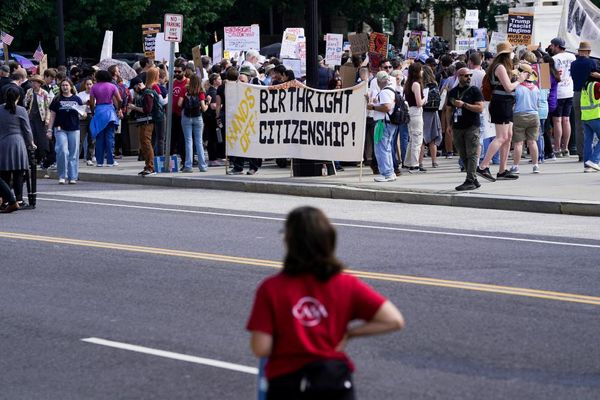
The Chicago area has been at the centre of the administration's sweeping immigration crackdown, dubbed Operation Midway Blitz. Protests have erupted in response, often in front of an ICE facility in the suburb of Broadview. Trump federalised roughly 300 members of the Illinois National Guard and about 400 from the Texas National Guard to support immigration enforcement operations.
Illinois Attorney General Kwame Raoul told the Supreme Court that state and local law enforcement officers have adequately handled the 'isolated protest activities', some of which he said is protected under the First Amendment. The Justice Department, however, painted a far grimmer picture, telling the Supreme Court that the situation in Chicago 'has become unsustainably dangerous for federal agents, who now risk their lives to carry out basic law enforcement functions'.
A Warning from Military Leaders
Chicago is not the first city where Trump has attempted to deploy guardsmen, but it's the first case to reach the Supreme Court. Officials in California and Oregon have sued to stop deployments in their states, as have officials in Memphis and Washington. State and local officials across these jurisdictions argue that federalising the troops represents an unconstitutional infringement on state power.
A group of former high-ranking military leaders weighed in with a filing supporting Illinois, warning that federalising the National Guard should be a 'last resort to avoid the politicisation of the military, which inevitably erodes public trust, hurts recruitment, and undermines morale'. They wrote: 'Peaceful protests of government actions are constitutionally protected speech deserving of the highest protection, not intimidation by the military'.
BREAKING: US Supreme Court rejects Trump's military deployment in Chicago area, for now https://t.co/UASNBNnyUZ pic.twitter.com/Bl4Xie5AYc
— Reuters Legal (@ReutersLegal) December 23, 2025
A Precedent for Presidential Power
The Supreme Court's decision carries significant implications beyond Chicago. According to analysis from the Brennan Center for Justice, the limits on presidential authority to deploy military forces domestically have been carefully crafted over centuries to prevent the politicisation of the armed forces. The Posse Comitatus Act of 1878 generally prohibits the use of federal military personnel to enforce domestic policies, with narrow exceptions that require clear statutory authority.
This ruling suggests the Supreme Court remains willing to check presidential power even in areas where national security and immigration enforcement intersect, though the three conservative dissenters signal potential future challenges to these limits. As similar cases from California, Oregon, Memphis, and Washington work their way through the courts, this Chicago decision will likely serve as a crucial precedent.