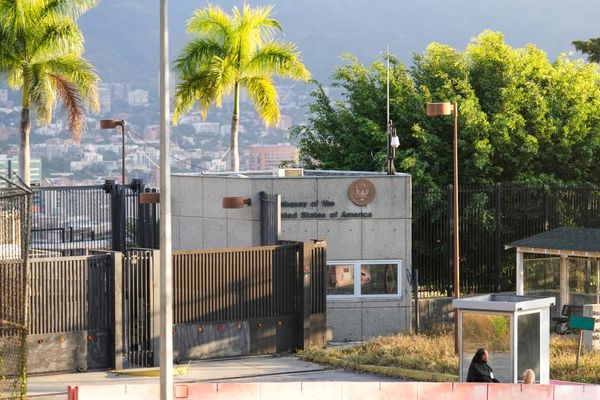
Marco Rubio has declined to rule out future US military action in Venezuela but insisted the Trump administration did not intend to take such steps, as he faced questions from lawmakers over Washington’s unprecedented intervention.
The US secretary of state appeared before the Senate foreign relations committee on Wednesday to defend the removal of Nicolás Maduro, which has left Venezuela under the control of interim president Delcy Rodríguez while the US seizes and sells its oil.
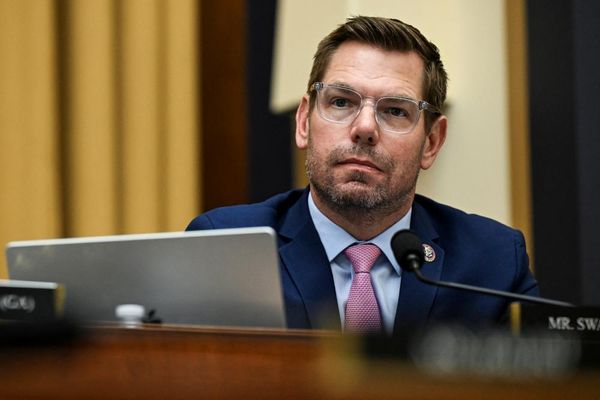
“The president does reserve the option in self defense to eliminate that threat,” Rubio said when pressed by Connecticut senator Chris Murphy on whether the administration would use force to compel cooperation on oil sales.
Rubio cited a hypothetical scenario of an Iranian drone factory threatening US forces in the region, but acknowledged that “military action is not good for recovery and transition”.
Rubio had earlier warned in prepared testimony that the US remains “prepared to use force to ensure maximum cooperation if other methods fail”, though he told senators Wednesday: “I can tell you right now with full certainty, we are not postured to, nor do we intend or expect to have to take any military action in Venezuela at any time.”
Murphy questioned whether the Trump administration’s approach was “destined for failure,” given that Maduro’s former aides remain in control.
“You are taking their oil at gunpoint. You are holding and selling that oil,” Murphy said.
Rubio refused to commit to a specific timeline for democratic transition but insisted that conditions would improve significantly within months. “Three or four or five months from now cannot look like what today looks like,” he said.
Rubio acknowledged the administration gave no-bid licenses to two US oil trading companies to quickly move Venezuelan oil to market. He characterized this as a “short-term fix” necessitated by Venezuela running out of storage capacity, saying the “long-term plan” involves direct sales to refineries and expanded operations by companies like Chevron.
Before the hearing, Rubio defended Trump’s decisions to remove Maduro to face drug-trafficking charges in the US, continue deadly military strikes on boats suspected of smuggling drugs, and seize sanctioned tankers carrying Venezuelan oil, according to the prepared remarks.
“There is no war against Venezuela, and we did not occupy a country,” he said in prepared remarks. “There are no US troops on the ground. This was an operation to aid law enforcement.”
Maduro, who has pleaded not guilty to federal drug-trafficking charges in a US court, has defiantly declared himself “the president of my country” and protested against his capture.
Congressional Democrats have condemned Trump’s moves as exceeding the authority of the executive branch, while most Republicans have supported them as a legitimate exercise of presidential power.
The pushback has begun in the courts, too, as the families of two Trinidadian nationals killed in a Trump administration boat strike filed what is thought to be the first wrongful-death case arising from the campaign. Three dozen strikes on boats in the Caribbean Sea and the eastern Pacific Ocean have killed at least 126 people since September.
While keeping pressure on those the Trump administration dubs “narcotraffickers” without providing evidence, US officials also are working to normalize ties with Venezuela’s acting president, Delcy Rodríguez. Nonetheless, Rubio will make clear in his testimony that she has little choice but to comply with Trump’s demands.
“Rodríguez is well aware of the fate of Maduro; it is our belief that her own self-interest aligns with advancing our key objectives,” Rubio said , noting that they include opening Venezuela’s energy sector to US companies, providing preferential access to production, using oil revenue to purchase US goods, and ending subsidized oil exports to Cuba.
Rodríguez, who previously served as Maduro’s vice-president, on Tuesday said her government and the Trump administration “have established respectful and courteous channels of communication”. During televised remarks, Rodríguez said she was working with Trump and Rubio to set “a working agenda”.
The Associated Press contributed reporting