Former FBI director Robert Mueller died on Friday at the age of 81, his family confirmed through his law firm WilmerHale. His family declined to specify a cause of death, noting only that Mueller had been diagnosed with Parkinson's disease in 2021 but not confirming whether the illness was linked to his passing. A spokesperson for WilmerHale described him as 'an extraordinary leader and public servant and a person of the greatest integrity', highlighting his service as a decorated Marine officer, FBI director, and senior Justice Department official.
Mueller's public career spanned half a century. He led the FBI from 2001 to 2013, steering the bureau through the aftermath of the 11 September attacks and a sweeping shift towards counterterrorism, before returning to public view in 2017 as special counsel investigating Russian interference in the 2016 presidential election and potential ties to Donald Trump's campaign. His family asked for privacy as they grieved, and beyond the brief notice, no further medical details have been confirmed.
Robert Mueller, Parkinson's and an Unanswered Question
In the hours after the announcement, online searches for Mueller's cause of death surged, reflecting public interest in tying off the story of a prominent figure with a clear medical explanation. On that point, the record remains limited. His family has confirmed three things: he died at 81, he had been living with Parkinson's disease since 2021, and they are not, at this stage, disclosing more. No direct link has been established between the diagnosis and his death, and any speculation about the precise cause should be treated with caution.
Mueller's death has also renewed interest in details that commonly trail high-profile Washington figures. Financial disclosures and estimates place his wealth between $4.2 million and $15.2 million (approximately £3.3 million to £12 million), with some assessments near $7 million (approximately £5.5 million), accumulated over decades of government service and later legal work. He is survived by his wife, Ann Standish, whom he married in 1966, and their two daughters, Cynthia and Melissa.
Why Robert Mueller Divided Trump's America
For many outside the United States, Mueller's name is inseparable from the Russia investigation that shadowed Trump's first presidency. Appointed special counsel in 2017, he led a nearly two-year inquiry into Russian interference, contacts between Moscow and the Trump campaign, and potential obstruction of justice. The final report found extensive efforts by Russia to influence the election and documented numerous contacts between Russian actors and campaign figures. It did not establish a criminal conspiracy but explicitly stated that Trump was not exonerated on questions of obstruction. Several individuals were charged as a result.
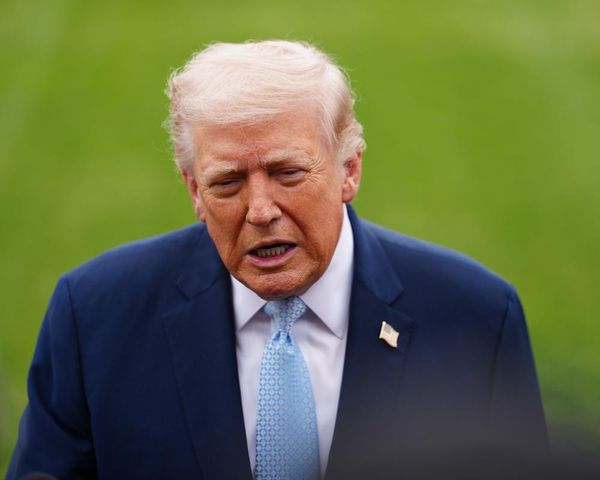
That hedged conclusion turned Mueller into a divisive figure. For Trump, he was the face of what the president repeatedly described as a 'witch hunt', and Trump attacked him in public remarks and on social media throughout the investigation. After news of Mueller's death broke, Trump posted on Truth Social at 1:26 pm Eastern time on Saturday: 'Robert Mueller just died. Good, I'm glad he's dead. He can no longer hurt innocent people!' The post drew immediate condemnation from lawmakers and public figures. Senate Minority Leader Chuck Schumer said 'the cruelty is the point', while Representative Dan Goldman described Mueller's life in opposition to Trump's reaction, saying: 'We mourn the passing of Robert Mueller, a true public servant.' Former President George W Bush said Mueller 'dedicated his life to public service' and expressed condolences to his family.
Mueller, the Epstein Files, and the Subpoena
Mueller's name surfaced in a separate politically charged context in the months before his death. He was included in a batch of subpoenas issued by the House Oversight Committee for records connected to Jeffrey Epstein, alongside several former attorneys general and senior officials. The subpoena was later withdrawn after the panel said it had learned of unspecified health issues that meant he could not testify, a development that pointed back to his Parkinson's diagnosis.
Mueller's name also appears in Justice Department material related to Epstein, though not in connection with any personal relationship between the two men. The documents show Epstein and his associates tracking Mueller's work in the Trump-Russia case. One message, sent on 17 May 2017, the day Mueller was appointed special counsel, warned that his selection was 'bad for DJT.' A 2018 communication described Mueller's office as preparing for a 'life or death confrontation with the President' and 'the mother of all constitutional crises.'