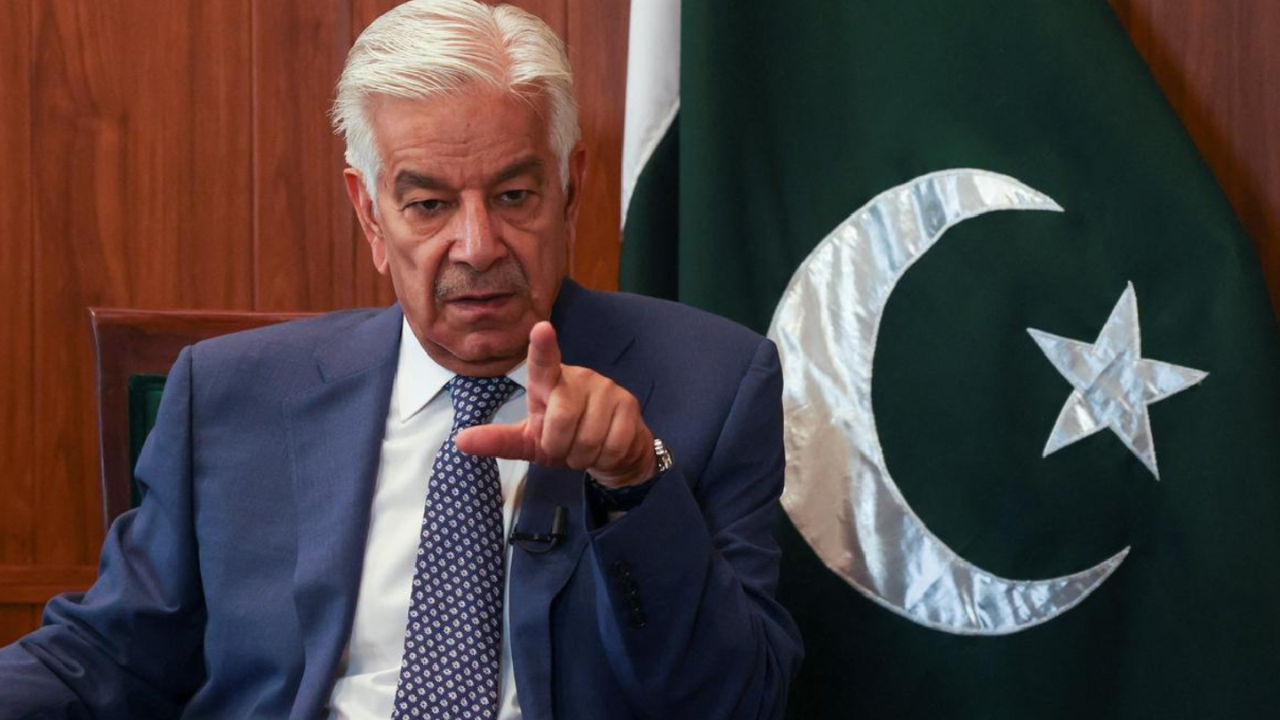
Pakistan’s defence minister Khawaja Asif said the country’s security forces are “physically handicapped” by the sheer size of Balochistan as they battle a fresh surge in militant violence, after authorities reported killing 177 insurgents in sweeping counter-terror operations across the province.
Addressing the national assembly, Asif described the scale of the challenge facing troops deployed in Pakistan’s largest and least populated province, where coordinated attacks triggered one of the deadliest security crises in recent years. His remarks came after militants launched simultaneous assaults in multiple towns, targeting civilians, homes and security installations.
Troops ‘physically handicapped’ by vast terrain
“Balochistan constitutes over 40 per cent of Pakistan geographically...To control it is much more difficult than a populated city, and it needs deployment of massive forces. Our troops are deployed there and are in action against them (terrorists), but they are physically handicapped by guarding and patrolling such a big area,” Asif told lawmakers, as quoted by PTI.
Security officials said the death toll of militants had risen to 177 in the past two days following large-scale raids and gun battles. The operations were launched after insurgents carried out coordinated attacks at 12 locations, with authorities confirming that at least 17 police and security personnel were killed, along with dozens of civilians.
Asif said the weekend violence claimed 33 civilian lives and 17 members of the security forces. He ruled out talks with the Baloch Liberation Army (BLA), saying no negotiations would be held with “terrorists” responsible for killing civilians, including women and children.
Insurgency background and wider fallout
Balochistan, which borders Iran and Afghanistan, has long faced a separatist insurgency driven by ethnic Baloch groups who accuse the central government of discrimination and exploitation. Authorities say groups such as the BLA have targeted security forces, infrastructure and projects linked to the China–Pakistan Economic Corridor.
Train services between Balochistan and the rest of Pakistan remained suspended for a third day, while mobile and internet services were cut in several districts during clean-up operations. Provincial officials said services were expected to resume once the security situation stabilised.
Asif dismissed claims that Balochistan had been neglected, saying the province had seen development, including multiple airports. He also rejected the “missing persons” narrative, alleging that names of militants killed in operations had appeared on such lists. “This narrative has been concocted. I also used to support this cause and protest over it. But, terrorists and criminal elements have hijacked all these narratives,” he said.