Canadian prime minister Mark Carney has said Ottawa has “no intention” of pursuing a free trade agreement with China, pushing back against claims of a strategic drift towards Beijing, a day after US President Donald Trump threatened sweeping tariffs on Canadian goods.
Carney’s remarks came after Trump warned that Canada could face “100 per cent tariffs if it makes a deal with China". Speaking to reporters on Sunday (local time), Carney said Canada remains bound by commitments under the Canada–United States–Mexico Agreement (CUSMA), which restricts free trade agreements with non-market economies without prior notification.
“We have commitments under CUSMA not to pursue free trade agreements with non-market economies without prior notification. We have no intention of doing that with China or any other non-market economy,” Carney said. “What we have done with China is to rectify some issues that developed in the last couple of years.”
The prime minister said recent engagement with Beijing was limited to resolving tariff disputes stemming from an escalation in trade tensions, and did not involve broader market access or a comprehensive trade pact.
Trump’ issues sharp warning
Trump had issued a sharp warning on Saturday, accusing China of undermining Canada’s economy and cautioning Ottawa against becoming a conduit for Chinese goods entering the United States.
“China will eat Canada alive, completely devour it, including the destruction of their businesses, social fabric, and general way of life,” Trump wrote on Truth Social.
While Trump’s initial posts targeted Canada, his tone later softened, with subsequent messages focusing more directly on China. “China is successfully and completely taking over the once Great Country of Canada. So sad to see it happen,” he wrote, later adding, “I want to see Canada SURVIVE AND THRIVE!”
The tariff threat was a shift from Trump’s earlier response after Canada reached a trade arrangement with China. At the time, Trump had appeared unfazed. “That's what [Carney] should be doing. It's a good thing for him to sign a trade deal. If you can get a deal with China, you should do that,” he told reporters at the White House.
On Sunday, US treasury secretary Scott Bessent clarified that the administration’s concern centres on the possibility of Chinese goods entering the US via Canada. “If they go further – if we see that the Canadians are allowing the Chinese to dump goods ([into the United States),” Bessent said on ABC’s This Week. “We can’t let Canada become an opening that the Chinese to pour their cheap goods into the US,” Bessent added. .
He also questioned Carney’s approach ahead of a planned renegotiation of CUSMA this summer, saying, “I’m not sure what prime minister Carney is doing here, other than trying to virtue-signal to his globalist friends at Davos.”
What’s the contention
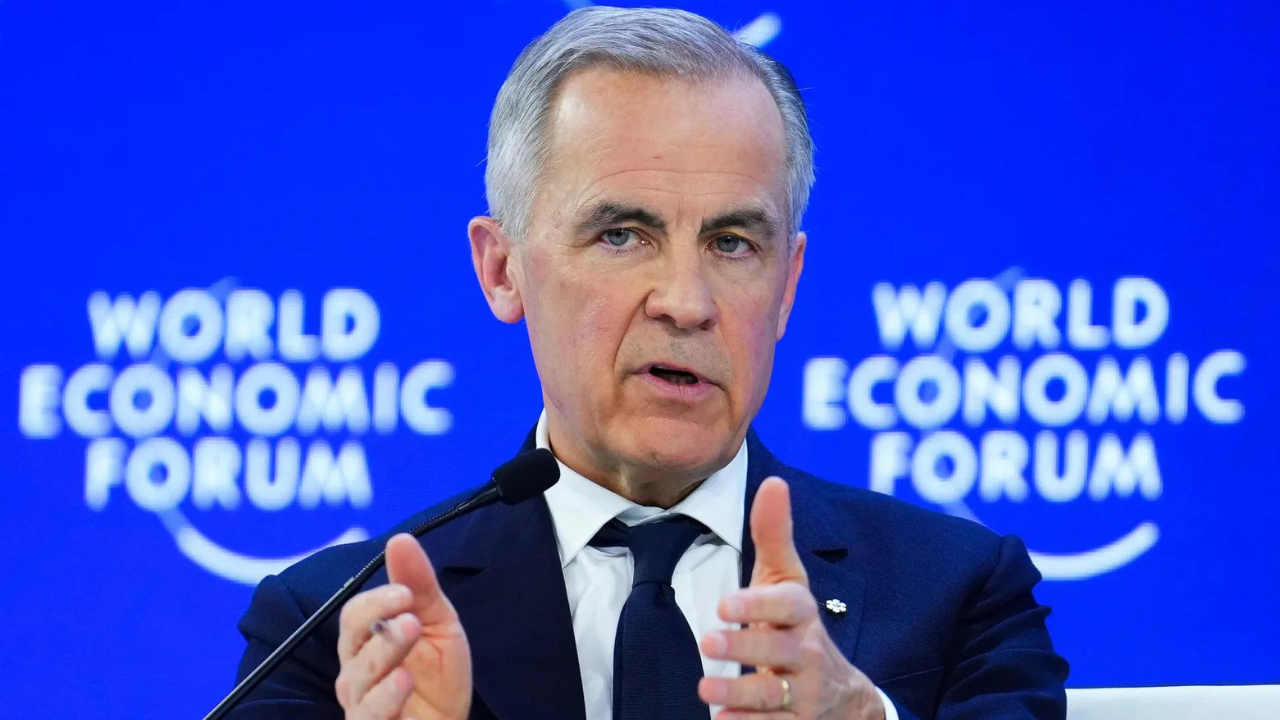
Trade tensions have risen since Carney’s speech at the World Economic Forum in Davos last week, where he said “American hegemony” and “great powers” were using economic integration as “weapons.” Trump later criticised the remarks, saying, “Canada lives because of the United States. Remember that, Mark, the next time you make your statements.”
Canada’s latest position follows months of retaliatory trade measures. In 2024, Ottawa imposed a 100 per cent tariff on Chinese electric vehicles and 25 per cent tariffs on steel and aluminium, mirroring US actions. China responded with duties on Canadian exports including canola oil, pork and seafood.
Earlier this month, Canada adjusted its policy during a visit to China, agreeing to lower tariffs on a capped number of Chinese electric vehicles in exchange for reduced Chinese tariffs on Canadian agricultural products. Under the arrangement, up to 49,000 Chinese EVs will enter Canada annually at a 6.1 per cent tariff, rising to about 70,000 over five years, reported CBS News.
Carney said the cap represents roughly 3 per cent of Canada’s annual vehicle sales and described the move as a stabilisation measure rather than a shift in trade strategy. He added that China is expected to begin investing in Canada’s auto sector within three years.