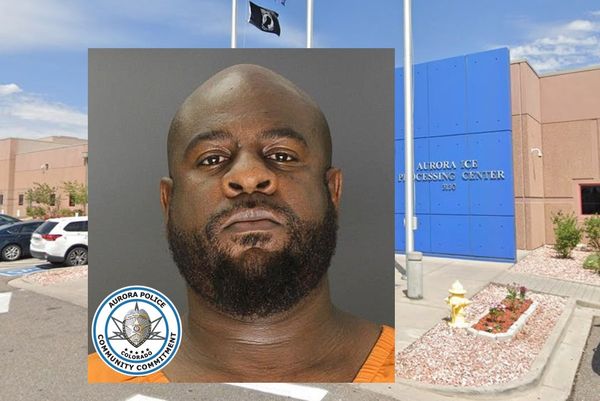
Further to that last post, Lebanese officials said president Joseph Aoun is due to meet with Donald Trump on Tuesday in Washington.
While in Washington, Aoun planned talks “on the situation in Lebanon and ways to strengthen the ceasefire” as well as on “the withdrawal of Israel from the Lebanese regions it occupies,” his office said earlier.
Rubio meets with Aoun to discuss trilateral framework
As we reported earlier, US secretary of state Marco Rubio met with Lebanese president Joseph Aoun in Washington on Sunday to discuss the implementation of the US-backed trilateral framework, hailing the country for its “move towards peace” after the latest round of Lebanon-Israel talks.
Rubio “commended the courage of the Government of Lebanon, under President Aoun’s leadership, for their determined effort to reclaim Lebanon’s sovereignty, disarm Hezbollah and dismantle its terrorist infrastructure, and move towards peace,” the US state department said in a statement.
It added that Rubio reaffirmed the US’s commitment to supporting the implementation of the framework.
Updated
The UN’s nuclear watchdog called for restraint on Sunday after Iran’s Atomic Energy Organization said the United States had attacked an under-construction nuclear power plant in the country’s southwest.
The US and Iran have been trading escalating attacks for days, and Washington carried out fresh airstrikes on Sunday to “punish” Iran for the deaths of two US service members in Jordan on Friday – its first reported losses since the return to open hostilities in the war.
Tehran’s Atomic Energy Organization said US forces “in an aggressive and brutal act contrary to international law, attacked the under-construction Darkhovin nuclear power plant... with a number of projectiles on Sunday”, according to a statement carried by state TV.
As we reported earlier, the UN’s International Atomic Energy Agency (IAEA) said it was looking into the reports, noting the plant “is in the very early stages of construction and contained no nuclear material when last visited by the IAEA”.
While the incident “is not believed to pose any radiological risk”, IAEA director Rafael Grossi reiterated his “call for military restraint in the vicinity of all nuclear-related sites”, the agency said, in a post on X.
The US secretary of state, Marco Rubio, met with Lebanese President Joseph Aoun in Washington on Sunday, a state department official told the AFP news agency.
It is the first trip to Washington by a Lebanese head of state since Michel Sleiman was received by former US president Barack Obama in 2009. The Lebanese president’s office said Aoun would meet Donald Trump on Tuesday.
Aoun, who served as the commander of Lebanon’s US-backed army before being elected president last year, will reportedly present a plan to Trump on how to disarm Hezbollah and secure Israel’s withdrawal from southern Lebanon. Hezbollah has firmly rejected the government’s direct talks with Israel and efforts by the state, which it operates independently of, to strip it of its arms.
As well is killing many Lebanese civilians in airstrikes across the country, the Israeli military has destroyed dozens of villages in the areas it occupies, something Human Rights Watch said could amount to a war crime. Hundreds of thousands of Lebanese people remain displaced from their homes.
Israel has occupied large swathes of south Lebanon in what it calls a “security zone” and says it is trying to protect its northern communities from the threat of Hezbollah.
Lebanon was drawn into the war when Hezbollah fired rockets at Israel on 2 March to avenge the US-Israeli killing of Iran’s former supreme leader in Tehran in late February.
Updated
More than 50 people have been killed in US attacks since the beginning of July, Iran’s Fars news agency has cited the country’s health ministry as saying.
Key event
The International Atomic Energy Agency (IAEA) has confirmed it is “looking into reports” of an overnight attack on an under-construction nuclear plant in Darkhovin, in Iran’s southwestern Khuzestan province (see this post for more details).
“The facility is in the very early stages of construction and contained no nuclear material when last visited by the IAEA,” the UN agency said in a statement.
The IAEA said the reported attack is “not believed to pose any radiological risk” but stressed that the agency’s director general, Rafael Grossi, urges for “military restraint in the vicinity of all nuclear-related sites”.
Iran’s Atomic Energy Organization said earlier today that the US attacked an under-construction nuclear power plant site Khuzestan province with multiple projectiles.
Updated
Trump urges Republicans to add Iran to Russian sanctions bill
The US president, Donald Trump, has said the Republican party should add Iran to the Russian sanctions bill, arguing that this is what Lindsey Graham, the late Republican senator and his close political ally, wanted.
“That’s what Lindsey wanted to do, and it was going to happen. IMPORTANT!!!” he wrote on the Truth Social platform in a brief post.
The bill would allow Trump to place 100% tariffs on goods coming from the top five buyers of Russian oil and natural gas.
The legislation is meant to cut revenues from the sale of Russia’s energy for its war on Ukraine. Republicans and Democrats have both indicated that the bill could become law over the summer.
The White House had previously suggested the scope of the bill could be widened to include Iran and Hezbollah, the Lebanese militant group Tehran has supported and funded for decades.
Earlier this month, the US reimposed sanctions on Iranian oil sales in response to attacks on commercial ships near the strait of Hormuz. This was after the US agreed to a 60-day sanctions waiver and promised to unfreeze Iran’s assets under the now collapsed memorandum of understanding. The waiver was welcomed in Iran, where US sanctions have long crippled the economy.
Updated
Sirens have sounded in the Jordanian capital Amman on Sunday, an AFP correspondent said, as the United States and Iran exchanged drone and missile attacks.
Jordan’s state-run Al-Mamlaka channel also reported that “sirens have been activated in different parts of the kingdom”.
Updated
IDF says missiles launched from Iran toward Jordan and spillover into Israeli territory possible
The Israeli military said Sunday it had identified missiles launched from Iran towards Aqaba in Jordan, after Jordan’s government denied the city’s airport and seaport were evacuated over a threat.
“A short while ago, the IDF identified the launch of missiles from Iran toward the city of Aqaba in Jordan, adjacent to Israeli territory,” the military said. “It is possible that as a result of the fire, there will be spillover into Israeli territory.”
Updated
Kuwait reports another Iranian attack on a power and water plant
Kuwait’s ministry of electricity, water and renewable energy said a power and water distillation plant was attacked by Iran for the second time in two days, causing a fire in some of its facilities.
In a statement posted to social media, the ministry said the attack impacted a “large number of electricity generation units”, triggering emergency plans to mitigate the effects and “maintain the stability of the electricity grid”.
It added that firefighters were working to extinguish the fire while the extent of the damage is being assessed.
As my colleague Donna Ferguson notes in this story, Kuwait on Saturday accused Iran of targeting civilian sites and vital infrastructure in the country, such as a power and water desalination plant.
Kuwait, which is extremely arid, relies on desalinated water for about 90% of its drinking water, so is extremely vulnerable to attacks from Iran.
Updated
Iran says US attacked under-construction nuclear power plant
Iran’s Atomic Energy Organization said earlier today that the US attacked an under-construction nuclear power plant site in Khuzestan province, in the country’s southwest.
US forces “in an aggressive and brutal act contrary to international law, attacked the under-construction Darkhovin nuclear power plant... with a number of projectiles on Sunday,” the organisation said in a statement carried by state TV.
Construction of the nuclear power plant reportedly began four years ago. We have not been able to verify this report and the US has not commented on the reported attack.
Jordanian authorities have not issued any decision to evacuate the airport or seaport in the city of Aqaba, and have not detected any potential threats in the past hours, the state news agency cited the government spokesperson as saying.
This denial comes in response to the US embassy in Jordan earlier saying the airport and seaport in Aqaba had been evacuated by Jordanian authorities because of a “specific and credible threat” (see this post for more details).
Updated
Bahrain’s defence force has condemned Iran’s “repeated attacks targeting (its) civilians”, as it confirmed the country’s air defence systems intercepted and destroyed a number of Iranian missile and drone attacks launched this morning.
“With unwavering resolve and high combat readiness, the Bahrain defence force’s air defence systems intercepted and destroyed several treacherous Iranian aerial attacks today,” it said in a statement.
“The General Command also urges everyone to exercise caution, avoid approaching any strange or suspicious objects resulting from the remnants of the brutal Iranian aggression, and report them immediately.”
“The General Command emphasizes that the deliberate use of missiles and drones to target civilians and private property constitutes a flagrant violation of international humanitarian law.”
Jordan evacuates airport and seaport in city of Aqaba after 'credible threat', US embassy says
The US embassy in Jordan has said authorities evacuated the international airport and seaport in the Jordanian city of Aqaba because of a “specific and credible threat”.
In a statement, the US embassy, based in the capital Amman, “strongly” advises all Americans to avoid travelling to the airport and seaport, adding that they should follow Jordanian authorities’ “security directives” and also avoid travel to military bases in Jordan.
It notes that on 2 March the US state department “ordered non-emergency US government employees and their family members to leave Jordan due to safety risks”.
The statement also advises US citizens to avoid all protests, large gatherings or anywhere there is a large police presence, and to generally keep a “low profile”.
Updated
Two ships involved in 'accident' after defying strait of Hormuz warnings, IRGC says
Iran’s Revolutionary Guards said that two ships were involved in an “accident” after attempting to transit the strait of Hormuz via an “unsafe route”, while two other vessels abandoned that route, according to a report in the Tasnim news agency, which we have not yet been able to independently verify.
The IRGC said the four vessels had ignored Iranian warnings and acted with US backing.
“Vessels that are influenced by the words of the Americans and enter unsafe routes will certainly face accidents,” an IRGC statement read.
The US has urged mariners to travel on the southern route through Oman’s territorial waters to avoid Iran. But Iran has laid out a system of lanes through the north of the strait close to the Iranian coast, and has insisted that all vessels use this route (or face consequences).
Updated
We reported in an earlier post that sirens had been activated in Bahrain, which hosts a US naval base and has been targeted by Iran in recent days.
A journalist from the Agence France-Presse (AFP) news agency has confirmed sirens had rung out in Bahrain’s capital Manama. We will bring you more details as they come in.
Updated
The Guardian’s defence and security editor, Dan Sabbagh, has written an interesting analysis piece about why Iran has more than enough capability to inflict damage despite the US being the superior military power. Here is an extract from his story, which was published last Friday:
A frustrated US is exploring how to bend Iran to its will, after Trump described the country’s leaders as “scum” and “sick people” at this month’s Nato summit, though it is not obvious how that can be done without a substantial ground campaign, for which the US is not prepared for, nor has the appetite for.
Military escalation was considered at a White House Situation Room meeting on Tuesday, followed by leaks that the options considered included bombing another deep-lying nuclear site at Pickaxe Mountain – which would have no effect on the now critical Hormuz dynamic – or a seizure of the strategic Kharg Island, through which 90% of Iran’s oil exports would flow if there was no US blockade.
It is perfectly possible for the US to capture Kharg or any other small location on the ground, but the challenge would be holding on, as it would be inevitably targeted by Iranian missiles and drones. Meanwhile, continued US bombing will further reduce stockpiles of hard-to-make air defence interceptors, depleted by a half, and expensive missiles, down by a quarter to a third, based on estimates from the Center for Strategic and International Studies thinktank.
Bahrain’s interior ministry has urged residents to head to the nearest safe place of shelter as sirens sounded across the country. We’ll bring you more as it comes in.
Updated
Key event
The US president, Donald Trump, held a brief phone call with NewsNation in which he talked about the Iranian attack on Jordan on Friday that killed two American service members.
Trump said the troops died “in service of our country” and stated again that the war on Iran was launched in order to never allow Iran to have a nuclear weapon.
Asked about Iran’s assertion that it would no longer honour the memorandum of understanding if Washington failed to uphold its obligations, Trump replied: “I couldn’t care less.”
Trump angrily declared the ceasefire “over” earlier this month but in reality he has very little leverage over Tehran as it can still assert control over the strait of Hormuz and thereby effect global energy prices, a politically sensitive topic for the president ahead of the US midterms.
And Iran could expand the conflict further with help from its regional allies. Reuters reported on Thursday that Iran has asked Yemen’s Houthis to stand ready to close the Red Sea oil route if the US strikes Iranian power infrastructure, which would wreak havoc on the world economy.
Iran could also inflict severe damage on US allied-Gulf countries if American forces decide to escalate the war, such as through sustained and widespread attacks on desalination plants across the region, which would have a devastating civilian cost.
Tehran has already retaliated to US attacks by hitting power and desalination plants in Kuwait, threatening daily life in the small country which relies on desalinated water for about 90% of its drinking water. But so far these attacks have been relatively limited in scope.
Updated
Kuwait says it is responding to Iranian missile and drone attacks
In a post to X about an hour ago, Kuwait’s army said it was dealing with hostile missile and drone attacks, following what it described as “Iranian aggression”.
The statement said that any explosions that are heard would likely be the sound of air defence systems intercepting the hostile attacks.
The Iranian army said earlier that it targeted two US bases in Kuwait with drones, hitting an ammunition depot at camp Buehring (formerly camp Udairi) and radar and air surveillance systems at the Ali Al Salem air base, in retaliation for US strikes on Iran overnight. It was not immediately clear whether the Iranian attacks were successful or intercepted.
Updated
US launches new round of strikes to 'punish' Iran after two US troops killed in Iranian attack
The US military said it launched new airstrikes against Iran to “swiftly punish” the country’s Revolutionary Guard for an attack in Jordan that killed two American service members, left one missing and four requiring hospitalisation.
Speaking to the New York Post, the US president, Donald Trump, described the deaths as a “shame”. “They did it because they don’t want to see Iran have a nuclear weapon,” Trump said of the troops. “And it just shows you how bad (the Iranians) are,” he added.
Iran’s supreme leader, Mojtaba Khamenei, said before the strikes that Washington would pay for “seeking to escalate the conflict”.
The US military’s Central Command said the airstrikes began at 6pm ET (10pm GMT) on Saturday at Trump’s direction and were also designed to “further degrade” Iran’s ability to threaten commercial shipping in the strait of Hormuz.
An area near Sirik – on the vital energy shipping route – was targeted about 1.30am local time, Iran’s state-run Irna news agency said. A location near Hajiabad in the same southern province of Hormozgan was also targeted, and explosions were heard in the port city of Bandar Abbas, Irna said. An area near Qeshm Island in the strait was also targeted, state-run broadcaster Irib said.
In an update posted to social media a few hours ago, Centcom claimed it had struck “Iranian military coastal surveillance and air defense facilities, maritime capabilities, and missile and drone storage sites,” completing its eighth consecutive night of strikes against Iran.
The US and Iran have intensified attacks since their framework ceasefire deal signed a month ago fell apart last week, raising the possibility of a return to all-out war.
In other key developments:
-
The two US troop deaths on Friday were its first from direct Iranian fire since the opening days of the war. US defence secretary Pete Hegseth posted on X: “Their sacrifice only stiffens our resolve.”
-
Iran appeared to target Saudi Arabia as well as other US Gulf allies and Jordan on Saturday after US attacks on Iranian bridges, power facilities and other infrastructure.
-
Mojtaba Khamenei said US actions had shown that Trump’s signature was “utterly worthless and devoid of credibility”, warning of “even heavier costs and further humiliation” for the US, in a statement carried by the official social media accounts of Iran’s supreme leader and state media.
-
The American deaths brought the number of US service members killed since the war began to 16, while more than 430 have been injured. Iran’s health ministry said on Saturday that 50 people had been killed and more than 500 injured in US strikes on the country over the past three weeks.
-
In Iraq, a base near Irbil of the Kurdistan Freedom party, an Iranian Kurdish dissident group, was struck by a drone early on Sunday, wounding eight of its members, according to a military official with the group.
-
The most significant damage from Iranian strikes on Saturday occurred in Kuwait, where a water desalination plant and an oil facility were hit, according to the Kuwait authorities and the Kuwait Petroleum Corporation. It was the second attack against a desalination plant in two days in the tiny nation that depends on desalination for 90% of its drinking water.