Revised Iranian proposal to end war shared with US - report
The Iranian foreign ministry spokesperson Esmail Baghaei also confirmed in the news conference that Tehran had responded to a new US proposal aimed at ending the war.
“As we announced yesterday, our concerns were conveyed to the American side,” he told journalists.
Baghaei said exchanges were “continuing through the Pakistani mediator”, without providing details.
Citing a source, the Reuters news agency reported this morning that Pakistan had shared a revised peace proposal from Iran with the US.
“We don’t have much time,” the source told Reuters when asked if it would take time to close gaps, adding that both countries “keep changing their goalposts”.
It is not immediately clear what is in the revised proposal but Iran’s previous demands have reportedly included compensation for war damage, an end to Israel’s war on Lebanon and the US’s blockade of Iranian ports, guarantees of no further attacks on Iran and a recognition of Iranian sovereignty over the strait of Hormuz, something the US has rejected.
Washington is reportedly losing patience with Iran’s negotiators and is weighing up a resumption of military operations if Tehran does not make the sort of concessions on its nuclear programme it wants.
Updated
The Iranian foreign ministry spokesperson Esmail Baghaei has been speaking at a news conference.
He told reporters that Iranian and Omani technical teams have met in Oman to negotiate a mechanism for safe transit in the strait of Hormuz, a strategic stretch of water located between Iran, the UAE and Oman at the heart of the impasse in the peace talks, Al Jazeera is reporting.
About a fifth of the world’s oil and liquefied natural gas usually passes through the strait. But Iran closed the shipping route to so-called “hostile” countries in response to being attacked by Israel and the US on 28 February, causing global energy prices to surge and raising bills for consumers around the world.
Iran effectively closed the strait by attacking – or just threatening to attack – some ships and told others not affiliated with the US or Israel that they could pass through the waterway if they paid a toll.
Donald Trump imposed a counter-blockade of ships using Iranian ports on 13 April to try to pressure Tehran into accepting concessions to bring an end to the war – but this failed. The US has said repeatedly there can be no permanent solution to the blockade that involves the payment of a toll to Iran, and claims that Oman holds a similar view.
Updated
Oman’s foreign ministry has condemned the drone strike that caused a fire at the perimeter of UAE’s Barakah nuclear power plant on Sunday.
In a statement shared to X, the ministry expressed its solidarity with the UAE but stressed that it rejected all “hostile and escalatory acts” as it urged for dialogue to address regional issues and called for international law to be respected by all parties.
The UAE did not say who launched the attack and there was no immediate claim of responsibility. No injuries were reported and officials said there was no impact on radiological safety levels.
Trump warns 'clock is ticking for Iran' to reach peace deal
We are restarting our coverage of the US-Israeli war on Iran and Israel’s war on Lebanon. Donald Trump has issued an extreme warning to Iran to quickly agree to a peace deal with the US or face devastation.
As Washington struggles to break an impasse on ending the war, the US president said on his Truth Social platform on Sunday: “For Iran, the Clock is Ticking, and they better get moving, FAST, or there won’t be anything left of them. TIME IS OF THE ESSENCE!”
Trump is expected to meet top national security advisers on Tuesday to discuss options for military action on Iran, according to a report in the US outlet Axios.
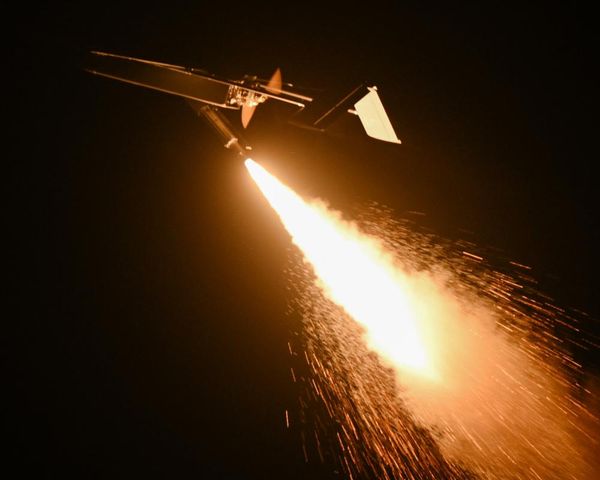
It came as a drone strike in the United Arab Emirates caused a fire at a nuclear power plant – which the country called a “dangerous escalation” and blamed on Iran or its proxies – and Saudi Arabia reported intercepting three drones.
Tehran has demanded a lasting ceasefire in Lebanon before any broader peace deal with Washington.
Israel’s airstrikes killed seven people in Lebanon on Sunday, including an Islamic Jihad commander, Lebanese authorities and state media said, despite the fragile ceasefire as Hezbollah called US-brokered talks between the two countries a “dead end”.
In other key developments:
Iranian media said the US had failed to make any concrete concessions in its latest response to Iran’s proposed agenda for negotiations to end the war. The Fars news agency said on Sunday that Washington had presented a five-point list that included a demand for Iran to keep only one nuclear site in operation and transfer its stockpile of highly enriched uranium to the US.
Islamic Jihad commander Wael Abdel Halim and his 17-year-old daughter were killed in an Israeli missile strike on an apartment in eastern Lebanon on Sunday, Lebanese state media said. Israeli strikes on towns in southern Lebanon earlier killed five people, including two children, and left at least 15 people injured, the Lebanese health ministry said, despite Israel and Lebanon agreeing to extend their ceasefire by 45 days.
Hezbollah had fired about 200 projectiles at Israel and its troops over the weekend, an Israeli military official said on Sunday.
Israel’s cabinet approved a plan to build a defence compound on the site of the recently demolished premises of the UN Palestinian refugee agency (Unrwa) in East Jerusalem. Israel seized the site last year in an act the agency condemned as a violation of international law.