Mark Carney’s trip to Beijing this week secured what he described as a “preliminary but landmark” trade deal and a recognition – welcomed by Beijing – that countries are operating in a “new world order”.
Carney’s visit is the first time in nearly a decade that a Canadian prime minister has been welcomed in Beijing. It comes after years of a deep freeze in the relationship between Ottawa and Beijing that Carney wants to thaw, in order to reduce his country’s precarious reliance on the United States.
Guy Saint-Jacques, a former Canadian ambassador to China, said: “The main goal of trying to reset or recalibrate the relationship with China has been achieved during this trip.”
That recalibration comes at a delicate moment for geopolitical alliances between North American countries and China.
“Mr Carney is driven by a sense of urgency. And this urgency comes from the difficulties that we have with our neighbour to the south,” Saint-Jacques said.
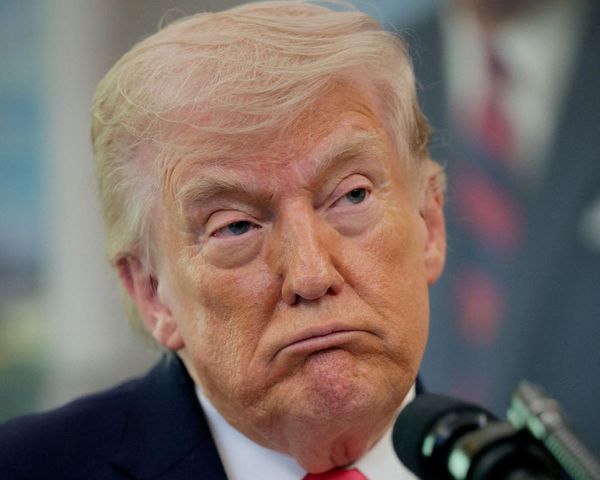
Just as Carney was heading to Beijing, the US president, Donald Trump, was telling reporters the US doesn’t need Canadian products. The comment highlights the pressure that Carney is under to diversify his country’s exports away from the US. Canada sends about 70% of its exports to the US.
But as trade negotiators around the world have learned to anticipate, Trump seemingly reversed course in the hours after the Chinese president, Xi Jinping, and Carney announced a deal.
“Well, it’s OK. That’s what he should be doing,” Trump told reporters on Friday at the White House. “If you can get a deal with China, you should do that.”
On Thursday in Beijing, Carney told reporters he believed the progress and partnerships between the two sides set both countries up for the “new world order” – a view that chimes, at least rhetorically, with Beijing’s position that the days of a US-led world order are nearing their end.
And while Carney and Canada are “desperate” for a closer relationship with China, Beijing is also under growing pressure to forge new and deeper relationships, said Lynette Ong, a professor of political science and China scholar at the University of Toronto.
“Despite the headlines and excitement surrounding the electric vehicle and technology markets, China still relies on exports to drive economic growth,” she said. “And leadership in Beijing is well aware of the fact that the economy is in a lacklustre state. They cannot allow for exports to fall behind.”
She also pointed out that the Chinese foreign ministry made no mention of any intent to weaken Canada’s position with the US, suggesting negotiators want to enter agreements “in good faith”.
Comments from both leaders may have been nearly as consequential as the trade agreements secured this week.
On Friday, China and Canada announced “a preliminary, provisional agreement” allowing up to 49,000 Chinese electric vehicles into the Canadian market and a lowering of Chinese tariffs on Canadian canola, lobsters, seafood and peas from March until the end of the year. A pledge on both sides to reduce – but not fully remove – tariffs on key industries brings the hope of ending a bitter trade war.
But with all eyes on how the leaders might frame the deal, Vina Nadjibulla, vice-president of the Asia Pacific Foundation of Canada, said the joint statement was the biggest surprise of the summit.
“It is perhaps the most significant achievement, outlining this new strategic partnership between China and Canada,” she said. “And it’s a bold move by Carney to position Canada in this new and evolving geopolitical order, with the hopes of charting a path that leads to more strategic autonomy and agency. He also seems to recognise there are limits with what can be done with China.”
Carney himself said the deal between the two reflected the need for cooperation and partnership in a more “divided and fragmented” world.
But the deal, while welcomed by some senior Canadian politicians at home, has frustrated and angered others.
“Prime minister Carney must explain how he has gone from saying China was Canada’s biggest security threat before the election to announcing a strategic partnership with Beijing after the election,” said the Conservative leader, Pierre Poilievre. The Ontario premier, Doug Ford, criticised the move to reduce tariffs on electric vehicles. “Make no mistake: China now has a foothold in the Canadian market and will use it to their full advantage at the expense of Canadian workers.”
But Nadjibulla said it was a “creative agreement” and reflected the mounting precarity of a multibillion dollar auto sector with an “uncertain” future.
“Carney made it through this visit and did impressive moves on the diplomatic tightrope – but a lot still needs to be worked out. This new strategic partnership is very aspirational and ambitious, and we’ll see how it evolves and what the implications will be,” she said. But lingering concerns about Canada’s decision to further entrench its canola exports to China are “worrisome” and show an overreliance on a strategy that has sometimes backfired.
“We’ve already learned this lesson and if we look at the track record of China, they use coercion, and they use it on the sector where we’re heavily dependent on trade with them. This deal doesn’t make that any less likely.”
Xi hailed a “turnaround” in China-Canada ties since he met Carney at the Asia-Pacific Economic Cooperation (Apec) summit in South Korea in 2025.
Commentators in China framed the trip as a watershed moment in countries breaking away from US-led hegemony. In an article for People’s Daily, the Chinese Communist party’s mouthpiece, Wang Wen and Jin Zhen, professors at Renmin University in Beijing, wrote: “Instead of blindly adhering to Washington’s hardline approach, several western nations are recalibrating their China policies based on their own national interests. Canada, as a key ally and neighbour of the US, has chosen to break the deadlock by re-establishing high-level ties with Beijing.”
On a personal level, Carney is admired in Beijing for his technocrat credentials, and during his visit he eschewed any of the typical tourist stops, instead committing to hours of meetings with top officials. But some experts stressed that Carney’s smooth trip should not be taken as a sign of a clean break with the difficult relations of years past.
“Every new government – not just in Canada – thinks it can do China better than the last one,” said Michael Kovrig, a former diplomat and senior Asia adviser for the thinktank International Crisis Group. “History says otherwise. China policy too often follows a cycle: optimism, friction, damage control. The goal this time should be stabilisation, not transformation.”
Kovrig also cautioned that China could not be the solution to an “over-reliance” on any one partner. “China is not just another market: it is a one-party state that routinely uses trade and investment as political leverage.”
Carney also spoke of “red lines” for Ottawa, including concerns about human rights and interference in Canadian elections. But he added: “We take the world as it is – not as we wish it to be.”
Additional research by Lillian Yang